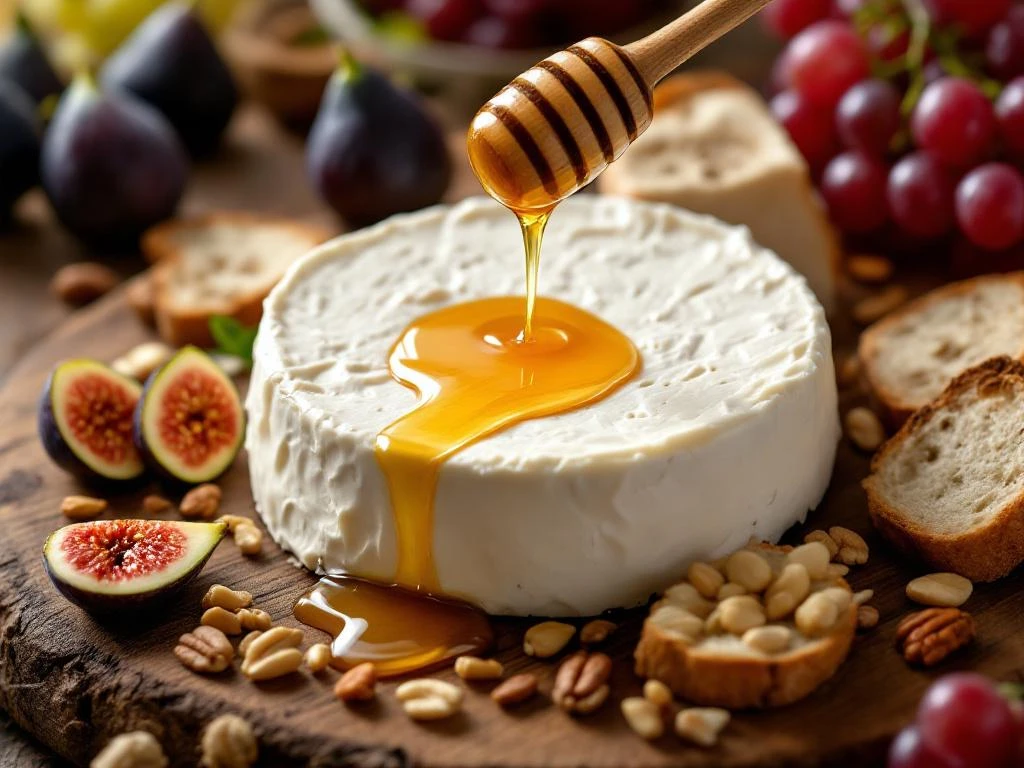
Goat cheese pairs beautifully with sweet and savoury ingredients that complement its distinctive tangy, creamy profile. Fresh fruits like figs and berries, crisp white wines such as Sauvignon Blanc, aromatic herbs, toasted nuts, and honey create harmonious combinations that enhance the cheese’s natural characteristics. Understanding these pairing principles helps foodservice professionals and retailers create memorable culinary experiences whilst maximising the versatility of this artisanal cheese.
Understanding goat cheese pairing fundamentals
The unique flavour profile of goat cheese stems from its tangy, fresh taste and creamy texture that varies from soft and spreadable to firm and crumbly. This distinctive character comes from the natural composition of goat’s milk, which contains smaller fat globules than cow’s milk, creating a lighter, more digestible cheese with a characteristic bright acidity.
Successful pairing relies on balancing these tangy notes with complementary flavours. Sweet elements like honey or fresh fruits provide contrast, whilst savoury ingredients such as herbs and roasted vegetables create depth. Texture plays an equally important role, with crunchy nuts or crisp vegetables offering textural contrast to creamy fresh goat cheese, whilst softer accompaniments complement aged varieties.
Temperature considerations significantly impact serving quality. Fresh goat cheese performs best at cool room temperature, allowing its creamy texture to shine, whilst ripened varieties benefit from slightly warmer serving temperatures that enhance their complex flavours. These fundamentals guide menu development and retail presentation strategies across the industry.
What fruits pair best with goat cheese?
Fresh and dried fruits create exceptional pairings with goat cheese by providing natural sweetness that balances its tangy profile. Figs, whether fresh or dried, offer a honeyed sweetness and jammy texture that complements both fresh and aged goat cheese varieties. Pears bring crisp texture and subtle sweetness, whilst stone fruits like peaches and apricots add juicy, aromatic notes during their peak seasons.
Berries deserve special attention in goat cheese applications. Strawberries and raspberries provide bright acidity that echoes the cheese’s tang, whilst blackberries and blueberries offer deeper, more complex sweetness. These combinations work brilliantly in salads, on cheese boards, and as garnishes for hot dishes where goat cheese features prominently.
For year-round menu stability, dried fruits present reliable options. Dried apricots, cranberries, and dates maintain consistent quality and offer concentrated flavours that stand up well to stronger aged goat cheeses. These pairings create opportunities for seasonal menu variations whilst maintaining core offerings that customers expect.
Which wines and beverages complement goat cheese?
Crisp white wines traditionally pair best with goat cheese, particularly Sauvignon Blanc and Sancerre, which share similar bright, acidic profiles. These wines cleanse the palate between bites whilst enhancing the cheese’s fresh characteristics. Light-bodied red wines like Pinot Noir work well with aged goat cheese varieties, offering subtle tannins that complement without overwhelming.
Non-alcoholic pairings expand service opportunities significantly. Honey remains a classic accompaniment, with different varieties offering unique flavour profiles, from delicate acacia to robust chestnut honey. Fruit preserves and chutneys provide similar sweet-tart balance, with fig jam, quince paste, and onion marmalade proving particularly successful in retail and restaurant settings.
Specialty teas present innovative pairing options for afternoon service or health-conscious consumers. Light green teas complement fresh goat cheese, whilst herbal infusions featuring chamomile or lavender echo the floral notes often found in artisanal varieties. These beverages create distinctive experiences that differentiate establishments in competitive markets.
What savory ingredients work well with goat cheese?
Mediterranean ingredients form natural partnerships with goat cheese, reflecting shared culinary traditions. Fresh herbs like thyme, rosemary, and basil enhance the cheese’s brightness, whilst sun-dried tomatoes, olives, and capers add briny, umami notes. These combinations work exceptionally well in salads, pizzas, and hot dishes where goat cheese serves as a creamy counterpoint.
Nuts provide both flavour and textural interest, with toasted walnuts, pine nuts, and almonds offering particular affinity. The natural oils in nuts complement the richness of goat cheese whilst adding crucial crunch. Roasted vegetables, especially beetroot, butternut squash, and red peppers, bring sweetness and depth that balance the cheese’s acidity beautifully.
For protein pairings, prosciutto and other cured meats create classic combinations, whilst grilled chicken and roasted lamb provide substantial options for main courses. These applications demonstrate goat cheese’s versatility across menu categories, from starters to substantial mains. Understanding these combinations helps operators develop cohesive menus that showcase premium cheese products for industrial and wholesale applications.
How do you incorporate goat cheese into different meal occasions?
Breakfast service benefits from goat cheese’s lighter profile compared to many cow’s milk cheeses. Spread on bagels or toast, crumbled over scrambled eggs, or incorporated into omelettes, it provides protein and flavour without heaviness. Fresh goat cheese blends smoothly into breakfast bowls and pairs well with granola and fresh fruits for health-conscious options.
Lunch applications showcase remarkable versatility. Goat cheese elevates simple salads, melts beautifully in paninis and wraps, and creates memorable sandwich fillings when combined with roasted vegetables or cured meats. The cheese’s melting properties make it ideal for hot applications, maintaining distinct flavour whilst achieving creamy consistency without becoming greasy.
Dinner service allows for sophisticated presentations, from elegant cheese courses to incorporated elements in pasta, risotto, and gratins. Goat cheese performs exceptionally in both cold and hot preparations, making it valuable for diverse menu offerings. Understanding optimal serving temperatures and melting characteristics ensures consistent quality across all applications.
Key takeaways for perfect goat cheese pairings
Mastering goat cheese pairings centres on understanding balance, with sweet elements tempering tanginess, whilst savoury ingredients add complexity. The cheese’s versatility spans all meal occasions, from breakfast through to dessert applications, making it an essential component for innovative menu development. Quality considerations remain paramount, as premium goat cheese delivers superior flavour and performance across all applications.
Professional kitchens and retail operations benefit from exploring the full range of pairing possibilities, from traditional combinations to innovative applications. The growing consumer interest in artisanal cheeses creates opportunities for differentiation through thoughtful pairings and presentations. By focusing on quality sourcing and understanding fundamental pairing principles, businesses can maximise both customer satisfaction and operational efficiency with this versatile cheese category.
Related Articles
- What are the options for private label goat cheese concepts for retail partners?
- How does pallet delivery of goat cheese curd for the food industry work?
- How can goat cheese support clean label products?
- How can goat cheese help brands innovate in fresh foods?
- What are portion control guidelines for goat cheese?