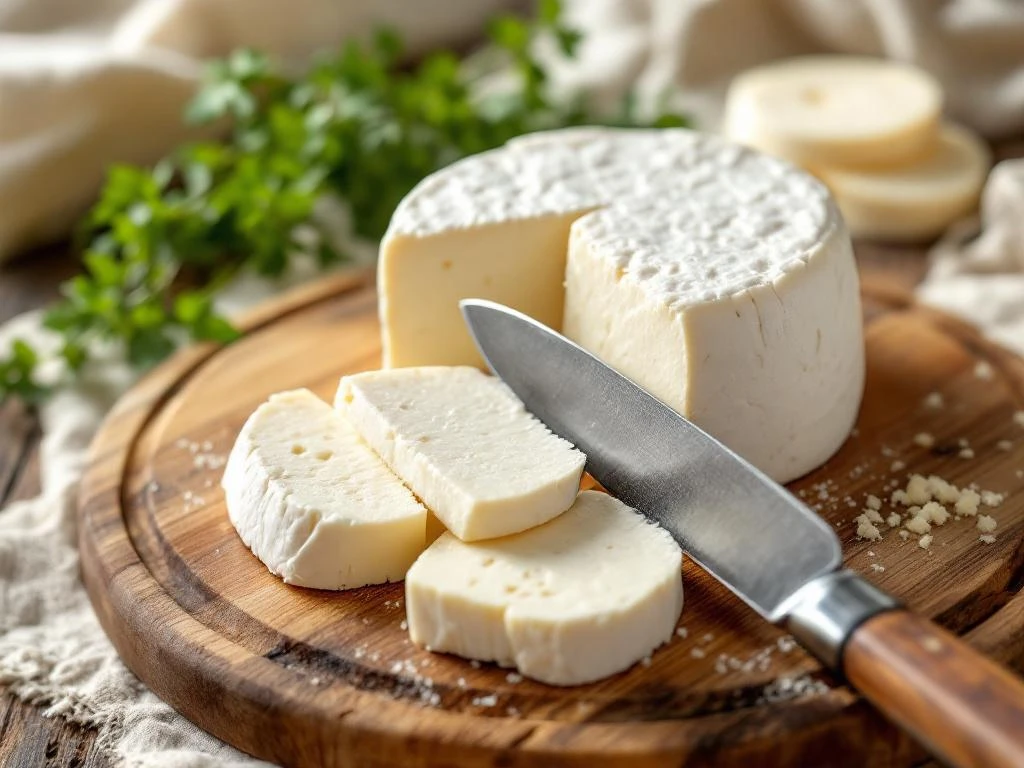
To slice goat cheese without crumbling, let it reach room temperature for 20-30 minutes before cutting, use a thin-bladed knife or cheese wire, and employ a gentle, single-stroke technique. The key is understanding that goat cheese’s unique texture requires different handling than harder cheeses, with temperature control being the most critical factor for achieving clean, professional cuts.
Master the art of slicing goat cheese perfectly
Slicing goat cheese without crumbling is a common challenge in professional kitchens, retail displays, and foodservice operations. The delicate texture of goat cheese, combined with its tendency to stick to knives and crumble under pressure, makes it one of the more challenging cheeses to portion cleanly. Whether you’re preparing fresh goat cheese rolls for a restaurant service or creating attractive retail displays, mastering proper slicing techniques ensures better presentation and reduces product waste.
The unique characteristics of goat cheese require specific handling approaches. Unlike harder cheeses that can be sliced straight from refrigeration, goat cheese needs careful temperature management and the right tools. Professional cheese handlers know that the difference between a clean slice and a crumbly mess often comes down to just a few degrees of temperature and the proper cutting technique.
For businesses handling various goat cheese formats, from fresh rolls to ripened varieties and specialty products like goat brie, understanding these techniques becomes even more crucial. Each type responds differently to cutting, and knowing these nuances helps maintain product integrity throughout service.
Why does goat cheese crumble when you cut it?
Goat cheese crumbles primarily due to its molecular structure and lower fat content compared to cow’s milk cheese. The protein bonds in goat cheese are more fragile, and the smaller fat globules create a drier, more crumbly texture. This structural difference means goat cheese lacks the elasticity found in many cow’s milk cheeses.
The pH levels in goat cheese also contribute to its crumbling tendency. Fresh goat cheese typically has a higher acidity level, which affects how proteins bind together. As the cheese ages, moisture content decreases and the texture becomes even more prone to breaking apart. This is why fresh goat cheese often crumbles differently than aged varieties – the moisture content and protein structure change significantly over time.
Temperature plays a crucial role in the cheese’s structural integrity. When cold, the fat molecules are rigid and the protein matrix is tight, making the cheese brittle. As it warms, the fat softens and the proteins relax, creating a more pliable texture that’s less likely to crumble. Understanding these factors helps professionals anticipate how different goat cheese products will behave during slicing.
What is the best knife for cutting goat cheese?
The ideal tool for cutting goat cheese is a thin-bladed knife with a non-stick coating or a professional cheese wire. These tools minimise surface contact and reduce drag through the cheese, preventing the crumbling that occurs with thicker blades. Many professionals prefer perforated cheese knives, which create less suction and allow for cleaner cuts.
Cheese wires offer exceptional precision for portioning goat cheese, particularly in high-volume settings. The thin wire slices through without compressing the cheese, maintaining its structure. For softer varieties like spreadable goat cheese or fresh rolls, dental floss can serve as an effective alternative, providing a clean cut without the risk of sticking.
| Cutting Tool | Best For | Advantages |
|---|---|---|
| Thin-bladed knife | All goat cheese types | Versatile, easy to control |
| Cheese wire | Fresh and semi-soft varieties | No sticking, precise portions |
| Perforated knife | Ripened goat cheese | Reduces suction, clean cuts |
| Dental floss | Soft fresh cheese | Inexpensive, no drag |
In commercial settings, maintaining clean knives is essential. Dipping the blade in warm water between cuts prevents cheese build-up and ensures consistent portions. Some operations use dedicated knives for different cheese types to maintain optimal cutting conditions throughout service.
How do you prepare goat cheese for slicing?
Proper preparation begins with temperature control. Remove goat cheese from refrigeration 20-30 minutes before slicing, allowing it to reach 15-18°C (59-64°F). This temperature range provides the ideal balance between firmness and pliability. Different goat cheese types require slightly different warming times – fresh varieties need less time than aged or ripened options.
Surface preparation involves removing any packaging and patting the cheese dry with paper towels if moisture has accumulated. For cheese rolls or logs, ensure the surface is smooth and free from indentations that could affect cutting. In humid environments, a light dusting of cornstarch on the cutting surface can prevent sticking without affecting flavour.
For batch preparation in foodservice environments, arrange cheeses on cutting boards in the order they’ll be used, allowing each to reach optimal temperature progressively. Cover loosely with parchment paper to prevent drying while maintaining airflow. This systematic approach ensures consistent texture throughout service periods.
What are the professional techniques for clean goat cheese portions?
The single-stroke method produces the cleanest cuts in goat cheese. Position your knife at the desired portion mark and draw it through the cheese in one smooth, confident motion without sawing. This technique prevents the compression and crumbling that occurs with multiple strokes. Apply gentle downward pressure, letting the blade do the work rather than forcing it through.
For cheese wire cutting, maintain consistent tension and use a swift, straight pull-through motion. The rocking technique works well for firmer aged varieties – place the knife tip on the board beyond the cheese, then rock the blade down through in a smooth arc. This method provides excellent control for precise portioning.
Portion control in professional settings requires consistency. Mark cutting guides on your board or use portion templates to ensure uniform sizes. For retail displays, cut samples slightly larger than serving portions to account for edge drying. When preparing goat cheese pucks or medallions, use ring moulds after slicing to create perfectly uniform presentations that enhance visual appeal.
Key takeaways for perfect goat cheese slicing
Mastering goat cheese slicing comes down to three essential elements: proper temperature control, selecting the right cutting tools, and employing gentle handling techniques. These fundamentals apply whether you’re working with fresh goat cheese rolls, ripened varieties, or specialty products like goat brie. Allowing cheese to reach room temperature remains the single most important factor for achieving clean cuts.
Professional cheese cutting techniques significantly improve presentation quality and reduce product waste in commercial operations. The investment in proper tools and training pays dividends through improved portion control, enhanced visual appeal, and increased customer satisfaction. These methods work equally well for retail displays, restaurant plating, and high-volume foodservice operations.
Quality goat cheese from trusted suppliers makes the slicing process notably easier, as consistent texture and proper aging contribute to better cutting characteristics. When cheese is produced with traditional methods and careful attention to moisture content and texture development, it naturally performs better under the knife, allowing your team to focus on presentation rather than struggling with difficult products.
Related Articles
- How do you adapt a goat cheese concept for different export markets?
- How does animal welfare on the goat farm affect the consistency of goat milk?
- What are sustainable packaging alternatives for goat cheese?
- What are the benefits of IFS certified goat cheese suppliers?
- What is the best way to melt goat cheese for recipes?