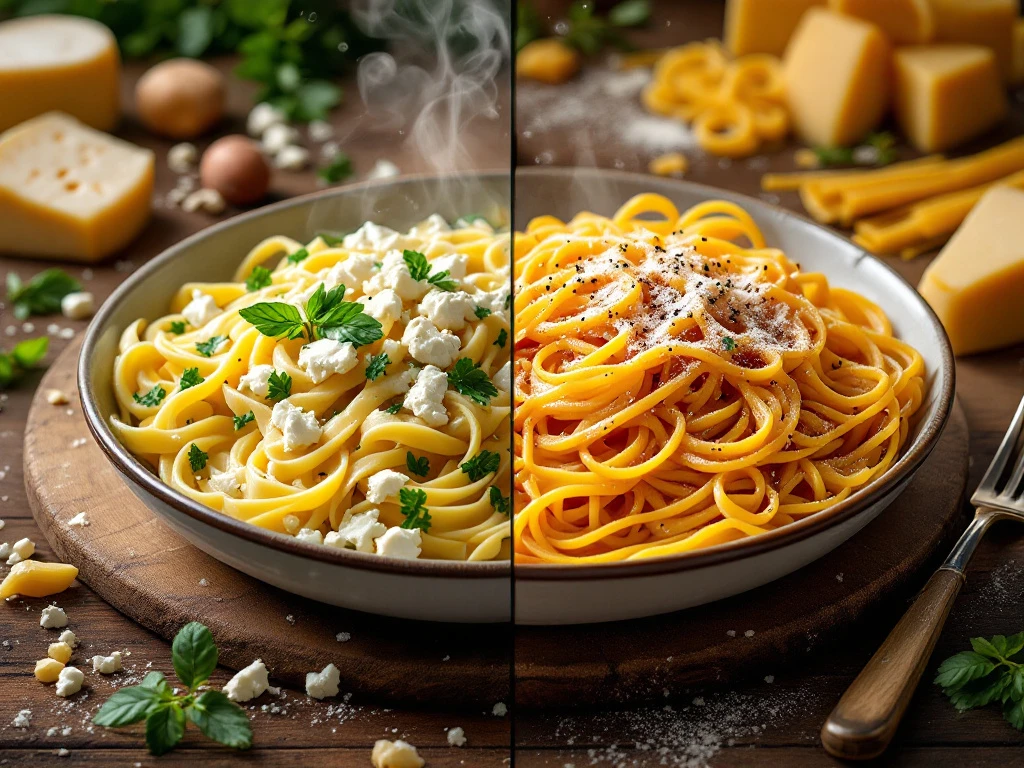
Goat cheese and parmesan create distinctly different pasta experiences due to their contrasting textures, flavours, and melting properties. Goat cheese delivers a creamy, tangy richness that melts into silky sauces, while parmesan adds sharp, nutty complexity with its granular texture that doesn’t fully melt. The choice between these cheeses depends on your desired outcome: goat cheese for creamy, mild dishes or parmesan for bold, traditional Italian flavours.
What makes goat cheese and parmesan different in pasta dishes?
Goat cheese brings a soft, spreadable texture and mild tanginess to pasta, melting smoothly into creamy sauces at lower temperatures. Parmesan offers a hard, aged texture with intense umami flavours, maintaining its granular structure even when heated. These fundamental differences stem from their production methods, with goat cheese being fresh and parmesan aged for months or years.
The protein and fat content variations significantly impact cooking results. Fresh goat cheese contains approximately 16% fat and higher moisture content, creating luxurious, coating sauces. Parmesan’s lower moisture and higher protein concentration means it browns beautifully under heat rather than melting completely, adding textural contrast to dishes.
Temperature sensitivity marks another crucial distinction. Goat cheese requires gentle heat to prevent separation, ideally mixed off-heat with pasta water. Parmesan tolerates higher temperatures, making it perfect for baked pasta dishes or finishing under the grill. This difference allows cooks to achieve completely different textures and presentations depending on their cheese choice.
Which pasta shapes work best with goat cheese versus parmesan?
Goat cheese pairs beautifully with delicate pasta shapes like angel hair, orzo, or filled pastas such as ravioli and tortellini. These lighter shapes complement the cheese’s creamy texture without overwhelming its subtle flavour. Parmesan excels with heartier shapes like rigatoni, penne, or spaghetti that can stand up to its bold taste and provide surfaces for the cheese to cling to.
Short pasta shapes with ridges or curves work particularly well with goat cheese-based sauces, as they capture the creamy mixture in their grooves. Think fusilli, cavatappi, or shells that hold pockets of the smooth sauce. For parmesan, long strands like linguine or fettuccine showcase the cheese’s ability to coat each strand while maintaining distinct texture.
The sauce compatibility differs dramatically between traditional Italian and modern fusion approaches. Goat cheese naturally complements lighter preparations with vegetables, herbs, and white wine reductions. Parmesan remains the classic choice for robust tomato sauces, pestos, and olive oil-based dishes where its sharp flavour can shine through stronger ingredients.
How do you properly melt goat cheese in pasta without clumping?
Successfully melting goat cheese requires removing the pasta from direct heat and using reserved pasta water to create a smooth emulsion. Start by adding small pieces of goat cheese to warm (not boiling) pasta, then gradually incorporate pasta water while stirring gently. This technique prevents the proteins from seizing and creates a silky sauce that coats each strand evenly.
Temperature control remains critical throughout the process. Keep your pasta and cooking vessel warm but not hot, aiming for approximately 60-70°C. Add the cheese in stages rather than all at once, allowing each addition to melt before adding more. A wooden spoon works better than metal for gentle stirring that won’t break up the pasta.
Unlike parmesan’s forgiving nature, goat cheese demands patience and proper technique. Reserve at least 250ml of pasta water before draining, as its starch content helps bind the sauce. If clumping occurs, whisk in more pasta water off the heat until smooth. Adding a splash of cream or butter can also help stabilise the emulsion for consistently creamy results.
What are the best flavor combinations for goat cheese pasta dishes?
Goat cheese harmonises beautifully with Mediterranean herbs like basil, thyme, and oregano, while vegetables such as roasted red peppers, sun-dried tomatoes, and spinach enhance its creamy tanginess. Honey-infused goat cheese varieties add subtle sweetness that pairs wonderfully with caramelised onions or roasted garlic. These combinations create balanced dishes where the cheese’s mild flavour complements rather than dominates.
Protein pairings for goat cheese pasta include grilled chicken, prawns, or crispy pancetta, which add textural contrast to the creamy sauce. Nuts like toasted pine nuts or walnuts provide crunch while echoing the cheese’s earthy undertones. Fresh herbs stirred in at the last moment brighten the entire dish.
This contrasts sharply with classic parmesan pairings like robust Italian sausage, anchovies, or bresaola. Where parmesan stands up to bold flavours, goat cheese requires gentler companions. Consider adding lemon zest, white wine, or light vegetable broths to goat cheese sauces rather than the red wine reductions or heavy cream typical in parmesan-based dishes.
Can you substitute goat cheese for parmesan in traditional recipes?
Substituting goat cheese for parmesan works selectively, succeeding best in cream-based sauces like alfredo where the creamy texture enhances rather than detracts. However, classic dishes like carbonara or cacio e pepe rely on parmesan’s specific melting properties and sharp flavour, making substitution challenging. The key lies in understanding each recipe’s core requirements and adjusting techniques accordingly.
When making the swap, reduce cooking temperatures and add goat cheese off-heat to prevent curdling. Increase the cheese quantity by approximately 25% to compensate for goat cheese’s milder flavour. Consider adding a touch of lemon juice or white wine vinegar to replicate parmesan’s sharp notes, though the texture will remain fundamentally different.
Certain recipes actually benefit from the exchange. Creamy vegetable pastas, lighter summer dishes, and fusion recipes often improve with goat cheese’s delicate profile. Avoid substitution in dishes requiring cheese to crisp or brown, as goat cheese will simply melt. For best results, think of it as creating a new dish inspired by the original rather than a direct replacement.
Understanding these fundamental differences between goat cheese and parmesan empowers you to make informed choices for your pasta dishes. Whether you prefer the creamy elegance of goat cheese or the bold tradition of parmesan, each brings unique qualities that can elevate your cooking. At DeJong Cheese, we specialise in premium goat cheese varieties perfect for creating memorable pasta experiences, from our fresh spreadable options to aged varieties that offer exciting alternatives to traditional Italian cheeses.
Related Articles
- How do you organize a trial delivery of goat cheese crumbles from a new producer?
- How do you recognize a reliable cheese supplier for large-scale production?
- What flavor varieties of goat cheese such as cranberry-cinnamon are popular in the food industry?
- How does goat cheese perform in hot meal applications?
- Is goat cheese good for weight loss?