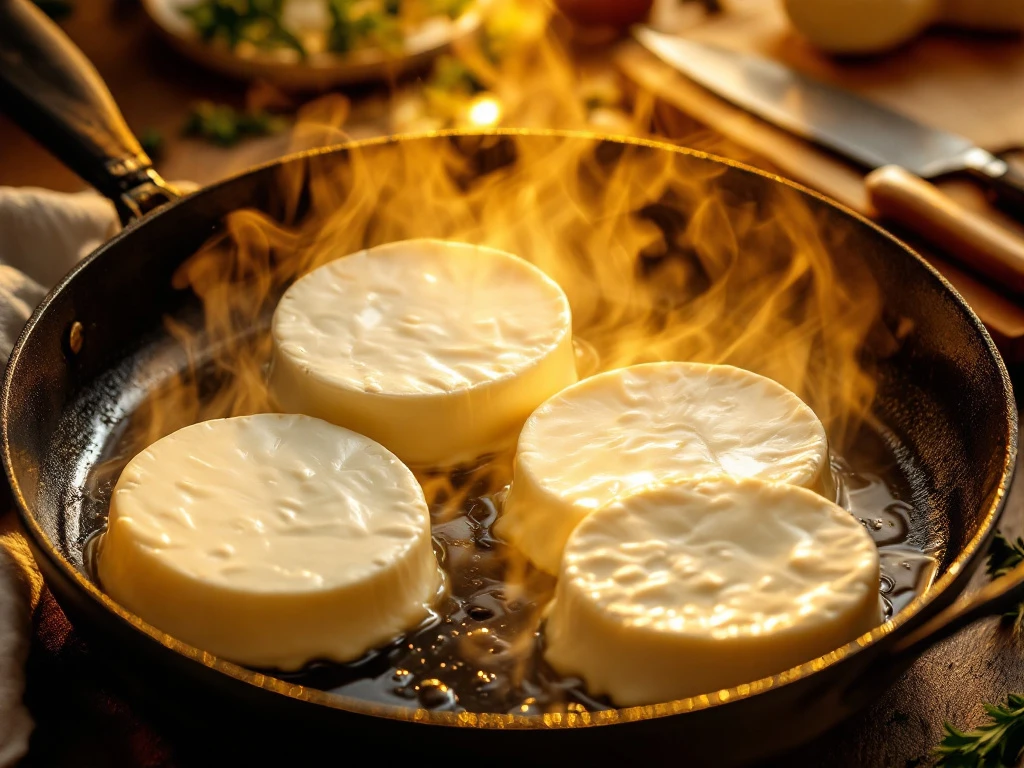
To warm goat cheese the right way, use gentle heat between 70-80°C (160-175°F) for soft types and up to 90°C (195°F) for harder aged cheeses. The important thing is warming slowly to keep the cheese’s creamy texture while avoiding separation or graininess. Whether you use an oven, microwave, or stovetop, watch the temperature carefully and remove from heat once the cheese becomes soft and easy to spread. This guide answers important questions about heating goat cheese for the best results.
What happens to goat cheese when you heat it?
When goat cheese gets hot, its protein structure becomes loose and fat molecules start to melt, making a softer, more spreadable texture. Fresh goat cheese with more moisture becomes creamy and flowing, while aged types develop a more elastic feel. The proteins unfold slowly, helping the cheese keep its shape better than many cow’s milk cheeses.
The change depends a lot on the cheese’s age and moisture content. Fresh goat cheese like our Alphenaer spreads contains around 60-70% moisture, making it melt into a smooth, sauce-like texture. As heat increases, water disappears and proteins contract, which can cause separation if it gets too hot. Ripened goat cheeses with less moisture tend to soften without completely turning liquid, making them perfect for grilling or baking.
The pH level of goat cheese, usually between 4.5-5.5, affects how it responds to heat. This acidity helps keep structure during warming, preventing the stringy melt common in other cheeses. However, too much heat above 95°C (203°F) makes proteins seize and oils separate, creating a grainy, unpleasant texture that cannot be fixed.
What’s the best temperature for warming goat cheese?
The best temperature for warming goat cheese is from 70-80°C (160-175°F) for soft varieties and up to 90°C (195°F) for firmer aged cheeses. These temperatures make sure the cheese becomes nicely warm and spreadable without breaking down its delicate structure. Fresh goat cheese spreads and crumbles work best at the lower end of this range.
Different warming methods need specific temperature changes. For keeping a creamy texture in fresh goat cheese, keep temperatures below 75°C (167°F). This range lets the cheese soften slowly while keeping its smooth consistency. When you want a golden-brown surface on baked goat cheese, brief exposure to 180-200°C (355-390°F) creates nice browning without overheating the inside.
Temperature control becomes important for different cooking uses. Sauce preparations need steady heat around 65-70°C (150-160°F) to mix goat cheese smoothly into liquids. For gratins or baked dishes, keep oven temperatures at 160-175°C (320-350°F) to warm the cheese completely without causing separation. Always let cold goat cheese reach room temperature before heating for more even warming.
How do you warm goat cheese in the oven?
To warm goat cheese in the oven, heat to 200°C (392°F) and place the cheese in an oven-safe dish for 8-12 minutes until soft and slightly golden. Cover the dish with foil for the first half of warming to prevent moisture loss, then remove for light browning. Fresh goat cheese rolls or slices warm nicely when covered with olive oil and herbs.
Preparation makes results much better. Score the top of firmer goat cheese rounds to let heat get in and create nice presentation. Place cheese pieces in individual small dishes or a shallow baking dish, leaving space between pieces for even heating. Adding a tablespoon of cream or milk helps keep moisture in drier aged varieties.
The water bath method gives gentler, more controlled warming. Place your goat cheese dish inside a larger pan filled with hot water reaching halfway up the sides. This technique keeps steady temperature around 70°C (160°F), perfect for delicate fresh varieties. Bake for 15-20 minutes, checking texture every 5 minutes. This method works very well for our Alphenaer spreadable varieties, making sure of silky smooth results.
Can you microwave goat cheese safely?
Yes, you can safely microwave goat cheese using 50% power in 15-20 second intervals, stirring between each heating cycle. This method works best for softening small portions quickly or preparing cheese for spreading. Always use microwave-safe containers and avoid metal packaging or foil wrapping.
Proper technique prevents common microwave heating problems. Remove cheese from original packaging and place in a microwave-safe bowl with high sides to contain any melting. For 100g portions, start with 15 seconds at medium power, then stir gently. Fresh goat cheese crumbles benefit from a sprinkle of water before heating to keep moisture. Continue heating in 10-second bursts until reaching desired texture.
Microwave heating suits specific uses better than others. It works great for quickly softening cheese for dips or spreads but is less ideal for dishes needing even browning or crispy surfaces. Avoid microwaving aged goat cheese logs or thick portions, as uneven heating creates hot spots that cause separation. For best results with products like our fresh goat cheese pearls, use conventional heating methods that give more controlled temperature distribution.
Which dishes work best with warmed goat cheese?
Warmed goat cheese works great in salads, where it provides creamy contrast to crisp greens and tangy dressings. Classic uses include goat cheese crostini, where warming changes firm cheese into luxurious spreads, and stuffed vegetables that show the cheese’s melting properties. Pasta dishes benefit from stirred-in warm goat cheese creating instant creamy sauces.
Main courses featuring warmed goat cheese range from elegant to rustic. Baked goat cheese on top of grilled meats adds richness without overwhelming delicate flavours. Pizza and flatbreads show how warmed goat cheese keeps distinct flavour while other cheeses might overpower. Our Alphenaer brie-style varieties work beautifully in puff pastry parcels, creating impressive appetizers with minimal effort.
Texture considerations guide dish selection for best results. Fresh, spreadable varieties suit dishes needing smooth integration like soups, risottos, and cream sauces. Firmer aged cheeses work better in applications needing distinct pieces, such as tart toppings or gratins. Honey-flavoured varieties pair very well with roasted vegetables and fruit-based desserts. Consider moisture content when planning dishes – high-moisture fresh cheeses contribute creaminess, while aged varieties add concentrated flavour without excess liquid.
Understanding proper warming techniques changes goat cheese from simple ingredient to culinary star. Whether creating elegant appetizers or comforting main dishes, controlling temperature and timing ensures perfect results. At DeJong Cheese, we craft our Alphenaer range specifically to perform beautifully when warmed, maintaining the traditional quality and flavour our family business has perfected since 1995. Explore our varieties to discover which warming applications suit your culinary needs best.
Related Articles
- What types of partnerships exist between product developers and cheese producers?
- How does the aging process of aged goat cheese influence the flavor in a final product?
- What references do you request from a producer of industrial goat cheese?
- What does a factory audit reveal about the reliability of a cheese producer?
- How can goat cheese be applied in savoury pastry fillings?