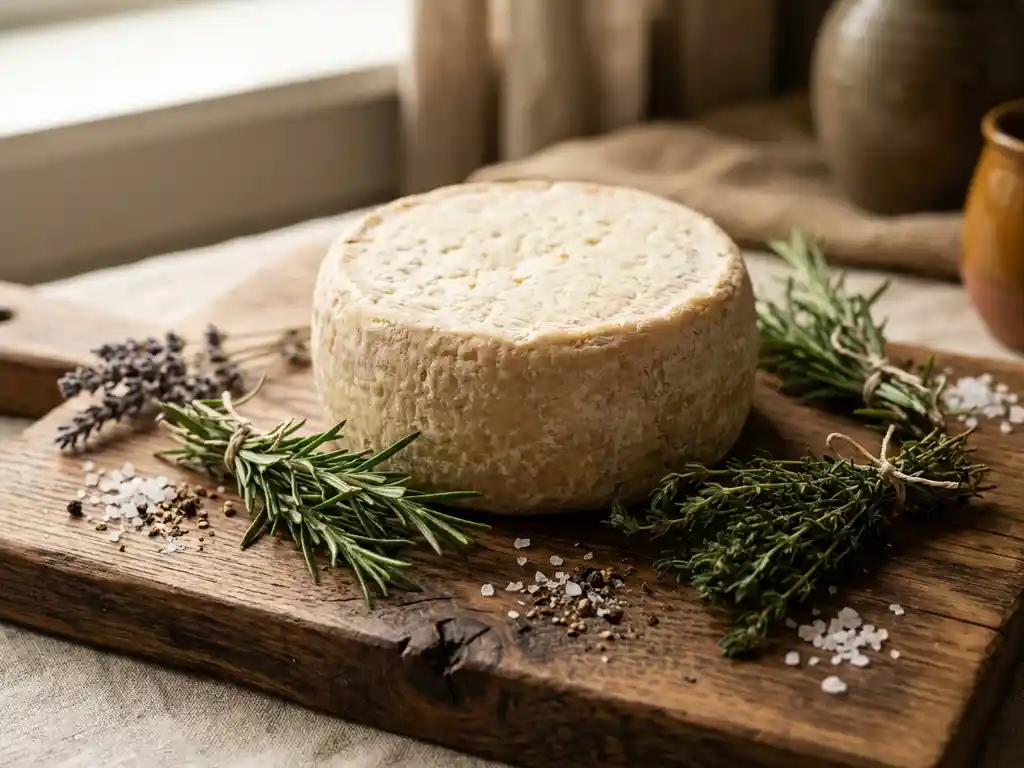
The herb blends that best bring out the flavor of Alphenaer goat cheese are Mediterranean herbs like thyme, rosemary, and oregano. More delicate combinations with chives, tarragon, and lemon zest also work great. The slightly tangy, creamy base of goat cheese pairs well with both fresh and earthy herb profiles, depending on how aged the cheese is and how you use it. In this article, we answer the most common questions about flavor pairings, uses, and custom options for goat cheese with herbs.
Which flavors naturally pair well with goat cheese?
Goat cheese has a naturally tangy, creamy flavor with subtle earthy notes that come from the goat’s milk itself. This flavor base works best with herbs and ingredients that either boost its freshness or offer a warm, earthy contrast. Think lemon, honey, nuts, fresh herbs, and mildly bitter greens like arugula or endive.
The acidity in goat cheese keeps rich or sweet flavors in balance. That’s why combinations with figs, walnuts, or honey work surprisingly well alongside the cheese, while bold elements like black pepper or chili flakes highlight its creaminess. For product developers working with premium ingredients, this broad flavor profile leaves plenty of room for creative concepts.
Which herb blends work best with fresh goat cheese?
Fresh goat cheese pairs best with light, fresh herb blends. Its soft texture and mild flavor call for herbs that support its freshness without overpowering it. The most effective combinations are built around chives, parsley, tarragon, and lemon thyme.
- Chives and parsley: a classic combination that supports the creaminess of fresh goat cheese
- Tarragon and lemon zest: adds an anise-like freshness that works well in salads and appetizers
- Dill and capers: popular in Scandinavian-inspired applications and on crackers or bread
- Mint and cucumber: a refreshing profile that suits light summer dishes
In the retail market, fresh goat cheeses with chives or Provençal herbs are proven bestsellers. These combinations are familiar to consumers and make it easy for them to buy again.
Which herbs pair well with aged Alphenaer goat cheese specialties?
Aged goat cheese has a more intense, complex flavor than fresh varieties and calls for herbs with more character. Earthy, aromatic herbs like rosemary, thyme, oregano, and sage enhance the deep umami flavor of aged goat cheese specialties without overwhelming them.
Beyond classic Mediterranean herbs, some more unexpected combinations also work well with aged goat cheese:
- Smoked paprika: adds warmth and depth, and pairs beautifully with aged cheese on a cheese board
- Fennel seed: its mildly sweet, anise-like flavor complements the sharpness of mature goat cheese
- Black pepper and juniper berry: a classic combination for herb crusts on aged cheese specialties
- Lavender and thyme: a Provençal combination that works well in premium retail and foodservice concepts
We produce our Alphenaer goat cheese specialties using traditional recipes, which means our aging processes are stable and consistent. That’s a key advantage for buyers who need reliable flavor profiles across multiple deliveries.
How do herbs affect the melting behavior of goat cheese in heated applications?
Herbs affect the melting behavior of goat cheese in two indirect but important ways: through their moisture content and their fat-binding properties. Fresh herbs with high moisture content, like basil or fresh parsley, can make melted goat cheese slightly looser in texture. Dried herbs have little to no effect on melting behavior itself.
For heated applications like pizza, quiche, or ready meals, the melting behavior of the goat cheese itself is the most important factor. Goat cheese melts differently than cow’s milk cheese — it becomes softer and creamier but holds its structure better. This makes it a great choice for applications where you don’t want the cheese to spread too much.
Buyers in the food industry working with heated applications are best served by dried herb blends applied either before or after the production process, depending on the desired result. Herbs added before heating give more integrated flavor. Herbs added after heating give a fresher, more pronounced herb profile.
Which herb combinations align with current food trends?
In 2026, several clear flavor trends are shaping the food industry — and they pair naturally with herbed goat cheese. Truffle, fermented ingredients, North African spices, and wild plants are high on the agenda for product developers and chefs working with premium cheese concepts.
- Truffle and thyme: a luxurious combination that taps into the growing demand for premium, umami-rich products
- Harissa and mint: a North African-inspired profile that works well in wraps, dips, and street food concepts
- Red onion and rosemary: a sweet-earthy profile that’s popular in charcuterie and cheese board combinations
- Wild herbs and edible flowers: in line with the foraging and natural food trend
- Yuzu and shiso: Japanese influences that work well in fusion concepts and premium retail
For product developers working on innovative concepts, goat cheese offers a versatile base. Its neutral yet distinctive flavor lets trendy ingredients shine without the cheese fading into the background. Through our foodservice solutions, we regularly take part in this kind of innovative product development.
Can Alphenaer goat cheese be custom-produced with specific herb blends?
Yes, we also produce Alphenaer goat cheese with custom herb blends for clients in retail, foodservice, and the food industry. Custom work in herb composition, fat content, texture, and packaging is one of our core activities as a specialized goat cheese producer.
For private label productions and client-specific concepts, we work closely with buyers and product developers to create a cheese specialty that fits the intended application perfectly. We take technical specifications into account, including melting behavior, shelf life, and food safety guidelines.
How DeJong Cheese helps with herb blends for goat cheese
As a family business with over thirty years of experience in goat cheese specialties, DeJong Cheese offers practical solutions for buyers and product developers looking for the right herb blends for their product. We actively contribute to the development process and deliver consistent quality at volume.
What we offer for clients working with goat cheese and herbs:
- Custom herb blends: we work with you to develop the ideal herb composition for your product
- Private label production: Alphenaer goat cheese specialties under your own brand, including herb varieties
- Technical support: advice on melting behavior, shelf life, and application options in heated products
- Consistent delivery: fixed specifications and reliable supply for industrial production lines
- Flexible collaboration: from small product development samples to large volumes for retail chains
Want to know which herb blends work best for your specific application, or curious about the options for custom goat cheese specialties? Get in touch with us and we’ll be happy to explore the possibilities together.
Frequently Asked Questions
How long does the herb flavor last in goat cheese during its shelf life?
The flavor intensity of herbs in goat cheese gradually increases during the shelf life as the herbs continue to integrate into the cheese matrix. Dried herbs are more stable in this regard than fresh herbs, which can discolor or develop a bitter aftertaste over time. For products with a longer shelf life, we recommend using dried or oil-preserved herb blends and validating this through shelf life testing on the final product.
Are there herbs that simply don't work with goat cheese?
Yes, some herbs clash with the characteristic tangy and creamy flavor of goat cheese. Very dominant herbs like raw garlic in large quantities, curry, or star anise can completely overpower the subtle milky notes and result in an unbalanced flavor profile. Herbs with a high tannin content, such as sage in large doses, can also affect the protein structure of fresh goat cheese and negatively impact its texture.
What is the difference between adding herbs before or after the aging process?
Herbs added before or during the aging process integrate more deeply into the cheese structure and produce a subtle, layered flavor profile. Herbs applied after aging — for example as an herb crust or surface treatment — create a bold, immediately recognizable herb flavor from the first bite. The choice depends on the desired end result: for a refined and complex profile, add herbs early; for a visually appealing and aromatic product, go with an herb crust.
As a buyer, how can I validate the right herb blend before moving to large-scale production?
The validation process ideally starts with a small product development sample where different herb concentrations and combinations are tested for flavor, texture, shelf life, and visual presentation. At DeJong Cheese, we guide you through this process step by step — from the first trial batch to locking in fixed product specifications for series production. We also recommend scheduling sensory panel tests and, if needed, consumer research before finalizing a herb blend for a retail concept.
Which herb blends work best for international export markets?
For export markets, it’s important to consider regional flavor preferences and any regulations around permitted herbs and additives per country. Mediterranean herb blends like thyme, rosemary, and oregano are widely accepted in Western Europe and North America, while North African or Asian-inspired combinations are a better fit for emerging markets in the Middle East or Southeast Asia. We always advise export-focused clients to verify labeling requirements and permitted ingredient lists for each target market in advance.
As a small foodservice buyer, can I also access custom options, or is that only for large volumes?
Custom work isn’t exclusive to large-scale buyers. Smaller foodservice clients are also welcome to explore client-specific herb varieties with us, though minimum order quantities per concept may vary. For smaller volumes, we often work with a selection of existing herb profiles that can be lightly adjusted to your preferences. Reach out to our team to discuss the options and minimum order sizes for your specific situation.
What is the best way to store herbed goat cheese to prevent flavor loss?
Store herbed goat cheese in the refrigerator at a temperature between 39 and 45°F, preferably in its original packaging or sealed airtight to prevent it from drying out and to avoid flavor transfer to other products. Fresh herb varieties are more sensitive to temperature fluctuations than aged varieties with dried herbs and generally have a shorter shelf life. Once opened, consume the cheese within three to five days for the best flavor.
Related Articles
- How do you test a new goat cheese concept with a small test group?
- What are the key contract points in a supplier agreement for goat cheese?
- What are the advantages of goat cheese over cow cheese in industrial pizza applications?
- How to warm goat cheese properly?
- What is the difference between fresh and aged goat cheese?