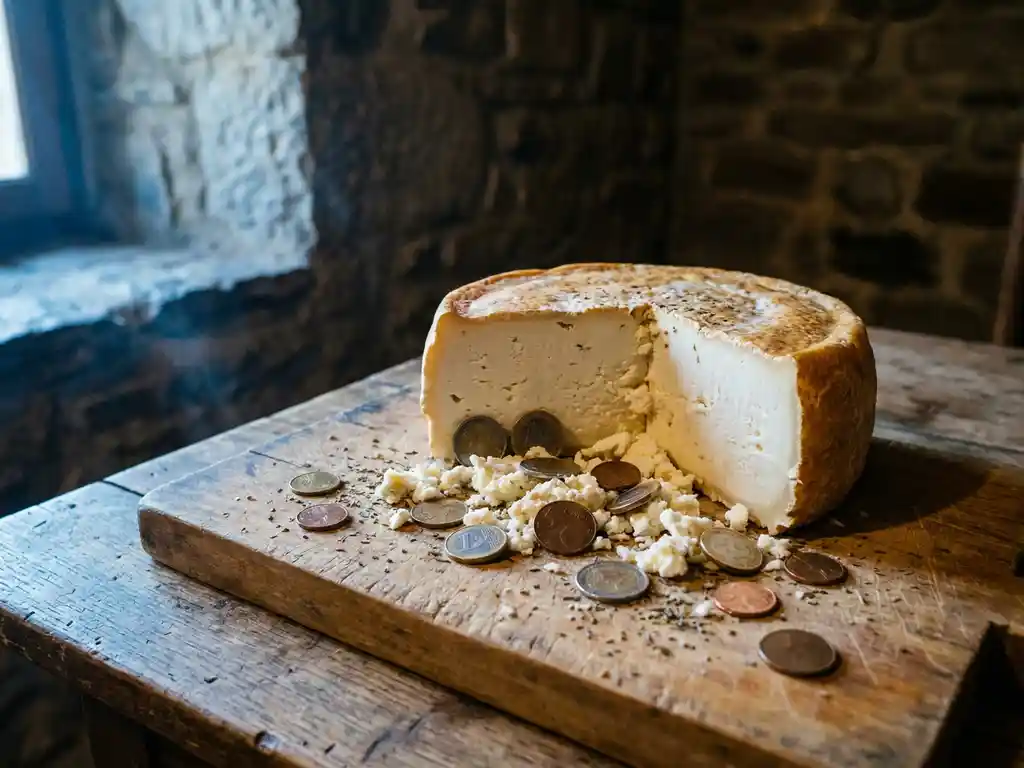
The hidden costs of switching cheese suppliers are much larger than most buyers expect. Beyond any price differences, there are costs for requalification, product testing, administrative updates, and production disruptions. Together, these can quickly add up to several months of extra workload and real financial damage. This article covers the most underestimated cost factors, so you can make a well-informed decision.
Which costs are most underestimated when switching suppliers?
The most underestimated costs when switching cheese suppliers are the indirect ones: lost production time, internal hours spent on evaluation and onboarding, and the temporary quality fluctuations that occur while a new supplier gets up to speed. Many buyers only compare the purchase price, but the true cost of switching suppliers is much higher.
Here are the specific cost factors that food industry companies regularly underestimate:
- Internal time costs: Evaluating, selecting, and onboarding a new supplier takes employees dozens of hours — hours that are not spent on core business activities.
- Production tests and trial runs: Before a new cheese is added to a production line, multiple test runs are needed. Failed batches are rarely included in the initial cost estimate.
- Recipe or process adjustments: A new cheese supplier often delivers a product with slightly different properties, which may require changes to processing methods or recipes.
- Relationship value: An existing supplier relationship has real value. The built-up knowledge, mutual understanding, and flexibility in exceptional situations are hard to quantify — but they disappear when you switch.
For buyers in the food industry, switching suppliers rarely turns out to be neutral in the first year. The time investment alone justifies a thorough cost-benefit analysis before any decision is made.
What are the costs of requalifying a new cheese supplier?
Requalifying a new cheese supplier means going through the full approval process again: audits, sampling, lab testing, taste panels, and technical evaluations. In the food industry, this process typically takes several weeks to months and brings direct costs for both the buyer and the supplier.
For cheese products used in industrial applications, the qualification requirements are especially specific. Think about establishing:
- Fat content and moisture content per batch
- Melting behavior and heat resistance for processing applications such as pizza or hot dishes
- Microbiological specifications and shelf life profile
- Consistency across multiple deliveries, not just a single sample
On top of lab costs, there are also the costs of failed production runs during the testing phase. If a new cheese behaves differently on the production line than expected, it leads to waste, rework, or in the worst case, rejection of an entire batch. These costs are rarely factored in upfront, but they can be significant.
How does inconsistent cheese quality affect production costs?
Inconsistent cheese quality directly increases production costs. Processes need more frequent adjustments, waste goes up, and the quality of the end product becomes less predictable. For producers of pizzas, ready meals, or other processed products, consistent cheese quality is not a luxury — it is a basic requirement for a stable production line.
The impact of quality fluctuations is wide-ranging and affects multiple parts of production:
- Process settings: Variations in fat or moisture content require adjustments to melting or processing temperatures, which takes extra time and expertise.
- Waste and rework: Cheese that falls outside specifications leads to production waste. Rework is costly and disrupts planning.
- Complaints and returns: If the end product deviates from the standard due to quality fluctuations, the risk of complaints from retail or foodservice increases — bringing reputational damage and direct financial costs.
- Extra quality checks: With an unreliable supplier, internal QC teams need to inspect more often, requiring additional staff time.
A supplier that guarantees consistent specifications with every delivery saves a producer money not only on direct production costs, but also on the indirect costs of inspection, correction, and communication.
What administrative and compliance costs come with a new cheese supplier?
Switching to a new cheese supplier brings significant administrative and compliance costs. These include updating product files, requesting and reviewing certifications, adjusting labeling, and revising HACCP documentation. In regulated sectors like the food industry, these costs are mandatory and non-negotiable.
Here are the specific administrative requirements involved:
- Supplier audit: Many companies are required to audit new suppliers on food safety, hygiene standards, and traceability. This takes time and sometimes involves external audit costs.
- Certification documentation: Think BRC, IFS, FSSC 22000, or organic certifications. All of these documents need to be requested, reviewed, and filed.
- Labeling changes: If the origin or composition of the cheese changes, ingredient lists and allergen information must be updated. This requires approval and reprinting of packaging.
- System updates: ERP and purchasing systems need to be updated with new supplier data, product codes, and specifications.
Compliance errors during a supplier switch can lead to fines, product recalls, or problems during retail chain audits. It is wise to factor in the full administrative lead time before making a switch decision.
When is switching to a different cheese supplier the right choice?
Switching to a different cheese supplier is the right choice when your current supplier consistently fails to meet quality or delivery agreements, when there is no path to improvement, or when the strategic direction of your product development requires different ingredients or more flexibility. The decision should be based on facts, not on one-off frustrations.
There are situations where the costs of switching outweigh the costs of staying:
- Ongoing quality problems: If a supplier repeatedly delivers outside specifications and shows no structural improvement, the long-term cost of production disruptions is greater than the one-time cost of switching.
- Delivery reliability: Supply chain disruptions that keep coming back and halt production justify looking for a more stable partner.
- Product development: If you want to develop new products with specific cheese types or custom ingredients, and your current supplier cannot offer that flexibility, a switch makes strategic sense.
- Price increases without added value: Rising purchase prices are acceptable when they come with quality and service. Price increases with flat or declining performance are a signal to explore the market.
A good rule of thumb: base the decision on a total cost analysis covering at least twelve months, including all the hidden costs described in this article. Only then is a fair comparison possible.
How we at DeJong Cheese help minimize the costs of switching suppliers
If you are considering switching cheese suppliers — or wondering whether it is worth it — we understand as a family business with years of experience exactly what concerns come with that decision. At DeJong Cheese, we focus on consistent quality, reliable delivery, and a personal working relationship that keeps the hidden costs of switching suppliers as low as possible.
Here is what we offer in practice:
- Consistent specifications with every delivery, so your production line stays stable and quality checks do not become a burden
- Complete certification documentation available, including traceability and food safety certificates, for a smooth onboarding process
- Flexibility in product development, from standard goat cheese specialties to custom solutions for foodservice and industrial applications
- Personal contact with dedicated points of contact who know your production line and needs
- Delivery reliability built over decades, with a proven track record of supplying international customers
- Solutions for both retail and industrial applications, under your own brand or private label
Want to find out if working with us fits your needs — without the hidden costs of an uncertain switch? Get in touch with us and we will be happy to think along with you, no strings attached.
Frequently Asked Questions
How long does it typically take before a new cheese supplier is fully operational in our production line?
Fully onboarding a new cheese supplier in the food industry typically takes three to six months, depending on the complexity of your production processes and the required certifications. Plan for a qualification phase of four to eight weeks, followed by a startup period in which processes are fine-tuned and employees get familiar with the new product. It is wise to factor this lead time into your planning and only phase out the existing supplier once the new one has been fully validated.
What is the best way to build a total cost of ownership (TCO) analysis for a supplier switch?
A reliable TCO analysis for a supplier switch covers at least four cost categories: direct purchase costs, internal time costs (evaluation, onboarding, system changes), qualification and testing costs (lab costs, trial runs, failed batches), and compliance costs (audits, certifications, label changes). Add to this the indirect risks, such as potential production disruptions and quality fluctuations during the first delivery period. Compare this total over a period of at least twelve months against the expected savings or added value of the new supplier.
How can I detect quality fluctuations from a new cheese supplier as early as possible?
Set clear, measurable specifications upfront for every relevant quality parameter — such as fat content, moisture content, melting behavior, and microbiological profile — and require the supplier to provide a Certificate of Analysis (CoA) with every delivery. Always verify the first three to five deliveries internally with your own lab checks, even if the CoA looks correct, so you build a reliable picture of consistency over time. Put deviation protocols in the contract, including who is responsible for the costs of batches that fall outside specifications.
What contractual agreements are essential to limit hidden costs when switching suppliers?
At a minimum, make sure your contract includes specification guarantees per delivery with a corresponding CoA requirement, a clear liability clause for non-conforming batches, and an agreed response and resolution time for quality or delivery issues. Also specify which certifications the supplier must actively maintain throughout the partnership, and within what timeframe they must notify you of changes in product composition or origin. This prevents compliance issues — such as mandatory label changes — from coming as a surprise and landing on your tab.
Is it useful to work with two cheese suppliers at the same time during a transition period?
Yes, a parallel supplier strategy during the transition period is in many cases the lowest-risk approach. By gradually scaling up the new supplier — for example, starting with just one product line or SKU — while the existing supplier continues to cover the remaining volumes, you limit the impact of any quality or delivery issues on your total production. The downside is that you temporarily have higher administrative workloads and may be ordering smaller volumes from both parties, but for most producers this is worth it compared to the risk of a full immediate switch.
How do I handle resistance from production staff when switching to a new cheese supplier?
Resistance on the production floor during a supplier switch is often underestimated, but it is a real factor that can slow down onboarding. Involve production and QC employees early in the process by having them take part in taste panels and test runs, so they feel a sense of ownership over the decision. Also communicate clearly about why the switch is happening and what will specifically change in their day-to-day work, including any adjustments to process settings or recipes.
When does it make sense to bring in an external party to help select a new cheese supplier?
Bringing in an external purchasing or quality consultant makes sense when your organization does not have enough internal capacity or expertise to carry out a thorough supplier evaluation, or when the ingredient is strategically critical and a wrong choice could have major financial consequences. An external party can also be valuable for international sourcing projects, where knowledge of local certification requirements, logistics, and market pricing is lacking. The cost of external guidance is generally modest compared to the risks of a poorly supported supplier decision.