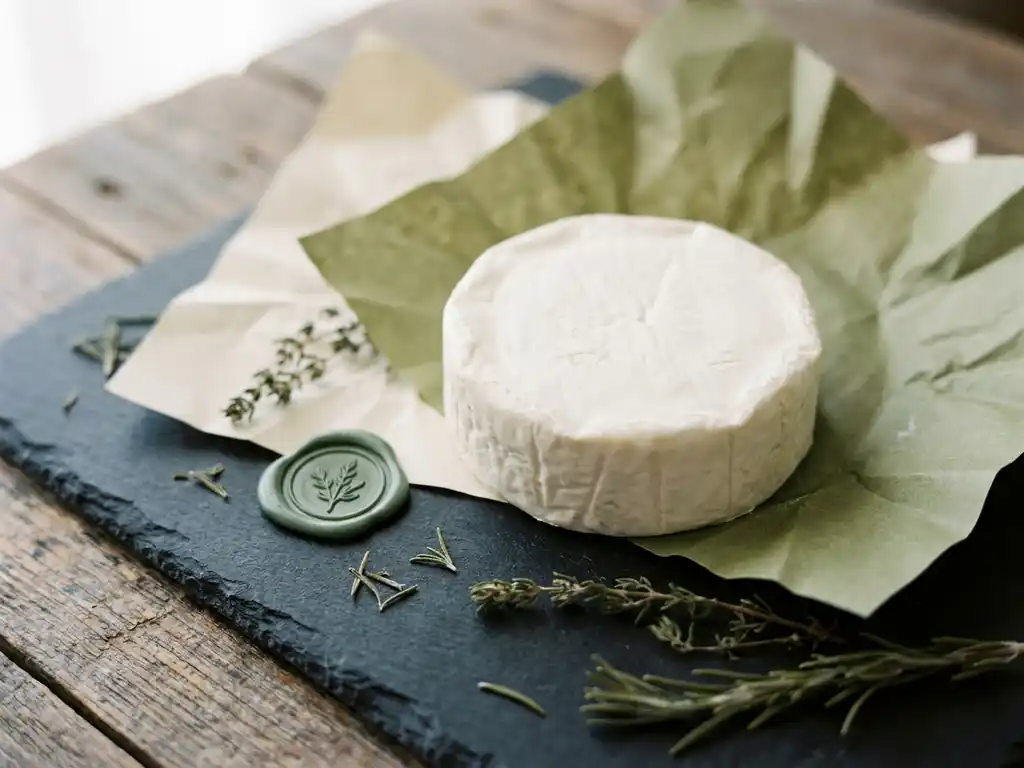
The best packaging innovations for premium goat cheese products combine functionality with brand experience. Think modified atmosphere packaging for optimal shelf life, sustainable materials that match consumer expectations, and clean packaging design that reinforces premium positioning. In this article, we answer the most common questions about packaging choices for goat cheese — from retail formats to foodservice solutions.
Which packaging formats work best for premium goat cheese?
The best packaging formats for premium goat cheese are vacuum packs, trays with sealed film, and wooden or cardboard boxes. The right format depends on the type of goat cheese, the sales channel, and the experience you want to create for the consumer. Fresh goat cheese needs a different package than an aged specialty.
For fresh and soft goat cheese varieties, trays with a clear or printed lidding film are a popular choice in retail. Consumers can see the product, which builds trust and encourages purchase. Vacuum packaging works better for aged varieties, as it protects the cheese from drying out and oxidation without affecting the texture.
Smaller portion packs — such as individual rolls or blocks of 100 to 150 grams — do well with consumers who eat mindfully and like variety. Larger formats, such as 1 kg or bulk packs, make more sense for foodservice and industrial use. Choosing the right format is a direct reflection of your target audience and distribution strategy.
How does modified atmosphere packaging extend the shelf life of goat cheese?
Modified atmosphere packaging, or MAP, extends the shelf life of goat cheese by replacing the air inside the package with a specific gas mixture — usually a combination of carbon dioxide and nitrogen. Carbon dioxide slows the growth of bacteria and mold, while nitrogen keeps the package firm and prevents oxidation.
For soft goat cheese, the balance between the gases is critical. Too much carbon dioxide can negatively affect the texture and flavor, while too little provides insufficient protection. Cheese producers therefore fine-tune the gas mixture based on the specific fat content, moisture level, and microbiological properties of the product.
In practice, MAP can extend the shelf life of fresh goat cheese from a few days to several weeks, depending on storage temperature and the quality of the packaging seal. This makes modified atmosphere packaging especially valuable for export markets where longer transport times apply.
What are the sustainable packaging alternatives for cheese producers?
Sustainable packaging alternatives for cheese producers include recyclable monomaterials, compostable bio-based films, and reduced packaging that uses less material overall. Choosing a sustainable cheese package requires a balance between environmental performance, food safety, and cost.
The most widely used sustainable approach in 2026 is the shift to monomaterials — packaging made from a single type of plastic, which makes it much easier to recycle. Traditional cheese films combine multiple material layers, which complicates recycling. Monomaterial alternatives now achieve comparable barrier properties and are technically suitable for goat cheese.
Compostable packaging is another option, but it has practical limitations. It requires industrial composting facilities and is not always suitable for high-moisture products like fresh goat cheese. Paper-based packaging — with or without a thin barrier layer — offers a recognizable, premium look and is popular with artisanal and organic cheese brands.
Minimalist packaging — using less material without compromising protection — is also an effective strategy. Thinner film, smaller labels, and optimized trays all reduce environmental impact without requiring major investment.
What labeling information is required on goat cheese for the EU market?
Goat cheese sold on the EU market must include the following information by law: the name of the food, the ingredient list, allergen information, the net quantity, the best-before or use-by date, storage instructions, the name and address of the producer or importer, the country of origin, and the nutrition declaration.
Cheese is also subject to specific rules under European dairy regulations. The product name must state the animal species when the cheese is not made from cow’s milk — so “goat cheese” must be clearly identified as such. Protected designations such as AOC or PDO come with additional labeling requirements.
Allergen information is mandatory for milk and milk derivatives, which are classified as major allergens. This must be clearly legible and cannot appear only on a separate leaflet. Producers exporting to multiple EU countries often choose multilingual labels to meet all national requirements.
The nutrition declaration must be shown per 100 grams or 100 ml and must include at minimum: energy, fat, saturated fat, carbohydrates, sugars, protein, and salt. A serving size indication may be added but does not replace the per-100-gram declaration.
How does packaging design influence the premium perception of goat cheese?
Packaging design has a strong influence on the premium perception of goat cheese through color use, material feel, typography, and the level of transparency. Consumers judge quality and value largely based on visual and tactile cues — before they even taste the product.
White, cream, and natural tones are consistently associated with purity, craftsmanship, and dairy. Gold accents and clean, minimalist typography reinforce a premium look. Consumers tend to perceive matte packaging as higher-priced and better quality than glossy versions — even when the product inside is identical.
Transparent windows in the packaging that let consumers see the cheese build trust and lower the barrier to purchase. This works especially well for fresh goat cheese, where the white color and texture are distinctive quality signals. Making the product visible partly replaces the role that a tasting at a cheese shop would play.
Storytelling on the packaging — such as a brief reference to the origin, the craft, or the production method — adds value for consumers who make conscious choices. A mention like “traditionally made” or “family business” strengthens the perception of authenticity and justifies a higher price in the consumer’s eyes.
Which packaging solutions are suitable for goat cheese in foodservice and industry?
For goat cheese in foodservice and industrial settings, bulk packaging, vacuum bags in larger weight classes, and resealable tubs or containers are the most suitable solutions. The focus is on functionality, hygiene, and efficiency in the supply chain — not on the consumer experience.
Foodservice buyers — such as restaurants, caterers, and artisanal producers — typically work with packages of 1 to 5 kilograms. Vacuum packaging is the standard here, as it maximizes shelf life and protects the cheese from cross-contamination in professional kitchens. Resealable packaging is a practical addition for products that are not used all at once.
Industrial buyers — such as producers of pizzas, quiches, or ready meals — work with even larger volumes and have additional packaging requirements. Think specific weight tolerances, uniform block sizes for automated processing, and traceability information such as batch numbers and production dates on the outer packaging.
For both channels, packaging must comply with HACCP guidelines and applicable EU food contact materials legislation. Packaging that comes into direct contact with the cheese must not release migrating substances that could compromise food safety. Our goat cheese for foodservice and our retail goat cheese solutions are developed with these requirements as the starting point.
How DeJong Cheese helps with packaging innovations for goat cheese
As a family business with years of experience producing fresh and soft goat cheese specialties under the Alphenaer brand, we know that packaging is more than just a wrapper. It is an extension of the quality we put into every product. We actively think along with you about packaging solutions that fit your specific situation — whether you are sourcing for a production line or developing a new retail concept.
What we offer in the area of packaging innovation:
- Flexible packaging formats for retail, foodservice, and industrial applications
- Private label options with custom packaging design and labeling
- Packaging tailored to export markets, including multilingual labeling
- Technical advice on shelf life, MAP, and storage conditions
- Custom solutions in weight, format, and presentation for specific product concepts
Want to know which packaging solution best fits your product or production line? Get in touch with us and we will be happy to think it through with you.
Frequently Asked Questions
How do I choose the right gas mixture for MAP with different types of goat cheese?
The ideal gas mixture varies by cheese type: for fresh, soft goat cheese, a ratio of 30–40% CO₂ and 60–70% N₂ is commonly used, while aged varieties can sometimes tolerate a higher CO₂ concentration. It is strongly recommended to validate the gas mixture through shelf-life testing in collaboration with your packaging supplier or a food technologist. An incorrect ratio can lead to texture loss, off-flavors, or insufficient microbiological protection.
What are the most common mistakes when designing premium packaging for goat cheese?
A common mistake is overloading the packaging with text and graphic elements, which undermines the premium look — less is often more when positioning in the higher segment. Producers also frequently underestimate the importance of material feel: a cheap-looking film or a flimsy cardboard box damages the brand experience, even if the design itself is strong. Finally, the legibility of mandatory labeling information on small packages is often only checked late in the design process, which can lead to costly reprints.
Can smaller cheese producers also use monomaterial alternatives, or is that only for large players?
Monomaterials are becoming increasingly accessible for smaller producers, partly because packaging suppliers are offering these materials more and more as a standard option alongside traditional multilayer films. Minimum order quantities have decreased in recent years, and some suppliers offer flexible order quantities for artisanal and mid-sized producers. It is wise to have the barrier properties of your chosen monomaterial alternative specifically tested on your product, as performance can vary depending on cheese type and storage conditions.
How do I handle packaging requirements when I want to export goat cheese to countries outside the EU?
Outside the EU, each country has its own labeling rules that may differ from European legislation — think mandatory language requirements, different nutrition label formats, or additional certifications such as Halal or Kosher for certain markets. It is essential to check the local regulations for each export market, preferably through a local importer or a specialized regulatory agency. Multilingual labels or a modular labeling system — where a base package is combined with market-specific stickers — are practical solutions for keeping costs under control.
How long does fresh goat cheese keep in MAP packaging, and what storage conditions are critical?
Fresh goat cheese in well-executed MAP packaging typically has a shelf life of 3 to 6 weeks at a storage temperature of 2–4°C, depending on the specific product and the quality of the packaging seal. The cold chain is the most critical factor: even a brief interruption in refrigeration can affect microbiological stability and significantly shorten shelf life. Make sure the packaging is consumed as quickly as possible after opening, and communicate this clearly on the label with a ‘use within X days of opening’ instruction.
Is private label packaging also worthwhile for smaller retail chains or specialized cheese retailers?
Yes, private label is definitely worthwhile for specialized cheese retailers and smaller retail chains, as it allows them to carry a distinctive brand of their own without investing in production infrastructure. It gives retailers full control over the brand experience — from packaging design to storytelling — which increases customer loyalty and perceived value. Discuss minimum volumes and lead times for private label with your supplier so you can make a realistic assessment of the business case.
Which certifications or quality marks can further strengthen the value of my goat cheese packaging?
Quality marks such as the European PDO/PGI logo (Protected Designation of Origin or Protected Geographical Indication), an organic certificate (EU organic logo), or a sustainability label such as FSC for paper-based packaging visibly strengthen credibility and premium positioning on the package. For export markets, additional certifications such as IFS Food or BRC Global Standards may be relevant, as large international retailers are increasingly requiring these from their suppliers. Make sure that every quality mark you use is genuinely certified and up to date — incorrect use of quality marks can lead to legal and reputational risks.
Related Articles
- How do you set up a supplier evaluation form for goat cheese?
- What role does texture play in choosing goat cheese for snack concepts?
- Why is goat cheese popular in premium pizza concepts?
- What are traceability requirements for goat cheese?
- How to portion and slice goat cheese efficiently in a professional kitchen?