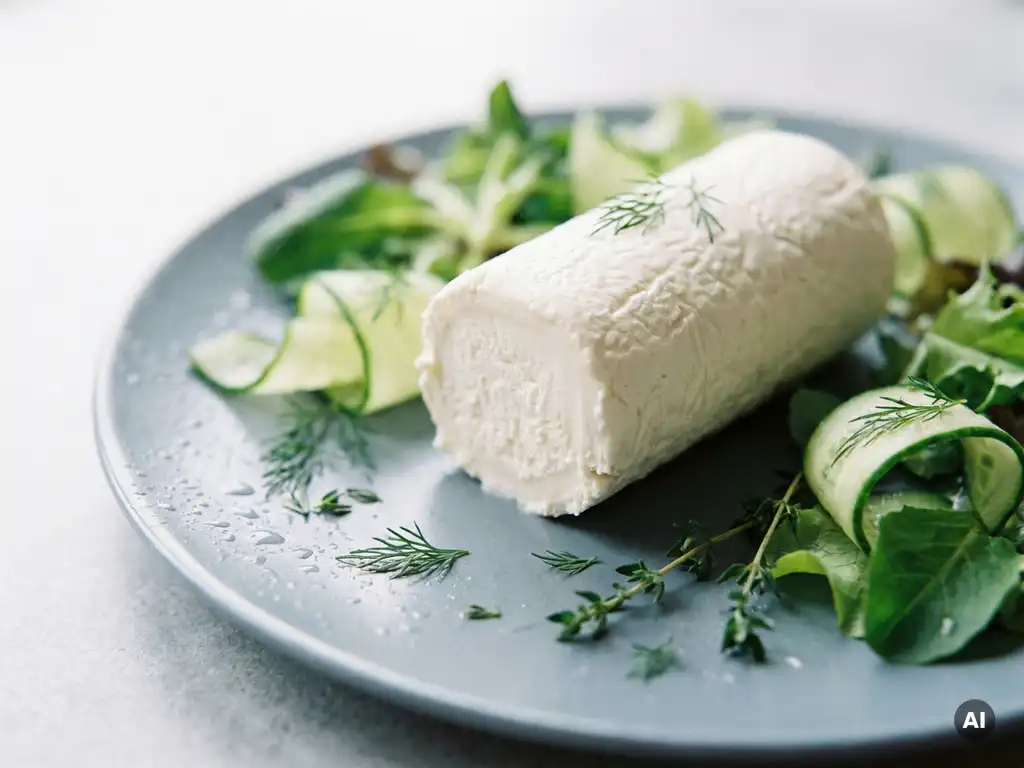
Fresh goat cheese stays creamy in chilled salads when you choose a variety with a high moisture content and a soft, smooth texture, such as a fresh log or a rindless creamy goat cheese. The key lies in the fat structure and the production process: artisanally made fresh goat cheese retains its creaminess even after refrigeration, while aged varieties dry out or crumble more quickly. In this article, we answer the most frequently asked questions about goat cheese in chilled salad recipes, from texture and storage to innovative applications and private-label options.
What properties determine whether goat cheese stays creamy?
The creaminess of goat cheese in a chilled salad is determined by moisture content, fat percentage, and the structure of the curd. Fresh goat cheese with a high moisture content and a fine, smooth curd structure retains its soft texture even after refrigeration and mixing. Aged or dry varieties lose moisture more quickly and become grainy or crumbly.
In addition to moisture content, acidity plays an important role. A slightly acidic, fresh goat cheese has a more stable protein structure that holds up better against temperature fluctuations in the cold chain. The presence of cream or a higher fat fraction also contributes to a velvety mouthfeel that is preserved even when the cheese is mixed with dressings or other salad ingredients.
Practical factors to watch:
- Moisture content: The higher, the creamier and more stable in chilled applications
- Fat percentage: A higher fat content results in a richer, less dry texture
- Curd structure: Fine and homogeneous holds together better than coarse or crumbly
- Acidity (pH): A stable pH prevents flocculation when in contact with dressings
What is the difference between fresh and soft goat cheese in salads?
Fresh goat cheese is unaged and has a high moisture content, a light, fresh flavor, and a smooth to spreadable texture. Soft goat cheese is lightly aged, has a thin white rind, and a slightly more intense flavor, but retains a creamy core. In chilled salads, fresh goat cheese behaves more neutrally and blends better, while soft goat cheese adds more character.
For salad recipes, the distinction is practically relevant. Fresh goat cheese in cubes or crumbled partially dissolves in a moist dressing and creates a creamy coating around the other ingredients. This makes it ideal as a binding element in a salad with roasted vegetables, nuts, or grains. Soft goat cheese with a light aging retains its shape better and provides visually appealing, recognizable pieces in the salad, which is attractive for packaged retail products.
The choice depends on the desired end result: if you want a creamy, integrated flavor experience, go with fresh goat cheese. If you want a recognizable, premium ingredient with more depth of flavor, soft goat cheese is a better fit.
How do you prevent goat cheese from drying out or crumbling in a chilled salad?
Goat cheese dries out or crumbles in chilled salads when the moisture content is too low, the cheese is added too early, or the dressing is too acidic. The best way to prevent this is to use fresh goat cheese with a high moisture content, add the cheese just before packaging, and choose dressings with a mild pH.
From a product development perspective, there are a number of concrete measures that make a difference:
- Choose the right cut: Larger cubes or logs dry out less quickly than fine crumbles
- Add the cheese last: Minimize contact time with moist ingredients before packaging
- Use a protective marinade: A light coating of olive oil or herb oil protects the surface
- Watch the storage temperature: Consistent refrigeration between 2 and 4 degrees Celsius extends texture stability
- Avoid highly acidic dressings: A pH that is too low breaks down the protein structure and causes crumbling
Packaging technology also plays a role. Modified atmosphere packaging (MAP) helps limit moisture loss and extends the shelf life of the cheese in the salad without compromising the creamy texture.
Which goat cheese specialties lend themselves to innovative salad recipes?
For innovative salad recipes, fresh goat cheese logs, creamy goat cheese with herbs, and soft goat cheese cubes work best. These varieties combine texture stability with depth of flavor and can be used flexibly in both warm and chilled applications. Specialties with added ingredients such as truffle, red onion, or Mediterranean herbs give a recipe an immediate point of difference.
Trending flavor combinations that work well in chilled salads:
- Goat cheese with truffle: Luxury positioning, great paired with arugula, walnuts, and pear
- Goat cheese with red onion and thyme: Savory and familiar, ideal for Mediterranean salad varieties
- Goat cheese with honey and lavender: Sweet-savory contrast, suited for seasonal summer salads
- Plain fresh goat cheese: Versatile base for clean-label concepts where the dressing carries the flavor
From a clean-label perspective, fresh goat cheese scores highly: a short ingredient list, recognizable raw materials, and an artisanal production process align perfectly with the demand for transparent, natural products in the retail segment. This makes goat cheese specialties particularly well-suited for product developers responding to the growing demand for premium, honest food.
When should you choose private-label goat cheese for salad development?
Private-label goat cheese is the right choice when, as a product developer, you want to build a distinctive salad concept with its own flavor profile, specific dimensions, or unique packaging that cannot be sourced from a standard range. It offers full control over positioning, ingredients, and brand identity, without the need for in-house cheese production.
Private label is especially worthwhile in these situations:
- You want an exclusive product that competitors cannot copy
- You have specific requirements regarding format, fat content, flavor additions, or packaging
- You are working on a clean-label line where the origin and production process are important to communicate
- You are looking for economies of scale at larger volumes without compromising on quality
For retail applications, private-label goat cheese offers the opportunity to link your own brand story to artisanal quality, which is increasingly a decisive differentiator on the shelf. For foodservice, it gives the chef or caterer an ingredient that fits a specific menu format or seasonal concept.
How we help develop creamy goat cheese for chilled salads
As a family business with years of experience in fresh and soft goat cheese specialties, we actively think along with our customers during product development. We understand that a product developer needs more than a standard catalog: you are looking for a partner who thinks with you, is flexible, and offers concrete solutions for your specific salad concept.
What we offer for salad development:
- Custom goat cheese specialties tailored to your recipe, including flavor additions such as truffle, herbs, or red onion
- Private-label options for both retail and foodservice, with full control over positioning and packaging
- Technical support on texture questions, shelf life, and the behavior of goat cheese in chilled applications
- Flexible formats in cubes, logs, or crumbled, tailored to your production process
- Clean-label production based on a traditional recipe with recognizable, natural ingredients
Whether you are developing a new salad for the retail channel or an innovative concept for foodservice, we are ready to work with you to find the right goat cheese solution. View our range at dejongcheese.nl or contact us directly for a no-obligation conversation about your salad concept.
Frequently Asked Questions
How long does fresh goat cheese stay creamy in a chilled salad after packaging?
With proper refrigeration between 2 and 4 degrees Celsius and the use of modified atmosphere packaging (MAP), fresh goat cheese stays creamy and stable in a chilled salad for an average of 5 to 10 days. The exact shelf life depends on the moisture content of the cheese, the composition of the dressing, and the hygienic conditions during production. For retail applications, it is advisable to conduct shelf-life tests on the finished product together with your cheese supplier.
Can I freeze fresh goat cheese for use in chilled salad recipes?
Freezing is strongly discouraged for fresh goat cheese intended for chilled salads. Due to the high moisture content, ice crystals form that damage the curd structure, causing the cheese to become grainy, watery, or crumbly after thawing instead of creamy. For a consistent texture and optimal flavor experience, always work with refrigerated, fresh goat cheese that comes directly from the cold chain.
Which dressings combine best with fresh goat cheese without affecting the texture?
Dressings based on olive oil, honey-mustard, or a mild white balsamic work best with fresh goat cheese, because their pH does not affect the protein structure of the cheese. Avoid strongly acidic dressings based on vinegar or lemon juice in large quantities, as a pH that is too low can cause the cheese to flocculate or crumble. A light oil coating on the goat cheese before adding the dressing provides extra protection against aggressive ingredients.
What are the most common mistakes when processing goat cheese in chilled salads at production scale?
The most common mistake is adding the goat cheese to the salad too early, causing the cheese to be in contact with moist ingredients for too long and losing its texture before packaging. A second common problem is using an aged or too-dry variety that does not have sufficient moisture content for chilled applications. Finally, many product developers underestimate the importance of a stable cold chain: temperature fluctuations significantly accelerate the loss of creaminess.
Is fresh goat cheese suitable for clean-label salads and how do I communicate that on the packaging?
Yes, fresh goat cheese is particularly well-suited for clean-label concepts thanks to its short ingredient list, recognizable raw materials, and artisanal production process. On the packaging, you can communicate about the origin of the milk, the traditional production process, and the absence of artificial additives, which strongly aligns with the growing consumer demand for transparent products. Work with a supplier who can provide traceability and production documentation to support your label claims.
How do I get started developing a custom private-label salad with goat cheese?
The first step is defining your concept: think about the desired flavor profile, the target channel (retail or foodservice), the packaging format, and any specific requirements such as fat content or flavor additions. You then contact a specialized goat cheese producer with experience in custom development projects who offers technical support during product development. At De Jong Cheese, you can directly request a no-obligation conversation to discuss your salad concept and determine the right goat cheese solution together.
Are there plant-based or lactose-free alternatives that behave the same way as fresh goat cheese in chilled salads?
Plant-based alternatives based on cashews or coconut can offer a similar creamy texture, but behave technologically differently from real goat cheese: they lack the characteristic slightly acidic flavor and the stable protein structure that makes goat cheese so suitable for chilled applications. Goat cheese is naturally lower in lactose than cow’s milk cheese, making it an already more accessible choice for many lactose-sensitive consumers. For a fully lactose-free or plant-based concept, it is advisable to include specific stabilizers and texture tests in the development process.