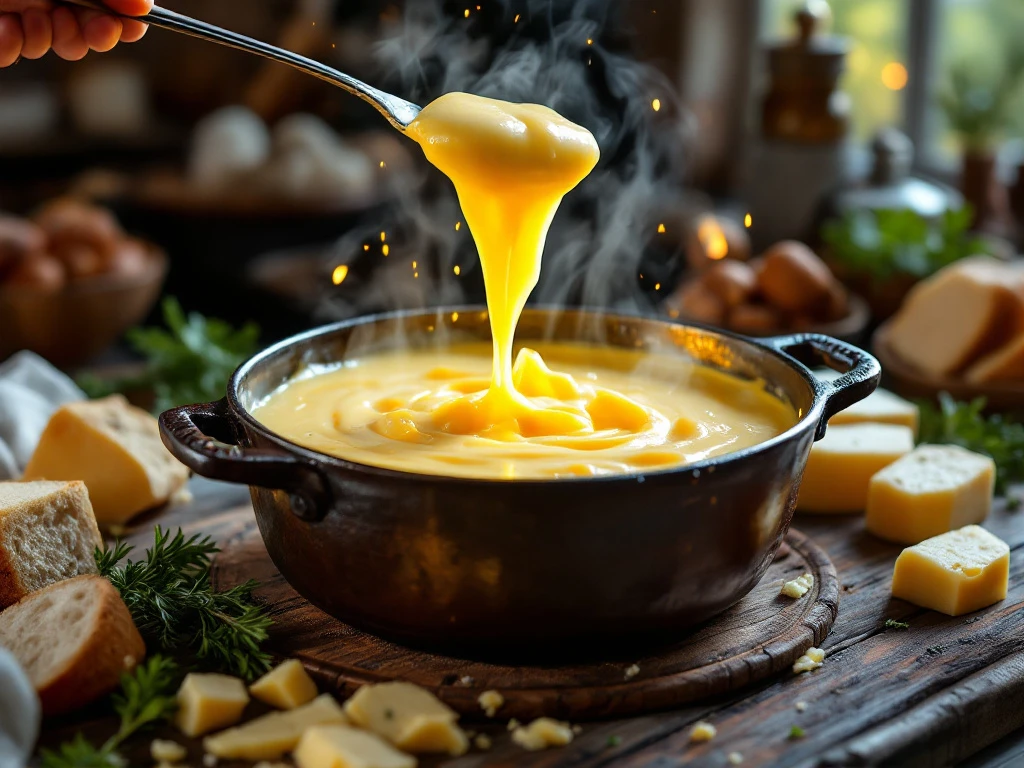
Yes, you can make fondue with goat cheese! You need to change some traditional methods because goat cheese has special properties. Goat cheese melts differently than normal fondue cheeses. It has more water and melts at a lower temperature. This creates a creamier and more tangy fondue that many people really like. To succeed, you need to choose the right goat cheese types, control the temperature carefully, and use proper methods to make it smooth and creamy.
Can you actually make fondue with goat cheese?
Goat cheese fondue is possible and gives a special twist to the classic dish. The important thing is to understand that goat cheese acts differently when it melts compared to traditional Swiss cheeses like Gruyère or Emmental. Fresh goat cheese has more water and is softer. This means it melts at lower temperatures and can become lumpy if it gets too hot.
Traditional cheese fondue variations usually use aged, hard cheeses that melt evenly. Goat cheese, especially fresh types, needs gentler handling. It often works better when you mix it with other cheeses to get the best texture. The tangy, special taste of goat cheese creates a lighter, more delicate fondue. It goes well with vegetables, crusty bread, and even fruit.
When making goat cheese fondue, expect a creamier texture than traditional versions. Goat cheese has more acid, which changes how proteins stick together when melting. This is why many good recipes mix goat cheese with other types or add stabilizers. This special melting behavior is not a problem. It is actually a chance to create special fondue experiences with complex flavors.
What makes goat cheese different for fondue preparation?
Goat cheese has special characteristics that really affect fondue preparation. The protein structure in goat cheese is different from cow’s milk cheese. It has smaller fat pieces and different protein types. This results in a lower melting point, usually around 26-32°C compared to 35-40°C for traditional fondue cheeses. You need to manage temperature carefully during preparation.
Fresh goat cheese can have 60-80% water content. This is much higher than aged cheeses used in classic fondue recepten. This extra water affects consistency and can make a thinner fondue unless you balance it properly with other ingredients. Also, goat cheese’s natural acidity gives it that special tangy taste. But it can cause proteins to separate more easily when heated, making smooth mixing more difficult.
Understanding geitenkaas smelten requires knowing its delicate nature. Unlike harder cheeses that keep their structure when melted, goat cheese changes quickly from solid to liquid. The fat content varies a lot between fresh chèvre (around 20% fat) and aged varieties (up to 45% fat). This directly affects how smoothly the cheese melts and mixes into the fondue base.
How do you prevent goat cheese fondue from separating?
To prevent separation in goat cheese fondue, you need exact temperature control and proper stabilization techniques. Keep the heat low and steady, ideally between 60-70°C. Higher temperatures cause proteins to seize and separate from the fat. Use a heavy-bottomed fondue pot or double boiler to spread heat evenly. This prevents hot spots that could cause curdling.
Adding stabilizers is very important for smooth geitenkaas fondue. Mix grated goat cheese with cornstarch or flour before melting. Use about one tablespoon per 200g of cheese. This coating helps bind proteins and prevents them from clumping. Some recipes work better with a small amount of sodium citrate. This is a natural emulsifier that helps keep smooth consistency without changing the taste.
Wine selection is very important for stability. Choose dry white wines with good acidity, such as Sauvignon Blanc or Pinot Grigio. These complement goat cheese’s tangy taste while helping maintain smooth mixing. Add wine slowly while stirring in a figure-eight pattern. This creates better mixing than circular stirring. If the fondue begins to separate, remove from heat immediately. Whisk in a splash of lemon juice or white wine vinegar to help mix it again.
Which goat cheese varieties work best for fondue?
Semi-hard aged goat cheeses work very well in fondue. They have better melting properties than fresh varieties. Aged goat Gouda or mature chèvre (aged 2-6 months) provide ideal fat content and less water, creating smoother consistency. These cheeses develop complex flavors during aging while keeping the special goat cheese character that makes the fondue special.
Fresh goat cheese works best when you combine it with other varieties in your fondue recipe. Mix fresh chèvre with aged goat cheese in a 30:70 ratio for best results. This combination balances the fresh cheese’s creaminess with the aged variety’s stability. Goat cheese crumbles offer easy portion control and melt evenly because of their uniform size. This makes them an excellent choice for consistent results.
For adventurous fondue makers, ripened goat cheeses like goat brie add luxurious creaminess. Remove the rind and combine with firmer goat cheeses to prevent it becoming too runny. Herb-mixed varieties introduce additional flavor dimensions. Consider honey goat cheese for subtle sweetness or garlic-herb varieties for savory depth. The fat content should ideally be between 25-35% for the best melting characteristics.
What ingredients complement goat cheese fondue perfectly?
The tangy profile of goat cheese melting into fondue pairs beautifully with specific wines and spirits. Crisp white wines like Albariño or Vermentino enhance the cheese’s natural acidity while providing necessary liquid for proper consistency. For a unique twist, try adding a splash of gin or elderflower liqueur. These complement goat cheese’s floral notes. Champagne or Prosecco creates an elegant, lighter fondue perfect for special occasions.
Fresh herbs make goat cheese fondue better than traditional recipes. Thyme and rosemary provide earthy notes that balance the cheese’s brightness. Fresh basil or tarragon add aromatic complexity. Use lavender sparingly for a French touch, or try za’atar for Middle Eastern inspiration. Roasted garlic works beautifully in goat cheese fondue, creating depth without overpowering the delicate cheese flavor.
Choosing appropriate dippers enhances the fondue experience significantly. Crusty sourdough bread provides textural contrast, while roasted vegetables like beetroot, butternut squash, and Brussels sprouts complement the tangy cheese. Fresh pear slices, figs, and grapes offer sweet counterpoints. For protein options, consider prosciutto-wrapped asparagus, grilled shrimp, or herb-marinated chicken pieces. Toasted walnuts and pecans add crunch while matching goat cheese’s natural nuttiness.
Creating excellent goat cheese fondue opens new possibilities for this classic dish. By understanding the special properties of fondue maken with goat cheese and using proper techniques, you’ll achieve creamy, flavorful results that impress guests and expand your cooking skills. Whether you prefer traditional preparations or innovative flavor combinations, goat cheese fondue offers endless opportunities for delicious experimentation. At DeJong Cheese, our expertise in making premium goat cheese varieties ensures you have access to the perfect cheeses for your fondue adventures, from fresh spreads to aged specialties that melt beautifully into unforgettable fondue experiences.
Related Articles
- How do you choose between goat cheese crumbles, pearls and slices for an automated pizza line?
- What are the key contract points in a supplier agreement for goat cheese?
- How is goat cheese used in global food production?
- How to track goat cheese consumer preferences in retail?
- How to make goat cheese and olive tapenade?