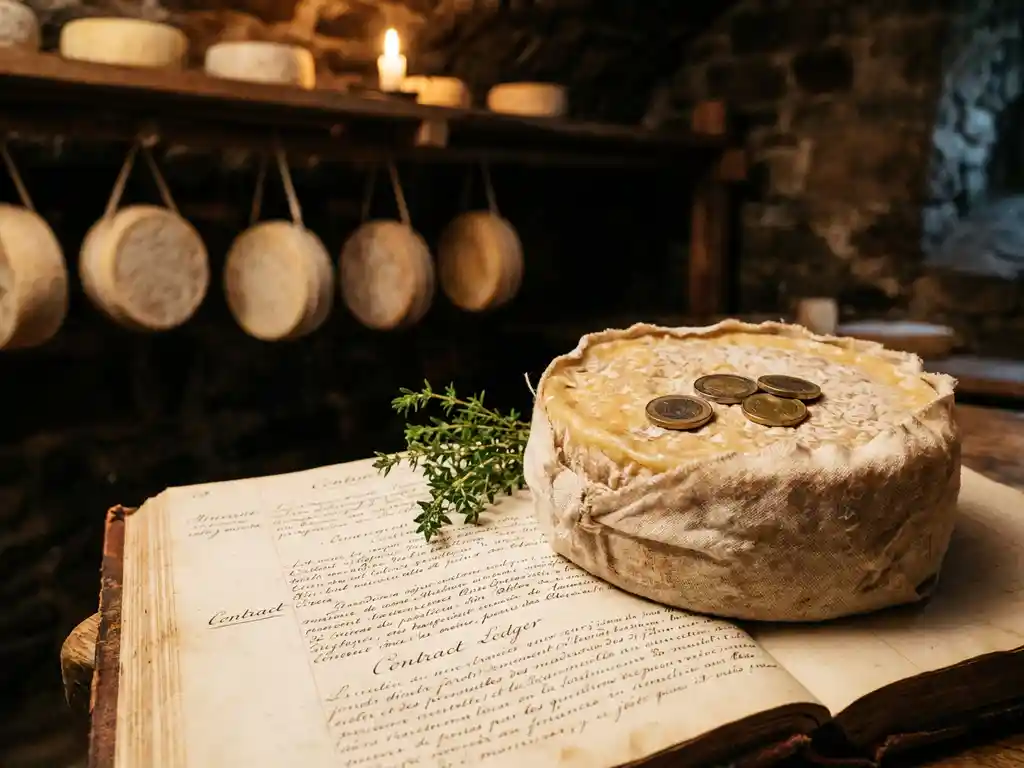
The most effective contract types for managing price increases in cheese purchasing are fixed-price contracts, index-linked contracts, and framework agreements. Which type works best depends on your purchase volume, planning horizon, and risk tolerance. In this article, we answer the most common questions about contract types for cheese purchasing, so you can make an informed decision.
What contract types exist for cheese purchasing?
There are three common contract types in cheese purchasing: the fixed-price contract, the index-linked contract, and the framework agreement. Each type distributes price risk differently between buyer and supplier, and each fits a different purchasing strategy. Your choice largely determines how stable your purchasing costs are over time.
Here is an overview of the three main types:
- Fixed-price contract: You agree on a set price for a specific period or quantity. No surprises, but no benefit either if raw material prices drop.
- Index-linked contract: The price is tied to an external index, such as the milk price quotation. The price moves with the market, but within agreed limits.
- Framework agreement: You set the terms, but not the exact price per delivery. Flexible in volume, but with less price certainty.
Beyond these three, there are also hybrid forms that combine elements from multiple contract types. For example, you could set up a framework agreement with a partially fixed price for a base volume and an index-linked component for the remaining volume.
How does a fixed-price agreement work in cheese purchasing?
A fixed-price agreement in cheese purchasing means that you and your supplier agree on a price per kilogram that does not change during a set period, regardless of what happens in the raw materials market. This gives you maximum budget certainty and makes financial planning much simpler.
The duration of a fixed-price contract for cheese typically ranges from three months to one year. The longer the term, the greater the risk for the supplier — which often translates into a slightly higher base price. This is the direct premium the supplier charges for taking on the price risk.
A fixed price works best when:
- You have a predictable and stable purchase volume
- Budget certainty matters more to you than benefiting from falling market prices
- You make products with a fixed selling price where margin loss from raw material fluctuations is not acceptable
- Your supplier is willing to carry the risk, which depends on the level of trust in your relationship
Keep in mind that when raw material prices rise sharply, suppliers sometimes include clauses that allow for renegotiation. Always read contracts carefully for these kinds of exception provisions.
What is an index-linked contract and how does it protect against price fluctuations?
An index-linked contract ties the purchase price of cheese to an external reference index, such as the official milk price quotation or a sector-specific commodity index. This means the price always reflects current market conditions, which distributes risk fairly between buyer and supplier.
The protection is not about eliminating price fluctuations — it is about making them transparent and predictable. You know exactly how the price is calculated and can track the index yourself. In addition, most index-linked contracts include a minimum and maximum price, also known as a floor and a cap. Within those limits, the price moves with the market, but extreme swings are covered.
Benefits of an index-linked contract in cheese purchasing:
- Transparency: the price structure is objective and verifiable
- Fair risk distribution between buyer and supplier
- You partially benefit when raw material prices fall
- Less chance of disputes over price adjustments
This contract type is popular in the food industry because it makes the relationship between buyer and supplier less sensitive to market movements. In 2026, we are seeing growing interest in index-linked agreements, partly due to the volatility in the European dairy market in recent years.
When is a framework agreement the best choice for cheese purchasing?
A framework agreement is the best choice when you need flexibility in volume or product range, but still want fixed agreements on delivery terms, quality requirements, and service. You set the rules of the partnership without committing to an exact quantity or price per delivery.
This contract type works well for product developers and foodservice companies that regularly launch new products or handle seasonal peaks in demand. A framework agreement gives you the flexibility to respond to market changes without having to renegotiate the basic terms every time.
A framework agreement is especially suitable when:
- Your purchase volume fluctuates by quarter or season
- You want to source multiple cheese varieties or formats under the same terms
- You want to build a long-term partnership without committing to fixed volumes
- Speed of ordering and delivery matters more than absolute price certainty
The downside is that prices per call-off can vary. You can limit this risk by including a price bandwidth or review mechanism in the framework agreement, so you are never caught off guard by unexpected cost increases.
Which contract clauses specifically limit price risk?
Specific contract clauses that limit price risk in cheese purchasing include the price review clause, the hardship clause, the cap-and-floor provision, and the force majeure clause. Each of these clauses provides protection in a different scenario, and together they form a solid risk buffer.
Price review clause
This clause defines under what circumstances and at what point the price may be revised. For example, it might allow a maximum adjustment of a set percentage per quarter, or a revision that only takes place if a commodity index rises by more than an agreed percentage. This prevents arbitrary price increases and makes expectations clear for both parties.
Cap-and-floor provision
With a cap-and-floor provision, you agree on an upper limit (cap) and a lower limit (floor) within which the price may move. You never pay more than the cap, and never less than the floor. This gives both parties certainty and makes budgeting easier, even when commodity markets are moving sharply.
Hardship clause
A hardship clause gives both parties the right to renegotiate if economic conditions change so drastically that the original terms become unreasonable. This is a safety net for extreme situations that could not have been foreseen when the contract was signed.
Force majeure clause
This clause protects both parties in the event of unforeseen circumstances beyond anyone’s control, such as a disease outbreak or a logistics crisis. In the context of cheese purchasing, it is important that this clause is worded specifically enough to also cover supply chain disruptions.
How do you choose the right contract type for your purchasing situation?
You choose the right contract type for cheese purchasing based on three factors: how predictable your demand is, your willingness to carry price risk, and the strategic value of the supplier relationship. There is no universally best choice, but there is always a contract type that fits your specific situation best.
Use the following guidelines as a starting point:
- Stable volume, high price sensitivity: Go with a fixed-price agreement with a term that matches your sales planning.
- Volatile commodity market, long-term relationship: Go with an index-linked contract with a cap-and-floor provision for transparency and mutual protection.
- Fluctuating volume, broad product range: Go with a framework agreement that includes a price review mechanism.
- New supplier or new product: Start with a short-term contract to test the partnership before entering into long-term commitments.
Also involve your legal and finance teams in the decision. Contracts for foodservice purchasing or industrial applications often include specific food safety requirements and documentation obligations that need to be written into the contract. Have every contract reviewed before you sign, regardless of the term or volume.
How we help with risk management in goat cheese purchasing
As a family business with more than thirty years of experience in goat cheese specialties, we know better than anyone how important price stability and supply security are for buyers in the food industry and product developers in the retail sector. At DeJong Cheese, we actively think along with you about the contract type that fits your situation best.
What we offer:
- Flexible contract types, from fixed-price agreements to index-linked contracts
- Transparent pricing based on objective commodity and milk price indexes
- Framework agreements for customers with a broad or seasonal product range
- Consistent quality and specifications, even at large volumes for industrial applications
- Personal contact and tailored advice on the right contract structure for your purchasing strategy
- Deliveries to retail and industry worldwide, both under our own brand and private label
Want to know which contract type best fits your goat cheese purchasing needs? Get in touch with us and we will be happy to discuss the options with you personally.
Frequently Asked Questions
How long does it typically take to negotiate and finalize a cheese purchasing contract?
The lead time for closing a cheese purchasing contract varies widely depending on the contract type and the complexity of the terms. A straightforward fixed-price contract with a familiar supplier can be wrapped up within one to two weeks, while a comprehensive framework agreement with multiple clauses and legal review can easily take four to eight weeks. Plan this process well before your current contract expires, so you are never left without agreed pricing.
What are the most common mistakes buyers make when closing a cheese purchasing contract?
A common mistake is signing a long-term fixed-price contract without exception provisions, leaving you with no way out if the market shifts dramatically or your own demand fluctuates significantly. Another frequent mistake is leaving out clear quality specifications and documentation requirements in the contract text, which can lead to disputes later on. Finally, buyers often underestimate the importance of an explicit price review clause, even in fixed-price contracts.
Can I switch contract types mid-term if my purchasing needs change?
Switching mid-term is generally only possible if this is explicitly included in the contract, for example through a review or exit clause. Without such a provision, you are bound to the agreed term and conditions. It is therefore wise to ask about options for mid-term adjustments when closing any contract, especially if your business is growing quickly or developing a new product range.
Which external indexes are most commonly used in practice for index-linked cheese contracts?
In the European dairy sector, index-linked cheese contracts most often reference the official milk price quotation from ZuivelNL, the GDT (Global Dairy Trade) price index, or the European Commission market prices for raw milk. For goat cheese specifically, the sector-specific goat milk price quotation is sometimes used, which differs from the standard cow milk index. Always agree explicitly when closing a contract on which index applies as the reference and how often it is updated.
How do I negotiate effectively for a better price or better terms with a cheese supplier?
You build the strongest negotiating position by consolidating your purchase volume, offering a longer contract term in exchange for a lower base price, or by making agreements early in the season when suppliers have a greater need for volume certainty. Always back up your request with market data and be transparent about your own planning horizon, so the supplier can better assess their risk. A strong long-term supplier relationship often delivers more value than a one-time price win through tough negotiations.
Is it a good idea to have contracts with multiple suppliers at the same time for the same product?
Spreading your purchasing across multiple suppliers — also known as dual sourcing or multi-sourcing — is an effective strategy for reducing supply risk and avoiding dependence on a single party. This is especially relevant for large volumes or critical raw materials where a supply interruption directly impacts your production. Keep in mind that splitting volumes across suppliers can weaken your negotiating position with each one, so weigh the risk diversification against the loss of volume leverage.
What role do food safety and certification play in a cheese purchasing contract?
Food safety requirements and certifications such as IFS Food, BRC, or FSSC 22000 should be a standard part of every cheese purchasing contract, especially for deliveries to retail or for industrial processing. Specify in the contract which certifications the supplier must hold as a minimum, how and when these are to be demonstrated, and what the consequences are if a certificate expires or is withdrawn. Do not forget the documentation requirements either, such as traceability records and analysis reports, which are essential during food safety audits.
Related Articles
- How do you choose between goat cheese crumbles, pearls and slices for an automated pizza line?
- What are the quality standards for goat cheese in the food industry?
- Why do processors need flexible cheese formats?
- What are emerging goat cheese flavor trends in foodservice?
- Is goat cheese suitable for diabetics?