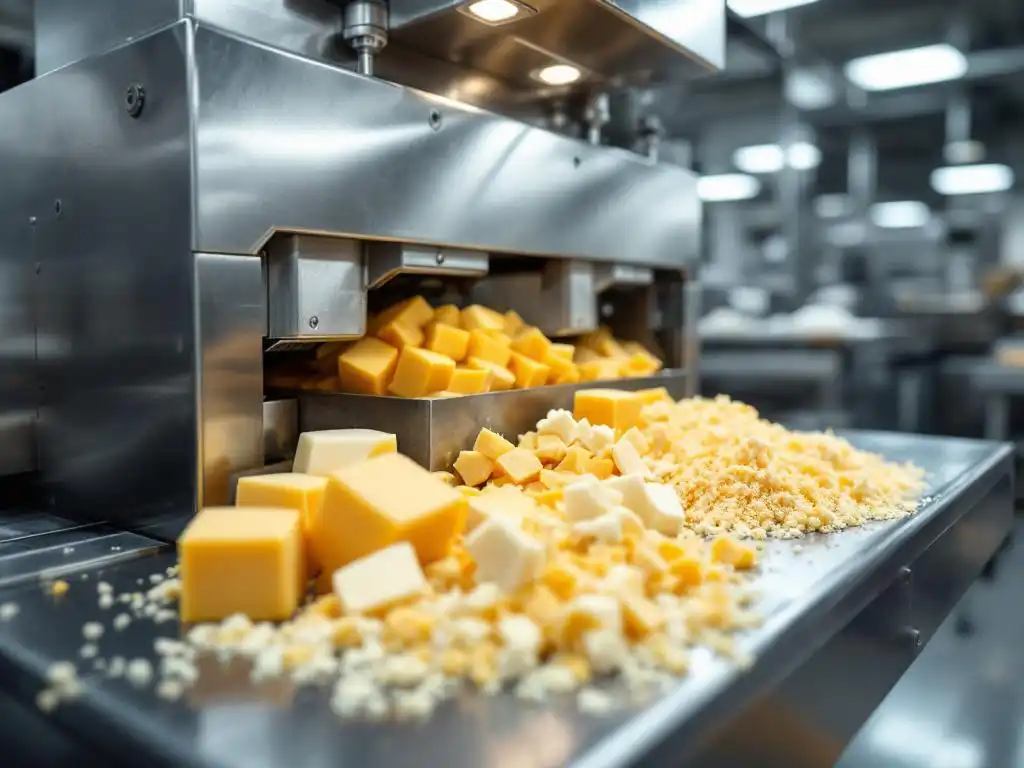
Food processors need flexible cheese formats to meet diverse production requirements while maintaining efficiency and reducing waste. Flexible cheese formats include shredded, cubed, sliced, crumbled, and custom-portioned options that can be adapted to specific manufacturing needs. These versatile formats enable processors to streamline operations, minimize manual handling, and deliver consistent quality across various food applications, from ready meals to sandwiches.
What are flexible cheese formats and why do processors need them?
Flexible cheese formats are customizable cheese preparations designed to meet specific food processing requirements. These include shredded cheese for pizza production, sliced formats for sandwich manufacturing, cubed options for ready meals, and crumbled varieties for salads. Processors need flexible formats to optimize production efficiency, reduce labor costs, and maintain product consistency across different applications.
The ability to order cheese in various formats directly impacts operational efficiency. Pre-portioned cheese eliminates time-consuming manual cutting and reduces product waste. Different format options allow processors to match cheese specifications exactly to their equipment capabilities and final product requirements. This flexibility becomes particularly important when producing multiple product lines that each require different cheese presentations.
Format flexibility also addresses practical challenges in food manufacturing. Shredded cheese melts more uniformly than blocks, ensuring consistent coverage on pizzas. Pre-sliced cheese speeds sandwich assembly lines while maintaining portion control. Custom-sized cubes integrate seamlessly into automated mixing systems for prepared meals. Each format serves a specific purpose in streamlining production processes.
How do different cheese formats affect production efficiency?
Different cheese formats significantly impact processing speed, labor requirements, and equipment utilization. Pre-shredded cheese can reduce preparation time by up to 75% compared with manually shredding blocks. Sliced formats enable automated sandwich assembly lines to operate continuously without manual intervention. The right format choice transforms cheese from a labor-intensive ingredient into a production-ready component.
Labor efficiency improves dramatically with format-specific cheese options. Workers no longer spend hours cutting, shredding, or portioning cheese blocks. This freed time allows staff to focus on quality control and other value-added activities. Equipment also runs more efficiently when cheese arrives in the optimal format, reducing downtime for blade changes or cleaning between different cutting operations.
Production consistency improves when using standardized cheese formats. Uniform shred sizes ensure even melting patterns. Consistent slice thickness maintains portion control across thousands of sandwiches. Precisely cut cubes distribute evenly throughout mixed products. This consistency reduces quality variations and customer complaints while supporting automated production systems that rely on ingredient uniformity.
What’s the difference between bulk and pre-portioned cheese for processors?
Bulk cheese typically arrives in large blocks requiring additional processing, while pre-portioned formats come ready for immediate use. Bulk blocks offer lower initial purchase costs but require storage space, processing equipment, and labor for conversion. Pre-portioned formats cost more upfront but eliminate processing steps, reduce waste, and improve portion control accuracy.
Storage requirements differ significantly between formats. Bulk blocks need larger refrigerated spaces and specialized handling equipment. Pre-portioned formats often stack more efficiently and move through inventory faster. Shelf life considerations also vary, as exposed surfaces in pre-cut formats may require modified atmosphere packaging to maintain freshness comparable to sealed blocks.
The choice between bulk and pre-portioned formats depends on production volume and capabilities. High-volume operations with specialized cutting equipment might benefit from bulk purchases. Smaller processors or those producing diverse product lines often find pre-portioned formats more economical when factoring in labor, waste, and equipment costs. Many processors use a combination, purchasing bulk for high-volume standardized products and pre-portioned formats for specialty items.
Which cheese formats work best for different food applications?
Pizza production benefits most from shredded cheese formats that provide even coverage and consistent melting. Fine shreds work best for thin-crust pizzas, while coarser shreds suit thick-crust varieties. Goat cheese crumbles add artisanal appeal to gourmet pizzas, offering distinct flavor profiles that differentiate premium products.
Sandwich manufacturing relies heavily on uniformly sliced cheese that fits standard bread sizes. Consistent thickness ensures proper portion control and cost management. For deli-style sandwiches, slightly thicker slices provide better texture and visual appeal. Goat cheese spreads offer an alternative format for specialty sandwiches, providing a creamy texture without slicing requirements.
Ready meal production typically uses cubed or diced formats that distribute evenly during mixing. Smaller cubes work well in pasta dishes and casseroles, while larger chunks suit applications where cheese visibility matters. Salad preparation benefits from crumbled formats that blend easily with greens and other ingredients. The key is matching format size to the final product’s texture and appearance requirements.
How do flexible packaging options support cheese format versatility?
Flexible packaging maintains cheese quality across different formats through specialized barrier properties and atmospheric controls. Vacuum-sealed portions remove oxygen to extend shelf life, while modified atmosphere packaging uses specific gas mixtures to preserve freshness. These packaging solutions protect delicate formats like shreds and crumbles from clumping or quality degradation during storage and transport.
Packaging flexibility enables processors to order exact quantities needed for production runs. Resealable bags allow partial use without compromising the remaining product’s quality. Portion-controlled packets eliminate measuring and reduce cross-contamination risks. Flow-wrapped individual portions support automated feeding systems in high-speed production lines.
Integration with automated systems becomes seamless when packaging matches equipment specifications. Machine-readable packaging supports inventory tracking and quality control systems. Easy-open features reduce worker strain and increase line speeds. The right packaging format can be as important as the cheese format itself in optimizing production efficiency.
How DeJong Cheese helps with flexible cheese format solutions
We provide customizable cheese formats tailored to your specific processing needs, with extensive experience in creating solutions for diverse food manufacturing applications. Our flexibility extends from traditional formats to innovative custom portions that solve unique production challenges.
Our comprehensive format solutions include:
- Bulk packaging options in various sizes to match your storage capabilities
- Custom portion sizes that eliminate waste and improve efficiency
- Consistent quality across all formats, from blocks to specialized cuts
- Flexible packaging solutions designed for your specific applications
- Technical support to help optimize format selection for your products
- Private label capabilities to support your brand requirements
We understand that every processor faces unique challenges, which is why we offer personalized consultation to identify the ideal cheese formats for your operation. Our team can analyze your current processes and recommend format modifications that could significantly improve your production efficiency.
Ready to explore how flexible cheese formats could transform your production line? Visit our foodservice page to discover our complete range of format options. For personalized advice on optimizing your cheese formats, contact our technical team today. You can also find our products at various locations to experience our quality firsthand.
Frequently Asked Questions
How do I determine the right cheese format for my specific production line?
Start by analyzing your current production speed, equipment capabilities, and final product requirements. Consider factors like portion sizes, melting characteristics needed, and whether your equipment can handle specific formats. Request samples of different formats to test in your actual production environment before committing to large orders. Most suppliers can provide technical consultation to help match formats to your specific equipment and product specifications.
What's the typical shelf life difference between pre-shredded and block cheese?
Pre-shredded cheese typically has a shorter shelf life than blocks due to increased surface area exposure, often 30-45 days compared to 60-90 days for sealed blocks. However, modern modified atmosphere packaging can extend pre-shredded cheese shelf life significantly. Consider your inventory turnover rate when choosing formats – if you use cheese within 30 days, the convenience of pre-shredded formats usually outweighs the shorter shelf life.
Can I switch between cheese formats without modifying my existing equipment?
Many format switches require minimal or no equipment modifications, especially when moving from manual to pre-portioned formats. However, some changes may need adjustments – for example, switching from block to shredded cheese might require different hopper sizes or feed mechanisms. Conduct a small trial run with the new format to identify any equipment adjustments needed before full implementation.
How much can I expect to save by switching from block cheese to pre-portioned formats?
Labor savings typically range from 50-75% when switching from manually processing blocks to pre-portioned formats, though actual savings depend on your volume and current processes. Factor in reduced waste (often 5-10% with pre-portioned formats), improved portion control, and freed storage space. While pre-portioned formats cost 15-30% more upfront, total cost savings often offset this premium within 3-6 months for most processors.
What are the most common mistakes when transitioning to flexible cheese formats?
The biggest mistake is not properly calculating total landed costs, including labor, waste, and storage. Processors often underestimate the true cost of converting bulk cheese in-house. Another common error is ordering formats that don’t match equipment specifications, leading to production slowdowns. Always test new formats thoroughly and ensure your staff is trained on handling requirements, as pre-portioned formats may need different storage temperatures or handling procedures.
How do I maintain cheese quality when using multiple format types?
Establish separate storage protocols for each format type, as shredded, sliced, and block cheeses have different temperature and humidity requirements. Implement a clear rotation system using color-coded labels or zones to prevent mixing of formats. Train staff on proper handling techniques for each format – for example, shredded cheese should never be compressed, while sliced formats need careful separation to prevent sticking.
Related Articles
- What are the benefits of a supplier that provides both fresh and frozen goat cheese?
- What references do you request from a producer of industrial goat cheese?
- How to customize goat cheese packaging for brand identity?
- What are seasonal goat cheese menu strategies?
- What are cold chain requirements for goat cheese transport?