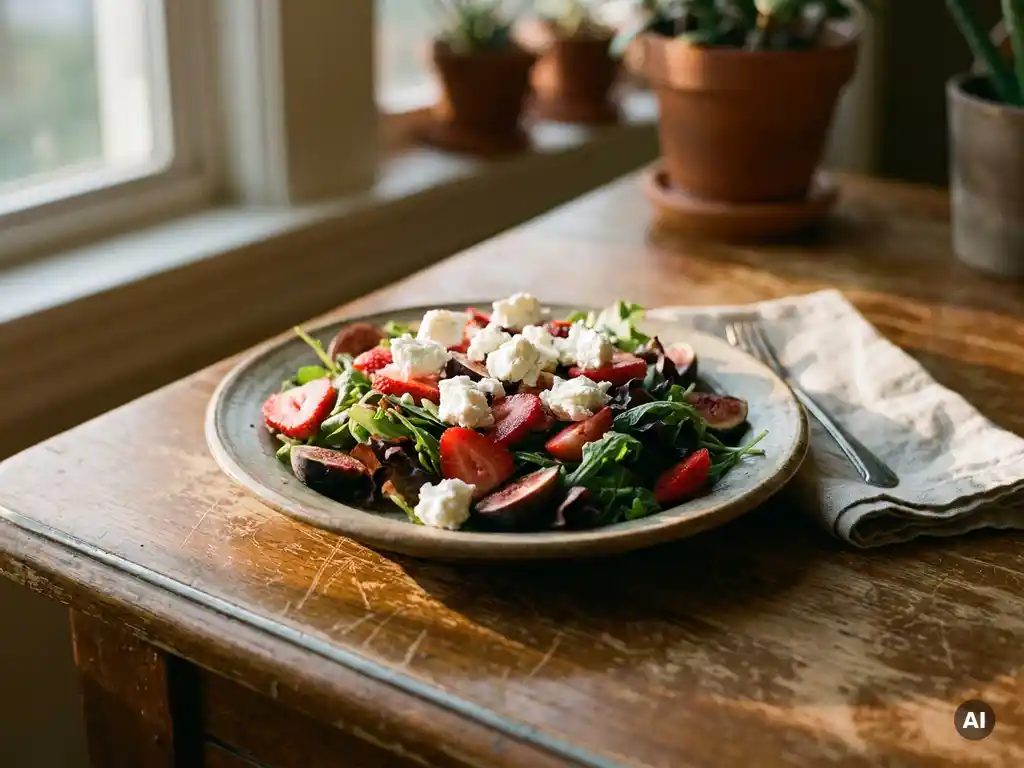
For a goat cheese fruit salad, the best choice is a mild, soft goat cheese such as a fresh chèvre or a creamy bûche. This soft goat cheese has a subtle tanginess that balances the sweetness of fruit without overpowering the flavor. In this article, we answer the most frequently asked questions about goat cheese and fruit in salads, from the best combinations to the most surprising uses.
Which fruit pairs best with soft goat cheese?
The best fruit combinations for soft goat cheese are pear, fig, strawberry, grape, and mango. The mild tanginess and creamy texture of soft goat cheese create a natural counterbalance to sweet and juicy fruit. Both fresh and lightly dried varieties work well, depending on the desired flavor profile of the salad.
Pear is perhaps the most classic partner: its soft, floral sweetness pairs seamlessly with the fresh notes of a mild goat cheese. Fig brings a rich, deep sweetness that works especially well with slightly creamier goat cheeses. Strawberries add freshness and color, while red grapes provide a light tannic note that gives the salad more depth.
Tropical fruit such as mango or passion fruit is a more modern choice that is showing up more and more in foodservice and retail. The more intense sweetness calls for a slightly firmer or lightly aged goat cheese to keep things balanced. Citrus fruits like blood orange or grapefruit also work well, but use them sparingly: too much acidity can overwhelm the subtle flavor of the cheese.
What is the difference between fresh and aged goat cheese in salads?
Fresh goat cheese is soft, spreadable, and mild in flavor, while aged goat cheese has a firmer texture and a more pronounced, sometimes slightly sharp taste. In salads, this difference determines not only the texture but also which fruit and other ingredients pair well.
A fresh goat cheese, such as a classic chèvre frais, crumbles beautifully over a salad and almost melts on the tongue. The mild, creamy flavor lets the fruit take center stage. This type of goat cheese pairs perfectly with delicate fruit like strawberry, pear, or white grape, combined with a light honey-citrus dressing.
An aged goat cheese has more character. The richer flavor calls for fruit with more body, such as fig, dried apricot, or pomegranate seeds. In a salad, an aged goat cheese adds more structure and a bold flavor contrast. This also makes it more interesting for those who are looking for a more complex goat cheese salad with multiple layers of flavor.
How do you get the right balance in a goat cheese fruit salad?
The right balance in a goat cheese fruit salad comes from playing with four elements: tangy, sweet, creamy, and crunchy. The goat cheese provides the creamy and tangy element, the fruit provides the sweetness, and a crunchy element like nuts or toasted seeds adds textural contrast.
Always start by choosing a base: a neutral leafy green such as lamb’s lettuce, arugula, or spinach lets both the cheese and the fruit shine. Arugula adds a slight bitterness that nicely tempers the sweetness of the fruit. Spinach is softer and works better with milder combinations.
The dressing is key. A light vinaigrette made with olive oil and white wine vinegar works universally well. Add a drizzle of honey if the fruit is less sweet, or use a citrus dressing for a fresher finish. Avoid heavy cream dressings: they compete with the creaminess of the goat cheese and make the salad too heavy.
Nuts like walnut, pecan, or pistachio not only add bite but also enhance the earthy notes of the cheese. Toasted seeds or a handful of granola can achieve the same effect for a more modern presentation.
Which goat cheese specialties work well in warm salads with fruit?
For warm salads with fruit, grilled or pan-fried goat cheese rounds are the most versatile choice. A firmer goat cheese that holds its shape when heated, such as a bûche or an aged round, is best suited for warm preparations. The heat intensifies the flavor and creates an appealing contrast with cold or lightly grilled fruit.
Grilled figs with a warm goat cheese round on a bed of arugula are a classic that never gets old. But grilled peach or nectarine also pairs surprisingly well: the caramelization of the sugars in the fruit enhances the sweet notes and makes a beautiful counterpart to the slightly tangy cheese.
With warm salads, the texture of the cheese matters even more than with cold versions. Choose a goat cheese that does not immediately melt in the pan but becomes soft and creamy on the inside. A light coating of breadcrumbs or chopped nuts helps the cheese hold its shape and adds an extra crunchy dimension.
Can you also use goat cheese with fruit in savory dishes?
Yes, goat cheese with fruit works great in savory dishes beyond the salad. The combination of mildly tangy cheese and sweet fruit is a widely used technique in savory tarts, wraps, bruschetta, and even as a stuffing for poultry or as a topping on pizza.
A quiche or savory tart with goat cheese, pear, and walnut is a proven combination that works just as well in restaurants as at home. The egg filling binds the flavors together and the goat cheese gives the tart a fresh, light taste that is not too heavy. Fig and goat cheese on crispy bruschetta with arugula and honey is a simple but impressive appetizer.
In product development, we are seeing more and more goat cheese and fruit combinations appear in savory snacks and ready-to-eat products. Think of filled wraps, breaded goat cheese balls with cranberry, or seasonal dipping sauces made with goat cheese and mango. The versatility of mild goat cheese makes it an interesting base ingredient for innovative food concepts that go beyond the traditional salad.
Goat cheese also pairs well with savory flavors like rosemary, thyme, or black pepper, allowing fruit to be used as a sweet accent in an otherwise fully savory dish. A goat cheese risotto with grilled fig or a pasta with goat cheese and sun-dried tomatoes are examples where fruit contributes subtly but effectively to the overall flavor profile.
How we help with goat cheese in creative salads and dishes
At DeJong Cheese, we have been producing fresh and soft goat cheese specialties since 1995 under the Alphenaer brand, made using traditional recipes in Alphen. Our cheeses are developed with a focus on quality and flavor, and are perfectly suited for the applications discussed in this article. Whether it is a classic goat cheese fruit salad or an innovative savory concept, we are happy to think along with you.
What we offer for product developers and food professionals:
- A wide range of fresh and aged goat cheese specialties, from creamy chèvre to firm bûche
- Flexibility in custom solutions and private label options for retail and foodservice
- Active collaboration in product development, including technical support for new concepts
- Deliveries to retail and foodservice worldwide, under our own brand or private label
- Cheeses made from natural ingredients, suitable for clean-label applications
Want to know which goat cheese specialties best fit your product or concept? Contact us and we will be happy to discuss the possibilities together.
Frequently Asked Questions
Can I prepare a goat cheese fruit salad in advance?
You can prepare most of the components ahead of time, but assemble the salad just before serving. Store the leafy greens, fruit, and goat cheese separately in the refrigerator and add the dressing at the last moment. This prevents the fruit from releasing liquid, the greens from wilting, or the cheese from losing its texture.
Which dressing works best with a goat cheese fruit salad and how do I make it?
A honey vinaigrette is the most versatile choice: mix three parts olive oil with één part white wine vinegar, a teaspoon of honey, a pinch of salt, and freshly ground pepper. For a fresher version, you can replace part of the vinegar with fresh lemon juice or orange juice. Avoid mayonnaise or cream dressings, as they overpower the delicate flavor of the goat cheese and make the salad too heavy.
What are common mistakes when making a goat cheese fruit salad?
One of the most common mistakes is combining too many acidic ingrediënts, such as citrus fruit én a vinegar dressing én a strong goat cheese all at once. This makes the salad unbalanced and sharp in flavor. Another pitfall is using overripe fruit that releases too much liquid and makes the salad watery. Choose fruit that is firm and at the right level of ripeness, and always taste the balance between sweet, tangy, and creamy before serving.
How do I use goat cheese and fruit combinations in a ready-to-eat product or foodservice concept?
For ready-to-eat applications, it is important to choose a goat cheese with a stable shelf life and a texture that can withstand transport and storage, such as a vacuüm-packed bûche or a breaded goat cheese round. Combine this with fruit that releases little moisture, such as dried fig, cranberry, or pomegranate seeds, to maintain product quality. Working with a specialized goat cheese producer like DeJong Cheese can help in developing a concept that is both culinarily and logistically feasible.
Is a goat cheese fruit salad also suitable for seasonal menus?
Absolutely, the goat cheese fruit salad lends itself perfectly to seasonal variations. Use strawberries and rhubarb in spring, peach and nectarine in summer, fig and pear in fall, and pomegranate or blood orange in winter. By adapting the fruit to the season, you stay relevant on a menu or in a retail concept, and you also benefit from better quality and lower purchasing prices.
Which nuts or extra ingrediënten enhance a goat cheese fruit salad the most?
Walnuts are the classic choice and enhance the earthy notes of goat cheese particularly well, while pecans provide a sweeter, more buttery bite. Pistachios add color and a lightly savory flavor that pairs well with tropical fruit. For a more modern presentation, you can also use toasted pumpkin seeds, caramelized sunflower seeds, or a handful of granola as a crunchy element.
Can goat cheese with fruit also be used as part of a plant-based or clean-label concept?
Goat cheese naturally fits well in clean-label concepts because it is typically made with a limited number of natural ingrediënten without artificial additives. Combine it with fresh or minimally processed fruit and a simple vinaigrette for a product that aligns with the growing consumer demand for transparent, recognizable ingrediënten. Check with your goat cheese producer for the exact composition and certifications to verify whether the product meets your specific label criteria.
Related Articles
- What documents do you need to keep on file when buying goat cheese?
- What are the quality standards for goat cheese in the food industry?
- What does solar energy in cheese production mean for the CO₂ footprint of curds?
- Goat cheese vs cream cheese in cheesecake?
- How to position soft vs. hard goat cheese in your product offering?