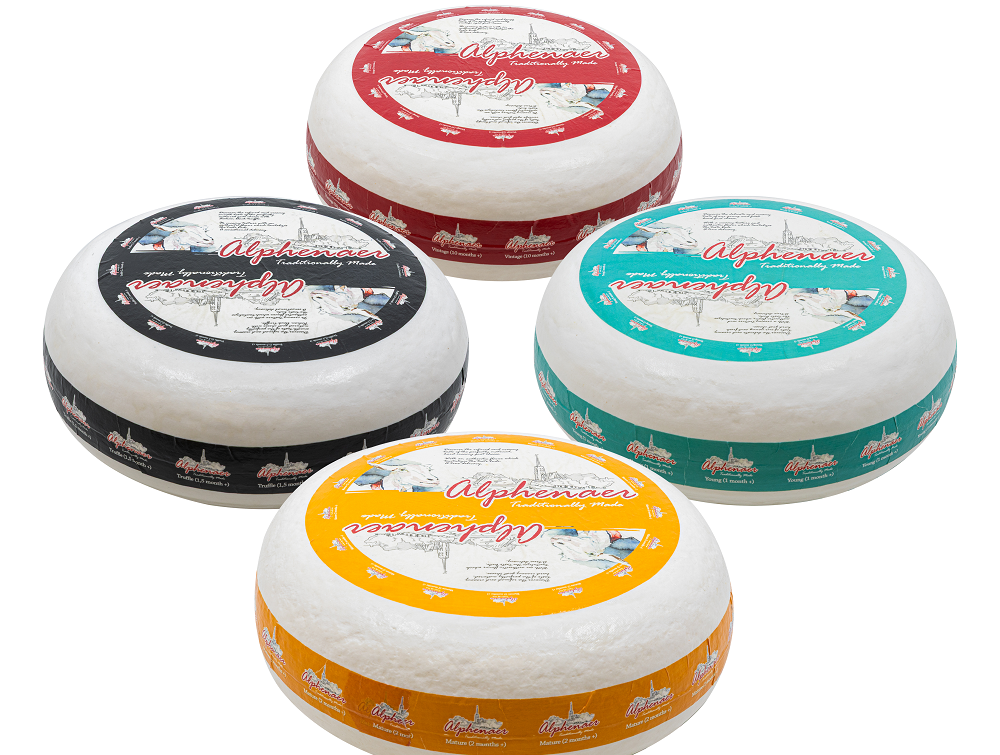
No, gouda is not inherently goat cheese. Gouda refers to a specific cheese-making style that originated in the Netherlands, traditionally made from cow’s milk. However, the term “goat cheese” or “goats cheese” simply indicates any cheese made from goat milk. The confusion often arises because gouda-style cheese can indeed be made from goat milk, creating what’s known as goat milk gouda—a specialty product that combines traditional Dutch cheese-making techniques with the distinctive qualities of goat milk.
And did you know that we also have our own Alphenaer goat’s milk Gouda? It comes in young, mature, vintage and truffle varieties. You can find more information about our hard goat cheeses here.
Understanding the difference between gouda and goat cheese
The confusion between gouda and goat cheese is common in the cheese industry, particularly among B2B buyers seeking specific products for their customers. Gouda refers to a cheese-making method, not the type of milk used. This traditional Dutch cheese style involves specific production techniques including pressing, brining, and ageing that create its characteristic texture and flavour profile.
Goat cheese, on the other hand, encompasses any cheese made from goat milk, regardless of the production method. These can range from fresh, soft cheeses like chèvre to aged hard cheeses, and yes, even gouda-style cheeses. When Dutch cheesemakers apply traditional gouda production methods to goat milk, they create goat milk gouda—a product that bridges both categories.
For professionals in the cheese industry, understanding this distinction is crucial when sourcing products. The overlap occurs when traditional gouda techniques meet goat milk, resulting in unique products that offer the best of both worlds: the familiar gouda texture and ageing characteristics combined with the distinctive tangy, clean flavour profile of goat milk.
What exactly is gouda cheese?
Gouda cheese is a semi-hard to hard cheese that originated in the Netherlands, specifically near the city of Gouda. Traditionally crafted from cow milk, this cheese follows a precise production process that has been refined over centuries. The method involves heating the milk, adding cultures and rennet, cutting the curd, pressing it into moulds, and then brining the wheels in salt water.
The ageing process defines gouda’s character. Young gouda, aged for just a few weeks, offers a mild, creamy texture with subtle flavours. As the cheese matures—sometimes for years—it develops complex, caramel-like notes with crystalline textures that cheese connoisseurs prize. The longer ageing periods create harder textures and more intense flavours, ranging from nutty to butterscotch.
For B2B buyers, understanding these ageing categories helps in selecting the right products. Young gouda melts beautifully for foodservice applications, whilst aged varieties excel on cheese boards and pair wonderfully with wines. The versatility of gouda-style cheeses makes them valuable additions to any professional cheese selection.
Can gouda be made from goat milk?
Yes, gouda can absolutely be made from goat milk. Traditional Dutch cheesemakers have successfully adapted the centuries-old gouda production method to work with goat milk, creating a unique product that maintains the characteristic gouda texture whilst showcasing the distinctive flavour of goat milk. This adaptation requires careful adjustments to account for the different fat and protein content in goat milk compared to cow milk.
The production process for goat milk gouda follows similar steps to traditional gouda but requires expertise in handling goat milk’s unique properties. Goat milk has smaller fat globules and different protein structures, which affect how the curd forms and how the cheese ages. Master cheesemakers adjust temperatures, timing, and cultures to achieve the desired texture and flavour development.
The resulting goat milk gouda offers a fascinating flavour profile. It combines the smooth, creamy texture expected from gouda with the bright, tangy notes characteristic of goat cheese. This creates opportunities for innovative product offerings in the wholesale and foodservice sectors, where unique flavour profiles can differentiate menus and retail selections.
How do you identify goat cheese versus traditional gouda?
Identifying goat cheese versus traditional cow milk gouda requires attention to several key indicators. The most obvious difference is colour—goat cheese typically appears whiter because goat milk lacks beta-carotene, the compound that gives cow milk cheese its yellow hue. This stark white appearance is consistent whether the goat cheese is fresh or aged in gouda style.
Texture and taste provide additional clues. Goat cheese generally has a distinctive tangy flavour with citrus notes, quite different from the buttery, nutty profile of traditional cow milk gouda. Even when made in the gouda style, goat cheese maintains its characteristic tang. The texture can vary, but goat cheeses often feel slightly more crumbly due to the different protein structure.
For B2B buyers, proper labelling is essential. Look for clear indications on packaging that specify the milk source. Certifications and quality marks also help identify authentic products. Professional suppliers should provide detailed product specifications, including milk type, ageing period, and flavour profiles, enabling informed purchasing decisions for retail shelves or restaurant menus.
What are the best uses for goat gouda in professional kitchens?
Goat milk gouda offers exceptional versatility in professional kitchens, combining excellent melting properties with a unique flavour profile that elevates both hot and cold preparations. Its slightly lower melting point compared to cow milk gouda makes it ideal for gratins, fondues, and sauces where a smooth, creamy texture is desired without the heaviness of traditional cheese.
For cheese boards and retail presentations, goat gouda provides an excellent talking point. Its white colour creates visual interest alongside traditional yellower cheeses, whilst its complex flavour—tangy yet mellow, with nutty undertones when aged—pairs beautifully with honey, figs, and crisp white wines. This makes it perfect for upscale restaurants and specialty food retailers looking to offer something distinctive.
| Application | Recommended Age | Pairing Suggestions |
|---|---|---|
| Melting (gratins, sauces) | Young (4-8 weeks) | Fresh herbs, white wine |
| Cheese boards | Medium (3-6 months) | Honey, nuts, dried fruits |
| Grating (salads, pasta) | Aged (6+ months) | Pears, walnuts, port |
Menu differentiation becomes effortless when incorporating goat gouda. Its lighter, brighter profile appeals to health-conscious diners whilst maintaining the satisfaction of traditional cheese. Chefs appreciate its ability to complement rather than overpower delicate ingredients, making it ideal for spring and summer menus.
Key takeaways about gouda and goat cheese varieties
Understanding the distinction between gouda as a cheese style and goat cheese as a milk source category is fundamental for professionals in the cheese industry. Gouda represents a time-honoured Dutch cheese-making technique that can be applied to various milk types, whilst goat cheese encompasses all cheeses made from goat milk, regardless of production method. When these two categories intersect in goat milk gouda, the result is a specialty product that offers unique opportunities for differentiation.
For B2B buyers seeking authentic goat cheese products, goat milk gouda represents an excellent addition to any professional cheese selection. Its versatility spans from foodservice applications to retail offerings, providing the familiar gouda texture with the distinctive, lighter flavour profile of goat milk. This combination appeals to traditional cheese lovers and health-conscious consumers alike.
When sourcing goat cheese varieties, whether fresh spreads, ripened logs, or gouda-style products, partnering with established producers ensures consistent quality and reliable supply. Look for suppliers who understand both traditional cheese-making techniques and the unique properties of goat milk, as this expertise translates directly into superior products that will satisfy your most discerning customers.