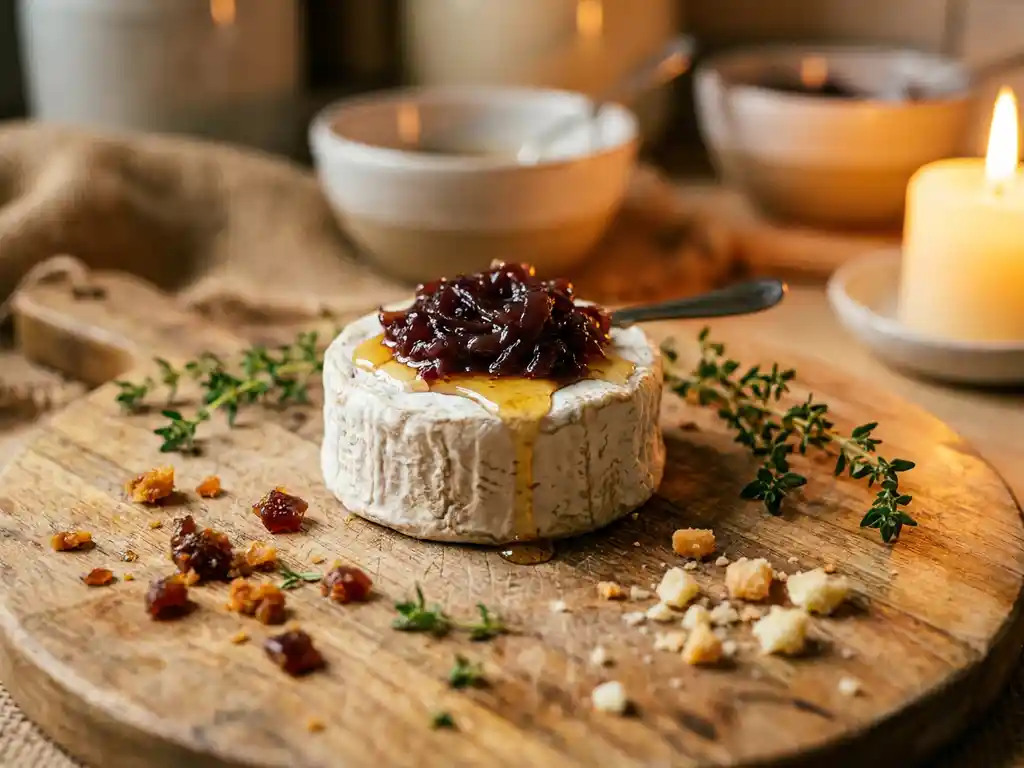
A goat cheese concept built around red onion and honey starts with flavor balance. The fresh, tangy notes of soft goat cheese need sweetness and depth — and that’s exactly what honey and caramelized red onion bring. This concept works well for both retail and foodservice, and it fits the growing demand for artisanal, clean-label products made with recognizable ingredients. In this article, we answer the most common questions about this flavor combination and how to turn it into a successful product concept.
Which flavor combinations work best with goat cheese?
Goat cheese pairs best with ingredients that complement or contrast its signature tangy flavor. Sweet elements like honey, figs, and red onion work great, as do herbs like thyme, rosemary, and oregano. Nuts, dried fruit, and balsamic vinegar are also proven partners that add complexity without overpowering the cheese’s character.
What makes goat cheese so versatile is its wide flavor range. Fresh goat cheese has a light, creamy tanginess that invites sweet pairings. Aged varieties bring more depth and umami, making them a good match for savory elements like olives, sun-dried tomatoes, or smoked ham. For product development, this means goat cheese can go in many directions — from sweet-savory to fully savory, from fresh and bright to rich and complex.
The combination of goat cheese, red onion, and honey falls into the sweet-savory category — one of the most popular flavor profiles in today’s food industry. It’s a combination consumers recognize and appreciate right away, which lowers the barrier to purchase.
Why does red onion pair so well with soft goat cheese?
Red onion pairs so well with soft goat cheese because its mildly sharp, earthy flavor balances out the tangy notes of the cheese. When red onion is caramelized, it develops a natural sweetness and depth that perfectly complements the creamy texture of soft goat cheese. The combination creates a flavor contrast that still feels harmonious.
Texture also plays a role. Soft goat cheese has a smooth, almost spreadable consistency. Caramelized red onion adds a slightly chewy, juicy bite that makes the eating experience more complete. For product developers, this matters because the combination doesn’t just work on flavor — it also performs well in terms of mouthfeel across a wide range of applications, including spreads, quiches, savory tarts, and salads.
Raw red onion gives a sharper, more pungent contrast that works well in cold applications. Roasted or caramelized red onion offers more depth for warm dishes or processed product concepts. The preparation method you choose for the onion plays a big part in shaping the final flavor profile of your product.
How do you incorporate honey into a goat cheese concept?
The most effective ways to use honey in a goat cheese concept are as a finishing touch, as part of a marinade, or as an integrated flavor component in a spread or filling. The key is getting the amount right: honey should support the goat cheese, not overpower it. A light floral honey works subtly, while chestnut or buckwheat honey adds more character to the final product.
Honey as a finishing touch or topping
In retail products like cheese boards, portioned rolls, or packaged goat cheese blocks, honey as a finishing touch is a popular choice. A thin layer of honey over the cheese adds visual appeal, a recognizable sweetness, and a premium look. This works well combined with nuts or thyme as an extra flavor layer.
Honey as an integrated component
For foodservice or industrial processing, you can work honey into a marinade or filling. Think of a goat cheese and honey filling for puff pastry bites, or a spread that combines honey and soft goat cheese with finely chopped red onion. In this case, it’s important to use a consistent honey quality so the flavor profile stays stable from batch to batch.
Which types of goat cheese are best suited for this concept?
For a goat cheese concept built around red onion and honey, fresh soft goat cheese and lightly aged goat cheese are the best choices. Fresh goat cheese has a mild, creamy flavor that leaves room for the sweet and savory layers of honey and onion. Lightly aged varieties add a bit more complexity without taking over the concept.
Fresh goat cheese in log or block form works great for retail. The neutral exterior can be finished with honey and herbs, or filled with a red onion component. For foodservice, spreadable or crumbled goat cheese is more practical, as it’s easy to work with in recipes and preparations.
Strongly aged goat cheese with a pronounced flavor is less suitable for this specific concept. Its dominant taste can overshadow the subtlety of the honey and red onion. Unless you’re intentionally going for a bold, assertive flavor profile, a mild to medium-aged goat cheese is the most versatile base.
How do you develop this concept for retail or foodservice?
For retail, developing a goat cheese, red onion, and honey concept means focusing on recognizability, packaging, and ease of use. Consumers want a product that’s easy to understand and has a clear flavor promise. For foodservice, it’s all about consistency, ease of processing, and scalability — the product needs to perform reliably in a professional kitchen or production line.
Retail development
In retail concepts, this flavor profile works well as a ready-to-use product — a goat cheese log with a honey glaze and red onion flakes, or a spreadable jar combining all three components. Clear labeling with recognizable ingredients fits right into the clean-label trend. Seasonal variants, like an autumn version with chestnut honey, give you a good reason to refresh the shelf and drive product innovation.
Foodservice applications
For foodservice applications, this concept works well as a filling for savory pastries, as a topping for pizza or flatbread, or as part of a cheese board with matching condiments. Here it’s important that the goat cheese behaves consistently during processing and that the flavor intensity remains manageable when scaling up recipes.
Which trends align with a goat cheese, red onion, and honey concept?
A goat cheese concept with red onion and honey connects with several current food trends: the rise of sweet-savory flavor profiles, the growing demand for clean-label products with recognizable ingredients, and the increasing interest in artisanal and locally produced food. In 2026, consumers are actively choosing products with a clear story behind the ingredients.
The combination of goat cheese and honey also fits within the broader trend of premium natural — products that feel luxurious without artificial additives. Red onion adds a familiar, homemade element that reinforces the authenticity of the concept. Together, these ingredients tell a story that appeals to both the conscious consumer and the foodie audience.
This concept also aligns well with the trend toward mindful eating. Many consumers see goat cheese as lighter and easier to digest than cow’s milk cheese, which gives you an extra angle for positioning in the health-conscious segment. Combined with natural sweeteners like honey and the antioxidants found in red onion, this concept offers multiple strong points for compelling product communication.
How we help you develop your goat cheese concept
As a family business with more than thirty years of experience in goat cheese specialties, we know exactly how to turn a flavor idea into a successful product. From our production facility in Alphen, we supply soft and fresh goat cheese specialties under the Alphenaer brand — the perfect base for a concept built around red onion and honey. We actively support product development, from the first taste test all the way to scalable production.
What we offer for your concept development:
- Fresh and soft goat cheese varieties in a range of formats, tailored to retail or foodservice
- Flexibility in private label and custom packaging to match your brand
- Technical support on flavor profiles, texture, and processing properties
- Consistent quality and reliable delivery, even at larger volumes
- Personal contact with our specialists who think along with you throughout your product development process
Curious what DeJong Cheese can do for your concept? Get in touch with our team and find out how we take your goat cheese, red onion, and honey concept from idea to market.
Frequently Asked Questions
How long does a goat cheese product with red onion and honey keep?
Shelf life depends largely on the processing method and packaging technique. Fresh goat cheese products typically keep for two to four weeks when refrigerated (35–45°F), but this can be extended through the use of modified atmosphere packaging (MAP) or pasteurization. For retail concepts, it’s smart to test early on — together with your production partner — which packaging method offers the best balance between shelf life, flavor retention, and clean-label positioning.
What common mistakes should I avoid when developing this flavor concept?
A common mistake is using too much honey, which completely wipes out the characteristic tanginess of the goat cheese and makes the product too sweet. Another pitfall is using raw red onion in processed concepts for warm applications, which can produce a sharp and unpleasant flavor. Also make sure to choose your goat cheese carefully: a strongly aged variety will overpower the subtle sweetness of the honey and onion, throwing off the intended flavor balance.
Is this concept also suitable for plant-based or lactose-free versions?
Goat cheese naturally contains less lactose than cow’s milk cheese and is well tolerated by many people with mild lactose intolerance, but it is not a fully lactose-free product. For a fully plant-based version, you would need to work with plant-based cheese alternatives — and the flavor balance with red onion and honey would need to be retested, since the flavor base is fundamentally different. Honey itself is not vegan, but it can be replaced with plant-based alternatives like agave syrup or maple syrup, which offer a similar sweet profile.
How do I test the flavor balance of my goat cheese, red onion, and honey concept before scaling up?
Start with small-scale taste tests where you combine the three core components in different ratios and have them evaluated by a diverse panel of tasters — ideally representative of your target audience. Pay attention not just to flavor, but also to texture, aroma, and visual appeal. Then develop the most appreciated versions in the final packaging or preparation format, so you can also assess the effect of heating, cooling, or storage on the flavor profile before moving to full-scale production.
Which type of honey gives the best result with goat cheese and red onion?
For a subtle and versatile flavor profile, a light floral honey or acacia honey is the most accessible choice — it supports the goat cheese without overpowering it. If you want to give your product a bolder, more pronounced character, chestnut or buckwheat honey offers more depth and a slight bitterness that contrasts nicely with the sweetness of caramelized red onion. The choice of honey is also a communication tool: a regionally sourced or artisanal honey strengthens the premium and local story of your concept.
How do I position this product on a busy retail shelf?
Lead with a clear flavor promise on the packaging using recognizable ingredients that speak directly to the consumer — for example, ‘soft goat cheese with caramelized red onion and honey.’ Visual elements that convey artisanal quality and naturalness — like kraft paper, handwritten fonts, or a transparent window in the packaging — help reinforce the clean-label positioning. Also consider a seasonal variant or a limited edition as a launch tactic, giving you a reason for shelf placement and consumer attention.
Can I use this concept for private label production?
Yes, the goat cheese, red onion, and honey concept is an excellent fit for private label. The flavor combination is widely recognizable and consumer-friendly, making it a natural addition to the assortment of retailers, specialty food stores, or caterers who want to carry their own brand line. For private label production, it’s important to set clear agreements on flavor consistency, packaging specifications, and minimum order volumes. Production partners with experience in goat cheese specialties, such as DeJong Cheese, can help guide the process from concept to finished product.