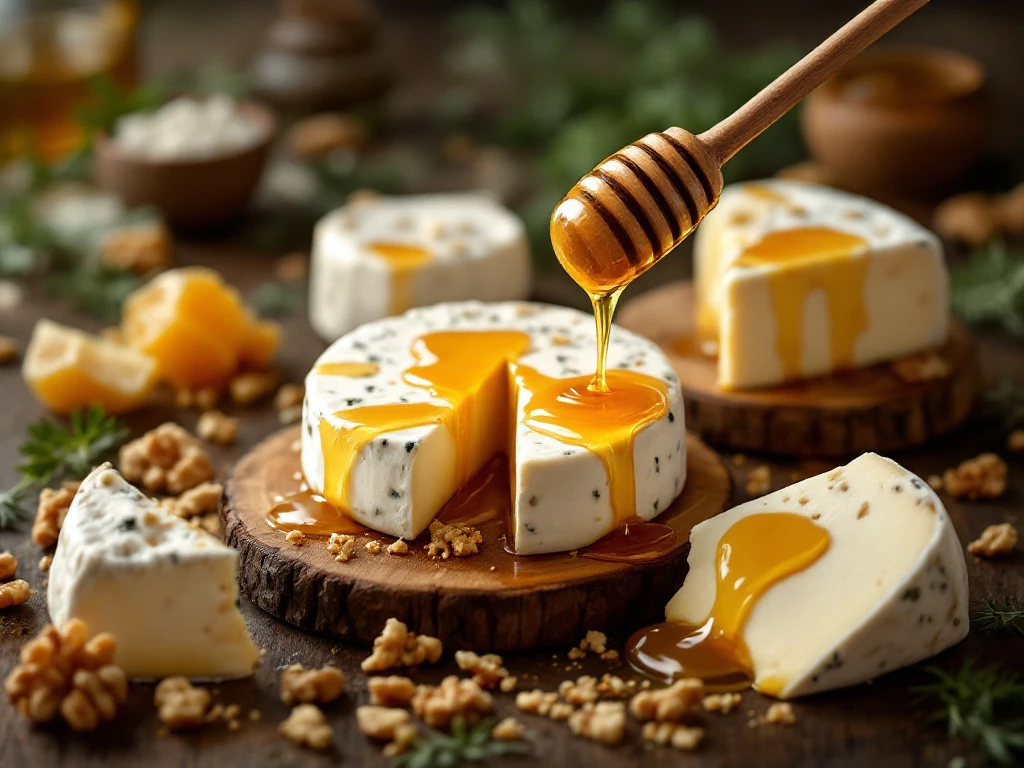
Goat cheese and honey combinations are food pairings that mix the creamy, tangy taste of goat cheese with the sweet taste of honey. This classic combination creates a perfect balance between salty and sweet flavors. The different textures make it taste great. This pairing has become very popular in appetizers, desserts, and special dishes. It works well for both casual meals and fancy dining.
What exactly are goat cheese and honey combinations?
Goat cheese and honey combinations are a classic food tradition. They pair the special tangy taste of goat cheese with honey’s natural sweetness. This pairing works because the creamy texture and mild sour taste of goat cheese goes perfectly with honey’s smooth, sweet taste. This creates a nice balance of flavors.
The combination appeals to many different tastes at the same time. Fresh goat cheese has a light, slightly sour flavor with a smooth texture that spreads easily. Honey adds sweetness with its thick, syrup-like texture. This contrast creates an interesting taste experience where neither flavor is too strong.
From a cooking perspective, these pairings work because fat carries flavor well. Goat cheese’s creamy base is perfect for honey’s sweet compounds. The different textures between soft cheese and liquid honey make it more interesting. Each bite is satisfying. You can serve these combinations at room temperature or slightly warm. They work well for many different dining occasions.
Which types of honey pair best with goat cheese?
Different honey types create unique flavor combinations when paired with goat cheese. Choosing the right combination makes both ingredients taste better. Lavender honey has delicate flower notes that go beautifully with fresh goat cheese. Wildflower honey has a stronger sweetness that works well with aged cheese varieties.
For fresh goat cheese, lighter honeys work very well. Acacia honey has a mild, vanilla-like sweetness that lets the cheese’s natural tang shine through. Orange blossom honey adds citrus flavors that brighten the overall taste. These lighter varieties work well with fresh goat cheese products, including spreads and crumbles. They don’t overpower the delicate taste.
Aged or ripened goat cheeses pair wonderfully with stronger honey varieties. Chestnut honey brings earthy, slightly bitter notes that balance stronger cheese flavors. Truffle honey creates a luxury combination with mature goat cheese, adding rich depth. The key is matching strength levels – mild cheeses with delicate honeys, and strong cheeses with bolder honey varieties.
How do you serve goat cheese and honey as an appetizer?
Serving goat cheese and honey as an appetizer needs attention to presentation, temperature, and side dishes. The cheese should be at room temperature for the best texture and flavor. Take it out of the refrigerator 20-30 minutes before serving. Honey works best when slightly warmed because it becomes more liquid and easier to pour.
You can plate this in different ways, from simple to elegant. For individual servings, place small rounds of goat cheese on serving spoons or small plates. Drizzle honey in an attractive pattern. Goat cheese rounds work perfectly for this, offering pre-portioned convenience. For sharing platters, arrange cheese on wooden boards with small honey pots for guests to serve themselves.
Important side dishes make the experience much better. Toasted walnuts or almonds add crunch and go well with both flavors. Fresh herbs like thyme or rosemary provide aromatic contrast. Crackers, toasted bread, or sliced baguette serve as neutral bases that don’t compete with the main flavors. Fresh or dried figs, grapes, or pear slices offer additional sweetness and different textures. Consider serving about 30g cheese per person for appetizers, with honey served separately so people can choose how much they want.
What are popular goat cheese and honey recipes?
Classic goat cheese and honey recipes range from simple preparations to more complex dishes. The easiest option involves spreading fresh goat cheese on toasted baguette slices, drizzling with honey, and finishing with crushed pistachios or fresh herbs. This basic appetizer is elegant and requires very little preparation time.
Small pastry cups filled with whipped goat cheese and honey create bite-sized appetizers perfect for parties. Mix goat cheese spread with a little cream for lighter texture, pipe into pre-baked pastry shells, and finish with honey and chopped herbs. For warm dishes, baked goat cheese rounds with honey glaze offer comfort food appeal. Simply coat cheese rounds in breadcrumbs, bake until golden, and drizzle with warm honey.
More advanced recipes include goat cheese and honey tarts with caramelized onions, fresh goat cheese salads with honey dressing, or stuffed dates with goat cheese and honey. Pizza applications work beautifully too – goat cheese crumbles melt perfectly when combined with honey, creating a sweet-savory topping. For dessert applications, honey-sweetened goat cheese mousse or cheesecake provides an unexpected finish to meals.
Why do goat cheese and honey complement each other so well?
The complementary relationship between goat cheese and honey comes from basic flavor chemistry principles. Goat cheese contains lactic acid that gives it its characteristic tangy taste. Honey’s natural sugars create sweetness. When combined, these contrasting flavor compounds stimulate different taste areas at the same time, creating a more complex and satisfying taste experience.
Fat plays an important role in this pairing. Goat cheese’s creamy fat content acts as a flavor carrier, helping to spread honey’s aromatic compounds across the mouth. This fat also reduces honey’s sweetness, preventing it from becoming too sweet. The protein in cheese provides substance and makes you feel satisfied, while honey’s simple sugars offer immediate flavor impact.
Cultural traditions worldwide have recognized this natural combination. Mediterranean cuisines have long featured these pairings, from Greek appetizers to French cheese courses. The texture contrast between smooth, spreadable cheese and thick honey creates additional sensory interest. Temperature also influences the experience – slightly warm cheese becomes more aromatic, while room-temperature honey flows better, allowing optimal mixing of flavors in the mouth.
Understanding these complementary qualities helps create better pairings. Fresh, mild goat cheeses pair beautifully with delicate honeys, while aged or flavored options can handle stronger honey types. This versatility makes goat cheese and honey combinations suitable for everything from simple snacks to sophisticated entertaining. This explains their lasting popularity across cultures and cuisines.