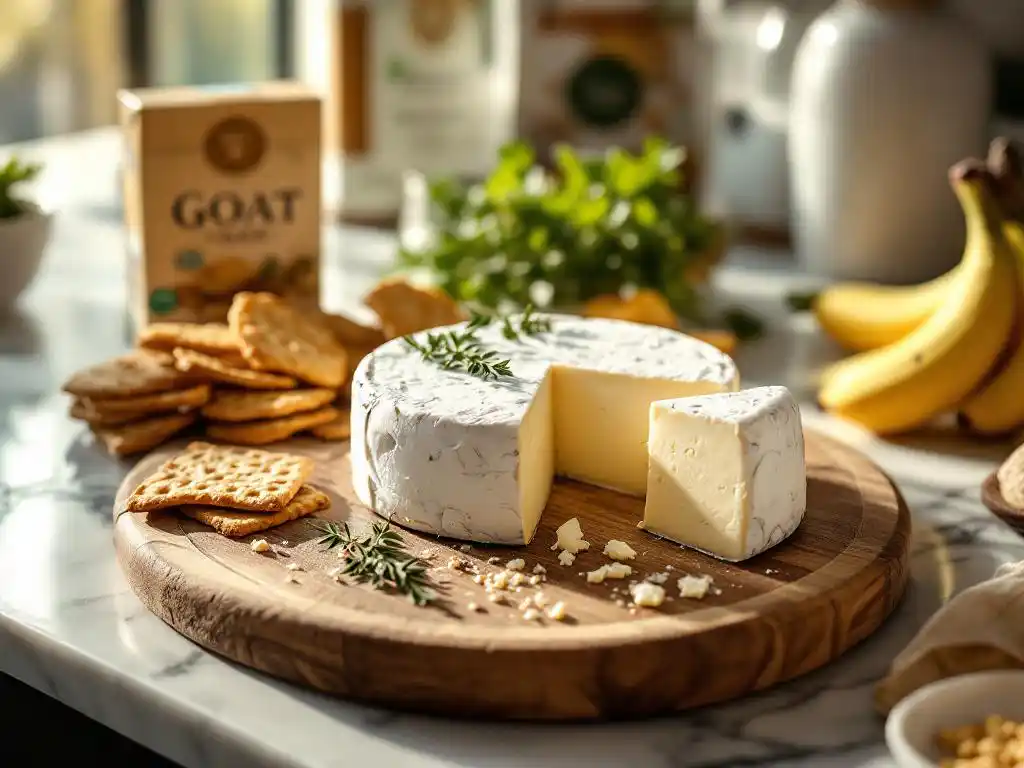
Global brands increasingly integrate goat cheese into their product lines to meet evolving consumer demand for premium, health-conscious ingredients. This strategic shift responds to growing awareness of lactose sensitivity, rising interest in artisanal products, and the pursuit of distinctive flavour profiles that differentiate brands in competitive markets. Understanding how international companies source, implement, and overcome challenges associated with goat cheese integration provides valuable insights for suppliers and manufacturers navigating this expanding market segment.
What is driving global brands to integrate goat cheese into their products?
Consumer health consciousness and premium product positioning drive global brands to incorporate goat cheese into their offerings. The ingredient appeals to lactose-sensitive consumers while delivering distinctive flavour profiles that support premium pricing strategies. Market trends show increasing demand for artisanal, natural ingredients that communicate quality and authenticity.
The shift towards goat cheese reflects broader dietary preferences emerging across international markets. Digestibility advantages make goat cheese attractive for health-focused product lines, as its smaller fat globules and different protein structure often prove easier to digest than cow’s milk products. This positions brands to capture growing segments of consumers seeking alternatives without compromising on taste or quality.
Premium positioning opportunities create compelling business cases for goat cheese integration. The ingredient’s association with artisanal production and Mediterranean diets allows brands to justify higher price points while meeting consumer expectations for sophisticated, globally inspired products. Ready meal manufacturers particularly benefit from goat cheese’s ability to elevate perceived value and differentiate offerings in crowded market segments.
How do international companies source goat cheese for large-scale production?
International companies establish direct partnerships with specialised producers to secure a consistent goat cheese supply for large-scale operations. These relationships typically involve private-label arrangements, custom specifications, and long-term contracts that ensure quality consistency across production cycles. Strategic sourcing requires balancing volume needs with seasonal availability while maintaining strict quality standards.
Supply chain strategies must address unique challenges in goat cheese procurement. Seasonal production variations require careful planning, as goat milk production naturally fluctuates throughout the year. Successful companies work with suppliers offering flexible capacity and storage solutions to maintain year-round availability. This often involves establishing relationships with multiple producers across different regions to mitigate supply risks.
Quality consistency remains paramount for international brands integrating goat cheese. Suppliers must demonstrate robust quality control systems, comprehensive documentation, and the ability to meet specific product specifications. Certification requirements typically include food safety standards recognised across international markets, enabling seamless cross-border trade. Companies increasingly seek suppliers offering both bulk formats for industrial processing and consumer-ready packaging options.
What are the most successful goat cheese applications in global food products?
Ready meals and pizza toppings represent the most successful goat cheese applications in global food manufacturing. These categories benefit from goat cheese’s distinctive flavour and melting characteristics, which enhance product appeal without requiring significant recipe modifications. Salad ingredients and sandwich fillings follow closely, where crumbled or spreadable formats integrate seamlessly into existing production processes.
Texture adaptations prove crucial for successful integration across different applications. Pizza manufacturers often require specific moisture levels and melting properties to ensure consistent performance in high-temperature ovens. Ready meal producers need goat cheese that maintains its texture through freezing and reheating cycles. Packaging innovations such as portion-controlled formats and modified-atmosphere packaging extend shelf life while preserving quality characteristics essential for each application.
Gourmet snack categories increasingly incorporate goat cheese as a premium ingredient. Crackers, crisps, and savoury biscuits benefit from goat cheese powder or freeze-dried formats that deliver concentrated flavour without moisture concerns. These applications demonstrate how technical adaptations enable goat cheese integration across diverse product categories, expanding market opportunities for innovative brands.
Which quality standards do global brands require for goat cheese suppliers?
Global brands require comprehensive food safety certifications, including HACCP, BRC, and IFS standards, from goat cheese suppliers. These certifications ensure systematic approaches to food safety management, which are crucial for international trade and brand protection. Documentation requirements extend beyond basic compliance to include full traceability systems tracking products from farm through final delivery.
Microbiological parameters and consistency specifications form critical quality requirements. Suppliers must demonstrate the capability to meet strict limits for pathogens, maintain consistent pH levels, and control moisture content within narrow ranges. Regular third-party audits verify ongoing compliance with these standards, providing brands with confidence in supplier reliability. Testing protocols typically include both raw material screening and finished product verification.
Cross-border trade demands additional documentation, including health certificates, origin declarations, and evidence of compliance with importing-country regulations. Successful suppliers maintain comprehensive quality management systems that streamline documentation while ensuring rapid responses to customer queries. This systematic approach to quality control enables smooth integration into global supply chains while protecting brand reputation.
How do brands overcome the challenges of goat cheese integration?
Brands overcome goat cheese integration challenges through strategic product development and consumer education initiatives. Custom formulations address specific technical requirements while maintaining the authentic goat cheese characteristics that consumers expect. Price point management involves careful positioning and clear communication of value propositions that justify premium pricing.
Shelf life optimisation requires close collaboration between brands and suppliers to develop solutions that meet distribution requirements. Modified-atmosphere packaging, natural preservation systems, and careful moisture control extend usability while maintaining quality. Supply chain flexibility proves essential, with successful brands establishing backup suppliers and maintaining strategic inventory to manage seasonal variations.
Consumer education plays a vital role in successful market introduction. Brands invest in marketing strategies that highlight the benefits of goat cheese while addressing potential flavour concerns through sampling programmes and recipe suggestions. This educational approach builds consumer confidence and encourages trial, particularly in markets where goat cheese remains relatively unfamiliar.
How DeJong Cheese helps global brands with goat cheese integration
We support global brands through comprehensive goat cheese solutions tailored to specific integration challenges. Our expertise in custom product development enables us to create formulations that meet exact specifications for various applications, from ready meals to gourmet snacks. With decades of experience in traditional cheesemaking combined with modern production capabilities, we deliver the consistent quality that international brands require.
Our support services for B2B clients include:
- Flexible bulk packaging options from 1 kg to 20 kg formats
- Private-label capabilities with custom branding solutions
- Year-round supply consistency through strategic production planning
- Complete international certification compliance (BRC, IFS, HACCP)
- Dedicated technical support for new product development
- Custom formulations for specific melting, texture, or flavour requirements
We understand the complexities of integrating goat cheese into global product lines. Our team provides hands-on support throughout the development process, from initial concept through to full-scale production. Whether you need specific moisture levels for pizza applications or extended shelf life for retail products, we work closely with your technical teams to achieve optimal results.
Ready to explore how our goat cheese solutions can enhance your product portfolio? Contact our team to discuss your specific requirements. Learn more about our extensive product range or find local distribution partners to experience our quality firsthand.
Frequently Asked Questions
What are the typical minimum order quantities when sourcing goat cheese for industrial applications?
Minimum order quantities for industrial goat cheese applications typically start at 500-1000 kg per delivery, depending on the supplier and product format. Many suppliers offer flexible arrangements for initial trials with smaller quantities (100-200 kg) to test product compatibility, then scale up to full production volumes. Container-load quantities (10-20 tonnes) often provide the best pricing for established product lines.
How can we test goat cheese compatibility with our existing production equipment?
Start by requesting technical data sheets and conducting small-scale trials on your production line to assess melting behaviour, moisture release, and equipment compatibility. Most suppliers offer technical support teams who can visit your facility to optimise processing parameters. Key factors to test include temperature stability, shredding or crumbling performance, and behaviour during freezing/thawing cycles if applicable to your process.
What's the typical shelf life for goat cheese in industrial applications, and how can it be extended?
Industrial goat cheese formats typically offer 6-12 months shelf life when properly stored, with frozen options extending to 18-24 months. Shelf life can be extended through modified atmosphere packaging (MAP), natural preservatives like cultured dextrose, or by using lower-moisture formats. Work with suppliers to specify optimal packaging solutions for your distribution timeline and storage conditions.
How do we calculate the cost impact of switching from cow's milk cheese to goat cheese in our products?
Calculate total cost impact by considering the price premium (typically 20-40% higher than cow’s milk cheese), potential yield differences, and reduced waste from longer shelf life. Factor in marketing advantages and premium positioning opportunities that can support 15-25% higher retail prices. Many brands find the overall margin improvement justifies the higher ingredient cost, particularly in premium product lines.
What are the most common formulation mistakes when first working with goat cheese?
Common mistakes include using the same moisture ratios as cow’s milk cheese (goat cheese often requires adjustment), over-seasoning to mask the natural flavour, and incorrect storage temperatures that accelerate flavour development. Avoid treating goat cheese as a direct substitute; instead, reformulate recipes to highlight its unique characteristics. Work closely with suppliers’ technical teams to optimise formulations for your specific application.
How do we communicate goat cheese benefits to retailers who are unfamiliar with the ingredient?
Provide retailers with clear data on growing consumer demand, including market growth statistics and consumer willingness to pay premium prices. Create comparison sheets highlighting digestibility benefits, flavour differentiation, and successful case studies from other markets. Offer in-store sampling programmes and point-of-sale materials that educate consumers, which helps drive retail confidence and sales velocity.
Related Articles
- How do you calculate the true cost including logistics when buying goat cheese?
- What KPIs do you use to evaluate a goat cheese producer on delivery reliability?
- How to budget for seasonal goat cheese price fluctuations?
- What is the difference between soft-ripened and hard goat cheese?
- What is chevre goat cheese?