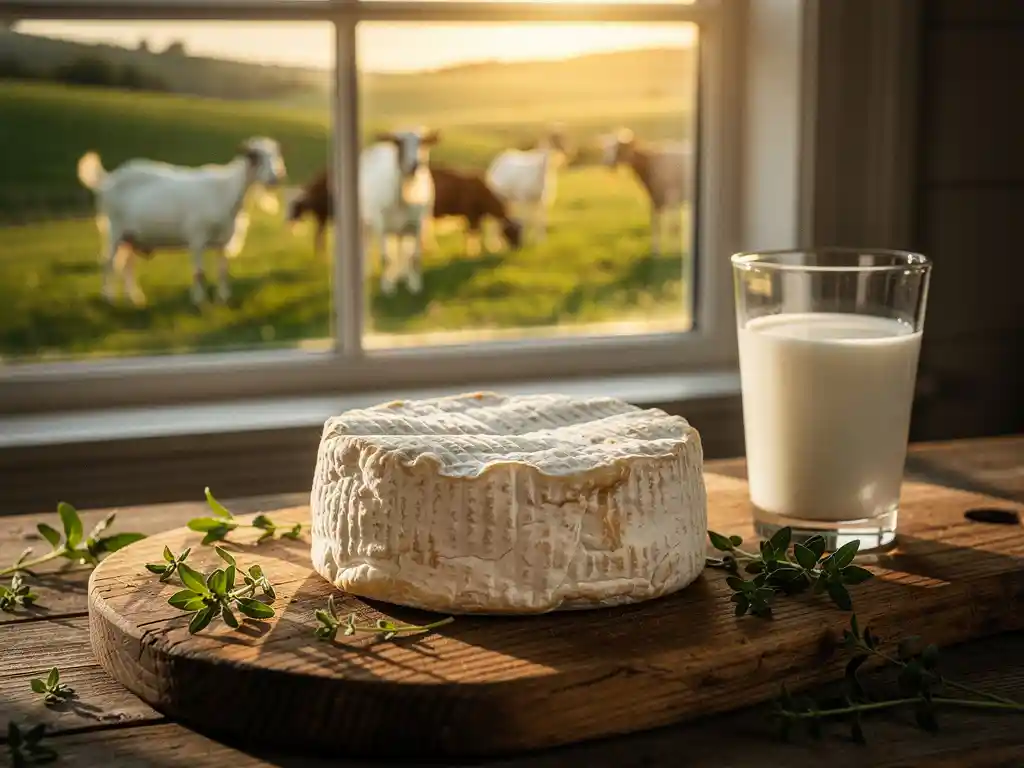
Transparency about milk origin is becoming increasingly important in the food industry, especially for specialty products like goat cheese. For professional buyers responsible for the quality and safety of their products, knowing where the milk comes from is no longer a luxury but a necessity. This article answers the key questions about transparency in milk origin and helps you make better purchasing decisions.
What does transparency about milk origin mean for goat cheese?
Transparency about milk origin means that a goat cheese producer provides openness about the exact source of the milk, including which farms supply it, how the goats are kept, and what quality controls are applied. This includes traceability from farm to final product and access to relevant certifications and test results.
For the food industry, transparency goes beyond just knowing which region the milk comes from. It means insight into the complete supply chain, from the feed the goats receive to the transport conditions of the milk to the cheese factory. A transparent supplier shares information about seasonal influences on milk quality, processing time between milking and cheese production, and any treatments the milk undergoes.
This openness enables buyers to better assess risks and ensure the consistency of their own final products. It’s about creating a trust relationship where all relevant information is available for audits and quality controls.
Why is milk origin important for goat cheese quality?
The origin of goat milk directly determines the taste, texture, and processing properties of the cheese, as factors like feed, season, and farming methods influence milk composition. Milk from goats eating fresh grass has different properties than milk from goats on a dry feed diet, resulting in measurable differences in fat and protein content.
For industrial processors, these differences are crucial. Fat content influences the melting behavior of fresh goat cheese on pizzas, for example, while protein content determines firmness in ready meals. Seasonal variations can lead to differences in natural enzymes in the milk, which in turn affects the shelf life of the final product.
Additionally, geographical location plays a role in the mineral composition of the milk. Goats grazing on calcium-rich soils produce milk with a different calcium profile than goats on sandy soils. This affects coagulation during the cheese production process and ultimately the structure of products like spreadable goat cheese or goat cheese crumble.
Consistent milk origin therefore means predictable product properties, which is essential for standardized production processes in the food industry.
What risks do you face without transparent milk origin?
Without transparent milk origin, you risk quality fluctuations, food safety issues, and compliance problems that can lead to product recalls, reputation damage, and financial losses. The lack of traceability makes it impossible to quickly identify the source of problems when quality deviations occur.
Concrete risks for the food industry include:
- Inconsistent product properties: Without knowledge of milk origin, processing properties like melting behavior or pH value can suddenly vary, leading to production problems.
- Hidden allergens: Unknown feed sources can introduce traces of allergens not listed on the label.
- Certification problems: Many retailers require specific sustainability certificates that cannot be guaranteed without transparent origin.
- Seasonal surprises: Sudden changes in milk composition due to seasonal transitions can disrupt production processes.
- Legal liability: In food safety incidents without clear traceability, the processor often bears full responsibility.
These risks translate directly to higher operational costs through additional quality controls, production losses, and potential damage claims. For companies working with aged goat cheese or fresh goat cheese in large volumes, these risks can be disastrous for business continuity.
How do you recognize a transparent goat cheese supplier?
A transparent goat cheese supplier is characterized by proactive information sharing about milk sources, accessible documentation, willingness to undergo audits, and concrete answers to technical questions about origin and quality. They voluntarily share certificates, test results, and have a clear traceability system.
Specific characteristics to look for:
- Documentation: All relevant certificates such as IFS Food or DGZK are directly available and up-to-date.
- Traceability system: Every product can be traced to specific milk deliveries within 24 hours.
- Fixed supplier relationships: Long-term partnerships with a limited number of dairy farmers.
- Openness about production location: Clarity about where the cheese is made and under what conditions.
- Technical specifications: Detailed product sheets with consistent quality parameters for products like goat cheese slices or goat cheese balls.
- Visiting policy: Possibility to visit production locations and partner companies.
Also pay attention to how a supplier responds to specific questions. A transparent partner will give concrete answers about, for example, the fat content of their spreadable goat cheese or the exact origin region of the milk for their goat cheese slices. Vague answers or unwillingness to share details are red flags.
What are the benefits of working with a transparent supplier?
Working with a transparent supplier offers predictable quality, faster problem-solving for deviations, better risk management, and a stronger negotiating position with retailers who demand transparency. This translates to lower operational costs and higher customer satisfaction.
The concrete benefits for your business operations:
- Consistent product quality: Predictable properties of fresh goat cheese mean less waste in your production line.
- Proactive communication: You are informed about seasonal changes that may affect milk composition.
- Faster innovation: With detailed knowledge about milk properties, you can develop new products more specifically.
- Compliance certainty: All documentation for audits is immediately available, saving time and stress.
- Cost savings: Fewer quality controls needed due to reliable input materials.
- Market advantage: You can carry transparency claims through to your own customers.
For companies working with specialties like aged goat cheese or innovative applications like goat cheese for pizzas, transparency also means access to technical expertise. A transparent supplier shares knowledge about optimal processing conditions and helps solve production challenges.
How do you ask the right questions about milk origin to suppliers?
Start with concrete questions about milk suppliers, ask about traceability systems, inquire about seasonal variations in milk quality, and request specific documentation such as milk test results and supplier audits. Formulate questions so they require measurable, verifiable answers.
Essential questions for your supplier evaluation:
- Milk suppliers: “How many fixed milk suppliers do you have and what is the average distance to your production location?”
- Quality control: “Which parameters do you test in the delivered milk and with what frequency?”
- Seasonal influences: “How does the fat and protein content of your milk vary throughout the year?”
- Traceability: “How long does it take to trace a specific batch of cheese to the milk supplier?”
- Certification: “What certifications do your milk suppliers have and how often are these audited?”
- Feed management: “What is the standard feed composition for the goats and are there seasonal changes?”
Also ask for concrete examples. If you’re purchasing spreadable goat cheese, for instance, ask: “How do you ensure that spreading properties remain consistent despite seasonal variations in the milk?” For goat cheese crumble, it’s relevant to ask: “How does milk origin affect the crumbliness and shelf life?”
When evaluating answers, look for specificity and willingness to share documentation. A supplier who can immediately provide figures and certificates demonstrates their level of transparency.
How De Jong Cheese helps with transparent milk origin
As a traditional family business since 1995, we at De Jong Cheese understand the importance of transparency about milk origin. Our Alphenaer goat cheese specialties are produced with milk from selected local farms in the Alphen region, where we offer complete openness about our supply chain.
Our transparency approach includes:
- Fixed partnerships: Long-term relationships with dairy farmers in the immediate vicinity of our production location.
- Complete traceability: Every product, from fresh goat cheese to aged specialties, is traceable to specific milk deliveries.
- Open communication: Proactive information about seasonal influences and quality variations.
- Certifications: IFS Food-certified with all relevant documentation directly available.
- Technical support: Our experts share knowledge about milk properties and optimal processing conditions.
- Visiting program: Possibility to visit our production location and partner companies.
For industrial processors, we offer detailed specifications for our complete range, from spreadable goat cheese to goat cheese pizza applications. We share not only where our milk comes from, but also how this affects the product properties that are crucial for your production processes.
Would you like to know more about our transparent approach and how this can improve your purchasing and production processes? Contact us for a personal conversation or visit our website for more information about our complete product range. You can also visit us at one of our sales points to experience our products yourself.
Frequently Asked Questions
How can I as a buyer manage seasonal variations in milk quality in my production process?
Plan your production flexibly by preparing seasonal recipe adjustments, work closely with your supplier for early warnings about quality shifts, and consider building strategic inventory during optimal milk quality periods. Regularly test incoming batches on critical parameters like fat and protein content to adjust your processes timely.
What documentation should I minimally request to verify transparency?
Request at minimum current IFS Food or BRC certification, milk test results from the last 12 months, an overview of all milk suppliers with locations, and traceability documentation of recent deliveries. Additionally, audit reports from dairy farms, feed specifications, and transport protocols are valuable for a complete transparency assessment.
What are the first steps to switch to a more transparent goat cheese supplier?
Start by inventorying your current quality challenges and set priorities for transparency requirements. Request samples from potential suppliers and test these in your production environment, evaluate their documentation and traceability systems, and plan a supplier audit or company visit. Implement the transition in phases to minimize production risks.
How do I prevent transparency requirements from leading to higher purchasing costs?
Transparency often delivers cost savings through reduced quality controls, lower waste, and fewer production disruptions. Negotiate multi-year contracts where you get lower prices in exchange for volume guarantees, and calculate the Total Cost of Ownership including risk reduction. Also ask about joint process optimization where efficiency gains are shared.
What technical parameters are most important to monitor with transparent milk origin?
Focus on parameters that directly affect your end product: fat and protein content for texture and melting behavior, pH value for shelf life, cell count for general milk quality, and seasonal enzyme levels. For specific applications like pizza cheese, calcium content is crucial, while for spread cheese, moisture content and fatty acid composition are important.
How do I integrate transparency information into my own quality system?
Develop a supplier database where all transparency information is stored centrally and linked to your incoming raw material controls. Set up automatic alerts for deviating parameters, integrate traceability data into your ERP system, and train your quality team in interpreting milk origin data. Make transparency part of your supplier evaluation with concrete KPIs.
Related Articles
- What KPIs do you use to evaluate a goat cheese producer on delivery reliability?
- How does the aging process of aged goat cheese influence the flavor in a final product?
- How to explain goat cheese value proposition to customers?
- What demographic prefers goat cheese products in restaurants?
- What spices work well with goat cheese?