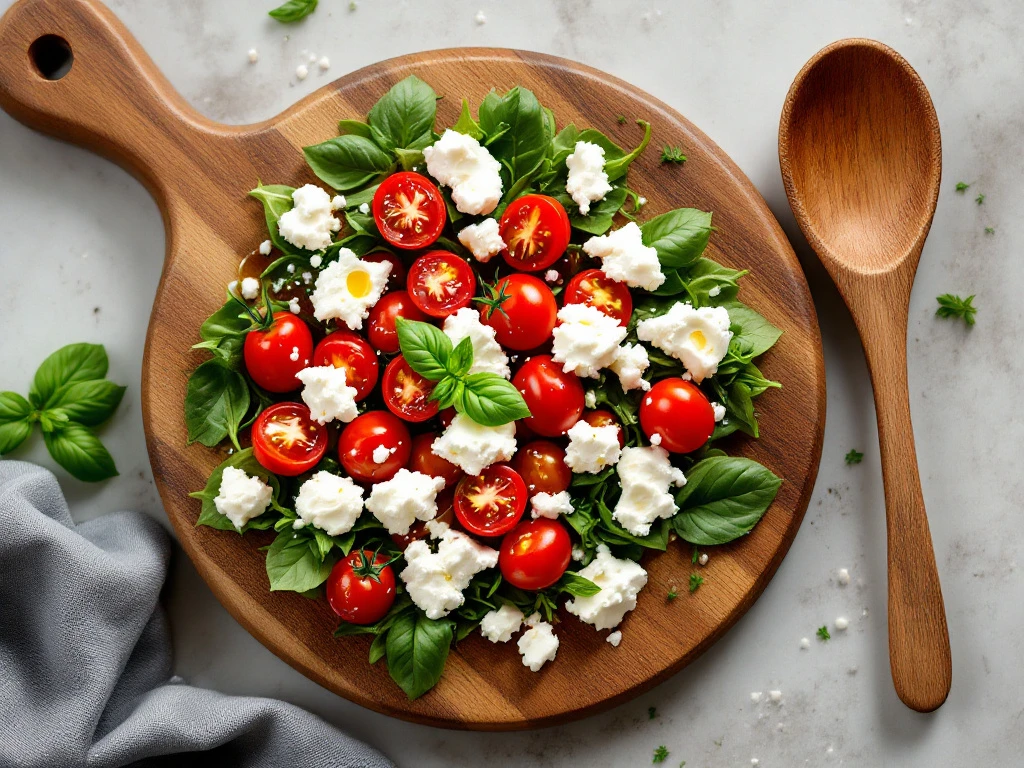
To make a goat cheese and tomato salad, mix fresh goat cheese with ripe tomatoes, mixed greens, and simple dressing. The important thing is to balance the creamy, tangy cheese with the sweet taste of tomatoes. Add good olive oil and fresh herbs. This popular mix makes a fresh dish that is perfect for any time of year. It takes only 15 minutes to make.
What ingredients do you need for a perfect goat cheese and tomato salad?
A perfect goat cheese and tomato salad needs fresh goat cheese (broken into pieces or sliced), ripe tomatoes, mixed salad leaves, extra virgin olive oil, balsamic vinegar, and fresh herbs like basil or thyme. You can also add toasted nuts, honey, and sea salt. The quality of each ingredient is very important for the final taste.
For the goat cheese, you have different choices. Fresh goat cheese has a mild, creamy texture that becomes soft when mixed with warm ingredients. Older types have stronger flavors and are firmer. We make different forms like crumbles, pearls, and slices. Each type adds different textures to your salad. Crumbles work well scattered around, while our goat cheese rounds make nice individual portions.
Choosing tomatoes is equally important. Special varieties offer better flavor and look more attractive. Cherry tomatoes are sweet and come in easy bite-sized pieces. Roma tomatoes work well when you need firmer flesh that keeps its shape. Choose tomatoes that are perfectly ripe for the best flavor balance with the tangy cheese.
Your green leaves should support the other flavors, not compete with them. Baby spinach adds mild earthy taste, rocket brings peppery notes, and mixed lettuce gives different textures. Fresh herbs make the whole dish better – basil goes perfectly with both tomatoes and goat cheese, while thyme adds subtle complexity.
Good quality olive oil and vinegar make your dressing base. Extra virgin olive oil should taste fruity and fresh. Aged balsamic vinegar adds sweetness and depth. For people with special diets, you can replace the cheese with our spreadable goat cheese for easier portions. You might also try plant-based alternatives while keeping the salad’s Mediterranean style.
How do you prepare and combine goat cheese with tomatoes for maximum flavor?
Prepare goat cheese and tomatoes by taking both out of the fridge 30 minutes before serving. Cut large tomatoes into 5mm thick slices, break or slice cheese into portions, and put them in layers on a plate. This temperature change lets flavors develop fully while creating an attractive presentation.
Preparing tomatoes needs careful attention. Use a sharp knife with small teeth for clean cuts without crushing. Remove extra seeds if you want, though they add valuable taste. For cherry tomatoes, cut them in half to release their juices, which mix beautifully with the cheese. Gently pat tomatoes with kitchen paper if they are very juicy to prevent a watery salad.
Handling goat cheese is different depending on the type. Our fresh cheese breaks easily when cold but becomes more spreadable at room temperature. For sliced presentations, use a warm knife dipped in hot water and dried. When using our goat cheese pearls, they can be scattered whole or gently broken to release their herb oils into the salad.
The science behind this pairing involves matching flavor compounds. Creamy goat cheese contains lactic acid that works well with tomatoes’ natural acids. This creates a balanced taste where neither ingredient is too strong. Layer ingredients just before serving to keep different textures and prevent the cheese from breaking down too much.
Professional plating makes both flavor and presentation better. Put cheese and tomato slices in overlapping circles, pour dressing in a spiral pattern, and finish with fresh herbs. This method ensures every bite has the perfect mix of ingredients while creating restaurant-quality visual appeal.
What dressing works best with goat cheese and tomato salad?
Classic vinaigrette works best with goat cheese and tomato salad. Mix three parts olive oil to one part acid (vinegar or lemon juice), with salt, pepper, and Dijon mustard. This mix creates a balanced dressing that supports the delicate cheese and fresh tomatoes without being too strong.
The traditional vinaigrette can be improved in several ways. Mix extra virgin olive oil with balsamic vinegar, adding a teaspoon of Dijon mustard to help it blend. Add minced shallots for subtle bite and fresh herbs that match those in your salad. The mustard not only helps bind the dressing but adds complexity that connects the tangy cheese and sweet tomatoes.
Balsamic reduction offers an elegant alternative. Cook quality balsamic vinegar until reduced by half, creating a thick consistency that sticks well to ingredients. This concentrated flavor needs less quantity, preventing your salad from becoming too wet. The natural sweetness becomes stronger during cooking, perfectly matching our tangy fresh goat cheese varieties.
Herb oils provide aromatic complexity. Warm olive oil gently with fresh thyme, rosemary, or basil, then strain and cool. This technique takes out essential oils without browning the herbs. For a honey version, mix honey with lemon juice and olive oil, creating a sweet-tart balance that works particularly well with our honey-flavored goat cheese options.
How you apply the dressing matters as much as the recipe. Dress greens lightly first, then arrange cheese and tomatoes before final drizzling. Use about two tablespoons of dressing per serving, adding more if needed. This prevents pooling at the bottom while ensuring even distribution. Always dress salads just before serving to keep the best texture and prevent wilting.
Which variations can elevate your basic goat cheese tomato salad?
Make your basic salad better with warm goat cheese rounds, grilled tomatoes, seasonal fruits, toasted nuts, or grains like quinoa. These additions create different textures and flavor complexity while keeping the classic pairing’s appeal. Each variation transforms the simple salad into a substantial, restaurant-worthy dish.
Warm goat cheese rounds create an irresistible contrast. Cover our ripened goat cheese slices in breadcrumbs, pan-fry until golden, and place on top of dressed greens. The warm, creamy inside contrasts beautifully with the crispy coating and cool, fresh vegetables. This technique works particularly well with our firmer aged varieties that keep their shape when heated.
Grilling or roasting tomatoes makes their flavors stronger through caramelization. Cut tomatoes in half, brush with oil, and grill until charred edges appear. The smoky sweetness pairs exceptionally with our herb-marinated goat cheese pearls. Alternatively, slow-roast cherry tomatoes until they burst, creating an intensely flavored base that mixes with creamy cheese.
Seasonal fruit additions provide unexpected harmony. Fresh figs complement goat cheese’s tanginess with honey-like sweetness, while grilled peaches add summery brightness. Pomegranate seeds add jewel-like crunch and tart bursts. These fruits work especially well with our natural goat cheese varieties, allowing their pure flavor to shine.
Protein additions transform salads into complete meals. Crispy prosciutto adds salty depth, while grilled prawns provide elegant sophistication. For vegetarian options, toasted pine nuts or candied walnuts add protein and textural interest. Quinoa or farro adds substance while keeping the dish’s fresh character. These additions pair beautifully with our versatile goat cheese crumbles, which spread evenly throughout heartier salads.
When should you serve goat cheese and tomato salad for best results?
Serve goat cheese and tomato salad as a light lunch, elegant starter, or summer side dish when tomatoes are at their best season. The ideal serving temperature is cool but not cold, allowing flavors to express fully. Prepare parts ahead but put together just before serving for the best freshness and texture.
This versatile salad suits many occasions. As a starter, it stimulates appetites without being too heavy, particularly before heavier main courses. For lunch, add proteins or grains to create satisfying meals. During summer entertaining, it provides refreshing relief from barbecue heaviness. The visual appeal makes it perfect for special occasions where presentation matters.
Temperature considerations significantly impact enjoyment. Take ingredients out of the fridge 20-30 minutes before serving, allowing flavors to develop. However, greens should remain crisp and cool. This temperature balance ensures our fresh goat cheese keeps its creamy texture while tomatoes release their full aromatic potential.
Make-ahead strategies help entertaining flow smoothly. Wash and dry greens, storing them wrapped in kitchen paper. Prepare dressing up to three days ahead, shaking before use. Tomatoes can be sliced an hour before serving, seasoned and left to develop flavor. Our goat cheese crumbles or pearls can be portioned in advance. Combine everything just before guests arrive.
Wine pairings make the dining experience better. Crisp white wines like Sauvignon Blanc or Albariño complement the salad’s fresh flavors. Rosé provides a beautiful color match while bridging cheese and tomato elements. The salad pairs wonderfully with grilled fish, roasted chicken, or vegetarian mains. Consider seasonal availability – while greenhouse tomatoes work year-round, nothing matches the flavor of summer’s peak season combined with our artisanal goat cheese selections.
Creating the perfect goat cheese and tomato salad combines quality ingredients with thoughtful preparation. From selecting the right cheese variety to mastering dressing balance and exploring creative variations, each element contributes to this timeless dish’s success. Whether you’re preparing a quick lunch or an elegant dinner party starter, this classic combination delivers fresh, satisfying flavors that celebrate simplicity and quality.