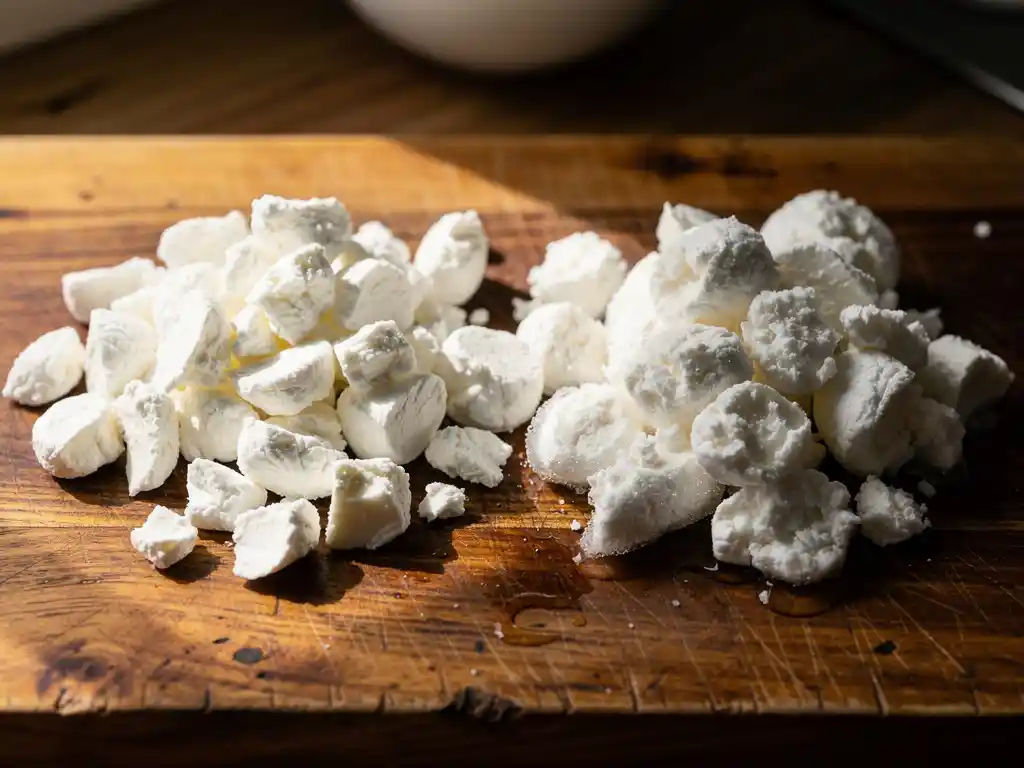
As specialists in fresh and soft goat cheese specialties since 1995, we at DeJong Cheese understand the importance of proper storage and shelf life of cheese products. Goat cheese crumbles are a versatile product that can be frozen excellently for longer storage. But what happens after thawing? In this article, we answer the most important questions about the shelf life of thawed goat cheese crumbles, so you can enjoy this delicious product optimally.
What is the exact shelf life of goat cheese crumbles after thawing?
Goat cheese crumbles remain fresh for 3 to 5 days in the refrigerator after thawing at a temperature between 2 and 4 degrees Celsius. This period applies to crumbles that have been properly thawed in the refrigerator and stored in airtight packaging.
The exact shelf life depends on various factors. The quality of the crumbles before freezing plays an important role. Fresh crumbles that were frozen immediately after production retain their quality better than products that had already been in the refrigerator for several days. The method of thawing is also crucial. Slow thawing in the refrigerator ensures better texture and longer shelf life than rapid thawing at room temperature.
It’s important to know that thawed goat cheese crumbles must not be refrozen. Repeated freezing and thawing damages the structure of the cheese and can lead to quality loss and possible food safety issues. Therefore, plan carefully how many crumbles you need and only thaw what you can use within a few days.
How do you recognize if thawed goat cheese crumbles are still good?
Fresh thawed goat cheese crumbles are recognizable by a fresh, slightly acidic smell, a white to light cream color, and a crumbly but cohesive texture. If the crumbles have a sharp, unpleasant odor, show discoloration, or have developed a slimy texture, they are no longer suitable for consumption.
There are various warning signs to watch for. Visually, the main indicators are discoloration (yellow, green, or pink spots), visible mold, or a dry, cracked surface. In terms of smell, a strong ammonia odor, musty air, or abnormally sour smell indicates spoilage. The texture also changes when the cheese is past its date: the crumbles can become extremely dry or develop a sticky, slimy layer.
When in doubt, it’s always better to throw the crumbles away. Goat cheese is a fresh dairy product and can spoil quickly with improper storage. The risk of food poisoning is not worth saving a small amount of cheese. Trust your senses: if something doesn’t smell, look, or feel right, don’t consume it.
What is the difference in shelf life between frozen and fresh goat cheese crumbles?
Fresh goat cheese crumbles last a maximum of 2 to 3 weeks in the refrigerator, while frozen crumbles can be stored for up to 6 months in the freezer. This significant difference makes freezing an excellent option for long-term storage without quality loss.
In fresh condition, goat cheese crumbles retain their optimal flavor and texture during the first week after purchase. The crumbly structure remains perfectly intact and the characteristic fresh taste is at its best. After two weeks, the crumbles may begin to dry out or start releasing moisture, depending on storage conditions. The flavor may become more intense as the cheese matures.
Frozen crumbles, on the other hand, completely stop the ripening process. At temperatures of -18 degrees Celsius or lower, they remain stable for months. The texture may change slightly after thawing – the crumbles may become somewhat softer – but the flavor remains largely preserved. For industrial applications, as we know from our years of experience with foodservice customers, this difference is often negligible. The important thing is that you choose the right storage method based on your usage pattern.
How do you store goat cheese crumbles after thawing for maximum shelf life?
For maximum shelf life, store thawed goat cheese crumbles in an airtight container in the coldest part of the refrigerator, usually the bottom drawer. Ensure the temperature remains constant between 2 and 4 degrees Celsius and avoid repeatedly opening the container.
Proper packaging is essential for maintaining quality. Preferably use a glass or plastic container with a tight-fitting lid. If you use the original packaging, wrap it additionally in aluminum foil or place it in a resealable plastic bag to prevent dehydration. Avoid using only plastic wrap, as this does not provide sufficient protection against air and odors from the refrigerator.
Some practical tips for optimal storage:
- Store goat cheese crumbles separately from strongly scented foods like onions or garlic
- Note the thaw date on the container so you know when the 5 days expire
- Use clean utensils to remove portions from the container to prevent cross-contamination
- Don’t leave the crumbles outside the refrigerator for longer than 30 minutes
- Check daily for signs of spoilage, especially after day 3
Which mistakes shorten the shelf life of thawed goat cheese crumbles?
The biggest mistake that shortens shelf life is thawing at room temperature instead of in the refrigerator. This causes temperature fluctuations that promote bacterial growth and affect the texture of the cheese, potentially reducing shelf life by days.
Temperature management is crucial for maintaining quality. Many people make the mistake of wanting to thaw frozen crumbles quickly by leaving them on the counter or even placing them in the microwave. This leads to uneven thawing where the outside becomes warm while the core is still frozen. These temperature differences create ideal conditions for bacterial growth and cause moisture separation that permanently damages the texture.
Other common mistakes are:
- Using dirty spoons or forks to scoop crumbles from the container
- Storing in a refrigerator that’s too warm (above 5 degrees Celsius)
- Not covering the crumbles, causing them to dry out or absorb other odors
- Mixing old and new crumbles in the same container
- Ignoring the first signs of spoilage and continuing to consume anyway
By avoiding these mistakes and applying proper storage methods, you can optimally enjoy the quality of goat cheese crumbles after thawing.
How De Jong Cheese helps with the perfect goat cheese solution
At DeJong Cheese, we understand like no other the challenges surrounding shelf life and quality of goat cheese products. With our years of expertise since 1995, we offer not only high-quality goat cheese crumbles, but also the knowledge and support you need for optimal use.
Our solutions for your goat cheese needs:
- Industrial curd products specially developed for freezing without quality loss
- Technical specifications and storage advice for all our products
- Flexible packaging options adapted to your specific storage needs
- Private label possibilities with customized shelf life solutions
- Personal advice on the best product choice for your application
Whether you’re looking for fresh goat cheese products for foodservice or industrial solutions with longer shelf life, we’re happy to think along with you. Visit our website for our complete range or contact us for personal advice. For consumers, our products are available at various retail locations in the Netherlands.
Frequently Asked Questions
Can I use thawed goat cheese crumbles for hot dishes?
Yes, thawed goat cheese crumbles are excellent for hot dishes like pizzas, quiches, and casseroles. The slightly softer texture after thawing even melts more beautifully than fresh crumbles. However, add them only in the last minutes of preparation to prevent them from losing too much moisture.
What is the best way to thaw large quantities of goat cheese crumbles for an event?
Place the frozen crumbles in the refrigerator 24-48 hours in advance, depending on the quantity. Distribute large amounts across multiple shallow containers for even thawing. For professional use, we recommend thawing a maximum of 2-3 kilos per container and removing them from the freezer at different times, so you always have fresh thawed crumbles.
How do I prevent thawed goat cheese crumbles from sticking together?
Immediately after thawing, you can gently separate the crumbles with a fork. Store them in a spacious container so they aren’t pressed together. A trick is to place a sheet of paper towel at the bottom of the container that absorbs excess moisture. Gently shake the container daily to prevent clumping.
Are there differences in thawing time between different types of goat cheese crumbles?
Yes, thawing time varies based on fat content and size of the crumbles. Crumbles with higher fat content thaw faster (12-18 hours) than lean varieties (18-24 hours). Finely crumbled cheese thaws faster than coarse crumbles. Industrial blocks of curd need up to 48 hours for complete thawing.
Can I extend the shelf life of thawed crumbles by storing them in oil?
While storing in olive oil can extend shelf life by several days, this does change the texture and flavor of the crumbles. They become softer and absorb the flavor of the oil. For salads this can be an advantage, but for other applications it’s less suitable. Always use clean oil and still store the whole thing in the refrigerator.
What are the best alternatives if I don't have time to thaw crumbles?
For immediate use, you can sprinkle frozen crumbles directly over hot dishes – they thaw within minutes. For cold applications, you can hold the crumbles in a strainer under cold running water for quick thawing (use within 24 hours). Also consider always having a small amount of fresh crumbles in the refrigerator for emergencies.
Related Articles
- How do you find a supplier who thinks along with you instead of just delivering?
- What types of partnerships exist between product developers and cheese producers?
- What does a buyer look for when selecting a producer of industrial goat cheese?
- How to use goat cheese in quiche?
- What makes Dutch goat cheese unique in the market?