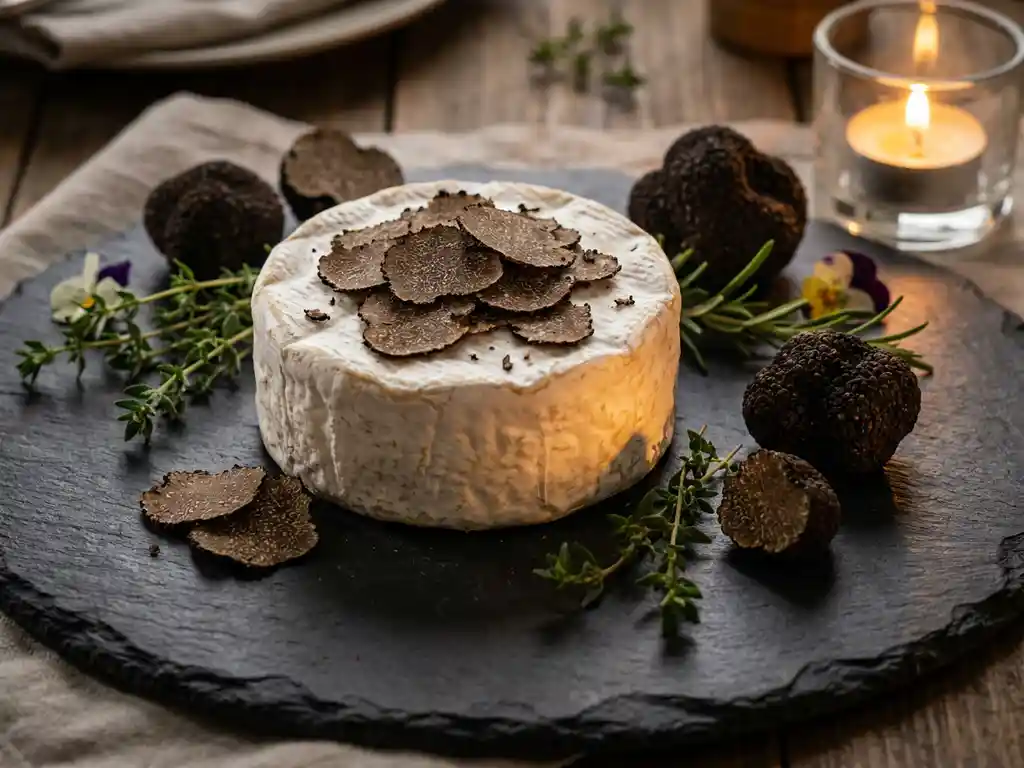
Combining goat cheese with truffle creates a premium charcuterie product — especially when you choose a soft, creamy goat cheese with a mild acidity that gives truffle’s earthy depth room to shine. The key is balancing two bold flavors so neither one overpowers the other. In this article, we answer the most common questions about this flavor combination, from choosing the right cheese to processing techniques and positioning in the premium segment.
Which truffle flavors pair best with goat cheese?
The earthy, umami-rich flavor of truffle pairs best with the fresh, slightly tangy notes of goat cheese. Truffle has a complex flavor profile with hints of mushroom, forest, and sometimes a subtle garlic-like quality. That depth is perfectly balanced by the characteristic brightness of goat cheese, so neither ingredient takes over.
Black truffle, such as Tuber melanosporum, has a more robust, warm flavor and pairs well with a slightly aged goat cheese. White truffle is more delicate and refined, and works best with a very soft, fresh goat cheese so its subtle aromas can fully come through. Truffle oil or truffle paste offer a more accessible and consistent flavor base for industrial applications, with intensity that’s easy to adjust to suit the desired end product.
It’s worth noting that the acidity of goat cheese acts as a flavor enhancer. The slight tanginess cuts through the rich, intense truffle aromas and creates a fresh contrast that makes the whole thing pleasant and enjoyably complex. That’s what makes goat cheese with truffle so appealing to product developers looking for a distinctive flavor profile.
Which type of goat cheese works best in a charcuterie product?
For a premium charcuterie product, a soft, creamy goat cheese with a fat content between 45 and 60 percent in dry matter works best. This type of cheese is smooth enough to mix and process well, while still having a strong enough flavor to hold its own alongside truffle.
Fresh goat cheese offers the most flexibility in processing. Its high moisture content makes it easy to portion, mix, and shape. The flavor is also mild enough not to overshadow the truffle aromas. A lightly aged goat cheese adds more character and works well in products where a pronounced cheese flavor is desirable — like a hearty charcuterie board or a stuffed roll.
Technical specs that matter for charcuterie applications include dry matter content, pH level, and spreadability at refrigerator temperature. A stable pH around 4.2 to 4.6 ensures good shelf life and limits unwanted microbial growth. At DeJong Cheese, we produce soft goat cheese specialties under the Alphenaer brand that meet exactly these technical requirements and are suitable for further processing.
How do you technically combine goat cheese and truffle in one product?
Combining goat cheese and truffle technically requires attention to three things: the order of addition, temperature control, and the consistency of the final product. Always add truffle to the already-processed goat cheese — never the other way around — to minimize flavor loss from heat or oxidation.
When using fresh or soft goat cheese as a base, mixing is easiest at a temperature between 46 and 54 degrees Fahrenheit (8 to 12 degrees Celsius). At this temperature, the cheese is pliable enough to mix well without separating or becoming grainy. Truffle paste or finely chopped truffle pieces are best added in the final mixing stage to preserve both texture and aroma.
For products like stuffed salami, truffle rolls, or breaded cheese products, it’s important that the goat cheese and truffle filling has enough firmness to hold up through further processing steps — such as portioning, breading, or coating. A higher dry matter ratio or a small amount of cream cheese can help achieve the right firmness without compromising the flavor profile. Always test the melting properties if the product will be heated, since goat cheese behaves differently from cow’s milk cheese at higher temperatures.
Which other ingredients enhance a goat cheese and truffle combination?
Beyond truffle, several ingredients can enhance the flavor combination with goat cheese and add an extra dimension to the product. The best additions are ingredients that either support truffle’s earthy notes or complement the brightness of goat cheese.
- Honey: A small amount of honey adds sweetness that softens the tanginess of goat cheese and lets the truffle aromas settle deeper. Great for a charcuterie board or a spreadable product.
- Fresh herbs: Thyme, rosemary, or chives enhance the earthy notes and give the product a recognizable, artisanal feel. Cut them finely to avoid texture issues.
- Dried fig or apricot: Dried fruit adds a sweet-tart counterpoint that makes the flavor profile more complex and fits well with premium positioning.
- Black pepper or Sichuan pepper: A touch of heat from pepper highlights truffle’s umami without overpowering the delicate goat cheese flavor.
- Nuts: Walnuts or hazelnuts add bite and a subtle bitterness that pairs well with both truffle and goat cheese.
Go easy on garlic or onion in large amounts — these ingredients can crowd out the truffle aromas. That said, a small amount of caramelized onion or a hint of garlic oil can actually add depth without dominating. Clean-label product development calls for restraint with artificial flavor enhancers, which isn’t an issue here at all: these ingredients speak for themselves.
What makes a goat cheese and truffle product suitable for the premium segment?
A goat cheese and truffle product fits the premium segment when it combines three core values: recognizable artisanal quality, a distinctive and authentic flavor profile, and a polished presentation that makes the added value visible. Truffle is naturally a luxury ingredient; goat cheese adds an artisanal dimension that lifts the product above standard offerings.
Positioning in the premium segment also requires transparency about origin and production. Consumers in this segment are willing to pay more when they know what they’re buying: where the cheese comes from, how it was made, and what artisanal traditions it’s rooted in. That story is an integral part of the product’s value — not just a marketing add-on.
From a technical standpoint, premium products also stand out through consistent quality, a long shelf life without artificial preservatives, and an appealing texture that meets high expectations both visually and in terms of mouthfeel. For retailers and foodservice partners, this is also a commercial argument: a premium goat cheese and truffle product justifies a higher price per unit and attracts a discerning, high-value consumer. Want to learn more about retail opportunities? Check out our retail offering for inspiration.
How DeJong Cheese helps develop a goat cheese and truffle product
As a family business with over thirty years of experience in soft goat cheese specialties, we know exactly what it takes to develop a premium charcuterie product that truly stands out. Our Alphenaer goat cheeses are an excellent base for innovative truffle products, thanks to their consistent quality, stable technical specifications, and authentic flavor profile.
Here’s what we offer product developers and buyers looking to work with a goat cheese and truffle combination:
- Soft and fresh goat cheese specialties with fixed technical specifications, suitable for further processing
- Flexibility in customization, from fat content to dry matter percentage and flavor profile
- Private label options for retail and foodservice
- Personal advice from our production experts when developing new concepts
- Reliable supply and consistent quality, even at larger volumes
Whether you’re launching a new charcuterie line or looking to refresh an existing product with a premium twist, we’d love to think along with you. Reach out via our contact page and discover what we can create together.
Frequently Asked Questions
Can I use truffle oil as a substitute for real truffle in a charcuterie product?
Truffle oil is a practical and cost-effective substitute, but it’s important to choose a quality product made from real truffle extracts rather than synthetic flavorings. For industrial applications, truffle oil offers the advantage of consistent intensity and easy portioning. Keep in mind that the flavor profile is slightly less complex than fresh or dried truffle, which may affect the premium positioning of your end product.
What is the ideal ratio of goat cheese to truffle in a recipe?
A common starting ratio for product development is 2 to 4 percent truffle paste or finely chopped truffle based on the total amount of cheese. This gives a clearly recognizable truffle flavor without overpowering the characteristic goat cheese taste. It’s highly recommended to make several test batches and conduct sensory evaluations, since the desired intensity varies by application and target audience.
How long does a goat cheese and truffle product keep, and what's the best way to store it?
A well-formulated goat cheese and truffle product with a stable pH between 4.2 and 4.6 and proper packaging typically has a shelf life of 3 to 6 weeks when refrigerated. Vacuum packaging or modified atmosphere packaging (MAP) significantly extends shelf life and protects the delicate truffle aromas from oxidation. Always store the product at a temperature between 36 and 43 degrees Fahrenheit (2 to 6 degrees Celsius) and avoid temperature fluctuations to keep the texture and flavor stable.
Is a goat cheese and truffle product suitable for people with lactose intolerance?
Goat cheese naturally contains less lactose than cow’s milk cheese, and soft fresh goat cheese generally has a lower lactose content than aged varieties. For consumers with mild lactose intolerance, the product is often easier to digest — but it is not a lactose-free product. State this clearly on the packaging and consult a nutritionist if you want to make a specific claim targeting this consumer group.
Which packaging formats work best for a premium goat cheese and truffle product in the retail channel?
In the retail channel, vacuum packaging with a sleek design and resealable trays perform best for premium products, as they optimize both shelf life and visual appeal. Transparent packaging that shows the product reinforces the premium perception and gives consumers an immediate sense of the texture and quality. Consider a paper wrap or wooden elements as secondary packaging to visually support the artisanal positioning.
What are the most common mistakes when developing a goat cheese and truffle product?
The most common mistake is adding too much truffle under the assumption that more is always better — which actually leads to an overpowering, sometimes bitter flavor that completely masks the goat cheese. A second frequent mistake is adding truffle at too high a temperature, causing volatile aromas to be lost. Finally, product developers often underestimate the importance of texture stability: always test whether the filling or base retains enough firmness after all processing steps, such as portioning, breading, or chilling.
How do I know if my goat cheese and truffle combination is ready for market launch?
A solid market launch check involves three phases: an internal sensory evaluation by a panel assessing flavor, aroma, and texture, followed by a technical shelf-life study under realistic storage conditions. It’s also valuable to involve a small consumer panel or focus group from your target audience for feedback on taste experience and packaging perception. Make sure all labeling requirements around allergens, origin, and nutritional values are fully in order before presenting the product to retailers or foodservice partners.
Related Articles
- How do you build up a stock buffer without risking the shelf life of your goat cheese?
- What are the benefits of goat cheese spread in a 10 kg bucket for snack fillings?
- How can goat cheese support sustainable food concepts?
- How to identify goat cheese market opportunities?
- How to handle goat cheese delivery rejections?