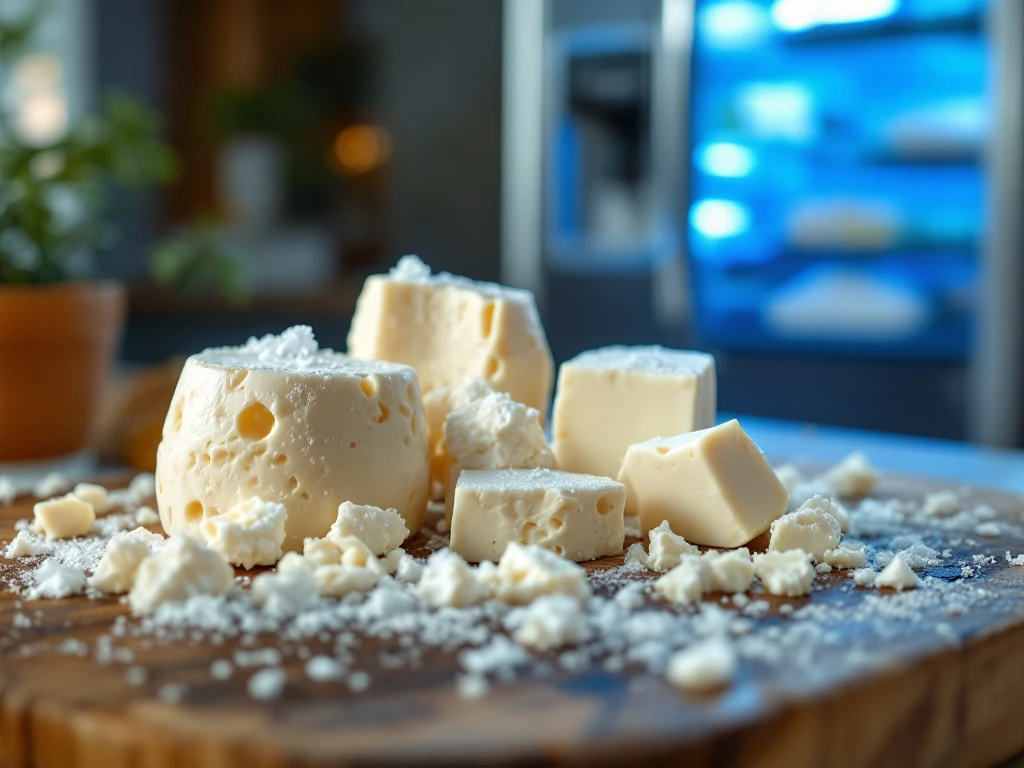
No, you should not refreeze goat cheese after it has been thawed. When goat cheese thaws, its texture becomes rough and breaks apart because of ice crystal damage. If you refreeze it, these bad changes get worse. The water that separates during the first freeze-thaw process gets worse each time you freeze it again. This makes the cheese dry and unpleasant to eat, and it loses its smooth texture and fresh taste.
Can you safely refreeze goat cheese after it has been thawed?
Refreezing thawed goat cheese is safe to eat if you handle it correctly, but it makes the quality much worse. We do not recommend doing this. The cheese is still safe to eat if you keep it in the fridge below 4°C while it thaws and refreeze it within 2-3 days. However, the texture becomes much worse. Fresh goat cheese gets damaged the most. It becomes dry and breaks apart instead of being smooth and easy to spread.
The freeze-thaw-refreeze process causes damage to goat cheese that cannot be fixed. Ice crystals make holes in the delicate cheese structure during freezing. This releases water when the cheese thaws. This water cannot go back into the cheese properly, which makes the texture rough. When you freeze it again, new ice crystals form in different places. This causes more damage and the cheese loses more water.
Professional cheese makers strongly say not to refreeze cheese because of these quality problems. The fat and protein connections that give goat cheese its special creamy texture break down more and more with each freeze cycle. Smooth, spreadable cheese becomes dry and crumbly cheese that you cannot use for most cooking.
What happens to goat cheese when you freeze and thaw it?
Freezing makes water molecules in goat cheese form ice crystals that break the protein structure. These crystals work like tiny knives, cutting through the delicate structure that holds water and fat together. During thawing, the damaged protein structure cannot hold the water that comes out. This causes visible water separation and makes the texture noticeably drier and more grainy.
The chemical changes during freezing affect goat cheese differently than harder cheeses. Fresh types like chèvre and spreadable goat cheese have more water in them, which makes them easier to damage when frozen. The mixture between fat and water breaks down, making the cheese lose its smooth consistency. Even careful freezing cannot prevent some texture changes.
Temperature changes during storage make these effects worse. Each time the cheese experiences small temperature changes, ice crystals grow larger through a process called recrystallisation. Larger crystals cause more damage to the structure. This explains why cheese stored in freezers that are opened often gets worse faster than cheese kept at constant temperatures.
How should you properly store thawed goat cheese instead of refreezing?
Store thawed goat cheese in the coldest part of your refrigerator. This is usually the back of the bottom shelf, at temperatures between 2-4°C. Wrap the cheese tightly in wax paper or parchment paper first, then put it in an airtight container. This prevents the cheese from losing water while allowing the cheese to breathe. This double-wrapping method stops the cheese from drying out while avoiding condensation that helps mould grow.
Proper storage makes thawed goat cheese last 5-7 days for fresh types and up to 2 weeks for firmer aged types. Change the wrapping every 2-3 days to remove water that has built up and keep it fresh. If the original packaging is damaged, move the cheese immediately to prevent contamination and stop it from absorbing flavours from other foods.
Consider dividing thawed goat cheese into smaller amounts for immediate use. Store each portion separately to reduce handling and contact with air. Label containers with the thaw date to track freshness. For spreadable types, smooth the surface before storage to reduce air pockets where bacteria could grow.
Which types of goat cheese freeze better than others?
Hard aged goat cheeses with less water content freeze most successfully. They maintain acceptable quality after thawing. These types, aged for several months, have already lost a lot of water during the aging process. This results in a denser structure that better handles ice crystal formation. Semi-hard goat cheeses also freeze reasonably well, though some texture changes are still noticeable.
Fresh goat cheese types freeze poorly because they have high water content of 60-80%. Soft spreadable types, crumbles, and fresh chèvre logs have the most dramatic texture changes. Goat brie and similar soft-ripened types lose their characteristic creamy interior. They become grainy and separate into different layers of water and solids.
Flavoured goat cheeses have additional problems when freezing. Herbs and added ingredients often release water during thawing, creating pockets of liquid within the cheese. Honey-sweetened types may develop crystallisation. Those with garlic or onion can become stronger in flavour and develop bad tastes during long freezer storage.
What are the best practices for freezing goat cheese the first time?
Freeze goat cheese in small portions that match how much you usually use. This helps you avoid repeated thawing. Cut larger wheels or logs into 100-150g portions. Wrap each piece individually in plastic wrap, then place in freezer-safe bags with air removed. This double-wrapping prevents freezer burn and makes it easy to thaw only what you need. This eliminates any temptation to refreeze unused portions.
Proper labelling ensures the best quality and prevents waste. Write the cheese type, freezing date, and “use within 2 months” on each package. Freeze fresh goat cheese immediately after purchase rather than waiting until near its expiration date. Place wrapped portions in the coldest part of your freezer. Maintain a constant temperature of -18°C or below.
Breaking fresh goat cheese into crumbles before freezing is convenient for cooking. Spread crumbles on a parchment-lined tray, freeze until solid, then transfer to portion bags. This method prevents clumping and allows you to remove exact amounts needed for recipes. Consider vacuum sealing for longer storage up to 3 months. However, texture changes will still happen regardless of packaging method.
Understanding proper goat cheese storage helps maintain quality and prevents waste. While freezing offers a way to make shelf life longer, the texture changes make it suitable mainly for cooked dishes rather than fresh serving. At our facility, we recommend enjoying fresh goat cheese at its best quality rather than freezing it. However, these guidelines help when freezing becomes necessary. For the best flavour and texture, explore our range of fresh goat cheese varieties designed for immediate enjoyment.
Related Articles
- How do you check if a supplier meets HACCP guidelines?
- How do you protect your pizza production line against a failing cheese supplier?
- How does goat cheese perform in hot meal applications?
- How can goat cheese help brands innovate in fresh foods?
- How to choose between bulk and pre-portioned goat cheese?