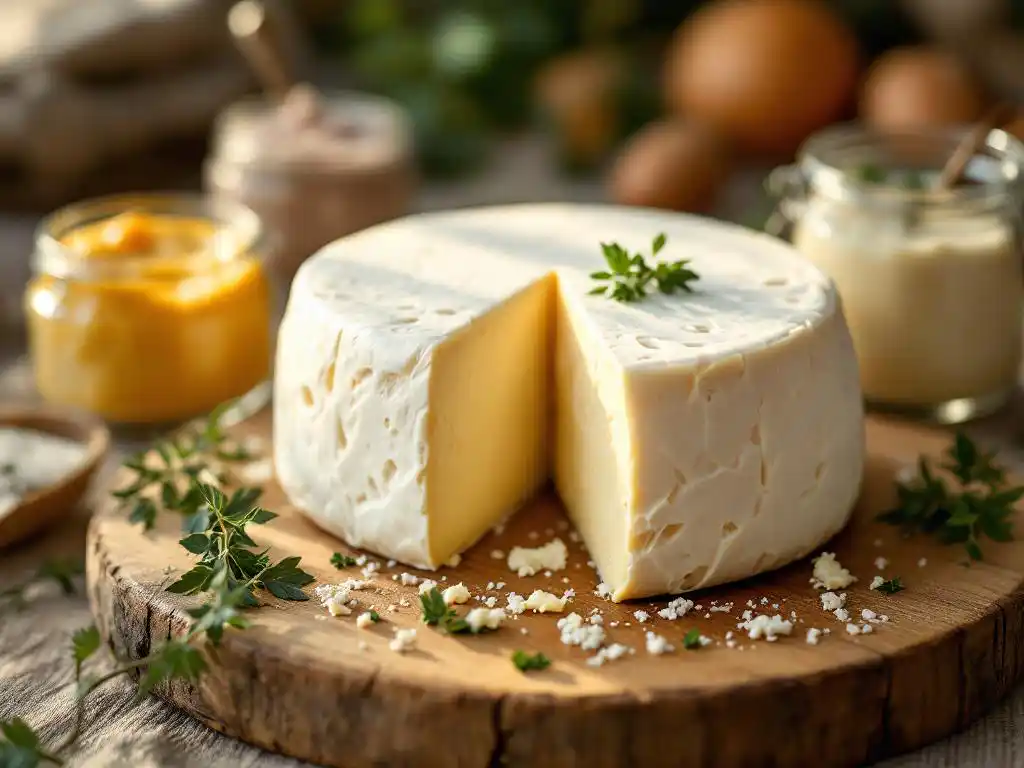
Goat cheese offers unique opportunities for businesses seeking to develop exclusive product lines that stand out in competitive markets. Its distinctive flavour profile, nutritional benefits, and versatile applications make it an ideal foundation for premium positioning. The growing consumer demand for artisanal and speciality cheeses, combined with goat cheese’s natural differentiation from traditional dairy products, creates significant potential for businesses to establish exclusive offerings that command premium prices and build customer loyalty.
What makes goat cheese ideal for exclusive product lines?
Goat cheese possesses several unique properties that make it particularly suitable for exclusive product development. Its distinctive tangy flavour profile, creamy texture, and natural white colour provide an immediate point of differentiation from cow’s milk cheeses. The cheese offers superior digestibility due to smaller fat globules and different protein structures, making it accessible to consumers with lactose sensitivities.
The health-conscious market particularly values goat cheese for its nutritional advantages, including higher levels of certain vitamins and minerals, lower cholesterol content, and easier digestibility. These attributes allow businesses to position goat cheese products as premium, health-forward options that justify higher price points.
Market demand for goat cheese continues to grow across multiple segments. Fine-dining establishments seek unique flavour profiles for innovative menu items. Speciality food retailers require distinctive products to differentiate their offerings. Health-focused consumers actively seek alternatives to traditional dairy products. This diverse demand creates opportunities for businesses to develop exclusive lines targeting specific market niches.
The versatility of goat cheese in product development extends from fresh, spreadable varieties to aged, complex flavours. It accepts flavour infusions exceptionally well, pairs beautifully with herbs, spices, and other ingredients, and maintains quality across various preparation methods. This adaptability enables businesses to create truly unique products that cannot be easily replicated with other cheese types.
How can businesses differentiate their goat cheese offerings?
Successful differentiation of goat cheese products requires strategic approaches across multiple dimensions. Flavour innovation represents the most direct path to uniqueness, with businesses developing signature blends using herbs, spices, fruits, or other distinctive ingredients. Mediterranean herbs, truffle infusions, honey combinations, and exotic spice blends create memorable taste experiences that build brand recognition.
Packaging solutions play a crucial role in differentiation strategies. Premium packaging materials, innovative portion-control options, and distinctive visual designs communicate quality and exclusivity. Businesses can develop unique packaging formats that enhance product freshness, improve convenience, or create gift-worthy presentations that command premium pricing.
Aging techniques offer another avenue for creating exclusive product characteristics. Different aging periods, environmental conditions, and surface treatments produce unique flavour profiles and textures. Some businesses develop proprietary aging processes using specific caves, controlled environments, or unique coating methods that result in products impossible to duplicate elsewhere.
Target-audience segmentation enables precise positioning of differentiated products. Gourmet food enthusiasts seek complex, artisanal flavours. Health-conscious consumers prioritise organic, grass-fed, or additive-free options. Professional chefs require consistent quality and specific functional properties. Understanding these distinct needs allows businesses to create targeted product lines that resonate deeply with specific customer segments.
Creating unique selling propositions involves combining multiple differentiation elements. A business might offer organic goat cheese aged in local caves, packaged in sustainable materials, with flavour profiles inspired by regional cuisine. This multilayered approach creates products with compelling stories that justify premium positioning and build strong customer loyalty.
What are the benefits of private label goat cheese production?
Private label goat cheese production offers businesses significant control over their brand identity and product specifications. Companies can develop unique recipes, specify exact quality standards, and create products that perfectly align with their brand positioning. This control extends to every aspect of production, from ingredient sourcing to final packaging, ensuring consistency with overall brand strategy.
Margin improvement represents a substantial benefit of private label production. By working directly with manufacturers, businesses eliminate intermediary costs and capture greater profit margins. Private label products typically offer 25–40% better margins compared to branded alternatives, providing financial flexibility for marketing investments or competitive pricing strategies.
Customer-loyalty building becomes more effective with exclusive private label products. When customers cannot find identical products elsewhere, they must return to the original retailer. This exclusivity creates switching barriers that increase customer retention and lifetime value. Businesses can develop signature products that become destination items, drawing customers specifically for these unique offerings.
Market exclusivity through private label partnerships provides competitive advantages that are difficult for rivals to replicate. Exclusive recipes, unique aging processes, or special ingredient combinations create products that competitors cannot simply purchase and resell. This exclusivity protects market position and allows businesses to maintain pricing power.
Quality standards and supply-chain reliability improve through dedicated private label partnerships. Manufacturers working on private label projects typically offer closer collaboration, more stringent quality controls, and priority production scheduling. This partnership approach ensures consistent product availability and quality, critical factors for building customer trust and repeat purchases.
Which goat cheese formats work best for different business needs?
Fresh goat cheese formats serve multiple business applications with their versatility and broad appeal. Spreadable varieties work excellently for foodservice operations requiring easy portion control and quick preparation. Crumbled formats suit salad bars, pizza operations, and prepared food manufacturers. Log shapes offer attractive presentation options for retail cheese counters and allow flexible portioning.
Aged goat cheese varieties meet demands for more complex flavour profiles and premium positioning. Semi-hard aged cheeses provide excellent melting properties for culinary applications. Hard aged varieties offer distinctive flavours for cheese boards and gourmet retail. Surface-ripened options create visual appeal and sophisticated taste experiences for speciality markets.
Flavoured and speciality preparations expand market opportunities across different business segments. Herb-crusted varieties appeal to retail customers seeking ready-to-serve options. Marinated products in oil create premium gift items and foodservice conveniences. Whipped preparations offer smooth textures ideal for catering and hospitality applications.
Bulk packaging options address industrial and foodservice needs efficiently. Five-kilogram blocks serve food manufacturers requiring a consistent supply for production. Foodservice tubs in various sizes accommodate different kitchen volumes. Individual portion packs support institutions and catering operations. Custom packaging solutions can include specific weights, shapes, or packaging materials designed for particular applications.
Format selection should align with specific business requirements. Quick-service restaurants benefit from pre-portioned, easy-melting formats. Gourmet retailers need visually appealing presentations with extended shelf life. Food manufacturers require consistent specifications and reliable bulk supply. Understanding these specific needs ensures optimal format selection that maximises operational efficiency and customer satisfaction.
How does DeJong Cheese support exclusive product development?
We at DeJong Cheese bring decades of traditional expertise in crafting exceptional goat cheese products for exclusive business lines. Our family-run operation, established in 1995, combines artisanal craftsmanship with modern production capabilities, enabling us to create truly unique products that meet specific market requirements. Our Alphenaer brand represents the pinnacle of Dutch goat cheese tradition, serving as the foundation for countless successful private label partnerships.
Our support for exclusive product development includes:
- Custom recipe development tailored to your specific flavour profiles and market positioning
- Flexible production volumes accommodating both small exclusive batches and large-scale requirements
- Private label capabilities with complete brand customisation options
- International food safety certifications ensuring global market access
- A collaborative product development process with our experienced cheesemakers
- Bulk packaging solutions designed for your operational needs
Our production facility maintains the highest food safety standards while preserving traditional cheese-making methods. We work closely with B2B partners across retail, foodservice, and industrial segments to develop exclusive products that differentiate their offerings. From fresh goat cheese to aged specialities, our range of capabilities ensures we can meet diverse product development needs.
Ready to create your exclusive goat cheese line? Contact our team to discuss your specific requirements and discover how our traditional expertise can support your business goals. Explore our complete product range or find where to experience our products firsthand.
Frequently Asked Questions
How do I calculate the right pricing strategy for exclusive goat cheese products?
Start by analysing your production costs, including custom recipe development and packaging, then add 40-60% markup for speciality positioning. Research competitor pricing for similar artisanal products and consider your target market’s willingness to pay. Factor in exclusivity value—products unavailable elsewhere can command 20-30% premium over standard offerings. Test different price points with small batches before full-scale launch.
What are the most common mistakes when launching a goat cheese product line?
The biggest mistakes include underestimating shelf-life requirements for your distribution channels, choosing flavour profiles that are too niche for your target market, and inadequate packaging that doesn’t preserve product quality. Many businesses also fail to secure consistent supply agreements, leading to stock-outs during peak demand. Start with 2-3 core products and expand based on actual sales data rather than launching too many varieties at once.
How much minimum order quantity should I expect for private label goat cheese?
Minimum order quantities vary significantly based on format and customisation level. Fresh goat cheese typically starts at 100-200kg for standard recipes, while custom-developed products may require 500kg minimum. Aged varieties often have higher minimums due to production time. Many manufacturers offer trial batches of 50-100kg for recipe development, allowing you to test market response before committing to larger volumes.
What certifications should I look for in a goat cheese manufacturing partner?
Essential certifications include HACCP for food safety fundamentals and BRC or IFS for comprehensive quality management. For international markets, look for FDA registration (US exports) or specific country requirements. Organic certification opens premium market segments, while animal welfare certifications like Beter Leven appeal to conscious consumers. Halal or Kosher certifications may be valuable depending on your target demographics.
How can I ensure consistent quality when scaling up exclusive goat cheese production?
Establish detailed product specifications including moisture content, pH levels, and sensory characteristics from the start. Implement regular quality testing at multiple production stages and maintain open communication with your manufacturer about any variations. Create a quality agreement that defines acceptable ranges and corrective actions. Consider appointing a dedicated account manager at the production facility to oversee your products and conduct periodic on-site audits.
What's the typical timeline from concept to market for a new goat cheese product?
Expect 3-4 months for developing and launching fresh goat cheese varieties, including 4-6 weeks for recipe development and testing, 2-3 weeks for packaging design and production, and 2-4 weeks for regulatory approvals and initial production. Aged varieties require additional 2-12 months depending on aging requirements. Factor in extra time for organic certification (3-6 months) or export documentation. Start with simpler products to establish the relationship before developing complex aged varieties.