You can ensure continuity with a supplier that depends on seasonal milk by choosing a producer with smart inventory management, fixed agreements on minimum delivery volumes, and clear communication about seasonal patterns. Buyers who arrange this upfront avoid production downtime and quality issues. In this article, we answer the most common questions about seasonal milk and supply reliability for goat cheese.
Why does goat milk availability vary by season?
Goat milk availability varies by season because goats naturally follow a reproductive cycle that is closely tied to day length. In fall and winter, goats are less productive or completely dry, while milk production rises sharply in spring after the kidding season. This makes goat milk fundamentally different from cow milk, where production stays relatively stable throughout the year.
In practice, peak goat milk production typically falls between March and September. During that period, milk is plentiful, fresh, and full of flavor. Outside that window, supply drops significantly. Goat farmers can partly manage this by staggering kidding dates across their herds, but a completely flat year-round supply is not biologically realistic. For buyers working with seasonal milk production, this is the starting point for every conversation with a supplier.
What risks does seasonal milk create for buyers?
Seasonal goat milk creates three specific risks for buyers: limited availability outside the main season, changing milk composition throughout the year, and higher price pressure when supply is tight. Buyers who don’t plan for this risk supply interruptions or quality issues at critical points in their production cycle.
For Marco, a buyer responsible for keeping a steady flow of cheese into his production line, these are not abstract risks. A supplier with no stock in November, or one that suddenly delivers milk with a different fat composition, can directly disrupt his process. The risks are not just logistical — they’re also technical. The functional properties of goat cheese, such as melting behavior and texture, can shift subtly depending on the season and milk composition.
- Availability risk: In the off-season, the supply of fresh goat milk can drop sharply or temporarily disappear.
- Quality risk: The composition of goat milk — including fat and protein content — varies by season and affects the final product.
- Price risk: Tight supply drives up purchasing prices, making budget planning harder.
- Compliance risk: Shifting specifications can cause problems for products that require fixed technical parameters.
How does a cheese producer maintain consistent quality despite seasonal fluctuations?
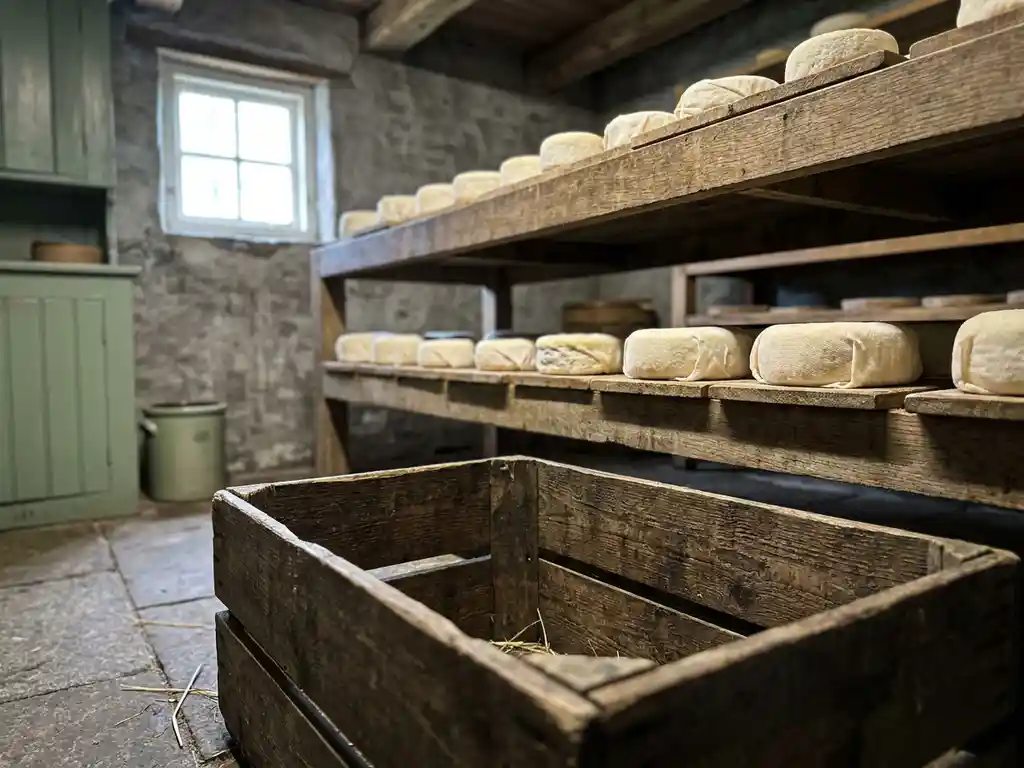
An experienced cheese producer maintains consistent quality during seasonal fluctuations by using strategic inventory buffers, careful batch-by-batch milk selection, and standardized production processes that absorb small variations in raw material. Aging and storage play a key role here: well-aged goat cheese can be produced during peak season and held for delivery during quieter periods.
Technical quality control starts at milk intake. A producer who knows their craft continuously monitors milk composition and adjusts recipes and aging processes accordingly. This keeps specifications — such as fat content, dry matter, and acidity — within agreed tolerances, regardless of the time of year. For aged goat cheese specialties, the aging period also provides a natural buffer: cheeses produced in April can be delivered in August or September.
Professional producers also work with a fixed group of milk suppliers through long-term agreements. This provides certainty not just about volume, but also about the origin and quality of the milk. Transparency about that supply chain is an important signal of reliability for buyers.
What are the benefits of seasonal milk for the taste and quality of goat cheese?
Seasonal milk produces higher-quality goat cheese because milk composition directly determines the richness and complexity of the cheese. Spring milk — from goats grazing on fresh grass and herbs — is richer in certain fatty acids and aromatic compounds that give the cheese depth and character. This is exactly why artisanal goat cheese offers a different flavor experience than industrially produced alternatives.
For product developers like Laura, this is an important selling point. Goat cheese made from seasonal milk fits perfectly with the growing consumer demand for authentic, traceable, and flavorful ingredients. The characteristic freshness and mild tanginess of goat cheese come through most strongly in cheeses made from peak-season milk. That makes seasonal milk not just a challenge, but also a mark of quality.
- Richer flavor profiles from the varied diet of grazing goats during the pasture season
- Higher concentrations of specific fatty acids that contribute to the distinctive goat cheese flavor
- Authentic origin that fits clean-label and artisanal positioning
- Better texture in fresh and soft goat cheese specialties
How can buyers plan smartly around seasonal deliveries?
As a buyer, you can plan smartly around seasonal deliveries by locking in supply agreements early in the year, building up inventory buffers during peak season, and choosing a mix of fresh and aged goat cheese varieties that complement each other in availability. Proactive planning replaces reactive scrambling and gives your production process the stability it needs.
In practice, this means not waiting until demand becomes urgent. Discuss expected volumes and timing early in the year. A good supplier thinks along with you and can advise on the best delivery windows and the most suitable product types per quarter, based on your production schedule. For aged specialties, you can stock up in larger quantities during the production peak. For fresh goat cheese, you’re more dependent on what’s available in the current season.
Consider agreeing on minimum guaranteed volumes per quarter with your supplier. This gives you certainty and gives the producer the ability to plan production and aging more effectively. A direct line with your supplier makes these conversations much easier.
What questions should you ask before choosing a seasonal cheese producer?
Before choosing a seasonal cheese producer, you should at minimum ask about their off-season inventory management, their quality control when milk composition shifts, the flexibility of their delivery volumes, and their track record on supply reliability. Skipping these questions risks unpleasant surprises at the worst possible moment for your production.
A structured framework helps you compare suppliers effectively. Use these questions as a starting point:
- How do you guarantee supply outside the main season? Ask specifically about inventory buffers, aging schedules, and alternative sourcing strategies.
- What specification guarantees do you offer per season? Ask about allowable tolerances in fat content, dry matter, and other technical parameters relevant to your production line.
- Which milk suppliers do you work with? Long-term relationships with dedicated goat farmers are a sign of stable supply.
- Can you provide references from industrial customers? A proven track record of supplying the food industry is a stronger signal than promises alone.
- What certifications and documentation can you provide? Food safety and compliance documentation should be available as standard, not on request.
- How do you communicate proactively about expected shortages or quality deviations? Transparency upfront is worth more than apologies after the fact.
How DeJong Cheese ensures continuity for seasonal goat cheese
As a family business specializing in goat cheese since 1995, we know better than anyone how to turn seasonal milk production into reliable deliveries for the food industry. Under our Alphenaer brand, we produce fresh and aged goat cheese specialties that are available year-round — thanks to a well-thought-out combination of seasonal planning, inventory management, and long-term relationships with our milk suppliers.
Here’s what we offer buyers and product developers who need certainty:
- Consistent specifications year-round, with transparent communication about any variations
- Supply reliability for both fresh and aged goat cheese specialties
- Flexible volumes for retail and foodservice, including private label options
- Personal alignment with your production cycle and planning horizon
- Complete documentation for food safety and compliance
Want to find out if we’re the right partner for your specific needs? Get in touch with us and we’ll be happy to talk through the options — no sales pitch, just straight answers to your questions.
Frequently Asked Questions
How far in advance should I arrange delivery agreements with a seasonal goat cheese producer?
Ideally, you should arrange delivery agreements for the following year in the fourth quarter of the current year. This gives the producer enough time to align production, aging, and inventory buffers with your needs. For aged goat cheese specialties, a planning horizon of six to twelve months is not unusual, while fresh products typically allow for a shorter lead time.
What is the difference in availability and shelf life between fresh and aged goat cheese outside the season?
Fresh goat cheese has a short shelf life and is therefore heavily dependent on current milk availability, which can be a challenge outside the main season. Aged goat cheese offers much more flexibility: thanks to the aging process, larger batches can be produced during the production peak and stored for months for delivery during the off-season. For buyers who need year-round continuity, a combination of both product types is the most reliable strategy.
How can I tell as a buyer whether a cheese producer truly has their inventory management under control, and isn't just making promises?
Ask the producer for concrete data: how many months of stock do they typically hold outside the season, and can they back this up with historical delivery records or references from existing industrial customers? A reliable producer is transparent about their production and aging schedule and can show you how they have handled shortages or unexpected demand spikes in the past. Vague promises without supporting evidence are a warning sign.
Can seasonal fluctuations in milk composition cause problems for products with fixed technical specifications, such as a recipe or additive declaration?
Yes, this is a real risk if clear specification agreements have not been made. Variations in fat content, protein content, or dry matter can affect the functional properties of goat cheese, which in turn impacts melting and binding behavior in processed applications. The solution is to define allowable tolerances in your purchasing specifications and to choose a producer who actively manages consistent composition through recipe adjustments and continuous milk analysis.
Is it a good idea to use multiple goat cheese producers at the same time to spread seasonal risk?
Spreading across multiple suppliers can reduce supply risk, but it also comes with downsides: more administrative burden, varying quality profiles, and less negotiating leverage with each supplier. A better approach is often to choose one primary supplier with a proven track record of seasonal continuity and solid contractual guarantees, potentially supplemented by a second supplier as a backup for specific product categories. Invest in thorough supplier selection before taking on the complexity of managing multiple relationships.
What are the most common mistakes buyers make when purchasing seasonal goat cheese?
The most common mistake is reactive buying: only placing orders when stock is almost gone, instead of planning proactively based on the seasonal cycle. Other frequent mistakes include failing to lock in specification guarantees in the contract, paying too little attention to the supplier’s quality control outside the peak season, and underestimating lead times for aged specialties. Avoiding these pitfalls through early planning and clear agreements prevents most supply problems before they even start.
How can I use seasonal goat cheese as a marketing advantage in my end product, rather than seeing it only as a purchasing challenge?
Seasonal milk is a powerful story for consumers: it highlights craftsmanship, authenticity, and traceability — all of which align perfectly with the growing demand for clean-label products. By communicating the seasonal nature as a quality feature — for example through ‘made from spring milk’ or ‘limited seasonal production’ — you create a distinctive positioning story. Work with your supplier to document the origin and seasonal journey, so you can bring that story to life visually and substantively on your packaging or in your marketing.
Related Articles
- What are the effects of too high a moisture content in goat cheese curd?
- How do you compare domestic versus foreign goat cheese producers on reliability?
- How can goat cheese help brands innovate in fresh foods?
- How is goat cheese different from sheep cheese?
- How long can goat cheese be displayed at room temperature during service?