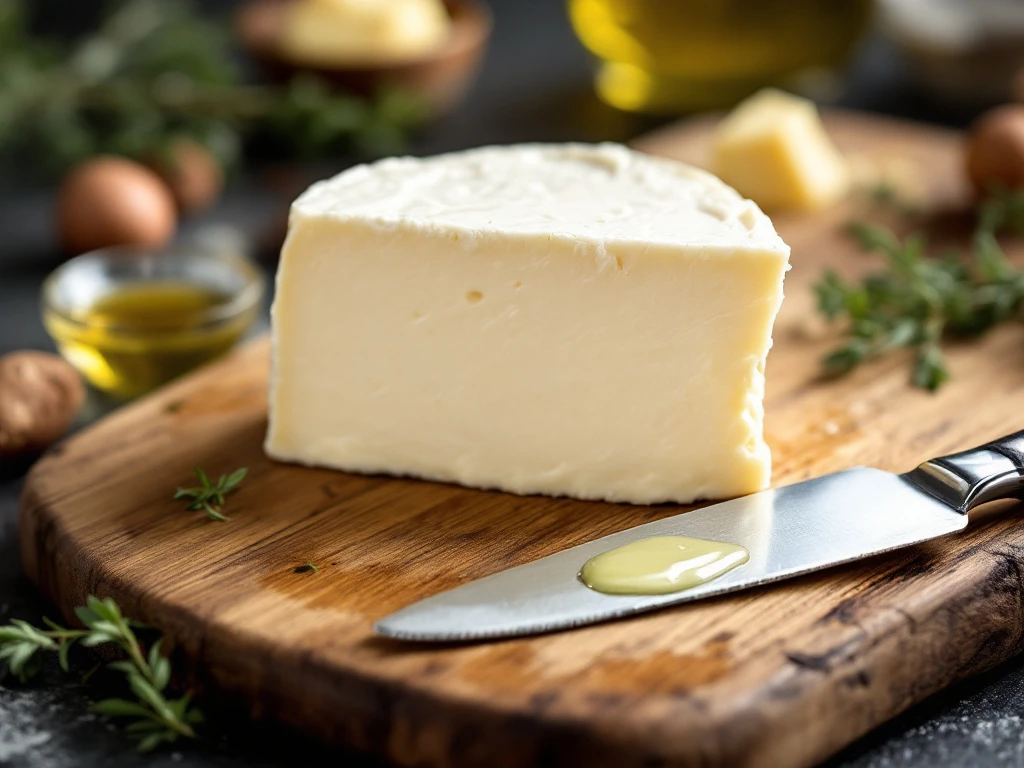
To stop goat cheese from sticking to your knife, wash the blade in hot water and dry it between cuts. You can also use thin wire or dental floss for the cleanest cuts. The main thing to know is that goat cheese has lots of water and a creamy texture that makes it stick easily. This means you need special cutting methods and tools. This guide answers important questions about cutting goat cheese cleanly, from the right temperature to how to make it look good when serving.
Why does goat cheese stick to knives more than other cheeses?
Goat cheese sticks to knives because it has a special protein structure and more water than aged cheeses. The soft, creamy texture has more whey proteins and is more acidic. This creates a sticky texture that holds onto metal surfaces. These things together make goat cheese very hard to cut cleanly.
The fat in goat cheese is different from cow’s milk cheeses. Goat milk has smaller fat pieces that spread evenly through the cheese. This makes a smoother texture that spreads easily. Because the fat spreads evenly, there are no natural places where the cheese breaks away cleanly from the knife.
Temperature is very important for the sticking problem. At room temperature, goat cheese becomes softer and stickier. The proteins and fats start to break down a little, making an almost glue-like layer on the knife. Cold goat cheese keeps its shape better, but it can break into pieces if it’s too cold.
When the knife surface touches the cheese proteins, it creates a temporary bond. Metal knives, especially those with rough surfaces, give more places for the cheese to grip and stick. The tiny rough spots on the blade catch the soft cheese pieces, making clean cuts almost impossible without the right method.
What’s the ideal temperature for cutting goat cheese cleanly?
The best temperature for cutting goat cheese is between 10-15°C (50-59°F). This is a bit cooler than normal room temperature but not as cold as the refrigerator. At this temperature, the cheese stays firm enough for clean cuts but stays soft enough so it doesn’t break into pieces. Take fresh goat cheese out of the refrigerator 10-15 minutes before cutting.
Different types of goat cheese need slightly different temperatures. Fresh goat cheese cuts best when cool but not cold. Ripened types like goat brie need 20-30 minutes at room temperature. The white skin on aged goat cheeses becomes easier to cut when slightly warmed. This lets the knife move through without pulling the delicate coating.
Cold cheese straight from the refrigerator has its own problems. While it’s firmer and less sticky, very cold goat cheese can break apart in uneven pieces. The proteins become too hard, making the cheese crack instead of slice cleanly. This is especially bad with fresh goat cheese rolls or logs.
The science behind temperature’s effect involves how milk proteins and fats behave. When temperature goes up, the fat pieces in goat cheese start to soften and the protein network relaxes. Finding the right spot where the cheese is firm enough to keep its shape but soft enough to cut smoothly needs careful timing and watching.
Which knife techniques prevent goat cheese from sticking?
The best method for cutting goat cheese uses a hot knife: put your knife in hot water, wipe it dry, and make one clean cut before doing it again. This stops cheese from building up and makes each slice smooth. The heat slightly melts the cheese surface, creating a barrier that stops sticking while the dry blade moves through cleanly.
The wire method gives excellent results for soft goat cheese. Hold a piece of plain dental floss or thin wire tight between your hands, then pull it down through the cheese in one smooth movement. This method works very well for cutting rounds from a log or making uniform pieces. The thin cutting surface touches less area and eliminates the sticking problem completely.
Using the right cutting angles makes a big difference. Instead of pressing straight down, use a gentle rocking movement with the knife at a slight angle. Start with the tip of the knife touching the cutting board and rock the blade through the cheese. This method reduces the surface area touching the cheese at any moment.
The difference between slicing and pressing movements is very important. Slicing means drawing the knife through the cheese with very little downward pressure, while pressing forces the blade straight down. For creamy goat cheese, a combination approach works best: gentle downward pressure combined with a slight sawing movement. This method works especially well for firmer, aged goat cheeses.
What tools work best for cutting sticky goat cheese?
Special cheese knives with holes in the blade or non-stick coatings work very well with goat cheese. The holes in these knives reduce surface contact, while non-stick coatings prevent sticking. Soft cheese knives with thin, flexible blades and small surface area are specially made to handle creamy textures without sticking.
Wire cheese slicers give the cleanest cuts for soft goat cheese. These tools use a thin wire stretched across a frame, eliminating the sticking problem completely. For home use, a cheese plane with an adjustable wire works well for making uniform slices from logs or blocks. The wire can be easily cleaned between cuts, keeping results consistent.
Alternative cutting tools often work better than traditional knives. Plain dental floss, fishing line, or even guitar strings can make perfectly clean cuts. These materials slide through soft cheese without any sticking. For spreading or serving, offset spatulas with thin, flexible blades can portion goat cheese better than knives.
The material and coating of your cutting tool greatly affects how well it works. Stainless steel knives with very smooth surfaces resist sticking better than rougher finishes. Ceramic knives, while less common, offer excellent non-stick properties for soft cheeses. Some professionals prefer plastic cheese cutters because they naturally don’t stick, though these work best with fresh rather than aged goat cheeses.
How do you maintain clean cuts when serving goat cheese?
Cutting goat cheese into portions before serving eliminates cutting problems during presentation. Slice or portion the cheese while it’s at the ideal temperature, then arrange pieces on your serving plate with space between each portion. This approach ensures guests can easily take individual servings without struggling with sticky knives or creating a mess on the cheese board.
Serving temperature greatly affects how good the presentation looks. Allow pre-cut portions to come to room temperature for 15-20 minutes before serving to improve flavour, but keep the cutting tools cool. Provide separate knives for each cheese type to prevent flavour mixing and maintain clean cuts. A small bowl of warm water with a clean towel nearby allows for knife cleaning between portions.
Keeping the knife clean between cuts is essential for professional presentation. Wipe the blade with a damp cloth after each cut, or rinse in warm water and dry completely. This prevents cheese build-up that makes later cuts messier. For longer serving periods, use two knives, keeping one in warm water while using the other.
Portion sizes and shapes affect both presentation and ease of serving. Cut fresh goat cheese into rounds about 1cm thick for best handling. For crumbled varieties, pre-portion into small bowls or directly onto dishes. Spreadable goat cheese serves best in small ramekins with special spreading knives. These approaches reduce handling and maintain the cheese’s appealing appearance throughout service.
Understanding the special properties of goat cheese and using these special methods changes a potentially frustrating task into a simple process. Whether you’re preparing an elegant cheese board or simply making lunch, these methods ensure clean, professional results every time. At our facilities, we’ve developed these methods through years of working with traditional goat cheese varieties, and we’re always happy to share more tips for enjoying our artisanal products at their best.