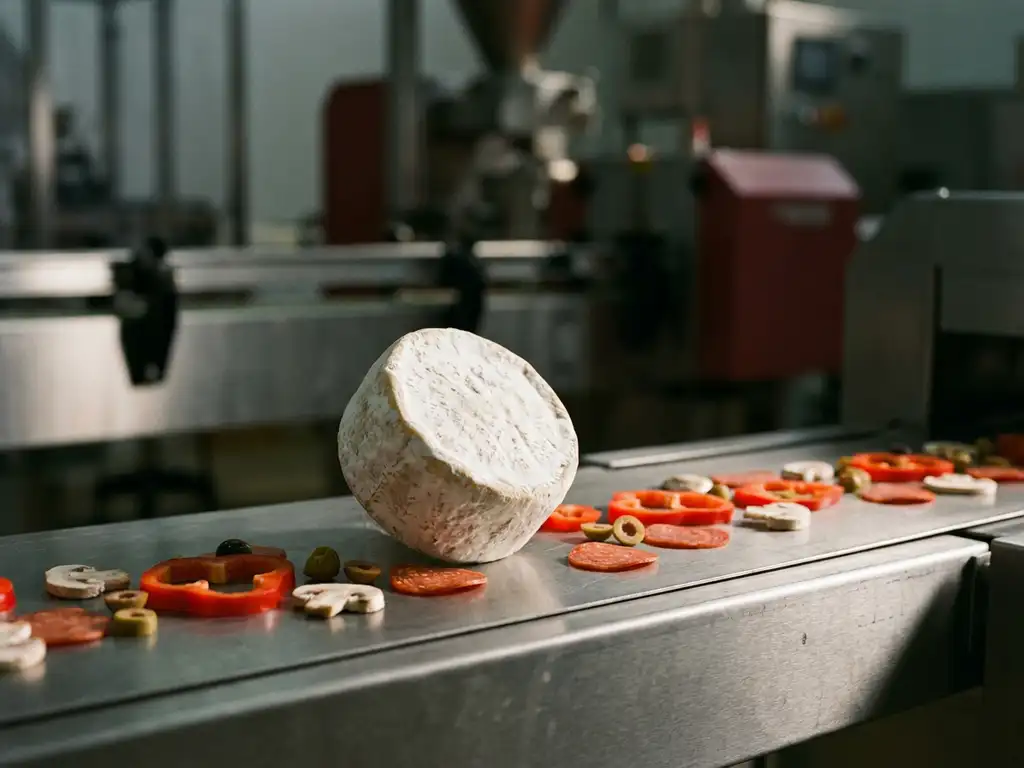
A missed delivery in a pizza production line can easily cost a company hundreds to thousands of dollars per hour. When a key ingredient like goat cheese doesn’t arrive on time, the entire production comes to a halt. The impact goes beyond direct costs — customer relationships, contract commitments, and product quality all come under pressure. In this article, we answer the most pressing questions about delivery issues in pizza production and how to tackle them structurally.
What does one hour of downtime cost in a pizza production line?
One hour of downtime in a pizza production line can quickly cost a mid-sized production company several thousand dollars in direct costs. Think of labor costs for employees who can’t work, fixed machine costs that keep running, and lost output that can’t be recovered within the planned production schedule.
But the real damage goes beyond direct costs. With a missed delivery in a pizza production line, indirect costs pile up fast. Overtime needed to make up the backlog, rush orders from alternative suppliers at higher prices, and the administrative burden of managing the crisis — all of this adds up significantly.
For producers working with fresh ingredients like goat cheese, the situation is especially vulnerable. Fresh cheese has a limited shelf life and can’t simply be stored as a buffer. A production stop of even two hours can mean the planned daily output is no longer achievable, with direct consequences for delivery commitments to retailers and foodservice customers.
Which links in the supply chain are hit the hardest?
When delivery problems hit pizza production, planning, procurement, and logistics take the biggest hit. Production planning is the first to fall out of balance when an ingredient is missing, and the pressure quickly spreads through the rest of the chain.
A pizza producer’s supply chain consists of multiple interdependent links. When one link breaks down, it creates a domino effect:
- Procurement has to scramble to find alternative suppliers, often at higher costs and with no guarantee of consistent quality.
- Production planning has to revise schedules, set priorities, and reassign staff.
- Logistics gets squeezed when outgoing deliveries are delayed due to the production stop.
- Quality control comes under pressure when a quick switch is made to an unknown supplier whose specifications haven’t been validated.
It’s precisely the reliance on fresh ingredients that makes the pizza production supply chain so sensitive. Cheese is not a commodity you can easily swap out without affecting the taste, melt behavior, or fat content of the final product.
How does a delivery disruption affect the quality of the final product?
A delivery disruption directly affects the quality of the final product when producers are forced to switch to an alternative cheese with different technical specifications. Different melt points, a different fat content, or a different moisture balance lead to inconsistent pizzas that don’t meet the established product standard.
For buyers like Marco, this is one of the most dreaded scenarios. A cheese that melts just a little differently can cause the pizza to look different after baking than the product photo on the packaging. This leads to complaints, returns, and in the worst case, product recalls.
On top of that, when a producer quickly brings in a replacement supplier during a crisis, there’s often no time for a full quality check. Certifications, allergen information, and technical data sheets get skipped. This increases the risk of consequences from cheese delivery problems that go beyond the production line itself — extending into food safety and compliance.
What are the commercial consequences for customers and retail?
The commercial consequences of a missed delivery reach all the way to retailers and foodservice customers. When a pizza producer fails to meet a delivery commitment, they risk penalty clauses, lost revenue, and in serious cases, the loss of a contract.
Retailers work with strict planograms and promotional calendars. A product that isn’t on the shelf on time means an empty spot that hurts the retailer and strains the relationship. With repeated problems, a retailer may decide to switch to a competitor — which means a structural loss of revenue for the pizza producer.
Within the retail supply chain, delivery reliability and consistency are the two most important criteria by which suppliers are judged. A one-time disruption can be forgiven, but a pattern of unreliability will inevitably lead to contract review.
The same applies to foodservice customers. Restaurants and caterers who depend on a reliable pizza supplier can’t simply find an alternative when things go wrong. The reputational damage they suffer with their own customers increases the pressure on the pizza producer to offer compensation.
How do you structurally reduce the risk of delivery problems?
You structurally reduce the risk of delivery problems in a pizza production line by working with a small number of reliable suppliers with a proven track record, clear contract agreements on delivery times and quality specifications, and a minimum safety stock of critical ingredients.
Practical steps producers can take:
- Dual supplier policy: Work with two approved suppliers for critical ingredients, so you can switch immediately without quality loss if one fails.
- Fixed specification documentation: Make sure every supplier works with documented technical specifications, including fat content, moisture content, and melt behavior.
- Delivery reliability monitoring: Measure and discuss delivery performance with your suppliers on a regular basis to catch problems early.
- Tailored safety stock: Calculate the minimum buffer stock for each ingredient based on lead time and production capacity.
- Transparent communication: Choose suppliers who communicate proactively when a delay is coming, so you can adjust ahead of time instead of reacting after the fact.
Especially with fresh cheese specialties, choosing a reliable cheese supplier with industrial experience is critical. A supplier who has been delivering to the foodservice industry for years understands the urgency of delivery reliability and can help you think through risk reduction.
How DeJong Cheese helps ensure reliable delivery in pizza production
As a family business with more than thirty years of experience in goat cheese specialties, we know exactly what’s at stake when a delivery falls through. From our factory in Alphen, we produce premium fresh and aged goat cheeses under the Alphenaer brand — cheeses that meet the strict requirements of industrial producers. We supply retailers, foodservice operators, and industrial customers worldwide, both under our own brand and as private label.
What we offer pizza producers and buyers:
- Consistent quality specifications with every delivery, including technical data sheets covering melt behavior, fat content, and moisture balance
- Reliable delivery planning aligned with your production schedule
- Volume flexibility for both regular orders and peak periods
- Full compliance documentation, including food safety certifications and allergen information
- Personal contact with dedicated account managers who communicate proactively when anything changes
Want to know how DeJong Cheese can support your production line with reliable goat cheese delivery? Get in touch with us and we’ll be happy to discuss the options for your specific situation.
Frequently Asked Questions
How quickly can I bring in an alternative cheese supplier during an acute delivery disruption?
In an acute situation, bringing in a completely new supplier is rarely a quick fix — quality validation, documentation checks, and logistical coordination all take time you simply don’t have during a crisis. That’s exactly why a dual supplier policy is so valuable: by having a second approved supplier ready in advance with validated specifications, you can switch within hours instead of days. Invest in this policy before a crisis hits, not after.
What technical specifications should I document before approving a new cheese supplier?
At a minimum, you should document fat content, moisture content, melt behavior, and pH value, along with allergen information, microbiological standards, and food safety certifications such as FSSC 22000 or BRC. For pizza applications, melt behavior is especially critical — even small differences in melt point or fat separation are visible on the final product and can lead to complaints. Always ask for a complete technical data sheet and validate it internally with a test bake before officially approving the supplier.
How do I calculate the right safety stock for fresh cheese in my production line?
Safety stock for fresh cheese is calculated based on three factors: your supplier’s average lead time, the daily usage volume in your production line, and the maximum shelf life of the product. Because fresh cheese has a limited shelf life, it’s a balancing act between having enough buffer and avoiding food waste. A good rule of thumb is to keep at least one full production day’s worth as a buffer — but always discuss this with your supplier to align the buffer with realistic lead times and seasonal peaks.
What are the most common mistakes when evaluating the delivery reliability of a cheese supplier?
The most common mistake is evaluating suppliers solely on price and product specifications, without systematically measuring and discussing delivery performance. Many buyers lack a formal system for tracking on-time delivery rates, quality deviations per delivery, and response times when problems arise. A second common mistake is not asking about the supplier’s own supply chain: how stable is their raw material supply, and do they communicate proactively when shortages are looming? This information is at least as important as the price per kilogram.
How do I approach a conversation with my current supplier about better delivery agreements without damaging the relationship?
Approach the conversation from a place of shared interest: a delivery disruption hurts both parties, and better agreements also protect the supplier from escalations and emergency procedures. Come well prepared with concrete data on past deliveries, including any delays or quality deviations, and work together to set measurable KPIs for delivery times and communication during disruptions. A structured quarterly review of delivery performance is a low-key way to make this a regular topic without putting the relationship under pressure.
Are there specific seasonal risks for cheese delivery that pizza producers should be aware of?
Yes, especially with goat cheese, seasonal factors play an important role. Goat milk has a natural production season, which means the availability — and sometimes the composition — of goat cheese can vary during the winter months. On top of that, peak periods in foodservice, such as the holiday season and summer months, drive higher demand throughout the entire chain. Discuss these seasonal patterns with your supplier in advance and agree on how volumes and delivery times will be guaranteed during peak periods.
What should I include in a contract with a cheese supplier to protect myself against delivery problems?
At a minimum, include the following in your contract: guaranteed delivery times with clear tolerances, quality specifications per product type including acceptable deviations, an escalation procedure for threatened delays, and agreements on compensation or remedial action in case of non-compliance. Also add a communication clause that requires the supplier to proactively notify you as soon as a delivery is at risk, so you as the producer still have time to adjust. Have this type of agreement reviewed by a lawyer with experience in food supply chain contracts.