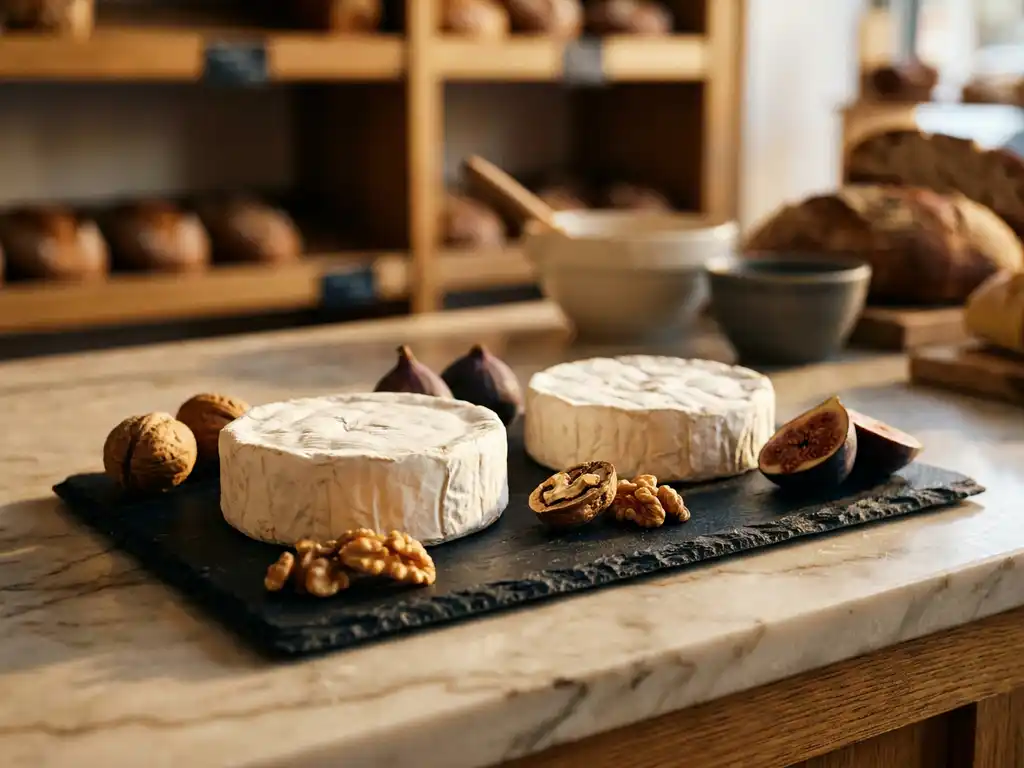
Goat cheese brie and camembert offer great opportunities for premium retail concepts. These soft goat cheese specialties stand out thanks to their refined flavor profile, clean-label positioning, and growing popularity among conscious consumers who choose authentic, artisanal products. In this article, we answer the most frequently asked questions about goat cheese brie and camembert in retail.
What sets goat cheese brie and camembert apart from cow’s milk varieties?
Goat cheese brie and goat cheese camembert differ from cow’s milk varieties through a fresher, slightly tangy flavor profile with a characteristic dairy roundness that is typical of goat’s milk. The texture is similarly soft and creamy, but the fat profile is different: goat’s milk contains shorter fatty acid chains, which makes it easier to digest and gives it a distinct aromatic character.
Beyond the flavor profile, there are also functional differences that matter for retail applications. Goat cheese brie typically has a whiter paste than its cow’s milk counterpart, which looks visually appealing in premium packaging. The white rind is similar, but the aging process can move a little faster, which requires careful planning in the supply chain.
For product developers like Laura, the unique character of soft goat cheese is exactly what makes a retail concept interesting. Goat cheese specialties appeal to consumers who are looking for something beyond the ordinary range, without straying too far from familiar cheese formats like brie and camembert.
How do goat cheese brie and camembert behave when heated?
Goat cheese brie and camembert melt well when heated, but they behave differently from cow’s milk varieties. Because of the shorter fatty acid chains in goat’s milk, the cheese melts a little faster and can run more quickly at high temperatures. At moderate temperatures, it gives a creamy, nicely fluid texture that works great in warm dishes.
For foodservice applications or processed products, it is important to use the right temperature range. Goat cheese camembert works well for oven preparation, gratins, and stuffed dishes where a melting, creamy result is desired. In retail concepts where consumers prepare the cheese themselves, it is a good idea to include preparation tips on the packaging.
Buyers like Marco who want to use goat cheese brie or camembert in processing lines should ask their supplier for the exact melt curve and fat content of the specific variety, so that production parameters can be adjusted accordingly.
Which retail concepts work best for soft goat cheese specialties?
Soft goat cheese specialties like goat cheese brie and camembert fit best with premium retail concepts that tap into authenticity, craftsmanship, and mindful consumption. Think curated cheese boxes, seasonal gift packaging, and themed assortments around French or Mediterranean food culture. Combinations with truffle, honey, fig, or specialty herbs also pair well with the positioning of soft goat cheese.
Retail concepts that work well:
- Premium cheese boxes with a curated selection of soft goat cheese specialties, optionally paired with crackers or preserves
- Seasonal editions such as a summery goat cheese box or a festive winter variety with special flavor combinations
- Private label concepts for supermarkets or specialty food stores that want to stand out with their own goat cheese range
- Foodservice-ready packaging for restaurants and bistros that want to put together a premium cheese board
- Combination packs featuring goat cheese brie and camembert as a duo, aimed at the curious, conscious consumer
The retail opportunities for cheese have grown significantly in recent years, partly because consumers are increasingly choosing recognizable, artisanal products with a clear story behind the packaging.
What are the packaging and shelf life considerations for retail?
Goat cheese brie and camembert are living products that continue to ripen after production. For retail, this means the shelf life needs to be carefully aligned with the logistics chain: from production to distribution center to shelf. Fresh soft goat cheese typically has a shelf life of three to six weeks, depending on the stage of ripening at the time of packaging.
Key considerations for packaging and shelf life:
- Ripening stage: Is the cheese packaged young or more mature? This determines the flavor experience for the consumer and the remaining shelf life on the shelf.
- Packaging material: Soft goat cheese specialties require packaging that is breathable or specifically designed for mold-ripened cheeses, so the rind stays intact.
- Cold chain: Consistent refrigeration between 36 and 43 degrees Fahrenheit is essential for quality and food safety.
- Labeling: Clean-label communication — including the origin of the goat’s milk and the artisanal production method — strengthens the premium positioning.
- Size and portioning: Small formats of 3.5 to 5.5 ounces suit individual consumers well; larger formats work for gift packaging or foodservice.
How do you position goat cheese brie and camembert as a premium product?
You position goat cheese brie and camembert as a premium product by communicating about origin, craftsmanship, and a distinctive flavor profile. Consumers who choose premium cheese want to know the story behind the product: where does the goat’s milk come from, how is the cheese made, and what makes this variety special compared to a standard cow’s milk brie?
Effective premium positioning rests on three pillars:
- Story and origin: Communicate about the traditional production method, the region, and the artisanal recipe. Authenticity is an important purchase driver for the conscious consumer.
- Visual presentation: Premium packaging with high-quality materials, clean typography, and subtle references to craftsmanship and nature strengthen the brand experience on the shelf.
- Flavor experience and pairings: Give consumers inspiration for combinations with wine, fruit, or charcuterie. This increases the perceived value and justifies a higher price.
Goat cheese specialties are a natural fit for premium positioning because they have a distinctive profile by nature. The clean-label character, artisanal production, and growing consumer demand for goat’s milk products make goat cheese brie and camembert strong candidates for a premium retail concept in 2026 and beyond.
How DeJong Cheese helps with goat cheese brie and camembert in premium retail concepts
At DeJong Cheese, we have specialized in fresh and soft goat cheese specialties under the Alphenaer brand since 1995. From our location in Alphen, we combine traditional recipes with the flexibility that retail and foodservice partners need to stand out in the market. Whether it’s a private label goat cheese brie, a seasonal camembert packaging, or a completely new retail concept around soft goat cheese — we actively think along with you at every stage of product development.
What we offer retail and foodservice partners:
- Soft goat cheese specialties with consistent quality and guaranteed specifications
- Private label options for supermarkets, specialty food stores, and foodservice concepts
- Flexible formats and packaging options tailored to your target audience
- Technical support for product development and flavor combinations
- Reliable delivery with transparent communication about shelf life and logistics
Want to find out how our goat cheese specialties fit your retail concept or product development? Check out our retail offering or get in touch directly with our team for a personal conversation.
Frequently Asked Questions
Can I combine goat cheese brie and camembert in one retail concept, and how do I differentiate the two for the consumer?
Yes, a combination concept works really well because brie and camembert offer a complementary flavor profile: goat cheese brie is generally a little milder and creamier, while goat cheese camembert has a more intense, earthy flavor due to its deeper aging. Communicate this difference clearly on the packaging and in any pairing suggestions, so consumers can make a conscious choice and appreciate the added value of the duo concept. A short flavor description or an icon system on the label helps a lot with this.
What common mistakes should I avoid when introducing soft goat cheese specialties to my range?
One of the most common mistakes is underestimating the logistics planning around shelf life: soft goat cheese keeps ripening and requires tight coordination between production date, delivery, and shelf placement. A second common mistake is generic positioning without a clear story, causing the product to get lost among standard cow’s milk varieties. Always make sure you have clear origin communication, and explicitly agree on the ripening stage at packaging with your supplier.
Is goat cheese brie or camembert suitable for consumers with lactose intolerance?
Goat’s milk naturally contains less lactose than cow’s milk, and because soft goat cheeses like brie and camembert go through a ripening process in which lactic acid bacteria break down lactose, the lactose content in the final product is typically very low. Many people with mild lactose intolerance tolerate soft goat cheese better than cow’s milk varieties. However, it is important not to make this a medical claim on the packaging; refer consumers who are unsure to their doctor or dietitian.
How do I determine the right retail price and margin level for a premium goat cheese product in my retail concept?
Premium soft goat cheese specialties justify a higher consumer price than standard cow’s milk varieties, as long as the premium positioning is consistently carried through in packaging, presentation, and communication. As a rule of thumb, a price premium of 20 to 40 percent compared to similar cow’s milk varieties is achievable in the premium segment, depending on the retail channel and target audience. Discuss the cost breakdown with your supplier and ask about the available margins for private label concepts, so you can set a sustainable and competitive price point.
What is the best time of year to launch a new goat cheese brie or camembert concept?
Spring and the holiday season are traditionally the strongest launch moments for soft goat cheese specialties. In spring, the seasonal association with fresh goat’s milk and artisanal production plays a big role, while the holiday period around November and December offers great opportunities for gift packaging and curated cheese boxes. When planning, allow for a lead time of at least three to six months for product development, packaging design, and logistics coordination with your supplier.
How do I handle returns or products approaching their expiration date on my shelf?
Soft goat cheese specialties require active shelf management: regularly check the ripening status and adjust the shelf presentation by moving riper products to the front. Discuss agreed return procedures with your supplier and set clear minimum remaining shelf life thresholds upon receipt. Good collaboration with your supplier on delivery frequency and minimum remaining shelf life at delivery is the most effective way to minimize waste.
As a small specialty food store or cheese shop, can I also work with a specialized supplier for smaller volumes?
Yes, specialized suppliers like DeJong Cheese also work with smaller retailers and specialty food stores, with flexible formats and smaller order volumes available. When making first contact, it is a good idea to ask right away about minimum order quantities, delivery frequency, and the options for private label or co-branding, even on a smaller scale. That way, even as a small player, you can offer a distinctive and consistent goat cheese range that meets the expectations of your customers.