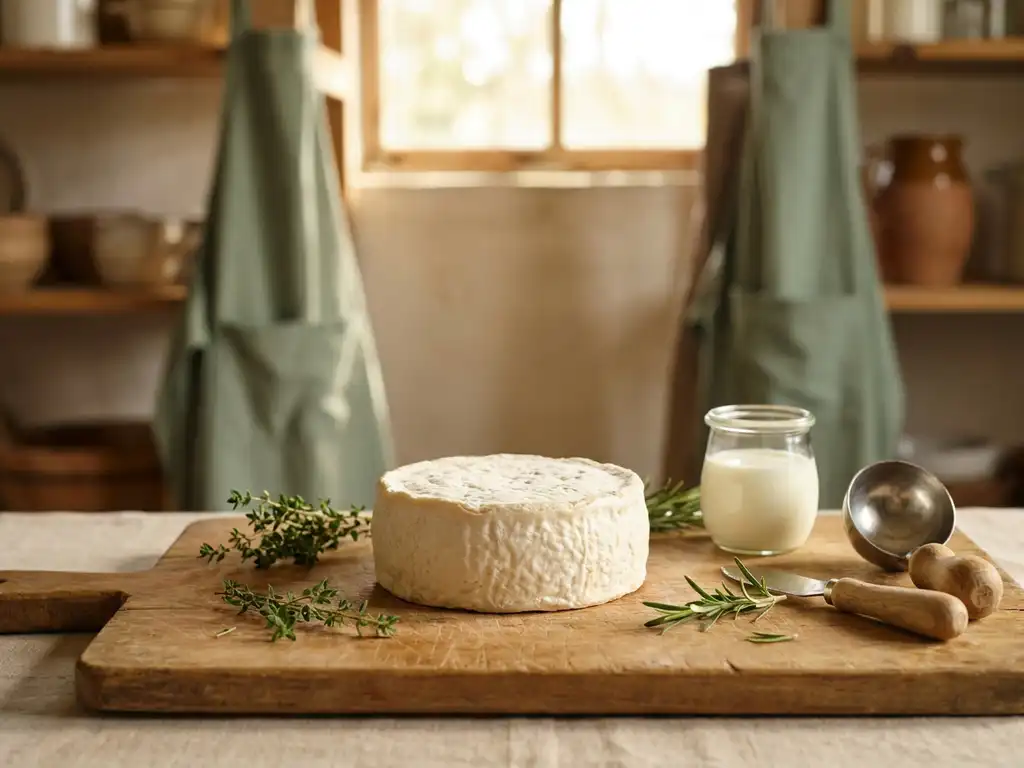
Bringing a new cheese product from concept to market typically involves five to seven stages: from idea and market research, through recipe development and technical validation, to production trials, packaging design, and finally commercial launch. The full process takes an average of six months to two years, depending on the complexity of the product and the requirements of the target market. In this article, we answer the most common questions about cheese product development — from first sketch to shelf launch.
What steps does a cheese product go through from idea to production?
From idea to production, a cheese product goes through at least five concrete stages: concept development, recipe development, technical validation, production scale-up, and market preparation. Each stage builds on the previous one and requires specific decisions about ingredients, production technique, packaging, and positioning before the next step makes sense.
The first stage starts with a clear product description: what kind of cheese is it, what is it intended for, and what sets it apart from existing products? This is followed by recipe development, where cheese technologists work on the right balance of milk, cultures, aging time, and any additions such as herbs or truffle.
In the validation stage, prototypes are tested for taste, texture, shelf life, and technical properties such as melting behavior or sliceability. Only when the prototype meets all requirements is production scaled up from small batches to industrial volume. Finally, market preparation covers things like packaging design, labeling, certification, and the commercial introduction to retail or foodservice partners.
How long does it take to develop a new cheese product?
Developing a new cheese product takes an average of six months to two years. Simple variations on existing recipes — such as a fresh goat cheese with a new herb blend — can be ready within three to six months. Completely new cheese types with different aging processes or specific technical requirements typically take a year or more.
Several factors determine the timeline. Aging time is one of them: an aged goat cheese requires weeks to months before the product can be evaluated. Shelf-life studies, microbiological testing, and certification processes also play a role, especially when the product is intended for export to markets with specific regulations.
For product developers working with seasonal concepts, timing is critical. A product that needs to launch in spring requires a development process that starts at least a year earlier. Starting early with defining specifications and involving the cheese producer in the concept stage significantly shortens the overall timeline.
What determines whether a cheese product is suitable for industrial use?
Whether a cheese product is suitable for industrial use depends on four technical properties: melting behavior, sliceability, shelf life, and consistency between batches. For applications such as pizza, ready meals, or snacks, these are the deciding factors alongside price and availability at volume.
Technical properties that matter
Melting behavior determines whether a cheese melts evenly without separating or burning during heating. Fat content and moisture content are key factors here. Goat cheese naturally has a specific melting profile that differs from cow’s milk cheese, which makes it interesting for certain applications but also requires technical alignment with the buyer’s production method.
Sliceability and processability are relevant for production lines that use automated cutting or portioning machines. A cheese that is too soft or too crumbly does not fit into automated processes without modifications to the line.
Consistency as a requirement
For industrial buyers, consistency between deliveries is at least as important as the properties of the product itself. Variations in fat content, salt content, or texture disrupt production processes and lead to quality issues in the end product. A good supplier not only delivers the right specifications — they also guarantee them over longer periods and at large volumes.
How does private label product development work for cheese specialties?
In private label product development, the cheese producer develops a product based on the specifications and brand identity of the client. The client determines the positioning, packaging, and flavor profile, while the producer handles the technical execution, production, and quality assurance. The result is a cheese product that comes to market entirely under the client’s brand.
The process starts with a briefing: the client describes the desired product, the target audience, the price segment, and any specific requirements such as clean label, organic ingredients, or a particular flavor profile. Based on that briefing, the producer develops one or more prototypes that are evaluated and refined until the final product meets expectations.
A key advantage of private label collaboration is that the client benefits from the producer’s manufacturing expertise and quality system without having to invest in production capacity. For retailers and foodservice partners who want to stand out with their own cheese range, this is an efficient route to market. Read more about the options for retail cheese concepts on our retail page.
What trends are shaping new cheese products in retail and foodservice?
In 2026, new cheese products in retail and foodservice are strongly influenced by four trends: clean label and natural ingredients, premiumization through authentic origin, plant-based and hybrid offerings, and flavor combinations inspired by international cuisines. Product developers who translate these trends into concrete products early on build a lead over competitors.
Clean label is no longer a differentiating factor — it’s a basic expectation. Consumers read labels and actively choose products without artificial additives or preservatives. This places demands on the recipe: cheese must achieve its flavor and shelf life without ingredients that weigh down the label.
Premiumization through authentic origin means that products with a demonstrably artisanal production method or a recognizable provenance can justify a higher price. Goat cheese specialties with a clear production method and regional identity fit well in this segment. Flavor combinations with truffle, red onion, wild herbs, or smoked varieties connect with the demand for distinctive taste experiences in both retail and foodservice applications.
When is a cheese product ready for market launch?
A cheese product is ready for market launch when it meets four conditions: the technical specifications are confirmed and reproducible, shelf-life and food safety tests are complete, the packaging and labeling comply with applicable laws and regulations, and there is sufficient production capacity available to fulfill the first orders.
A common mistake is launching too early based on a promising prototype, before production at scale has been tested. What works perfectly in small batches can show deviations in texture, taste, or shelf life during large-scale production. Pilot runs at industrial scale are therefore an essential step before the final launch.
Beyond technical readiness, commercial readiness also matters. Is there a clear positioning, a pricing strategy, and a distribution strategy? Have the first buyers been identified, and are there agreements in place about listing timelines with retailers or introductions to foodservice partners? A product that is technically ready but commercially unprepared will miss the opportunity for a successful market launch.
How DeJong Cheese helps with product development from concept to market
As a family business with over thirty years of experience in goat cheese specialties, we understand what it takes to bring a cheese product successfully from idea to market. Whether you work as a buyer in the food industry or as a product developer at a retail brand, we actively think along with you at every stage of the process.
- Tailored concept development: We translate your briefing into concrete cheese prototypes, including flavor combinations with truffle, herbs, or other premium ingredients.
- Technical support: From melting behavior to sliceability, we provide the technical specifications your production line needs.
- Private label production: Fully under your brand, with our artisanal quality and consistent delivery at volume.
- Flexible collaboration: Small test orders to large-scale deliveries, always with personal contact and short lines of communication.
- International experience: We supply retail, foodservice, and industry worldwide and know the requirements of different markets.
Want to know how we can bring your cheese product from concept to market? Get in touch with our team and discover what DeJong Cheese can do for your product development.
Frequently Asked Questions
Can I have a private label cheese product developed as a small retailer or foodservice partner, or is that only for large buyers?
Private label product development is definitely not exclusive to large companies. Many cheese producers, including specialized goat cheese producers, also work with smaller volumes to get a collaboration started. It’s smart to be upfront about your minimum order requirement so the producer can assess whether the partnership is technically and commercially viable. Start with a clear briefing and discuss the minimum order size early in the process to avoid surprises.
What are the most common mistakes product developers make when launching a new cheese product?
The most common mistake is skipping or shortening the pilot production stage: a prototype that works perfectly at small scale can show deviations in texture, taste, or shelf life during industrial production. A second frequent mistake is underestimating the lead time for certification and shelf-life studies, causing retailers’ listing windows to be missed. Finally, product developers sometimes forget to run commercial preparation — positioning, pricing strategy, distribution partners — in parallel with technical development, which leads to unnecessary delays.
How do I ensure my cheese product stays consistent across multiple deliveries and production batches?
Consistency starts with precisely documented product specifications: fat content, moisture content, salt content, pH value, and microbiological parameters must all fall within defined tolerances. Ask your supplier about their quality assurance system and how deviations are detected and corrected. It’s also advisable to request a Certificate of Analysis (CoA) with every delivery and to carry out periodic independent laboratory tests, especially at large volumes or when exporting to markets with strict regulations.
What certifications or quality marks are relevant if I want to export a cheese product abroad?
The required certifications depend heavily on the destination market. For export within the EU, BRC or IFS certification and compliance with EU food legislation (including labeling guidelines) are generally sufficient. For markets such as the US, the Middle East, or Asia, additional requirements may apply, such as FDA registration, Halal certification, or specific import permits. Involve your cheese producer early in the export process, as an experienced producer with international sales channels will already be familiar with the documentation requirements for each market.
How do I translate a trend like 'clean label' or 'premiumization' into the recipe for a new cheese product?
Translating clean label into a recipe means working with as few ingredients as possible, no artificial preservatives or flavor enhancers, and choosing natural aging and preservation methods such as brine or rind. Premiumization calls for demonstrable differentiation: think of a recognizable milk origin, a specific aging method, or the addition of quality ingredients such as truffle or artisanal herbs. Discuss these positioning choices with your producer during the briefing stage so they are built directly into the recipe development rather than added as an afterthought.
Is it possible to adapt an existing cheese product for a specific industrial application, such as use on pizza or in ready meals?
Yes, existing cheese recipes can be technically adapted for specific industrial applications. For pizza applications, for example, the moisture content and fat content are adjusted to achieve the desired melting behavior and browning properties. For ready meals, shelf life after heating and texture stability play a major role. This requires close collaboration between the cheese producer and the buyer’s product developer, including joint processing trials on the buyer’s production line to validate that the product performs as intended in practice.
How do I determine the right price segment for a new cheese product before development even starts?
The best way to determine the price segment is to combine market research with a cost price analysis before development begins. Map out which comparable products are already on the shelf and what their retail price is, then work backwards to the maximum purchase price your margin target allows. Share this range openly with your cheese producer during the briefing stage: an experienced producer can then factor in ingredient choices and production techniques that fit within the target cost price during recipe development, rather than having to cut quality later on.
Related Articles
- What role does storytelling about artisanal production play in product development?
- Why is a supplier with their own milk sources within 100 km more reliable for the industry?
- Why is goat cheese increasingly used in premium convenience foods?
- How to create goat cheese tasting menus?
- What does goat cheese look like?