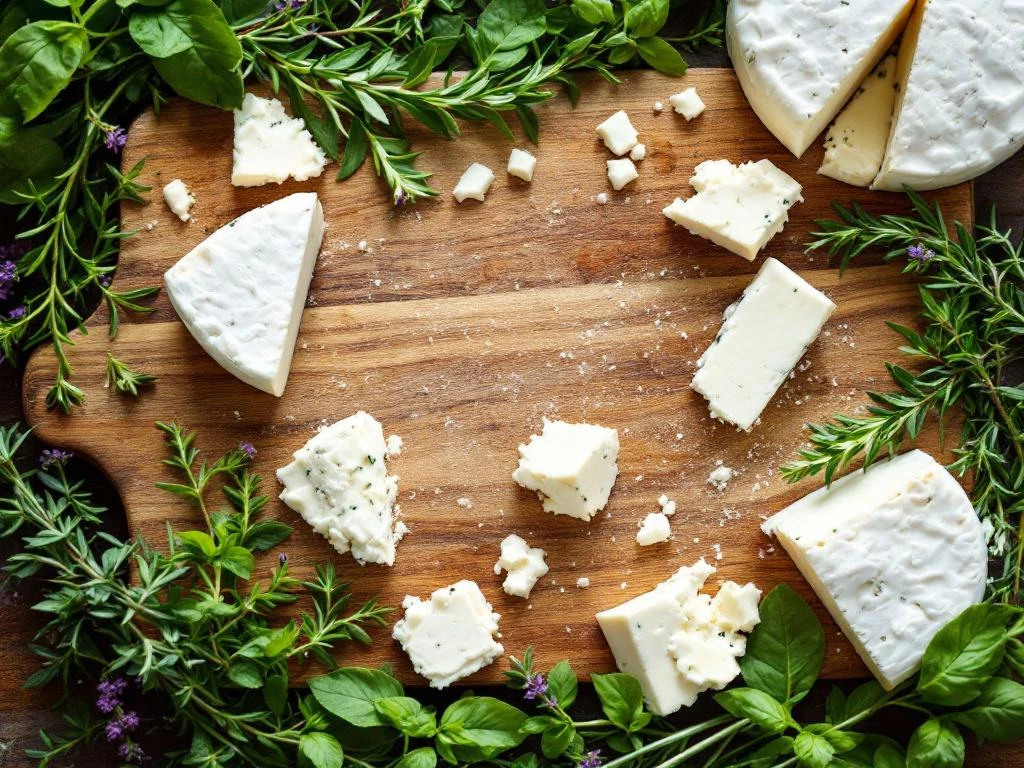
The best herbs to pair with goat cheese are thyme, rosemary, basil, chives, and dill, each offering unique flavour profiles that complement goat cheese’s characteristic tangy, creamy nature. These herbs enhance goat cheese through their aromatic compounds, which balance the cheese’s lactic acid notes whilst adding depth to both fresh and aged varieties. Professional kitchens rely on these pairings to create memorable dishes across appetisers, salads, entrees and cheese boards.
Introduction to herb and goat cheese pairings
Thyme, rosemary, basil, chives, and dill stand out as the premier herbs for pairing with goat cheese in professional culinary applications. These herbs complement goat cheese’s tangy, creamy profile by providing aromatic compounds that balance its distinctive lactic acid notes. The natural affinity between herbs and goat cheese stems from the way herb oils interact with the cheese’s fatty acids, creating harmonious flavour combinations that enhance rather than mask the cheese’s inherent qualities.
Different herbs serve distinct purposes across various goat cheese applications in professional kitchens. Fresh herbs like basil and chives work brilliantly with soft, spreadable goat cheese varieties, whilst robust herbs such as thyme and rosemary pair exceptionally well with aged or ripened goat cheese. Understanding these pairings enables chefs and food service professionals to create dishes that showcase both the cheese and herbs at their best, whether incorporating them into hot dishes, cold preparations, or cheese boards.
Which fresh herbs complement goat cheese’s tangy flavor profile?
Fresh herbs that best complement goat cheese’s tangy profile include basil, chives, dill, and parsley, each bringing unique characteristics that enhance the cheese’s natural flavours. Basil contributes sweet, slightly peppery notes that soften goat cheese’s tang, whilst chives add a mild onion flavour that provides savoury depth without overpowering the delicate cheese. Dill offers bright, fresh notes with subtle anise undertones, and parsley delivers clean, grassy flavours that refresh the palate.
The interaction between these herbs’ flavour compounds and goat cheese’s lactic acid creates balanced taste experiences ideal for commercial applications. Essential oils in fresh herbs contain volatile compounds that bind with the cheese’s fatty acids, resulting in flavour synergies that elevate both ingredients. For professional applications, maintaining proper herb-to-cheese ratios ensures consistency: typically one tablespoon of finely chopped fresh herbs per 100 grams of soft goat cheese provides optimal flavour without overwhelming the cheese’s character.
Storage considerations play a crucial role when working with fresh herb and goat cheese combinations in commercial settings. Fresh herbs should be added just before service when possible, as their volatile oils dissipate quickly once chopped. For advance preparation, folding herbs into goat cheese and storing in airtight containers at 2-4°C preserves both texture and flavour for up to three days.
What Mediterranean herbs work best with aged goat cheese varieties?
Mediterranean herbs including thyme, rosemary, oregano, and lavender excel when paired with aged goat cheese varieties, as their robust essential oils complement the complex flavours developed during the ageing process. These herbs contain concentrated aromatic compounds that stand up to the stronger, more pronounced flavours found in mature goat cheeses. Thyme brings earthy, slightly minty notes, whilst rosemary contributes pine-like aromatics that enhance the cheese’s nutty undertones.
The essential oils in Mediterranean herbs interact particularly well with aged goat cheese in warm applications. When heated, these oils release their full aromatic potential, creating layers of flavour that enhance dishes like gratins, tarts, and roasted vegetables topped with aged goat cheese. Temperature control remains critical: herbs should be added at specific cooking stages to preserve their aromatics, with hardy herbs like rosemary introduced early and delicate ones like oregano added towards the end.
Professional applications for Mediterranean herb and aged goat cheese pairings extend across multiple menu categories. These combinations work brilliantly in marinades for grilled vegetables, baked preparations like herb-crusted goat cheese medallions, and warm salads featuring roasted elements. The intensity of these herbs also makes them suitable for creating compound butters or oil infusions that can be drizzled over aged goat cheese just before service.
How do you incorporate herbs into goat cheese for food service applications?
Professional techniques for incorporating herbs into goat cheese vary based on the cheese format and intended application. For soft, fresh goat cheese, the most effective method involves folding finely chopped herbs directly into room-temperature cheese using a paddle attachment or by hand, ensuring even distribution without overworking the cheese. Creating herb crusts for aged varieties requires pressing dried herbs onto the cheese surface, often with a light coating of oil to ensure adhesion.
Infused oils represent another sophisticated approach for herb integration in commercial settings. By steeping herbs in neutral oils at controlled temperatures (60-70°C for 30 minutes), professionals can create finishing oils that add herb flavours without affecting the cheese’s texture. This method proves particularly useful for service efficiency, as oils can be prepared in advance and applied during plating.
| Preparation Method | Best For | Storage Time | Service Application |
|---|---|---|---|
| Folded fresh herbs | Soft goat cheese | 3 days at 2-4°C | Spreads, canapés |
| Herb crusts | Aged goat cheese | 5 days at 2-4°C | Cheese boards, salads |
| Infused oils | All varieties | 2 weeks refrigerated | Finishing drizzle |
| Herb marinades | Goat cheese pucks/slices | 24 hours | Grilled dishes, pizzas |
Portion control and consistency remain paramount in restaurant and catering operations. Pre-portioned herb-cheese preparations, whether in pucks, crumbles, or pearls format, ensure uniform presentation and flavour across all servings. Establishing standard recipes with precise herb measurements guarantees that signature dishes maintain their intended flavour profile regardless of who prepares them.
Which herb and goat cheese combinations create signature menu items?
Signature menu items often feature classic pairings like honey-thyme with fresh goat cheese, which balances sweet, floral, and earthy notes in perfect harmony. This combination works exceptionally well in appetisers, from simple crostini to sophisticated tarts. Rosemary-fig combinations with aged goat cheese varieties create autumn-inspired dishes that showcase the cheese’s complexity, whilst basil-sun dried tomato spreads offer Mediterranean flair that appeals across seasons.
Seasonal herb rotations provide opportunities for menu variety whilst maintaining cost efficiency. Spring calls for fresh chive and dill combinations with young goat cheese in salads and canapés. Summer highlights basil and oregano pairings in room-temperature preparations. Autumn and winter favour heartier herbs like sage and thyme in warm applications. This rotation strategy maximises herb usage when prices are lowest and quality peaks.
Applications span the entire menu structure, from herb-crusted goat cheese salads as starters to main courses featuring herb-marinated goat cheese in pasta or grain bowls. Cheese boards benefit from offering multiple herb-cheese pairings, allowing guests to experience flavour progressions. Cost-effective herb usage involves utilising stems in oil infusions, incorporating herb flowers as garnishes, and repurposing herb-infused oils across multiple dishes.
Key takeaways for professional herb and goat cheese pairings
Essential herb-cheese pairing principles centre on understanding flavour balance and practical application in food service settings. Fresh herbs like basil, chives, and dill excel with young, soft goat cheeses, whilst Mediterranean herbs including thyme, rosemary, and oregano complement aged varieties. Temperature control, proper storage, and consistent portioning ensure these pairings deliver reliable results in commercial kitchens.
Top herb choices vary by application: fresh herbs for cold preparations and spreads, dried herbs for crusts and rubs, and herb-infused oils for finishing touches. Quality goat cheese suppliers like DeJong Cheese offer herb-infused varieties and custom solutions for B2B clients, including pre-portioned formats that streamline kitchen operations. Our range includes herb-flavoured pearls, fresh goat cheese logs, and brie designed specifically for professional use.
Creating memorable dishes with herb and goat cheese pairings requires balancing tradition with innovation. Classic combinations provide reliable foundations, whilst seasonal variations and creative applications keep menus fresh and engaging. By understanding how herbs interact with different goat cheese varieties and mastering professional incorporation techniques, food service professionals can consistently deliver exceptional flavour experiences that highlight both ingredients at their best.
Related Articles
- What does solar energy in cheese production mean for the CO₂ footprint of curds?
- How do you use fig or truffle goat cheese as a premium ingredient in a ready-to-eat product?
- Can goat cheese be smoked?
- Does cooking change the flavor profile of goat cheese in prepared meals?
- What food pairings work best with goat cheese in hospitality settings?