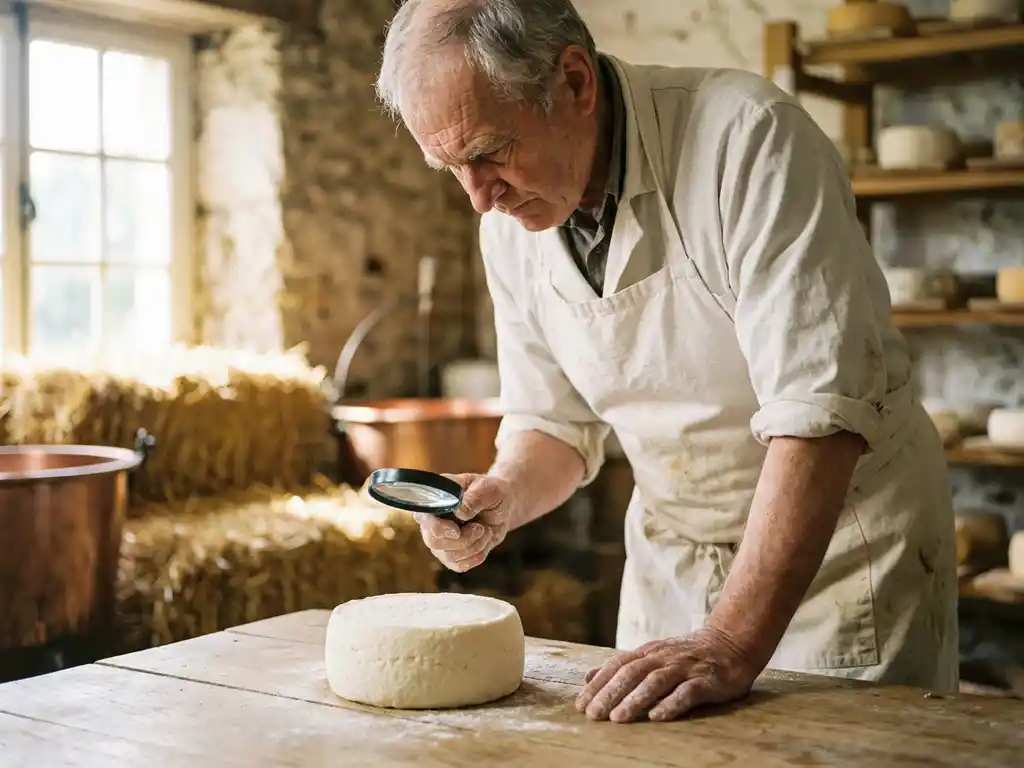
At a first technical meeting with a cheese producer, you ask about specifications, quality assurance, delivery reliability, custom development options, and food safety. Coming prepared with the right questions helps you avoid surprises on the production line and sets the foundation for a lasting partnership. Below you’ll find the most relevant questions buyers and product developers can ask, organized by topic.
What technical specifications should a cheese producer be able to provide?
At a first technical meeting, a cheese producer should at minimum be able to share a complete product data sheet covering fat content, moisture content, pH value, salt content, and microbiological parameters. For food industry applications, melting behavior, heat resistance, and texture characteristics are also essential. Without these industrial cheese specifications, responsible product selection simply isn’t possible.
Also ask specifically for the following documentation:
- Technical product sheets per SKU or variant
- Allergen information and labeling support
- Nutritional value tables in line with European regulations
- Shelf life and storage condition specifications
- Any functional properties such as spreadability or binding capacity
For goat cheese specifically, it’s worth asking about the fat content in dry matter and how the level of aging affects flavor intensity. A producer who can provide this information quickly and completely shows they take industrial applications seriously.
How does a cheese producer demonstrate consistent quality across deliveries?
A cheese producer demonstrates consistent quality through verifiable quality assurance — think certified production processes, batch-specific analysis reports, and an internal complaint registration system. Consistency across deliveries is one of the most critical selection criteria for buyers in the food industry, because quality fluctuations directly disrupt production lines.
Ask the following questions during your meeting:
- What certifications are in place, such as IFS, BRC, or FSSC 22000?
- Are analysis reports included with each delivery?
- How are production processes standardized to account for seasonal variations in milk quality?
- What is the procedure when a delivery falls outside specifications?
A producer with a strong track record of supplying to the industry can also provide references or historical performance data. Ask about internal tolerance limits per specification too — how narrow are the acceptable ranges, and how is it ensured that every batch stays within them?
What are the right questions about delivery reliability and minimum order quantities?
Delivery reliability comes down to three concrete factors: lead times, minimum order quantities (MOQ), and the robustness of the supply chain. A reliable goat cheese supplier should be able to give clear answers on all of these points — ideally documented in a Service Level Agreement or supply contract.
Relevant questions to ask:
- What are the standard lead times, and what lead time do you work with for large volumes?
- What are the minimum order quantities per variant and per delivery?
- How do you handle demand peaks, for example around the holidays?
- Do you have your own production capacity, or do you work with co-manufacturers?
- What backup scenarios are in place in case of raw material shortages or production issues?
Also ask about the geographic reach of the distribution. Does the producer deliver internationally, and what are the conditions for refrigerated transport? For larger buyers, it’s also worth asking whether framework contracts are available to combine price stability with guaranteed supply.
What questions help evaluate custom development and co-development options?
To evaluate custom development and co-development options, ask about the producer’s willingness and capacity to adapt products in terms of flavor, texture, packaging, or recipe. For product developers building innovative food concepts, this is just as important as the standard specifications.
Ask questions like:
- Can you develop products based on our flavor profiles or recipe requirements?
- Is private label possible, and what are the minimum volumes for that?
- What does a co-development process look like with you, from briefing to first sample?
- Can you work with specific add-ins such as truffle, herbs, or other flavor ingredients?
- How do you handle clean-label requirements and short ingredient lists?
A producer who actively participates in product development typically has a dedicated R&D team or a go-to contact for technical collaboration. Also ask about the timeline for a development project and how intellectual property for new recipes is handled.
How do you discuss food safety and compliance during a first meeting?
You address food safety and compliance in a first meeting by directly asking about current certifications, HACCP documentation, and the process for handling recalls or non-conformities. For cheese procurement in the food industry, this isn’t a formality — it’s a hard requirement. Shortcomings can lead to production stoppages, product recalls, or fines.
Ask specifically about:
- Which food safety certificates are current and who issued them?
- How is the HACCP system set up, and when was it last audited?
- What is the recall procedure, and how quickly can products be traced?
- How is cross-contamination with allergens prevented?
- What documentation do you routinely include with each shipment for import checks or retail audits?
Also ask whether the producer has experience with specific retail requirements or international export certification. A supplier who is transparent about their compliance processes and can provide documentation quickly will significantly reduce your own administrative burden.
How DeJong Cheese supports your technical introduction
As a family business specializing in fresh and soft goat cheese specialties, we at DeJong Cheese understand exactly what questions buyers and product developers have. We’ve been supplying retail, foodservice, and industrial customers worldwide since 1995, and we know what it takes to get a partnership off to a great start. Here’s what we offer:
- Complete technical product data sheets per variant, including melting behavior and microbiological specifications
- Batch-specific analysis reports and up-to-date certifications for quality assurance
- Flexible delivery arrangements for retail, foodservice, and industrial customers
- Custom development and private label options, including innovative flavor combinations
- Transparent compliance documentation for export and retail audits
Want to find out whether our Alphenaer goat cheese specialties are a good fit for your production line or concept development? Get in touch for a no-obligation first technical conversation.
Frequently Asked Questions
How do I practically prepare for a first technical meeting with a cheese producer?
Before the meeting, put together an internal briefing document outlining your technical requirements, desired volumes, applications, and any clean-label or allergen restrictions. Send it to the producer in advance so they can give focused answers and have the relevant documentation ready. The more specific your input, the more targeted and valuable the conversation will be.
What are common mistakes when selecting a goat cheese supplier for industrial applications?
A common mistake is focusing only on price without thoroughly comparing technical specifications — small differences in moisture content or pH can have a big impact on your production line. Buyers also often underestimate the importance of a clear non-conformance procedure: what happens if a delivery falls outside the tolerance limits? Make sure these agreements are documented in the contract before placing your first order.
How do I know if a cheese producer is equipped for international deliveries and export documentation?
Ask the producer directly about their experience with export certification for your target markets — such as EU export licenses, halal or kosher certification, or specific retail audits from international chains. An experienced exporter can quickly provide the necessary veterinary certificates, certificates of origin, and customs documentation. Without that experience, you risk delays at the border or rejections during import inspections.
How long does a typical co-development process take for a custom goat cheese product?
A co-development process for a custom goat cheese product typically takes between six weeks and six months, depending on the complexity of the recipe, the number of iterations, and the approvals required. A simple flavor variant will have a shorter timeline, while a completely new texture or aging profile requires more time for production and shelf-life testing. Always plan this process well ahead of your intended launch date.
What should a supply agreement with a cheese producer include at minimum?
A solid supply agreement should at minimum cover lead times, minimum order quantities, price indexing, quality tolerances, and the procedure for non-conforming deliveries. Also include clauses on traceability, recall responsibilities, and the provision of batch-specific analysis reports. Always have the agreement reviewed by a lawyer with expertise in food law, especially for international partnerships.
How does seasonal milk quality affect the consistency of goat cheese, and how should I handle that as a buyer?
Goat’s milk naturally varies in composition due to seasons, feed, and the animals’ lactation stage, which can affect the flavor, fat content, and texture of the final cheese. Professional producers compensate for this through standardized production processes and strict internal specification limits, but it’s smart to ask for historical variation data as a buyer. For critical applications, consider agreeing on a sampling protocol that allows you as the buyer to conduct your own random testing.
Can smaller buyers also work with a specialized goat cheese supplier, or are minimum volumes a barrier?
Many specialized goat cheese suppliers set minimum order quantities geared toward industrial or retail volumes, but there are also producers who offer flexible MOQs for growing or smaller buyers. Be upfront about your current and expected volumes during the first meeting so the producer can assess whether a suitable solution is possible. Framework contracts with staggered deliveries can sometimes offer a way forward — you commit to an annual volume without needing large one-off orders.
Related Articles
- How do you create an emergency plan for cheese supply during supply chain disruptions?
- How do you guarantee consistent quality in goat cheese on an industrial scale?
- How do you monitor the supplier performance of an industrial goat cheese manufacturer?
- What vitamins are in goat cheese?
- What is the history of goat cheese?