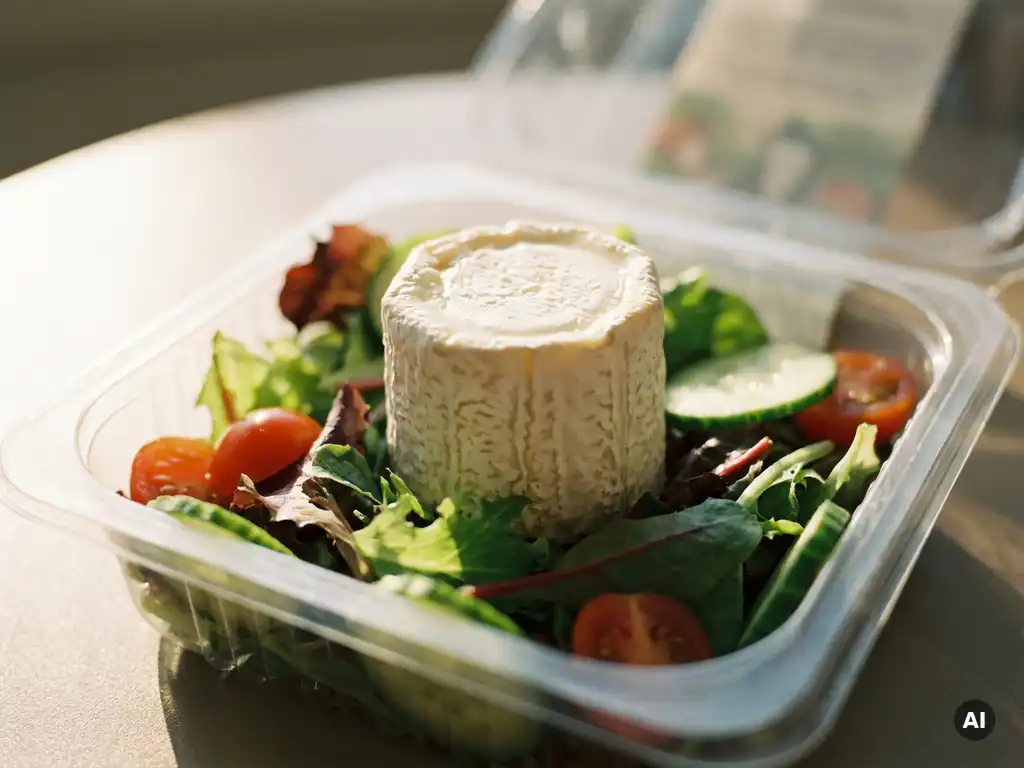
For a packaged salad, goat cheese needs a firm, closed texture that can withstand moisture, pressure, and temperature changes. An aged or semi-aged goat cheese with a compact structure stays intact best, while fresh, soft varieties quickly crumble or dry out. In this article, we answer the most frequently asked questions about goat cheese in packaged salads, from texture and aging to flavor combinations.
What texture does goat cheese need to avoid crumbling in a salad?
Goat cheese that doesn’t crumble in a salad needs a compact, moist yet firm texture. The cheese must have enough cohesion to withstand cutting and mixing without falling apart. A cheese that is too soft or too dry loses its shape as soon as it comes into contact with other salad components.
The texture of goat cheese is determined by its moisture content and protein structure. A cheese with too high a moisture content becomes mushy and sticks together, while a cheese that is too dry becomes crumbly. The ideal goat cheese for salads has a moisture content that provides elasticity without stickiness. In practice, this means a cheese you can cut into cubes or slices without the edges breaking off.
Acidity also plays a role. A lightly aged goat cheese with a mild tanginess typically has a firmer cell structure than a fully fresh goat cheese. That firmness makes it better suited for use in packaged products where mechanical stress during transport and storage is unavoidable.
How does packaging affect the firmness of goat cheese in a salad?
Packaging has a direct impact on the firmness of goat cheese in a salad. A modified atmosphere packaging (MAP) with an adjusted gas composition slows oxidation and moisture loss, allowing the cheese to retain its texture longer. Vacuum packaging, on the other hand, can put too much pressure on soft cheese cubes and damage their shape.
The choice between MAP and other packaging techniques depends on the desired shelf life and the type of goat cheese. For packaged salads with a shelf life of seven to fourteen days, MAP is generally the most effective method. It is important that the cheese and the other salad components are compatible in terms of moisture release, as a water-rich dressing can still damage the cheese structure.
The position of the goat cheese in the packaging also matters. Cheese that is in direct contact with wet ingredients such as tomatoes or cucumber absorbs moisture and loses firmness faster than cheese that is stored separately or added only at the time of consumption.
What is the difference between cubes, crumbles, and slices of goat cheese for salads?
Cubes, crumbles, and slices of goat cheese differ not only in shape, but also in texture, workability, and ease of use for the end consumer. Each format places different demands on the cheese and suits a different type of salad or packaging concept.
Goat cheese cubes
Cubes are cut from a firm, aged goat cheese. They hold their shape well during transport and mixing, and provide a recognizable visual presentation in the salad. Cubes are suitable for salads where the cheese needs to remain visible as a recognizable element, such as a Mediterranean salad or a grain bowl.
Goat cheese crumbles
Crumbles are broken or finely ground pieces of goat cheese with a drier, more crumbly texture. They distribute evenly throughout the salad and deliver a more intense flavor experience per bite. Crumbles work well in salads with a vinaigrette or dry dressing, but are more vulnerable to moist environments.
Goat cheese slices
Goat cheese slices, often cut from a log or cylinder, offer an elegant presentation and are widely used in premium packaged salads. They require a slightly firmer cheese to prevent tearing during cutting. Slices are also popular in warm salad combinations where the cheese melts slightly when heated.
Which ripeness level of goat cheese works best in packaged salads?
A semi-aged goat cheese with a ripening period of two to four weeks works best in packaged salads. This level of ripeness offers the ideal balance between firmness and flavor: the cheese is compact enough to hold its shape, but has already developed enough character to stand out in a salad composition.
Fully fresh goat cheese, such as a fromage frais or a soft bûche, is too fragile for the mechanical stress of packaging and distribution. On the other hand, a fully aged, hard goat cheese can be too dominant in flavor and may not pair as well with the light, fresh profiles that are popular in contemporary salads.
For product developers working on retail products, the semi-aged variety is also attractive because of its longer shelf life compared to fresh goat cheese. This increases flexibility in the supply chain and reduces food waste on the shelf.
How do you prevent goat cheese from losing or absorbing moisture in a salad?
You prevent moisture loss and moisture absorption by protecting the goat cheese through packaging technique, cheese treatment, and the composition of the salad itself. The most important measure is separating wet components from the cheese, or using a cheese with a protective rind or coating.
A light oil coating on the goat cheese cubes creates a barrier against moist dressings and extends texture stability. This is a technique widely used with goat cheese in oil, but it is also effective in dry salad processing. It also helps to compose the salad so that the water activity of the individual components is as close to each other as possible.
From the cheese production side, the moisture content can be controlled through pressing and aging. A cheese that has been produced slightly drier loses less moisture to its environment and also absorbs external moisture less quickly. This makes alignment with the cheese producer an essential step in product design.
Which flavor combinations with goat cheese work well in trendy packaged salads?
Goat cheese pairs excellently with sweet, sour, and earthy flavors that complement or contrast the mild tanginess of the cheese. In 2026, we see trendy packaged salads increasingly featuring combinations with truffle, red onion, honey, roasted nuts, and fresh herbs such as thyme and basil.
Truffle and goat cheese is a combination that is growing strongly in both the premium retail segment and in foodservice. The earthy, umami-rich note of truffle creates a beautiful contrast with the fresh tanginess of goat cheese. Red onion, roasted or pickled, adds depth and color and aligns with the clean-label trend where recognizable, single-ingredient items are preferred.
Other proven combinations for packaged salads include goat cheese with pear and walnut, with beet and orange vinaigrette, or with grains such as quinoa and farro. These combinations appeal to a broad audience and fit the growing range of meal salads in the retail channel. For foodservice applications, combinations with grilled vegetables, za’atar, and pomegranate seeds also work well as part of a Mediterranean or Middle Eastern-inspired concept.
How DeJong Cheese helps with goat cheese for packaged salads
At DeJong Cheese, we understand that a firm goat cheese in a packaged salad requires more than just a good base product. As a family business with years of experience in fresh and soft goat cheese specialties under our Alphenaer brand, we actively think along with our customers in product development. We offer:
- Custom texture and aging tailored to your packaging format and shelf life goal
- Various cut formats such as cubes, crumbles, and slices, also available in private label
- Technical advice on moisture management, MAP packaging, and cheese treatment for salad concepts
- Custom flavor concepts with ingredients such as truffle, red onion, herbs, and other trendy additions
- Flexible collaboration for both retail and foodservice, from small test runs to large-scale production
Would you like to develop a goat cheese specialty with us that fits perfectly in your salad concept? Contact us and we’ll be happy to discuss the options with you personally.
Frequently Asked Questions
Can I use goat cheese from the supermarket for packaged salads, or do I need a professional supplier?
Supermarket goat cheese is generally not optimized for use in packaged salads: the texture, moisture content, and shelf life are tailored for direct consumption, not for industrial processing and distribution. For professional applications — whether in retail or foodservice — working with a specialized cheese producer is strongly recommended. They can tailor the texture, ripeness level, and cut format to your specific packaging concept and shelf life requirements.
How long does goat cheese last in a packaged salad, and what factors affect this?
When using MAP packaging and a semi-aged goat cheese, a shelf life of seven to fourteen days is realistic, provided the cold chain is maintained uninterrupted between 2°C and 7°C. The exact shelf life is influenced by the moisture content of the cheese, the water activity of the other salad components, the gas composition in the packaging, and the hygiënic conditions during production. Separating wet ingredients from the cheese — or using an oil coating — can extend shelf life further.
What are the most common mistakes when using goat cheese in packaged salads?
A common mistake is choosing a goat cheese that is too fresh or too soft, which cannot handle the mechanical stress of transport and mixing and quickly crumbles or dries out. Another frequent mistake is placing the cheese in direct contact with water-rich ingrediënts such as tomatoes or cucumber, causing the cheese to absorb moisture and lose its structure. Finally, product developers sometimes underestimate the importance of aligning with the cheese producer on moisture content and ripeness level — parameters that are crucial for a consistent end result.
Is goat cheese in packaged salads also suitable for vegetarian or clean-label product lines?
Yes, goat cheese is excellent for vegetarian and clean-label concepts. Goat cheese is produced without meat components and therefore fits naturally in a vegetarian offering. For a clean-label positioning, it is important to choose a cheese without unnecessary additives or preservatives, and to align the other salad components accordingly. Recognizable, single-ingredient items such as red onion, honey, or walnut align seamlessly with the clean-label expectations of the modern consumer.
How do I choose the right cut format — cubes, crumbles, or slices — for my specific salad concept?
The choice depends on the desired visual effect, the type of dressing, and the positioning of the product. Cubes are ideal when the cheese needs to be visible as a recognizable, premium element in the packaging, such as in a grain bowl or Mediterranean salad. Crumbles distribute more evenly throughout the salad and enhance the flavor experience per bite, but require a drier environment. Slices are most suitable for premium or warm salad combinations where presentation is central. Consult with your cheese producer about which cut format is technically feasible based on the ripeness level you need.
Can goat cheese in a packaged salad also be used in warm preparations, such as microwave meals?
Yes, goat cheese — particularly in slices or cubes — lends itself well to warm salad combinations and microwave preparations, provided the cheese is firm enough not to melt or run completely. A semi-aged goat cheese retains its shape better when heated than a fresh variety and gives a slightly creamy, melted texture without fully losing its structure. For microwave concepts, it is important to adapt the packaging accordingly, for example with a valve film that prevents steam build-up.
Which trends in goat cheese salads are relevant for product developers looking to launch new concepts in 2025-2026?
The strongest trends for 2025-2026 are premiumization with distinctive flavor combinations such as truffle and goat cheese, the rise of meal salads with grains such as quinoa and farro, and a growing demand for Mediterranean and Middle Eastern-inspired concepts with ingrediënts such as za’atar, pomegranate seeds, and roasted vegetables. In addition, demand is growing for clean-label products with recognizable ingrediënts and shorter ingredient lists. Product developers who respond to portability, higher protein content, and sustainable packaging solutions have a strong competitive advantage in the retail channel.