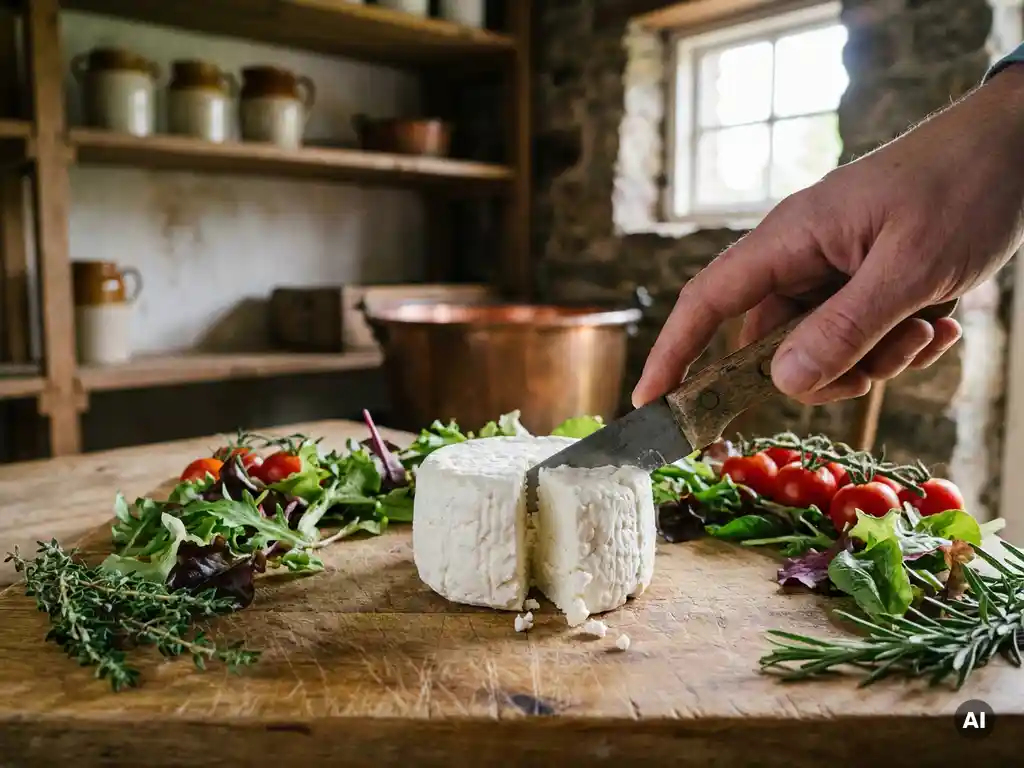
Cheese suppliers for salad manufacturers are specialized dairy companies that supply fresh and soft cheese varieties suitable for use in salad concepts, such as crumbled goat cheese, feta-style cheeses, and soft cream cheeses. The best suppliers offer not only standard products but also custom solutions, private label options, and technical support in product development. In this article, we answer the most frequently asked questions about sourcing cheese as a salad manufacturer.
Which cheese varieties are most suitable for salads?
The most suitable cheese varieties for salads are fresh and soft cheeses that crumble well, have a mild to pronounced flavor, and can withstand mixing with dressings and other ingredients. Goat cheese, feta-style cheese, and soft cream cheeses are the most commonly used varieties in the salad industry because of their texture and flavor profile.
For salad manufacturers, the functional properties of the cheese are at least as important as the taste. Goat cheese for salads is particularly popular because it crumbles well, does not melt quickly at room temperature, and has a distinctive, slightly tangy flavor that pairs well with vegetables, nuts, and sweet ingredients such as dried fruit.
- Fresh goat cheese: Creamy, slightly acidic, ideal for crumbling and combinations with truffle, red onion, or fresh herbs
- Soft aged goat cheese: More intense flavor, suitable for premium salad concepts
- Feta-style cheese: Firmer texture, holds its shape well in mixed salads
- Goat-based cream cheese: Spreadable, suitable for dressings and sauces in salad kits
The choice of a specific cheese variety depends heavily on the end product, the intended shelf life, and the target audience. Premium retail salads call for cheeses with a recognizable artisanal character, while foodservice applications often require consistent portioning and longer shelf life.
What requirements do salad manufacturers have for cheese?
Salad manufacturers have high standards for cheese as an ingredient: consistent quality per batch, a stable texture that can withstand mechanical processing, an appropriate shelf life, and compliance with food legislation. In addition, clean-label requirements, traceability, and supply reliability are playing an increasingly important role in 2026.
From a product development perspective, there are several technical and commercial criteria that a cheese supplier for salad manufacturers must meet:
- Consistent texture: Cheese must have the same crumblability or sliceability batch after batch for automated production lines
- Shelf life: Sufficient best-before date to allow for processing, transport, and retail
- Clean-label composition: No unnecessary additives, recognizable ingredient list for the end consumer
- Microbiological safety: Strict compliance with HACCP standards and relevant certifications
- Traceability: Insight into the origin of milk and production conditions
- Flexible packaging: Ability to deliver in bulk, blocks, or pre-portioned formats
A growing requirement is also the option for customization. Salad manufacturers are looking for suppliers who can think along with them on specific flavor profiles, herbs, or additions that align with seasonal concepts or new product lines. A supplier that only offers standard products is increasingly shutting out manufacturers.
How do you find a reliable cheese supplier as a salad manufacturer?
A reliable cheese supplier for salad manufacturers can be found by looking for parties with proven experience in foodservice and the food industry, relevant certifications, references in comparable applications, and a willingness to think along in product development. Trade fairs, industry associations, and LinkedIn are effective channels for finding suitable partners.
When selecting a cheese ingredient supplier for foodservice and industry, the following steps are relevant:
- Define your technical requirements before entering into conversations: texture, shelf life, packaging, volumes, and any customization requirements
- Request product specifications and certificates such as BRC, IFS, or comparable quality standards
- Request samples and test the cheese in your own production process under realistic conditions
- Discuss flexibility in product customization, private label options, and minimum order quantities
- Evaluate communication early in the process: a supplier that responds quickly and substantively is generally also a reliable long-term partner
Specialist cheese producers focused on soft cheese product development and foodservice are often better equipped to adapt to the needs of salad manufacturers than large generic dairy suppliers.
What is the difference between fresh and aged cheese in salad applications?
The main difference between fresh and aged cheese in salad applications is the texture, flavor profile, and technical shelf life. Fresh cheese is creamier, milder, and crumbles more softly, while aged cheese has a more intense flavor, is firmer in texture, and holds up better when mixed with moist ingredients.
Fresh cheese in salads
Fresh goat cheese is particularly well suited for salads where a creamy, delicate flavor is desired. The soft texture makes it ideal for premium concepts, but also requires careful handling. Fresh cheese has a shorter shelf life and is more sensitive to temperature fluctuations, which has implications for logistics and packaging.
Aged cheese in salads
Aged goat cheese specialties offer a more intense flavor experience and are more robust in processing. They hold their shape better in mixed salads, are less sensitive to moisture from dressings, and generally have a longer shelf life. For salad manufacturers working with longer production and distribution cycles, aged cheese offers practical advantages.
The choice between fresh and aged ultimately depends on the desired flavor profile, production capacity, and distribution chain. Many manufacturers choose a combination of both, depending on the specific salad concept.
Which suppliers deliver cheese under private label to the food industry?
Private label cheese suppliers for the food industry are specialized producers that make cheese products under the customer’s brand. In the Netherlands and Belgium, there are several dairy producers that supply private label, but specialists in soft and fresh goat cheese are scarce. The best private label partners offer not only production but also support with recipe development, packaging design, and certification.
When selecting a private label cheese supplier for the food industry, the following criteria are decisive:
- Production flexibility: The ability to produce small and larger volumes as the product grows
- Custom recipes: Adjustment of flavor, texture, or additions based on your product concept
- Packaging options: From bulk packaging for industrial processing to consumer packaging for retail
- Quality certification: Relevant certificates that align with the requirements of your sales channel
- Transparency about origin: Clarity about milk origin and production conditions for clean-label positioning
Family businesses specializing in goat cheese are often more attractive partners in this segment than large dairy corporations, because they can collaborate more personally and move faster in product development.
How DeJong Cheese helps with cheese sourcing for salad manufacturers
As a family business specializing in fresh and soft goat cheese specialties under the Alphenaer brand, we have been supplying salad manufacturers, foodservice companies, and product developers for years who are looking for a supplier that thinks beyond the standard range. Our strength lies in the combination of artisanal quality and the flexibility to offer customer-specific solutions.
What we offer for salad manufacturers and product developers:
- Fresh and soft goat cheese specialties, suitable for direct use in salads
- Custom flavor profiles, textures, and packaging tailored to your product concept
- Private label production for retail and foodservice applications
- Technical support in the development of new salad concepts
- Clean-label recipes with transparent origin of our goat’s milk
- Supply to both small product developers and large industrial customers
Want to discover how we can strengthen your salad production with our goat cheese specialties? Contact us for a no-obligation conversation about the possibilities.
Frequently Asked Questions
What are the minimum order quantities at a specialized cheese supplier for salad manufacturers?
Minimum order quantities vary greatly by supplier and product type. Specialized family businesses typically maintain lower minimum volumes than large dairy corporations, making them attractive for product developers who want to test a new salad concept. It is wise to discuss early on how volumes can scale as your product grows, so you are not locked into batches that are too large or too small.
How do I ensure that the cheese retains its texture after mixing with dressing in a salad?
The key lies in the right choice of cheese type én the moment of addition in the production process. Firmer cheese varieties such as feta-style cheese or lightly aged goat cheese are naturally more resistant to moist dressings than fresh cream cheeses. Discuss the specific texture characteristics per batch with your supplier and consider adding the cheese only in the final process step to guarantee optimal presentation in the end product.
What certifications must a cheese supplier have at minimum for delivery to the food industry?
For delivery to salad manufacturers and the broader food industry, BRC (British Retail Consortium) and IFS (International Featured Standards) are the most common and requested certifications. In addition, HACCP certification is an absolute basic requirement. Depending on your sales channel, specific retail certifications or organic labels may also be required, so always check the purchasing requirements of your own customers before selecting a supplier.
Is it possible to develop seasonal or limited salad concepts with a cheese supplier?
Yes, and this is precisely an area where specialized suppliers distinguish themselves from generic dairy suppliers. Flexible producers can think along about temporary flavor profiles, such as goat cheese with truffle for autumn or goat cheese with lemon and herbs for summer salads. Keep in mind that product development and test production take time, so plan seasonal concepts at least three to six months in advance.
What are the most common mistakes salad manufacturers make when sourcing cheese?
A common mistake is selecting a supplier purely on price, without testing the technical suitability of the cheese for the specific production process. Other common mistakes include: not requesting realistic production samples, not aligning shelf life with the full distribution chain, and thinking too late about customization requirements such as clean-label composition or private label packaging. Always invest in a thorough testing phase before committing to a supplier relationship.
Can I as a small or startup salad manufacturer also work with a specialized cheese supplier?
Absolutely. Specialized producers, especially family businesses, are often well equipped to serve smaller customers and grow along as production scales up. It is important to be transparent about your current volumes én your growth expectations, so the supplier can make a suitable offer. Many specialized suppliers see collaboration with innovative startup manufacturers as an opportunity to develop new concepts.
How long does it take on average to develop and produce a private label goat cheese?
The lead time for private label cheese development depends on the complexity of the product and the degree of customization. For a relatively simple adjustment to an existing product, such as a different flavor profile or adjusted packaging, you can expect four to eight weeks. For completely new recipes, including test production, taste panels, and packaging development, a lead time of three to six months is more realistic. Plan this well in advance, especially if certifications or retail approvals are also required.
Related Articles
- What questions do you ask a producer to test flexibility in custom orders?
- What are portion sizes for different goat cheese applications?
- How to choose between bulk and pre-portioned goat cheese?
- What does HACCP compliance mean for goat cheese suppliers?
- How to ensure consistent goat cheese quality across batches?