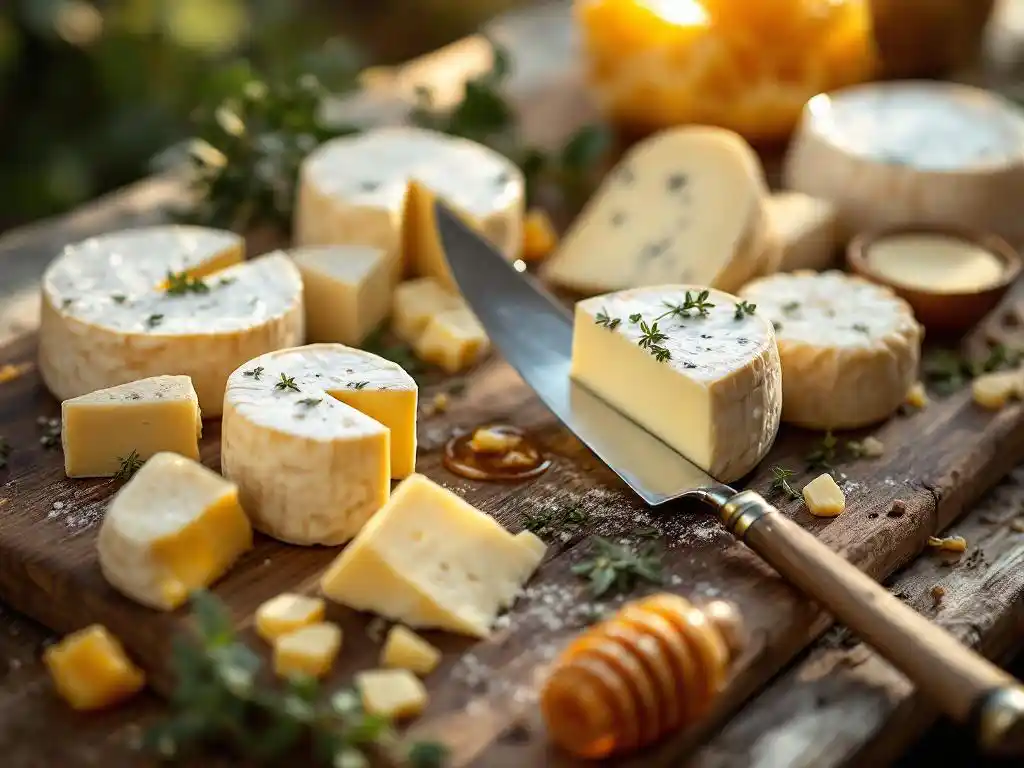
Custom goat cheese formats are specialised cheese products tailored to meet specific business needs through unique shapes, sizes, textures, and packaging solutions. These bespoke offerings go beyond standard retail products, allowing B2B partners to differentiate their product lines, optimise operations, and respond to evolving market demands. Understanding why partners seek these custom solutions reveals the strategic value of flexibility in today’s competitive food industry.
What exactly are custom goat cheese formats, and why do they matter?
Custom goat cheese formats encompass far more than simple size variations. They include specialised shapes for specific culinary applications, unique packaging configurations for operational efficiency, and tailored formulations that meet precise texture and melting requirements. These formats range from pre-portioned medallions for meal kits to specific crumble sizes for salad manufacturers, each designed to solve particular business challenges.
The customisation extends to ageing processes and flavour profiles, allowing partners to offer exclusive products that align with their brand identity. A pizza chain might require goat cheese with specific moisture content for optimal melting, while a premium sandwich producer needs consistently sized slices that maintain their integrity during assembly. This level of customisation creates competitive advantages through product differentiation and operational optimisation.
For B2B partners, custom formats represent strategic assets that enable market differentiation and customer satisfaction. Rather than adapting their processes to standard products, businesses can specify formats that integrate seamlessly into their operations, reducing waste and improving efficiency while offering unique products their competitors cannot easily replicate.
How do custom formats help businesses solve operational challenges?
Custom goat cheese formats directly address multiple operational pain points that food businesses face daily. Portion control becomes precise when cheese arrives in the exact weights needed for recipes, eliminating time-consuming portioning tasks and reducing labour costs. This precision extends to production line integration, where custom-sized products fit seamlessly into automated systems without modification.
Right-sizing reduces waste significantly, as businesses receive exactly what they need rather than adapting standard formats to their requirements. A meal kit company receiving 50-gram portions eliminates the need to divide larger blocks, while a salad manufacturer receiving pre-crumbled cheese in specific particle sizes maintains consistency across thousands of servings. These efficiencies translate directly into improved profit margins and simplified inventory management.
Storage and transportation logistics benefit equally from customisation. Stackable packaging designed for specific refrigeration systems maximises cold storage efficiency, while formats tailored to shipping requirements reduce transportation costs. Kitchen operations run more smoothly when staff work with products designed for their specific needs, from easy-open packaging that speeds preparation to formats that maintain quality throughout service periods.
What’s driving the demand for specialised goat cheese formats?
Consumer preferences for artisanal and premium products drive much of the demand for specialised goat cheese formats. As diners increasingly seek unique culinary experiences, restaurants and food manufacturers need distinctive ingredients that support menu differentiation. Goat cheese, with its versatile flavour profile and perceived premium status, fits perfectly into this trend when offered in formats that enable creative applications.
The growth in plant-forward menus creates additional opportunities for custom goat cheese formats. As vegetables take centre stage, cheese becomes a flavour accent rather than a main component, requiring smaller portions and specific textures that complement rather than overwhelm plant-based dishes. This shift demands formats that portion perfectly for modern plating styles and dietary preferences.
Seasonal menu changes and emerging food trends require flexibility that standard formats cannot provide. Quick-service restaurants launching limited-time offers need formats that integrate quickly into existing operations. Food manufacturers responding to trends such as Mediterranean bowls or artisanal flatbreads require cheese formats that deliver authentic experiences while maintaining operational efficiency. Custom formats enable rapid responses to these market opportunities without costly operational changes.
Which industries benefit most from custom goat cheese solutions?
Meal kit companies represent a primary beneficiary of custom goat cheese formats, requiring precise portions that maintain quality during shipping and storage. These businesses need individually wrapped portions that stay fresh throughout the delivery cycle while providing restaurant-quality results when consumers prepare meals at home. The right format ensures portion control, reduces packaging waste, and simplifies the cooking process for end users.
Pizza chains and quick-service restaurants benefit from formats designed for specific melting characteristics and application methods. Whether it’s crumbles that distribute evenly across pizzas or slices that melt consistently in sandwich applications, custom formats ensure product performance matches operational needs. These formats often include modified moisture levels or fat content to achieve the desired melting properties while maintaining goat cheese’s distinctive flavour.
Industrial food manufacturers have perhaps the most complex requirements, needing formats that integrate into large-scale production while maintaining quality standards. Salad producers require crumbles with specific particle sizes that will not break down during mixing and packaging. Sandwich manufacturers need slices with precise thickness and flexibility specifications. Ready-meal producers often require formats that maintain their texture through freezing and reheating cycles. Each industry segment benefits from formats engineered to their specific production requirements rather than adapting processes to standard products.
How does the custom format development process actually work?
The development process begins with detailed consultation to understand specific operational needs, target applications, and quality requirements. This initial phase explores everything from portion sizes and packaging preferences to shelf-life expectations and distribution channels. Technical discussions cover melting properties, texture requirements, and how the cheese will perform in the intended application, ensuring the final format meets all operational needs.
Product development follows a structured approach, starting with small-batch trials to test different formulations and formats. These trials allow for adjustments to moisture content, ageing processes, and packaging configurations before scaling to production quantities. Timeline expectations typically range from several weeks for simple format modifications to several months for completely new product development, depending on complexity and testing requirements.
Quality assurance protocols ensure consistency across production runs, with regular testing to maintain specifications. Minimum order considerations balance production efficiency with inventory management needs, often starting with trial quantities before moving to full production runs. The process maintains flexibility throughout, allowing for adjustments based on real-world performance and market feedback. This iterative approach ensures the final format truly meets partner needs while maintaining the quality standards essential for success.
How De Jong Cheese helps with custom goat cheese formats
We specialise in developing custom goat cheese formats that solve real business challenges for our B2B partners. Our traditional craftsmanship, combined with modern production capabilities, allows us to create unique solutions while maintaining the authentic quality our Alphenaer brand represents. With decades of experience in goat cheese production, we understand how to balance customisation with consistency.
Our comprehensive approach to custom formats includes:
- Flexible packaging options, from bulk containers to retail-ready portions
- Private-label capabilities that strengthen your brand identity
- Custom recipe development for unique flavour profiles and textures
- International shipping expertise to over 20 countries
- A dedicated B2B support team throughout the development process
- Food safety certifications that meet the highest international standards
We work closely with partners across the foodservice industry to develop formats that integrate seamlessly into their operations. Whether you need specific portion sizes for meal kits, custom melting properties for pizza applications, or unique packaging for retail differentiation, our team has the expertise to make it happen.
Ready to explore how custom goat cheese formats can enhance your product offering? Contact our team to discuss your specific needs and discover how our traditional expertise can create modern solutions for your business. For those interested in our current product range, visit our sales points page to see where our products are already making a difference.
Frequently Asked Questions
What's the minimum order quantity for custom goat cheese formats, and can we start with a trial batch?
Most manufacturers offer flexible minimum order quantities that vary based on the complexity of customisation. Trial batches are typically available, allowing you to test the product in your operations before committing to larger volumes. Starting with smaller quantities helps validate the format’s performance and ensures it meets your specific needs before scaling up production.
How do I calculate the cost-benefit of switching from standard to custom goat cheese formats?
Calculate your current costs including product waste from portioning, labour time for preparation, and any product loss from improper sizing. Compare this against the custom format pricing, factoring in reduced labour, eliminated waste, and improved portion control. Most businesses find that labour savings alone justify the switch, with additional benefits from reduced waste and improved consistency providing extra value.
What happens if our custom format needs adjustment after we've started using it?
Reputable suppliers maintain flexibility for format adjustments based on real-world feedback. Minor modifications like packaging changes or slight size adjustments can often be implemented quickly. More significant changes to texture or formulation may require additional development time, but the iterative process ensures your format evolves with your needs rather than forcing you to adapt to a fixed product.
How can we ensure our custom goat cheese format remains exclusive to our business?
Exclusivity agreements can be negotiated based on volume commitments and market segments. These typically define geographic regions, distribution channels, or specific industries where your custom format remains unique to your business. Clear contractual terms protect your investment in development while ensuring your competitive advantage through product differentiation.
What are the most common mistakes businesses make when specifying custom cheese formats?
The biggest mistake is focusing solely on price rather than total operational value. Other common errors include underestimating shelf-life requirements for distribution channels, not considering how the format will perform throughout temperature fluctuations, and failing to involve kitchen staff or production teams in the specification process. Success comes from thinking holistically about how the format will function across your entire operation.
How long should we expect our custom goat cheese format to remain stable during transport and storage?
Shelf-life depends on the specific format, packaging, and intended use, but custom formats can be optimised for your distribution timeline. Individually wrapped portions might achieve 60-90 days refrigerated, while bulk formats vary based on packaging. Work with your supplier to specify shelf-life requirements upfront, including considerations for transport time and storage conditions at various points in your supply chain.