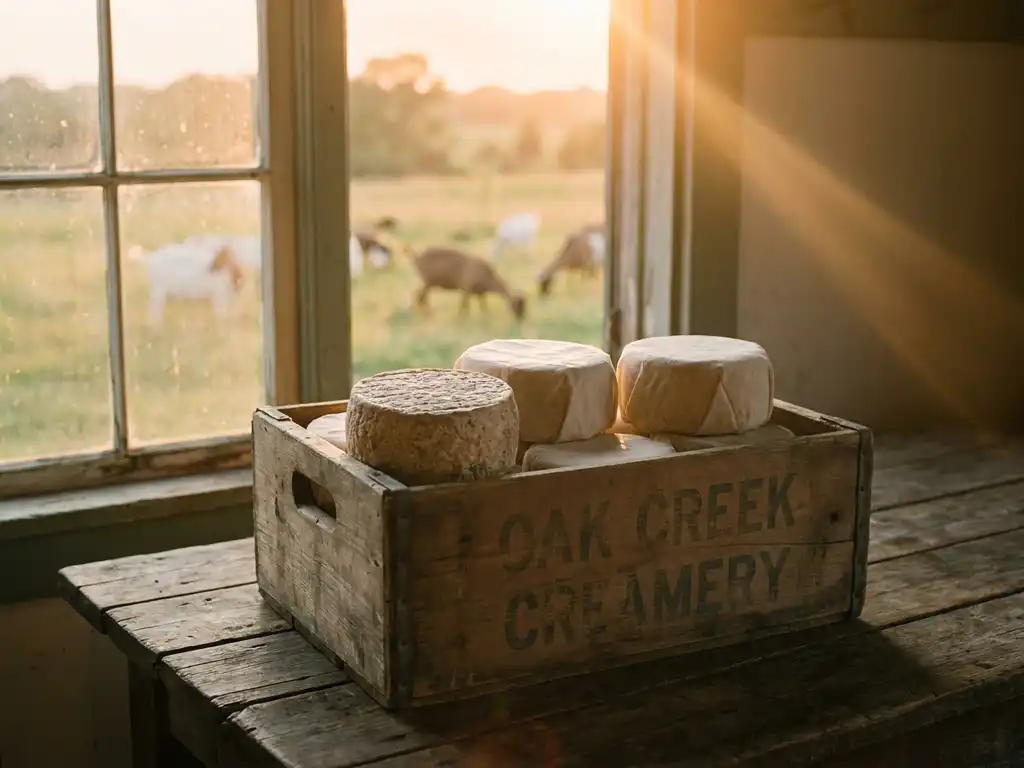
When sourcing cheese internationally, you need clear answers about milk origin, certification, traceability, quality control, and compliance. The most important questions focus on who produces the milk, how quality is guaranteed throughout the supply chain, and which documents prove that the milk source meets current food safety standards. Whether you’re buying for industrial processing or product development, milk origin directly affects the quality, flavor, and legal integrity of your end product. In this article, we answer the most common questions about milk origin in international cheese sourcing.
Which certifications prove milk origin at a cheese producer?
Milk origin at a cheese producer is proven through a combination of certifications such as IFS Food, BRC, ISO 22000, and EU organic certification. These standards require documented traceability from the milk source to the finished product. For goat cheese specifically, certificates from milk suppliers combined with internal audit reports are the strongest proof of consistent and verifiable milk origin.
Here are the certifications to look for when sourcing internationally:
- IFS Food or BRC Global Standard: Internationally recognized retail standards that require full traceability of raw materials, including the milk source.
- ISO 22000: A food safety management system standard that covers risk management across the entire supply chain.
- EU organic certification: Guarantees that goat milk comes from certified organic farms with documented pasture access and feed specifications.
- Halal or Kosher certification: Relevant for specific markets and also requires documented origin of all ingredients, including milk.
When reviewing certifications, always ask about their scope — not just whether a certificate exists. A company-level certificate means nothing if the specific production line or milk type isn’t explicitly included in the scope. Always request certificates with a clear indication of the validity date and the certifying body.
How do you verify that a supplier can guarantee consistent milk quality?
To verify consistent milk quality at a cheese producer, ask for fixed supply contracts with dairy farmers, internal quality protocols, and historical milk analysis data. A reliable supplier can show specifications for fat content, protein content, bacterial count, and somatic cell count over an extended period — not just a one-time snapshot.
Practical ways to check this include:
- Requesting batch-by-batch quality reports covering at least the past twelve months
- Asking how many fixed milk suppliers they work with and the length of their contracts with those farms
- Requesting insight into the internal quality assurance system, including how often milk is tested
- Asking about deviation procedures: what happens when a batch of milk falls outside specifications?
For industrial applications such as pizzas or ready meals, the somatic cell count of goat milk is a critical parameter. A high cell count indicates mastitis in the goat and directly affects the melting behavior and flavor stability of the cheese. Always ask specifically about average cell counts and the maximum limits the producer uses — not just the legal minimums.
What does the region of origin tell you about the flavor and characteristics of goat cheese?
The region where goat milk is produced has a direct impact on the flavor, texture, and fat composition of goat cheese. Goat milk from areas with rich, varied vegetation produces cheese with more complex flavors and a higher content of medium-chain fatty acids, which define the characteristic goat cheese taste. Regions with a stable climate generally deliver more consistent milk quality throughout the year.
Here are some specific regional characteristics relevant to international sourcing:
- Dutch goat milk: Known for strict veterinary controls, high hygiene standards, and a relatively mild flavor profile. Well suited for soft fresh cheeses and industrial applications where a neutral base is needed.
- French goat milk (Loire Valley): Produces cheese with a pronounced character due to the chalky soil and varied herbage. A stronger goat cheese flavor — less suited for neutral industrial processing.
- Mediterranean regions: Higher fat content due to the climate and the goats’ diet, resulting in richer cheeses but also greater seasonal variation.
For product development, it’s worth knowing that the region affects not just flavor but also functional properties. Milk with a higher fat content melts differently than low-fat milk, which is directly relevant for applications in hot dishes or melted cheese products.
Which questions about milk origin are required for food safety and compliance?
For food safety and compliance, you are required as a buyer to find out which country the milk comes from, whether the production facility meets EU veterinary standards, and whether a traceable system is in place that goes back to the individual milk delivery. This is not optional — it’s a legal requirement under EU Regulation 178/2002 and related legislation.
The required questions you must ask as a buyer are:
- In which country and at which locations is the goat milk collected?
- Does the milk production comply with the EU Hygiene Regulation (EC 853/2004) or an equivalent standard?
- Is there a complete traceability system in place that goes back to the individual farm or herd?
- Are antibiotic residues or other veterinary drug residues demonstrably excluded through systematic testing?
- Which documents are provided per batch to prove origin in the event of an audit or recall?
For imports from outside the EU, the exporting producer must also be listed on the EU list of approved third countries for dairy products. Always verify this in advance — products from non-approved locations cannot enter the EU market, regardless of the quality of the cheese itself.
How does traceability differ between private label goat cheese and branded cheese?
Private label goat cheese and branded cheese are legally equivalent in terms of traceability requirements. In practice, however, branded cheese more often comes with publicly accessible information about milk origin. With private label, the responsibility for transparency lies entirely with the producer and the commissioning party, which places higher demands on the contractual documentation of traceability information.
The practical differences are:
- Branded cheese: The producer has a reputational interest and often communicates origin proactively. Information about the milk source is sometimes publicly available through the producer or certifying bodies.
- Private label: The commissioning party sets the specifications but also bears responsibility for the accuracy of claims on the packaging. This requires explicit contractual agreements about which traceability documents are provided with each delivery.
As a buyer or product developer sourcing private label goat cheese, it’s wise to include a contractual requirement that each batch comes with a traceability declaration stating at minimum the country of origin of the milk, the name of the milk supplier, and the production batch number. This protects you in the event of a recall and meets the documentation requirements that retailers and auditors are increasingly demanding.
When is local or regional milk origin an advantage in product development?
Local or regional milk origin is an advantage in product development when you’re pursuing a clean-label positioning, developing seasonal products, or building a story around authenticity and terroir. Consumers and retailers increasingly value verifiable local origin as a quality argument — and it also simplifies traceability documentation.
Specific situations where local milk origin gives you a strategic advantage:
- Clean-label products: Local milk strengthens the perception of naturalness and transparency, which aligns with demand for products without unnecessary additives.
- Seasonal concepts: Milk from local goats varies in composition throughout the seasons, making it possible to create unique products you can position as limited editions or seasonal specialties.
- Flavor combinations with regional ingredients: A goat cheese made from Dutch milk, combined with local herbs or truffle from a specific region, offers a coherent origin story that lends itself to premium positioning.
- Retail claims: Supermarkets and foodservice partners are increasingly asking for verifiable regional origin as a differentiating feature on packaging or in product specifications.
For innovative product development, local origin is also functionally interesting. Milk from goats grazing on specific soils or following a particular feeding regimen shows measurable differences in fatty acid composition, which affects melting behavior, texture, and flavor release in the end product.
How DeJong Cheese supports transparent milk origin and international sourcing
As a family business based in Alphen, specializing in goat cheese under the Alphenaer brand since 1995, we know exactly what questions our customers ask about milk origin. We work with a fixed group of trusted milk suppliers and can provide full traceability from milk source to finished product. That makes us a reliable partner for both industrial buyers and product developers who set high standards for transparency and consistency.
Here’s what we offer:
- Complete traceability documentation per batch, including goat milk origin
- Consistent quality specifications with historical analysis data available on request
- Flexible private label solutions with contractually defined traceability requirements
- Technical support for product development, including advice on melting behavior, fat content, and flavor profile
- International delivery to retail, foodservice, and industry — both under our own brand and as private label for retail
Whether you’re buying for a production company or developing innovative food concepts, we’re happy to think along with you. Browse our offer for foodservice and industry, or contact us directly to talk about your specific needs. At DeJong Cheese, the door is always open for an honest, straightforward conversation about what we can do for you.
Frequently Asked Questions
How often should I re-check my cheese supplier's certifications?
Certifications have a fixed validity period, usually one to three years, but interim audits or changes to the production facility can affect their scope. At every new contract period or significant order increase, verify both the current validity and the exact scope of the certificate. A good practice is to contractually require suppliers to proactively notify you of any loss, suspension, or change to a certification, so you’re never caught off guard during a retail audit.
What are the most common mistakes buyers make when reviewing milk origin documentation?
The most common mistake is accepting a company-level certificate without checking whether the specific production line or milk type falls within the certification scope. A second frequent error is failing to request batch-specific traceability documents, which means that in the event of a recall or audit, you can’t prove where the milk actually came from. Always make sure that batch-level traceability documentation is contractually required and included as standard with every delivery.
Can I demand full traceability information as a small buyer, or is that only for large retailers?
Full traceability information is both a legal right and a legal obligation for every link in the food chain, regardless of the size of your organization. Under EU Regulation 178/2002, the ‘one step back, one step forward’ principle applies to all businesses that purchase or process food products. As a small buyer, you can easily meet this requirement by creating a standard checklist of minimum documentation requirements per delivery — such as country of milk origin, name of the milk supplier, and the batch number.
How do I handle seasonal variation in goat milk when I need consistent product quality for industrial processing?
Seasonal variation in goat milk — particularly in fat content and protein composition — is a real concern for industrial applications such as processed cheese or ready meals. The most effective approach is to agree on fixed product specifications with your supplier, including acceptable tolerance ranges for parameters such as fat content and somatic cell count, and to request historical seasonal data to understand how large the variation actually is in practice. Some producers offset seasonal fluctuations by blending milk from multiple suppliers or through standardization in the production process — both of which you can explicitly include in your purchasing specifications.
What additional questions should I ask when importing goat cheese from outside the EU?
When importing goat cheese from outside the EU, there are additional compliance questions you must ask on top of the standard traceability questions. First, check whether the exporting country and the specific production facility are listed on the EU list of approved third countries for dairy products — this is a hard entry requirement for the EU market. Also ask for a veterinary health certificate per shipment, and inquire about the residue standards the producer applies, since non-EU countries sometimes use different maximum residue limits for veterinary drugs that don’t automatically align with EU standards.
How can I communicate the milk origin of a private label goat cheese on the packaging without making misleading claims?
Milk origin claims on packaging must always be verifiable and legally defensible, which means you can only communicate what has been contractually and documentarily established with your producer. Use specific, verifiable wording such as ‘made from Dutch goat milk’ or ‘milk from certified organic goat farms’ rather than vague terms like ‘artisanal’ or ‘all natural.’ Always have origin claims reviewed by a legal advisor or your own compliance team, and make sure the underlying traceability documentation is available in case a retailer or regulator asks for supporting evidence.
What's a good starting point if I'm sourcing goat cheese internationally for the first time and don't yet have a supplier evaluation process?
A good starting point is to put together a supplier questionnaire covering at minimum certifications and their scope, the traceability system, fixed milk suppliers, and the availability of historical quality data. Combine this with a request for a product sample along with the corresponding analysis certificates, so you can assess quality alongside documentation. For your first international purchase, it’s also wise to place a trial order with an explicit evaluation period, so you can assess the consistency of both the product and the documentation before making any long-term commitments.
Related Articles
- How do you assess whether a supplier has enough R&D capacity?
- What are the possibilities of local sourcing as a unique selling point?
- How to maximize goat cheese sales in retail environments?
- Is it practical to freeze goat cheese spreads for later use in foodservice?
- Is goat cheese healthier than cow cheese?