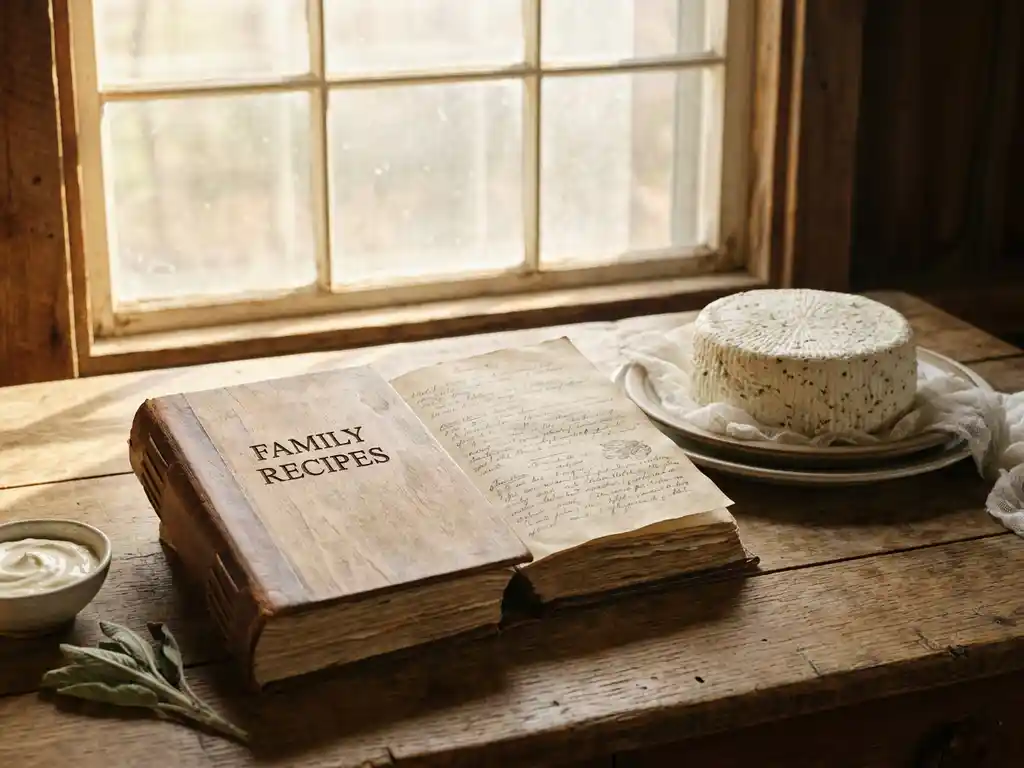
The story of a family business becomes real marketing value in product development when it’s translated into concrete, functional arguments: origin, craftsmanship, and continuity that demonstrably contribute to product quality. For food professionals like buyers and product developers, it’s not the story itself that convinces — it’s how that story connects to their technical and commercial needs. The questions below help you make that translation.
Which elements of a family business story are most valuable for food product development?
The most valuable elements are continuity, craftsmanship, and traceability. Continuity shows that a company has maintained the same standard across generations. Craftsmanship proves that recipes and production knowledge haven’t been lost through scaling up. Traceability makes clear where raw materials come from and how they’re processed. Together, these three elements form a foundation for product development based on reliable ingredients.
For a product developer working with premium ingredients, the story behind a supplier is more than a marketing tool. It’s a quality signal. When a family business has used the same production method for decades, that gives confidence about flavor profile, texture, and consistency — properties that directly affect the outcome of a new product.
Elements that add less value in a professional context are emotional anecdotes without functional relevance. A photo of the founder or a story about the first cheese dairy appeals to consumers, but it won’t convince a buyer. The value lies in the translation of the story into specifications: what does all that years of experience actually mean for fat content, shelf life, or melting behavior?
How do you translate artisanal production values into a technical product file?
Artisanal production values become technically relevant when linked to measurable properties: pH level, moisture content, fat content, ripening time, and microbiological specifications. A technical product file that also describes the production philosophy gives buyers and quality managers confidence that the values behind the product are built into the processes.
The translation happens in a few steps:
- Identify the artisanal characteristics that set the product apart — such as the use of fresh raw milk, hand-ladling, or a specific ripening environment.
- Link each characteristic to a measurable outcome, such as higher moisture content from hand-ladling or a specific aroma profile from wood-aged ripening.
- Document process control: how is the consistency of that artisanal step maintained at larger volumes?
- Translate into application advice: which production conditions on the customer’s end work best with this ingredient?
This is exactly the information a buyer like Marco needs to evaluate a supplier. Not the story — but proof that the story holds up in practice.
What is the difference between brand identity and marketing story in the cheese industry?
Brand identity is the core of what a company is and what it stands for, based on real characteristics like origin, production method, and values. The marketing story is how that identity is communicated to different audiences. In the cheese industry, the distinction is crucial: a strong brand has a consistent identity, but adapts the story to fit the audience.
A family business that produces goat cheese might have this brand identity: artisanal production, regional origin, and generational knowledge. That’s the fixed core. But the marketing story differs by audience:
- For a retail buyer, the focus is on shelf differentiation, clean label, and an origin story for the consumer.
- For a foodservice buyer, the story is about consistency, ease of use, and reliable delivery.
- For a product developer, the focus is on flexibility: can the supplier collaborate on new flavor combinations and formats?
The mistake many companies make is treating the marketing story as the same thing as the brand identity. That leads to generic communication that doesn’t really connect with anyone. The real strength lies in translating a strong, authentic identity into a relevant story for each specific conversation partner.
How do you use origin and tradition as a differentiating argument with retailers and buyers?
Origin and tradition become differentiating factors when they’re verifiable and directly linked to product quality or consumer need. For retailers, the origin story is valuable when it matches what consumers are looking for: transparency, authenticity, and local production. For industrial buyers, origin matters as proof of consistent raw material quality and a stable supplier base.
Practical ways to use origin and tradition as a differentiating argument:
- Geographic specificity: not “made in the Netherlands,” but “produced in Alphen, with milk from the region.” Specificity makes the story credible.
- Timeline as proof: a family business that has been producing at the same location for more than thirty years demonstrates continuity. That’s an argument for supply reliability.
- Process knowledge as differentiation: a traditional recipe that can’t easily be copied gives a product an authentic character that private label alternatives lack.
- Certifications and quality marks: back the story with verifiable quality assurance. Tradition plus certification is stronger than tradition alone.
For retail, this story works best when it’s translated into the consumer experience: what does the end user feel when they use this product? For industrial buyers, it works when the story is supported by specifications and a proven track record.
When does the family business story not work as a marketing argument?
The family business story doesn’t work when it isn’t backed up by demonstrable quality, when it doesn’t connect to the needs of the audience, or when it’s too generic to stand out. In the food industry, countless companies claim to be artisanal and family-run. Without concrete differentiation, the argument loses its power.
Situations where the story won’t convince:
- In pure price negotiations: a buyer focused solely on cost won’t place any value on the family business story. Here, the focus needs to be on volume, delivery reliability, and cost price.
- When quality is inconsistent: a great story combined with varying product specifications completely undermines trust. The story has to match the experience.
- When there’s no specificity: “made with passion for generations” says nothing. What makes this product technically different? Without an answer to that question, the story is empty.
- When the audience doesn’t relate to it: for some industrial applications, origin is simply irrelevant. Someone processing goat cheese in a ready-made meal for a budget brand has different priorities than authenticity.
The story is a tool, not a goal. When it doesn’t help solve a concrete problem for the buyer or product developer, it’s better left out.
How DeJong Cheese supports product development with an authentic story
As a family business since 1995, we know better than anyone how to translate craftsmanship and authenticity into concrete value for buyers and product developers. Under our brand Alphenaer, we produce fresh and soft goat cheese specialties that not only have a strong story, but are also technically supported for industrial and retail applications. That’s exactly the combination that makes the difference.
What we offer for your product development:
- Technical product files with full specifications, so you can immediately assess whether our cheeses fit your production line
- Custom solutions and flexibility in flavor combinations, formats, and private label production for retail and foodservice
- Consistent quality backed by years of production experience and tight quality control
- Personal collaboration in developing new concepts, from truffle goat cheese to seasonal specialties
- Reliable delivery to retail, foodservice, and industry worldwide, including at volume
Want to find out how our story fits your product needs? Get in touch with us and we’ll be happy to think along with you.
Frequently Asked Questions
How do I know as a buyer whether a family business story is truly differentiating, or just marketing?
Ask the supplier to translate the story into concrete specifications and verifiable processes. A genuine family business can explain exactly how their production method results in measurable properties such as a specific moisture content, ripening time, or aroma profile. If a supplier can only offer emotional arguments without technical backing, the story is probably more marketing than reality.
What documents or proof should I expect from an artisanal cheese producer when starting a new partnership?
From a serious supplier, you should expect at minimum a complete technical product file with microbiological specifications, nutritional and fat values, shelf life, and allergen information. Relevant certifications such as FSSC 22000, BRC, or IFS are also a sign of guaranteed quality control. A supplier who also provides process descriptions and application advice demonstrates that the artisanal story is genuinely embedded in the way they operate.
Can an artisanal producer also deliver at the volume and consistency I need for industrial applications?
That depends on how well the company has secured its production processes when scaling up. The key question isn’t whether a company is small or large, but whether it can consistently reproduce the artisanal characteristics at the required volume. Ask specifically for references from comparable customers, minimum and maximum order volumes, and how the company handles seasonal variations in raw material quality.
How do I effectively integrate an ingredient's origin story into my own product packaging or concept?
Work with the supplier to select the most concrete and verifiable elements of the story, such as a specific region, a unique production step, or a proven tradition. Avoid vague claims like ‘artisanal’ or ‘traditional’ without further explanation — these terms are now so common that they have little differentiating power. Specific details, such as the company name, location, or a quality mark, make the story credible and strengthen consumer trust.
What are common mistakes when selecting an artisanal cheese producer as a supplier?
A common mistake is letting the story take priority over technical suitability: a great family business story means nothing if the producer can’t meet your specific flavor, texture, or logistical requirements. Another pitfall is not testing consistency across multiple batches — which is a real risk with artisanal production. Always request multiple samples from different production runs before making a final supplier decision.
How do I start a product development process with a new artisanal cheese producer?
Start with a briefing that clearly describes your technical requirements, target audience, and application context, so the producer can immediately assess whether there’s a good match. Then schedule a factory visit to evaluate the production environment and processes firsthand, which also builds confidence in the supplier’s story. After that, move on to a structured sampling round with clear evaluation criteria covering taste, texture, shelf life, and processability in your production line.
Is a family business as a supplier also suitable for private label production without compromising its authentic character?
Yes, provided the family business has the production capacity and flexibility to follow your specifications without compromising the core quality that makes it stand out. The best private label partnerships happen when the producer brings their own expertise into the development process, so you benefit from artisanal knowledge without having to reinvent the wheel yourself. Discuss upfront what the minimum and maximum room for adjustment is within the supplier’s production processes.