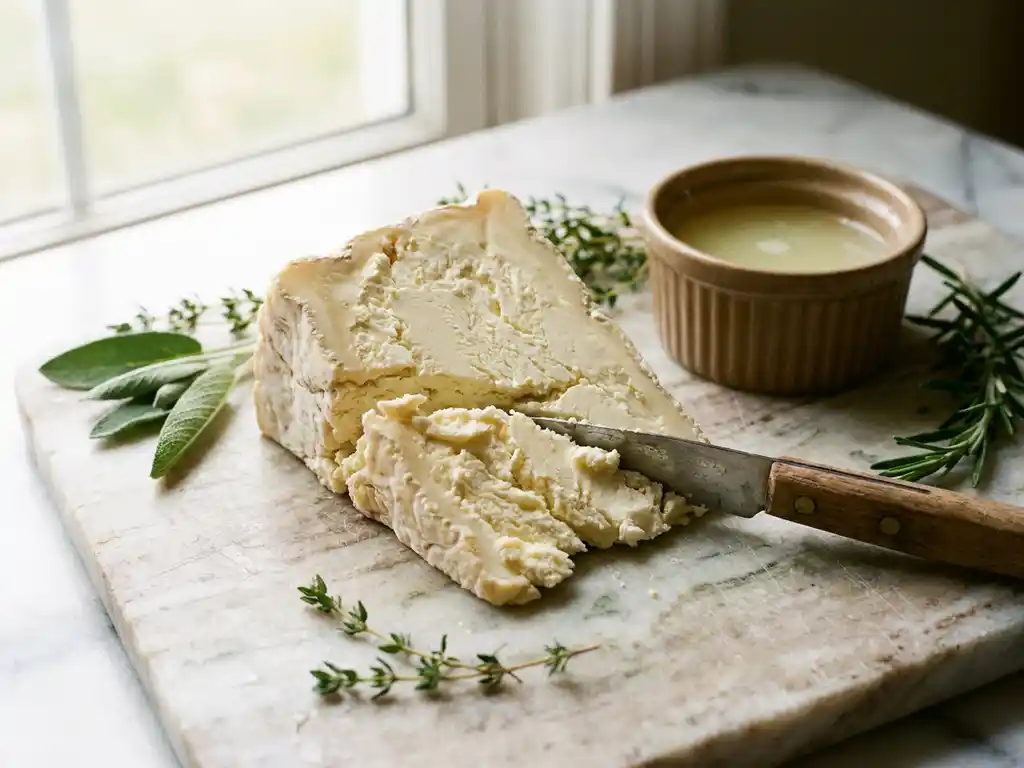
The protein content of goat cheese directly affects its texture, melting behavior, and structure in ready-made meals. A higher protein content generally results in a firmer cheese that melts less easily, while a lower protein content creates a softer, creamier consistency when heated. The best protein profile depends on how the cheese will be processed and what the final product should look like. The questions below help buyers and product developers make the right choice.
Which protein types in goat cheese determine texture when heated?
The texture of goat cheese when heated is largely determined by casein and whey proteins. Casein forms the protein network that gives the curd its structure — and with it, the firmness and meltability of the cheese. Whey proteins contribute to creaminess and moisture retention, which makes the texture softer in heated applications.
In goat’s milk, the ratio of alpha-casein to beta-casein is different from cow’s milk. Goat’s milk contains relatively little alpha s1-casein, which results in a finer curd structure. This means goat cheese behaves differently when heated: it tends to hold its shape or melts in a specific way, depending on the aging process and moisture content. For ready-made meal applications, it’s essential to understand which protein type is dominant and how that affects processing behavior.
How does a higher protein content affect the melting behavior of goat cheese?
A higher protein content in goat cheese creates a stronger protein matrix, which means the cheese melts more slowly and less completely when heated. This makes high-protein goat cheese a good fit for applications where the cheese needs to hold its shape — such as a topping on a gratin. With a lower protein content, the matrix is looser and the cheese melts more evenly.
The melting behavior of goat cheese isn’t just determined by total protein content. The protein-to-fat ratio, moisture content, and acidity all play a role too. A higher pH combined with a lower protein content encourages melting, while a lower pH strengthens protein bonds and makes melting harder. For the goat cheese industry, this distinction is critical: a buyer looking for cheese to use in a sauce or filling needs different specifications than someone looking for a cheese that stays visible on top of a product.
What is the difference between fresh and aged goat cheese in processing applications?
Fresh goat cheese has a high moisture content, a soft texture, and a mild, fresh flavor profile. Aged goat cheese is drier, has a higher protein concentration, and a more intense flavor. In processing applications, this means fresh cheese works better in cold preparations, spreadable applications, and recipes where a creamy texture is desired — while aged goat cheese performs better when heated.
Fresh goat cheese in ready-made meals
Fresh goat cheese melts quickly when heated and can separate if the temperature gets too high. This makes it less suitable as a standalone topping in oven dishes, but excellent as a base for sauces, fillings, or dressings that are used at room temperature or with gentle heat. Its soft structure and high moisture content contribute to a creamy mouthfeel.
Aged goat cheese in ready-made meals
Aged goat cheese holds its structure better under moderate heat. Its lower moisture content and higher protein concentration allow it to melt in a controlled way while remaining recognizable in the final product. This makes aged varieties especially well-suited for pizzas, quiches, gratins, and other heated ready-made meals where the cheese needs to stay visible and maintain its texture.
Which protein specifications should a buyer request from a goat cheese supplier?
For food industry buyers, the most relevant protein specifications are total protein content (expressed as a percentage of dry weight), protein-to-fat ratio, moisture content, and pH. These four parameters together determine how the cheese behaves during processing and whether it performs consistently from batch to batch.
Beyond these basic specifications, it’s also worth asking for:
- Melting point and melting behavior at the specific temperatures relevant to your production line
- Fat content in dry matter, because fat directly affects meltability and mouthfeel
- Microbiological specifications and shelf life under processing conditions
- Batch-to-batch consistency and the tolerances the supplier applies to protein content and moisture content
- Technical data sheet with processing guidelines, including maximum processing temperature
A reliable supplier can provide this information without hesitation and ideally works with fixed specification sheets for each product. This prevents quality fluctuations that could disrupt your production line.
How do you prevent texture problems with goat cheese in ready-made meals?
Texture problems with goat cheese in ready-made meals — such as separation, drying out, or loss of texture — can almost always be prevented by choosing the right variety and aligning processing parameters with the cheese’s protein composition. The key is matching the protein profile to the processing application.
Practical steps to prevent texture problems:
- Choose the right moisture class: A cheese with higher moisture content is more sensitive to high temperatures. Only use fresh goat cheese in applications where heating is limited or where the cheese is protected by other ingredients.
- Check the pH: A pH that is too low strengthens protein bonds and makes melting harder. Ask your supplier for the pH range per product and compare it against your processing conditions.
- Test with representative samples: Have the cheese tested under production conditions before placing a large order. Melting behavior in a lab setting can sometimes differ from behavior in an industrial oven or steam chamber.
- Adjust the processing temperature: Goat cheese performs best with controlled, even heating. Avoid direct high heat without protection from other ingredients.
- Talk to your supplier about custom solutions: Some producers can adjust protein content and moisture content based on your processing requirements, which can solve texture problems for good.
How DeJong Cheese helps with goat cheese in ready-made meals
At DeJong Cheese, we have been producing goat cheese specialties under the Alphenaer brand since 1995, with deep knowledge of the processing properties of our products. As a family business specializing in fresh and soft goat cheese, we know exactly what buyers and product developers need when they want to use goat cheese in ready-made meals and other industrial applications.
What we offer:
- Complete technical specification sheets for each product, including protein content, moisture content, pH, and melting behavior
- Consistent quality with fixed tolerances, batch after batch
- Both fresh and aged goat cheese specialties, matched to your processing application
- Custom options for protein content and moisture class for specific production lines
- Deliveries to retail and foodservice customers worldwide, under our own brand or private label
- Personal advice from our product specialists on the best goat cheese variety for your application
Want to know which goat cheese is the best fit for your production line? Contact our team for a no-obligation conversation or a custom technical data sheet.
Frequently Asked Questions
Can goat cheese replace cow's milk cheese in an existing ready-made recipe?
This is technically possible, but it requires recipe adjustments because the protein composition is fundamentally different. Goat cheese contains little alpha s1-casein, which results in a finer curd structure and different melting behavior compared to cow’s milk cheese. If you make the switch, it’s strongly recommended to retest your processing temperatures and ratios, as the final result in terms of texture, melting behavior, and mouthfeel may differ noticeably.
How does freezing goat cheese affect its protein structure and processing properties?
Freezing has a significant impact on the protein structure of goat cheese, especially in fresh varieties with a high moisture content. Ice crystals that form during freezing can damage the protein matrix, leading to a grainy or watery texture after thawing. Aged goat cheese is generally more resistant to freezing due to its lower moisture content, but the same rule applies: always test behavior after thawing under production conditions before incorporating frozen cheese into your production line on a regular basis.
What is a realistic protein content to expect in fresh versus aged goat cheese?
Fresh goat cheese typically has a protein content of 5 to 9 percent on a product basis, depending on moisture content and production method. Aged goat cheese can reach 18 to 25 percent protein or higher, because moisture loss during aging increases the concentration of all dry matter. Always ask your supplier for protein content expressed on a dry weight basis for a fair comparison between products with different moisture levels.
How do I know in practice that I've chosen the wrong goat cheese variety for my application?
The most common signs are separation or moisture release during heating, loss of recognizability in the final product, a grainy or rubbery texture after preparation, or a consistency that is too liquid and causes the cheese to melt away completely. If you experience these issues, the first thing to look at is the combination of moisture content and pH of the cheese you’re using relative to your processing temperature. If problems persist, bring in your supplier’s technical team for a product selection consultation.
Is custom protein content only available for large buyers, or is it also an option for smaller production volumes?
Custom protein content and moisture class are not exclusive to large-scale buyers, but minimum order volumes vary by producer. Some specialized goat cheese producers — such as family businesses with their own production facilities — also offer custom solutions for mid-sized volumes, provided the specifications are technically feasible within their production process. It’s always worth having the conversation with your supplier and describing the desired specifications clearly, so they can tell you what’s possible within their capabilities.
Which certifications or quality marks are relevant when buying goat cheese for industrial processing?
For industrial processing, the most relevant certifications are FSSC 22000 or BRC (food safety management), IFS Food, and where applicable, organic certification or halal and kosher certification depending on your target market. Also ask for the producer’s HACCP documentation and whether they are auditable against your own quality system. A supplier who is transparent about their certifications and open to customer audits generally also offers greater assurance in terms of batch consistency and specification compliance.
How long does goat cheese keep under industrial processing and storage conditions?
Shelf life varies significantly by type: fresh goat cheese stored under refrigerated conditions (35–39°F) typically has a shelf life of 3 to 6 weeks, while aged goat cheese can keep for several months depending on moisture content and packaging. For industrial applications, it’s crucial to assess shelf life against your specific processing and storage conditions, including the time the cheese spends in your supply chain before processing. Ask your supplier for shelf life testing under your storage conditions if you have any doubts about suitability for your logistics chain.
Related Articles
- How do you evaluate each year whether your current cheese supplier is still the best choice?
- What are the effects of too high a moisture content in goat cheese curd?
- What product specifications do you request in an initial quote for industrial curd?
- How to vacuum-seal goat cheese at home?
- What makes goat cheese taste different from cow's milk cheese?