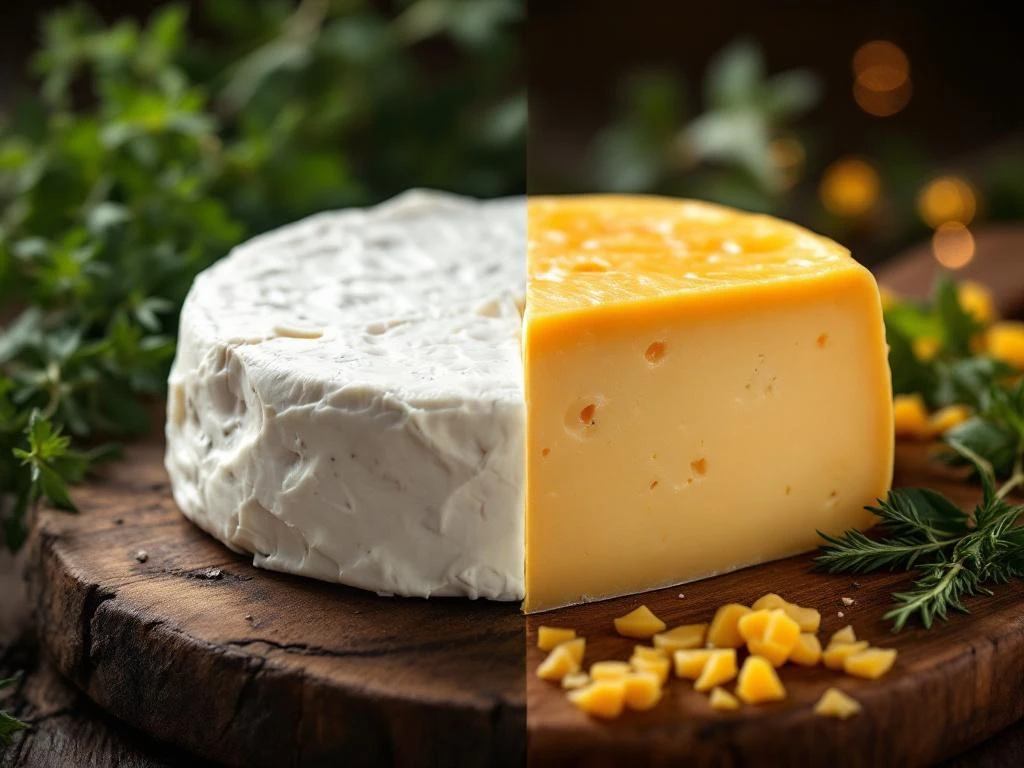
Goat cheese tastes different from cow’s milk cheese due to its unique fatty acid composition, protein structure, and production methods. The distinctive tangy, earthy flavour comes from higher levels of capric, caprylic, and caproic acids in goat milk, creating that characteristic “goaty” taste. Additionally, goat milk lacks alpha-s1 casein and has smaller fat globules, resulting in a different texture and mouthfeel that allows flavours to be perceived more intensely on the palate.
What creates the distinctive flavor profile of goat cheese?
The distinctive flavour profile of goat cheese emerges from a complex interplay of chemical compounds and production methods that set it apart from cow’s milk varieties. Goat cheese typically presents tangy, earthy, and sometimes tart flavour notes that create a bright, clean taste experience on the palate.
These flavours differ significantly from the milder, creamier taste of cow’s milk cheese. Where cow cheese often delivers buttery, nutty qualities with a smooth finish, goat cheese offers a more pronounced acidity and herbaceous undertones. This distinctive profile explains why consumers often have strong reactions to goat cheese, with some finding it refreshingly complex whilst others need time to appreciate its unique characteristics.
The intensity of goat cheese flavour can vary considerably based on several factors. Fresh goat cheese tends to have a milder, more approachable taste, whilst aged varieties develop stronger, more complex flavour profiles. The diet of the goats, seasonal variations, and specific production techniques all contribute to the final taste, making each cheese a unique expression of its origins.
Why does goat cheese have a tangy taste compared to cow cheese?
The tangy taste of goat cheese stems from its unique fatty acid composition, particularly the higher concentrations of medium-chain fatty acids. Goat milk contains significantly more capric, caprylic, and caproic acids compared to cow milk, and these compounds directly contribute to the characteristic tanginess.
Medium-chain fatty acids in goat milk create what many describe as the “goaty” flavour. Capric acid, named after the Latin word for goat (capra), is especially prominent and provides that sharp, tangy note. These fatty acids are more volatile than the longer-chain fatty acids found in cow milk, meaning they release their flavours more readily when consumed.
The concentration of these acids varies with factors such as the goat’s diet, breed, and lactation stage. Goats that graze on diverse pastures often produce milk with more complex fatty acid profiles, resulting in cheese with deeper, more nuanced tanginess. This natural variation allows cheesemakers to craft products with different intensity levels to suit various market preferences.
How does the protein structure affect goat cheese flavor?
The protein structure in goat milk fundamentally differs from cow milk, significantly impacting both texture and taste perception. The most notable difference is the absence or very low levels of alpha-s1 casein in goat milk, which affects how the cheese forms and how flavours are released during consumption.
This protein difference results in a softer, more crumbly texture in many goat cheeses. The smaller fat globules in goat milk, approximately one-fifth the size of those in cow milk, create a different mouthfeel that allows flavours to be perceived differently on the palate. These smaller globules distribute more evenly throughout the cheese matrix, creating a smoother texture that enhances flavour release.
The unique protein structure also affects how goat cheese melts and behaves in culinary applications. It tends to soften rather than melt stringily like many cow cheeses, which can intensify the perception of its tangy flavours. This characteristic makes goat cheese particularly suitable for certain applications where a creamy texture and bright flavour are desired. For businesses seeking diverse cheese options, you can explore wholesale goat cheese varieties that showcase these unique protein-based characteristics.
What role does the cheesemaking process play in goat cheese taste?
Traditional goat cheese production methods play a crucial role in developing and enhancing the natural flavours inherent in goat milk. The cheesemaking process begins with careful milk handling, as goat milk is more delicate than cow milk and requires gentle treatment to preserve its distinctive characteristics.
The choice of cultures and aging processes significantly impacts the final flavour profile. Specific starter cultures are selected to complement the natural tanginess of goat milk, whilst others might be chosen to mellow these characteristics for markets preferring milder tastes. The aging process can range from just a few days for fresh cheeses to several months for aged varieties, with each stage developing different flavour compounds.
Artisanal methods that preserve authentic flavours often include traditional techniques such as natural rind development, cave aging, or ash coating. These methods not only protect the cheese but also contribute additional flavour dimensions. Temperature control during aging is particularly important for goat cheese, as it affects how the proteins and fats break down, ultimately influencing the intensity of the goaty flavours.
Key flavor differences between goat and cow milk cheeses
The main taste distinctions between goat and cow milk cheeses reflect their fundamental compositional differences. Goat cheese typically exhibits brighter acidity, a cleaner finish, and herbaceous notes that create a more pronounced flavour experience. In contrast, cow cheese often presents buttery, nutty qualities with a rounder, more mellow profile.
| Characteristic | Goat Cheese | Cow Cheese |
|---|---|---|
| Primary Flavour | Tangy, bright, acidic | Mild, buttery, creamy |
| Texture | Crumbly, smooth, spreadable | Firm, elastic, melting |
| Finish | Clean, sharp, lingering | Rich, coating, mellow |
| Aromatic Notes | Herbaceous, earthy, citrusy | Nutty, sweet, milky |
These differences impact how each cheese type performs in culinary applications. Goat cheese’s bright acidity makes it excellent for cutting through rich dishes or adding complexity to salads and appetisers. Its unique flavour profile pairs particularly well with honey, herbs, and fruits, creating balanced taste experiences that highlight its distinctive characteristics.
Understanding these key differences helps food professionals select the appropriate cheese for specific applications. Whether creating menu items, developing new products, or sourcing for retail, recognising how goat cheese’s unique flavour profile differs from cow cheese enables better decision-making and more successful culinary outcomes.
Related Articles
- How do you position goat cheese as a premium ingredient compared to cow's milk cheese?
- How does the aging process of aged goat cheese influence the flavor in a final product?
- What form of goat cheese works best in an automated sandwich concept?
- What topping applications exist for goat cheese in oven dishes?
- How to make goat cheese pasta sauce from scratch?