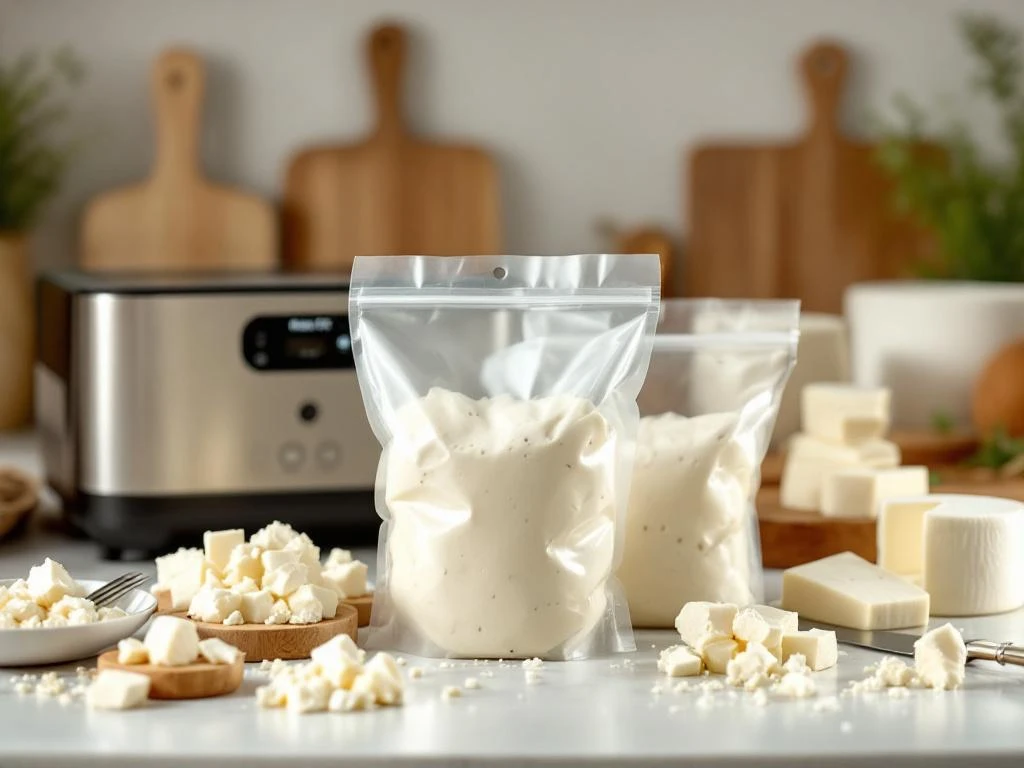
Vacuum-sealing goat cheese at home requires a vacuum sealer machine, proper food-grade plastic bags, and following specific steps including portioning, wrapping, and sealing at the right settings. This preservation method removes air that causes oxidation and bacterial growth, extending the cheese’s shelf life significantly whilst maintaining its delicate texture and flavour profile.
Getting started with vacuum-sealing goat cheese
Vacuum-sealing goat cheese involves removing air from specially designed bags to create an airtight environment that preserves the cheese’s quality. The process requires careful attention to temperature, pressure settings, and proper wrapping techniques to prevent moisture loss and maintain the cheese’s characteristic texture.
The science behind vacuum-sealing effectiveness lies in eliminating oxygen, which is the primary catalyst for bacterial growth and oxidation. When air is removed, the growth of aerobic bacteria slows dramatically, and the cheese’s natural enzymes work more slowly, preserving both flavour and texture. This method proves particularly beneficial for fresh goat cheese varieties like chèvre, which typically have shorter shelf lives due to their high moisture content.
Professional cheese producers understand that proper vacuum-sealing can extend goat cheese shelf life from days to weeks when combined with appropriate refrigeration. The key is finding the right balance between removing enough air to preserve the cheese whilst avoiding excessive pressure that could damage its delicate structure.
What equipment do you need to vacuum-seal goat cheese?
Essential equipment for vacuum-sealing goat cheese includes a vacuum sealer machine, food-grade vacuum bags, and optional tools like cheese paper or parchment paper for pre-wrapping. Chamber vacuum sealers offer the most precise control over vacuum pressure, making them ideal for delicate cheeses, whilst external vacuum sealers provide a more budget-friendly option for home use.
When selecting vacuum bags, choose those specifically designed for cheese storage, typically made from multi-layer polyethylene that prevents oxygen transmission. These bags should be BPA-free and suitable for refrigerator storage. The thickness of the bags matters too, with 3-4 mil bags offering adequate protection for most goat cheese types.
Additional helpful tools include:
- Sharp knife for portioning cheese into suitable sizes
- Cheese paper or parchment paper for pre-wrapping soft varieties
- Labels for dating and identifying different cheese types
- Clean cutting board designated for cheese preparation
For those seeking alternatives to expensive chamber sealers, handheld vacuum sealers with adjustable settings can work well for firmer goat cheese varieties. The investment in quality equipment pays dividends through extended cheese preservation and reduced waste.
How do you prepare goat cheese for vacuum sealing?
Preparing goat cheese for vacuum sealing begins with proper portioning into meal-sized amounts, as repeated opening and resealing compromises preservation quality. Fresh goat cheese should be pre-wrapped in parchment paper to absorb excess moisture and prevent the cheese from sticking to the vacuum bag during the sealing process.
Temperature control plays a crucial role in preparation. Allow refrigerated cheese to sit at room temperature for 10-15 minutes before sealing, as extremely cold cheese can become brittle and crack under vacuum pressure. However, avoid leaving cheese out too long, as moisture management becomes challenging when cheese warms excessively.
Different goat cheese varieties require specific preparation approaches:
- Fresh chèvre: Pat dry with paper towels and wrap in parchment before bagging
- Semi-soft ripened varieties: Leave rind intact and avoid over-handling
- Aged hard goat cheeses: Cut into wedges rather than slices for better preservation
- Spreadable goat cheese: Transfer to rigid containers before vacuum-sealing
Creating portion sizes that match typical usage patterns prevents unnecessary exposure to air when accessing the cheese. Consider how the cheese will be used, whether for cooking, spreading, or serving on cheese boards, and portion accordingly.
What are the best vacuum-sealing techniques for different goat cheese types?
Fresh chèvre requires gentle vacuum pressure settings, typically 70-80% vacuum strength, to prevent crushing its delicate texture. Double-bagging provides extra protection, with the inner bag sealed at lower pressure and the outer bag providing additional barrier protection against freezer burn if long-term storage is planned.
Semi-soft goat cheeses benefit from a pulse-sealing technique, where vacuum pressure is applied in short bursts rather than continuously. This method prevents the cheese from compressing whilst still removing adequate air. For these varieties, leaving a small air pocket around the cheese helps maintain its shape and prevents the development of unwanted moisture on the surface.
| Cheese Type | Vacuum Pressure | Special Considerations | Expected Shelf Life |
|---|---|---|---|
| Fresh Chèvre | 70-80% | Pre-wrap in parchment | 3-4 weeks refrigerated |
| Semi-soft Ripened | 60-70% | Pulse-seal technique | 4-6 weeks refrigerated |
| Aged Hard Varieties | 85-95% | Cut into wedges | 2-3 months refrigerated |
| Spreadable | 50-60% | Use rigid containers | 3-4 weeks refrigerated |
Preventing cheese deformation requires careful bag placement and avoiding overfilling. Leave adequate space between the cheese and the seal line, typically 7-10 centimetres, to ensure proper sealing without crushing the product. For crumbly textures, consider flash-freezing the cheese for 30 minutes before vacuum-sealing to maintain structural integrity.
Key takeaways for successful goat cheese preservation
Successful goat cheese preservation through vacuum-sealing depends on maintaining proper storage temperatures between 1-4°C after sealing. Vacuum-sealed goat cheese can extend shelf life by 200-300% compared to traditional storage methods, but this requires consistent refrigeration and proper handling throughout the storage period.
Signs of proper sealing include tight adherence of the bag to the cheese surface without excessive compression, no visible air pockets, and a secure seal line without wrinkles or gaps. Common mistakes to avoid include using excessive vacuum pressure, sealing warm cheese, and failing to pre-wrap high-moisture varieties.
Professional cheese producers like ourselves ensure optimal preservation through precise temperature control, consistent vacuum pressure settings, and rigorous quality checks at each stage. The same principles apply to home vacuum-sealing: attention to detail, proper equipment maintenance, and understanding each cheese type’s unique requirements.
Remember that vacuum-sealing enhances preservation but doesn’t eliminate the need for proper refrigeration. Always label packages with sealing dates and consume within recommended timeframes for best quality. With these techniques, home cheese enthusiasts can enjoy their favourite goat cheese varieties whilst minimising waste and maintaining peak flavour profiles.