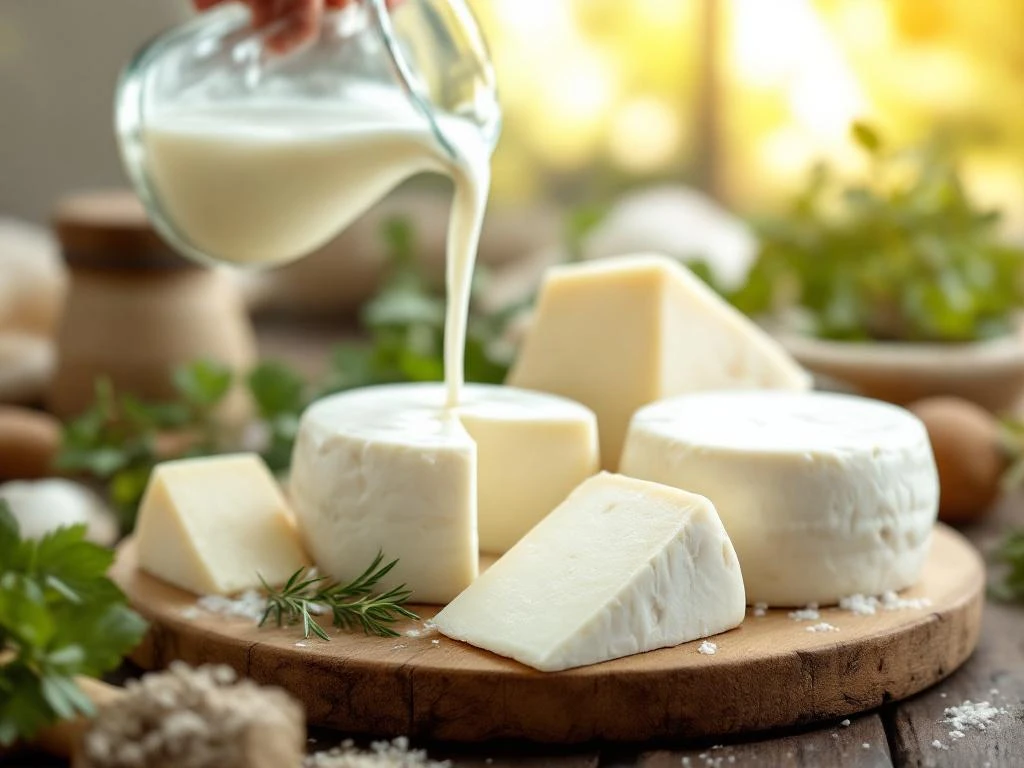
Yes, goat cheese can be made lactose-free through natural aging processes and specialized production techniques. During cheese production, bacterial cultures convert lactose into lactic acid, naturally reducing lactose content. Goat cheese already contains less lactose than cow’s milk cheese, and aged varieties become virtually lactose-free after 6-9 months of ripening. Fresh goat cheese can also be made lactose-free using lactase enzyme treatment, providing options for every application in foodservice and retail.
Understanding lactose in goat cheese production
The production of lactose-free goat cheese relies on fundamental cheese-making processes that naturally eliminate lactose through fermentation. When we produce goat cheese, lactic acid bacteria play a crucial role in converting lactose sugars into lactic acid, which gives cheese its characteristic tangy flavour and helps preserve it.
Goat’s milk naturally contains approximately 4.1% lactose, compared to 4.7% in cow’s milk, giving goat cheese products an inherent advantage for lactose-sensitive consumers. During the initial stages of cheese production, starter cultures begin consuming lactose immediately after being added to the milk. This fermentation process continues throughout production and aging, progressively reducing lactose levels.
The type of cheese being produced significantly impacts final lactose content. Fresh goat cheeses like spreadable varieties retain more moisture and undergo minimal aging, resulting in higher residual lactose. Conversely, aged and ripened goat cheeses experience extended fermentation periods where bacteria have more time to consume available lactose, creating products suitable for most lactose-intolerant individuals.
How does the aging process remove lactose from goat cheese?
The aging process naturally eliminates lactose through continuous bacterial fermentation over extended periods. As goat cheese ages in controlled environments, beneficial bacteria remain active, steadily converting any remaining lactose into lactic acid and other flavour compounds that enhance the cheese’s complexity.
During the first few weeks of aging, lactose levels drop dramatically as bacteria consume readily available sugars. After three months of aging, most semi-hard goat cheeses contain less than 0.5% lactose. By six to nine months, hard aged goat cheeses typically contain only trace amounts of lactose, often below 0.1%, making them suitable for virtually all lactose-intolerant consumers.
Temperature and humidity control during aging directly influence lactose reduction rates. Warmer aging conditions accelerate bacterial activity, while proper moisture levels ensure bacteria remain active throughout the aging process. Professional cheese makers monitor these conditions carefully to ensure consistent lactose reduction while developing desired flavour profiles and textures.
What’s the difference between naturally aged and enzyme-treated lactose-free goat cheese?
Two distinct methods create lactose-free goat cheese products, each offering unique advantages for different applications. Natural aging relies on time and bacterial fermentation, while enzyme treatment uses lactase to break down lactose before or during production, enabling lactose-free fresh cheese options.
Naturally aged lactose-free goat cheeses develop complex flavours and firmer textures through extended maturation. These cheeses offer robust taste profiles ideal for cheese boards, grating applications, and cooking where strong flavours enhance dishes. The aging process creates products with extended shelf life and stable textures that perform well in various temperature conditions.
Enzyme-treated goat cheeses maintain the mild, creamy characteristics of fresh cheese while eliminating lactose content. Lactase enzyme breaks down lactose into glucose and galactose, creating slightly sweeter products that retain moisture and spreadability. These cheeses work excellently in applications requiring fresh cheese characteristics, such as spreads, dips, and fresh toppings for salads or sandwiches.
| Characteristic | Naturally Aged | Enzyme-Treated |
|---|---|---|
| Texture | Firm to hard | Soft and creamy |
| Flavour Profile | Complex, tangy, nutty | Mild, slightly sweet |
| Shelf Life | Extended (months) | Standard (weeks) |
| Best Applications | Cheese boards, cooking, grating | Spreads, fresh toppings, dips |
| Production Time | 6-12 months | Days to weeks |
Which types of goat cheese are naturally lowest in lactose?
Hard aged goat cheeses contain the lowest lactose levels, often becoming completely lactose-free through extended maturation. Aged goat gouda, mature chèvre, and other hard varieties aged beyond six months typically contain less than 0.1% lactose, making them safe choices for lactose-intolerant customers.
Semi-hard goat cheeses aged three to six months occupy a middle ground with lactose levels generally below 0.5%. These include firmer log-style cheeses and semi-aged varieties that balance flavour development with moderate aging times. Ripened goat cheeses with white rinds, similar to brie-style products, also fall into this category after proper maturation.
Fresh goat cheeses contain the highest lactose levels among goat cheese varieties, though still lower than comparable cow’s milk products. Fresh spreadable goat cheese, crumbles, and soft rolls typically contain 2-3% lactose. However, these can be produced lactose-free through enzyme treatment, providing options across all texture preferences for foodservice operators and retailers seeking to accommodate lactose-sensitive customers.
Key considerations for sourcing lactose-free goat cheese
When sourcing lactose-free goat cheese for B2B applications, understanding certification requirements and testing standards ensures product compliance and customer safety. IFS-certified facilities maintain rigorous quality control systems that include regular lactose testing and verification procedures, providing reliable assurance for buyers.
Labelling regulations vary by market, but generally require products labelled “lactose-free” to contain less than 0.1% lactose. Some markets permit “low lactose” claims for products containing up to 1% lactose. Understanding these distinctions helps buyers select appropriate products for their specific customer base and menu applications.
Storage and handling requirements differ between naturally aged and enzyme-treated lactose-free goat cheeses. Aged varieties offer more flexibility with temperature fluctuations and longer holding times, making them ideal for retail environments. Fresh enzyme-treated options require consistent refrigeration but provide versatility for foodservice applications including:
- Salad preparations and cold applications
- Pizza and hot dish toppings that melt smoothly
- Sandwich and wrap fillings
- Sauce and soup enrichment
- Tapas and appetizer presentations
Traditional production methods combined with modern quality assurance create consistent lactose-free options across various formats. From portion-controlled pucks and crumbles to bulk packaging for industrial processing, lactose-free goat cheese products now meet diverse operational needs while maintaining the distinctive flavour profiles that make goat cheese a premium ingredient choice.