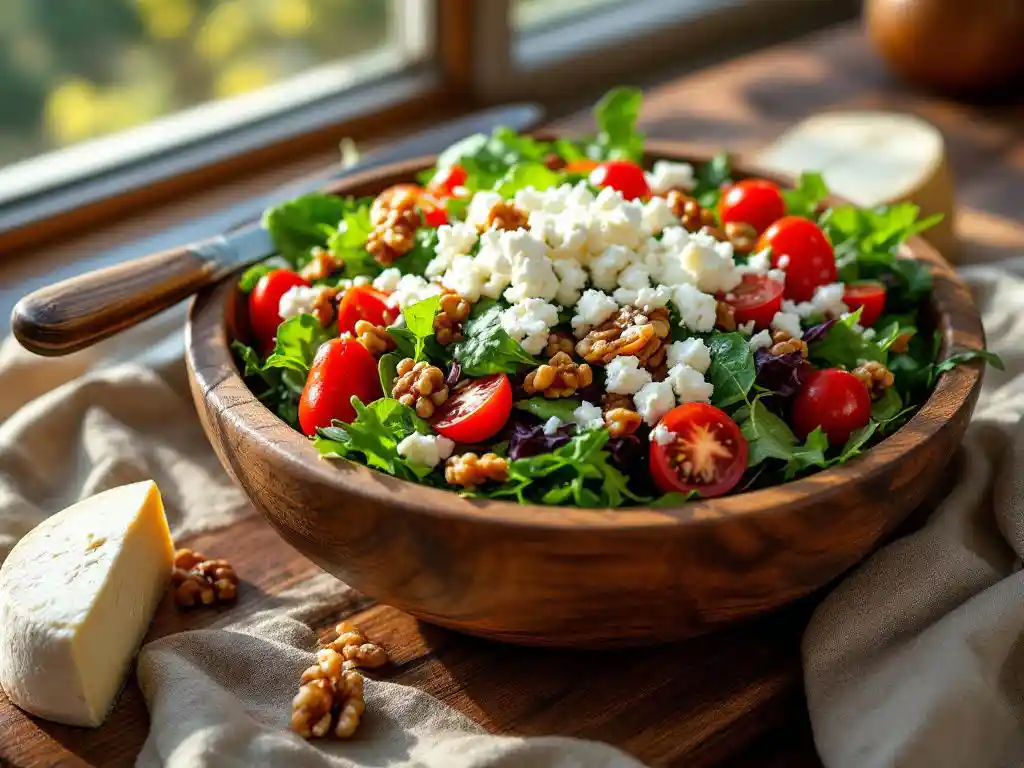
Goat cheese transforms ordinary salads into premium culinary experiences through its distinctive creamy texture, tangy flavour profile, and exceptional versatility. Professional kitchens increasingly choose goat cheese to elevate their salad offerings because it provides sophisticated taste while complementing diverse ingredients, from sweet fruits to earthy vegetables. Understanding how to select, handle, and pair goat cheese enables foodservice professionals to create memorable salad experiences that command premium prices and foster customer loyalty.
What makes goat cheese the perfect premium salad ingredient?
Goat cheese offers a unique combination of creamy texture and tangy flavour that instantly elevates any salad from ordinary to extraordinary. Its lower lactose content and easier digestibility compared with cow’s milk cheeses make it an inclusive choice for diverse dietary needs. The distinctive taste profile ranges from mild and fresh to complex and aged, providing versatility across menu applications.
The nutritional advantages of goat cheese contribute significantly to its premium positioning. With higher protein content per serving and beneficial fatty acids, it satisfies health-conscious diners while delivering indulgent flavour. The cheese naturally contains more calcium, potassium, and vitamin A than many cow’s milk alternatives, supporting its reputation as a nutritious luxury ingredient.
Professional chefs appreciate goat cheese for its remarkable ability to maintain textural integrity in salad applications. Unlike some cheeses that become rubbery or melt completely, goat cheese crumbles beautifully or can be sliced cleanly, depending on the variety. This textural reliability ensures consistent presentation and eating experience, both of which are critical factors in premium foodservice operations.
Which types of goat cheese work best for different salad styles?
Fresh chèvre works brilliantly in light, delicate salads where its mild, creamy character will not overpower subtle greens or vinaigrettes. This young goat cheese spreads easily and can be formed into quenelles or crumbled for textural variety. Mediterranean salads benefit particularly from fresh chèvre paired with olives, tomatoes, and herbs.
Semi-aged goat cheeses provide an ideal balance for grain-based and heartier salads. These varieties offer a firmer texture that holds up well against robust ingredients such as roasted vegetables, nuts, and ancient grains. The slightly intensified flavour complements earthy elements while maintaining the signature goat cheese tang that customers expect.
Aged goat cheeses deliver complex flavour profiles that are perfect for sophisticated seasonal salads. Hard varieties can be shaved over autumn salads with roasted squash and pomegranate, while semi-hard options cube beautifully for substantial composed salads. Portion control becomes easier with aged varieties, which typically require 30–40 grams per serving to achieve optimal flavour impact.
Speciality goat cheese variations, including those with herb coatings or ash-ripened rinds, create signature salad offerings. These distinctive options allow establishments to differentiate their menus while commanding premium prices. Consider featuring rotating seasonal goat cheese selections to maintain customer interest and showcase culinary creativity.
How do you properly store and handle goat cheese for salad service?
Proper storage of goat cheese requires maintaining temperatures between 35–40°F (2–4°C) in designated dairy refrigeration. Fresh varieties need airtight containers to prevent moisture loss and flavour absorption from other ingredients. Aged goat cheeses benefit from cheese paper or breathable wrapping that allows controlled air circulation while preventing excessive drying.
Handling techniques vary significantly based on cheese consistency and intended presentation. Fresh goat cheese should be brought to cool room temperature 15–20 minutes before service for optimal texture and flavour release. Use dedicated cutting boards and knives to prevent cross-contamination, which is particularly important given goat cheese’s ability to absorb surrounding flavours.
Preventing common texture issues requires understanding how goat cheese responds to temperature and handling. Excessive crumbling occurs when cheese is too cold or handled roughly. Combat this by using sharp, thin-bladed knives dipped in warm water between cuts. For creamy varieties, two-spoon quenelle techniques or piping bags create elegant presentations while minimising handling.
Shelf-life management ensures consistent quality throughout service periods. Fresh goat cheese typically maintains peak quality for 7–10 days after opening when properly stored. Implement first-in, first-out rotation systems and date all opened products. Pre-portioning for service can extend usability while maintaining portion control and reducing waste during busy periods.
What flavour combinations complement goat cheese in premium salads?
Sweet fruits create exceptional flavour contrast with goat cheese’s tangy profile, making combinations with figs, pears, and berries particularly successful. Stone fruits during summer months and citrus segments in winter provide seasonal variety while maintaining the sweet–savory balance that defines premium salads. Dried fruits offer year-round options that concentrate sweetness and add textural interest.
Nuts and seeds provide crucial textural elements while enhancing overall flavour complexity. Toasted walnuts, candied pecans, and pine nuts rank among the most successful pairings. Pumpkin seeds and sunflower seeds offer nut-free alternatives that maintain the desired crunch. The combination of creamy cheese with crunchy elements creates the textural variety that distinguishes premium salads.
Vegetable pairings should balance the richness of goat cheese without competing for attention. Roasted beetroot, caramelised onions, and grilled aubergine provide earthy sweetness that complements rather than masks the cheese’s flavour. Fresh herbs, particularly basil, thyme, and chives, brighten the overall profile while adding aromatic complexity.
Dressing selection significantly impacts the success of goat cheese salads. Light vinaigrettes using Champagne or white wine vinegar preserve the cheese’s delicate notes. Honey-based dressings enhance the sweet–savory interplay, while herb-infused oils add sophistication without heaviness. Avoid creamy dressings that compete with the cheese’s natural creaminess, and instead focus on complementary acidity and subtle sweetness.
How does DeJong Cheese help enhance your premium salad offerings?
We at DeJong Cheese understand the unique requirements of foodservice professionals seeking premium goat cheese for their salad menus. Our Alphenaer brand products deliver consistent quality and exceptional flavour profiles that elevate any salad creation. With decades of traditional craftsmanship combined with modern food safety standards, we ensure every delivery meets the exacting standards of professional kitchens.
Our comprehensive range includes: • Semi-aged options, ideal for grain bowls and composed salads • Bulk packaging formats designed for efficient kitchen operations • Custom development possibilities for unique menu applications
We support our foodservice partners with flexible ordering systems that accommodate varying volume needs and seasonal menu changes. Our international food safety certifications guarantee the highest quality standards, while our traditional production methods ensure authentic flavour that distinguishes premium offerings. Our team provides menu development support and application guidance to maximise the potential of goat cheese in your salad programme.
Ready to transform your salad menu with premium goat cheese? Explore our complete foodservice product range or contact our team for personalised recommendations. Discover where to find our products at authorised distributors near you.
Frequently Asked Questions
How much goat cheese should I portion per salad serving to balance cost and customer satisfaction?
For premium salads, portion 40-60 grams of fresh goat cheese or 30-40 grams of aged varieties per serving. This amount provides sufficient flavour impact while maintaining food cost targets of 25-30%. Consider offering half portions for lighter salads or full portions for entrée-sized offerings to maximise menu flexibility.
What are the most common mistakes when incorporating goat cheese into salad service?
The biggest mistakes include serving goat cheese too cold (which makes it crumbly and flavourless), over-handling fresh varieties (causing them to become pasty), and pairing with overly acidic dressings that clash with the cheese’s natural tang. Additionally, storing opened goat cheese improperly leads to premature spoilage and off-flavours that can ruin an otherwise perfect salad.
How can I prevent goat cheese from overwhelming delicate salad greens?
Balance is achieved by using smaller portions (20-30 grams) of stronger aged varieties or choosing milder fresh chèvre for delicate greens. Distribute cheese evenly throughout the salad rather than placing large chunks in one area. Consider whipping fresh goat cheese with herbs to create a lighter texture that integrates better with tender lettuces.
What's the best way to incorporate goat cheese into warm salads without it melting completely?
Add goat cheese to warm salads just before serving, placing it on top of warm ingredients rather than mixing it in. For grilled salads, add cheese after removing from heat. Semi-aged varieties hold their shape better than fresh ones when exposed to warmth. Consider briefly chilling portioned cheese before adding to ensure it maintains structure during service.
How do I calculate the shelf life of goat cheese once incorporated into prepared salads?
Prepared salads containing goat cheese should be consumed within 24 hours for optimal quality, though they remain safe for up to 48 hours when properly refrigerated. The cheese’s moisture can affect lettuce texture over time, so prepare components separately when possible. For grab-and-go applications, package cheese separately to maintain quality and extend shelf life to 3-4 days.
Which goat cheese varieties work best for high-volume catering and buffet service?
Semi-aged and aged goat cheeses perform best in catering situations due to their stability at room temperature and resistance to melting under heat lamps. Pre-crumbled or cubed portions maintain appearance longer than fresh varieties. Consider offering goat cheese on the side for buffets, allowing guests to customise while maintaining cheese quality throughout service.
How can I create signature goat cheese salad dressings that complement rather than compete?
Blend fresh goat cheese with buttermilk or yoghurt (2:1 ratio) for creamy dressings that enhance rather than mask salad flavours. Add fresh herbs, lemon zest, and a touch of honey for balance. For vinaigrettes, whisk small amounts of goat cheese into warm dressing to create subtle creaminess without heaviness. These signature dressings can become menu differentiators while showcasing the cheese’s versatility.
Related Articles
- What are the possibilities of goat cheese brie and camembert in premium retail concepts?
- How do you create a longlist of goat cheese producers for the food industry?
- How to optimize goat cheese delivery schedules for restaurants?
- What is the difference between pasteurized and unpasteurized goat cheese?
- Is goat cheese a soft cheese?