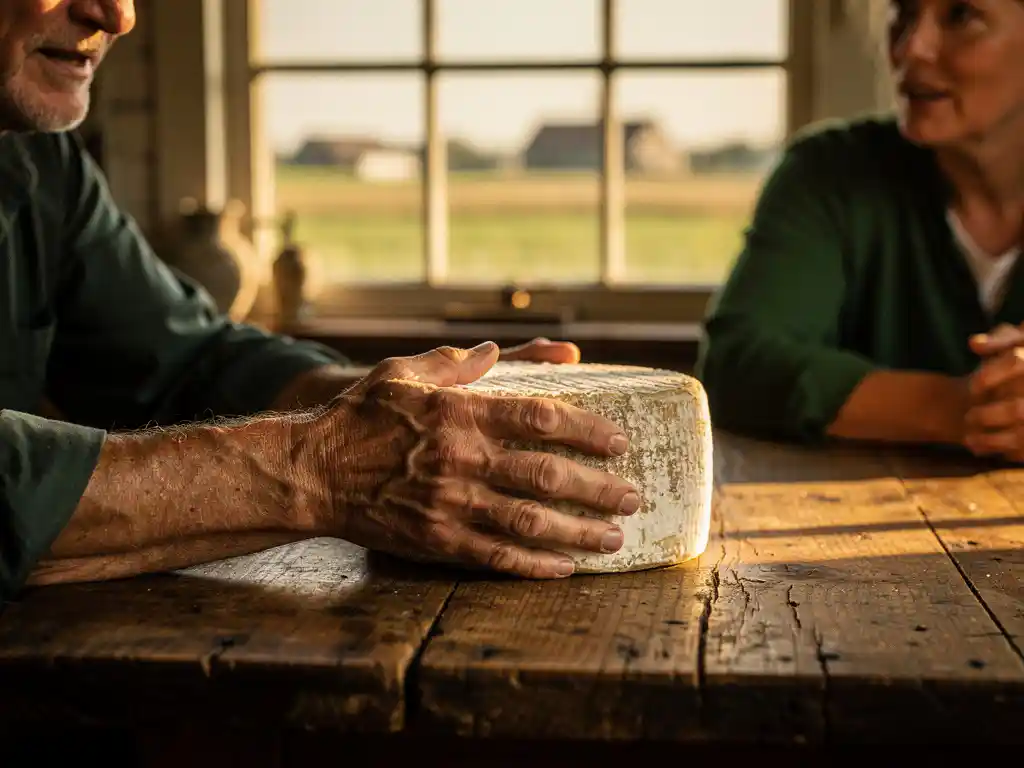
Building a long-term relationship with a specialized goat cheese producer begins with asking the right questions. As a buyer in the food industry, you know that choosing a cheese partner goes beyond just price and specifications. It’s about reliability, consistent quality, and a partner who thinks along with your production needs. At DeJong Cheese, we understand that every collaboration is unique and have been building sustainable relationships with our customers worldwide since 1995.
What makes a goat cheese producer a reliable long-term partner?
A reliable goat cheese producer is characterized by consistent product quality, transparent communication, flexibility in deliveries, and proven expertise in traditional cheese production. This producer must have demonstrable certifications, maintain a stable supply chain, and proactively think along with your specific applications.
The foundation of reliability lies in the production process itself. A specialized producer works with fixed milk suppliers who meet strict quality requirements. For example, all our milk suppliers are affiliated with DGZK (Sustainable Goat Dairy Chain), which ensures consistency in raw materials. This consistency translates directly to predictable product properties in your end products.
Certifications form the foundation of trust. An IFS Food certification guarantees that all processes meet the highest food safety standards. Additional certifications such as Halal, Kosher, and VLOG show that the producer can serve various market segments. For industrial applications, EC accreditation is especially crucial, as it demonstrates that export within Europe proceeds smoothly.
Technical support distinguishes a true partner from a simple supplier. This means your producer actively thinks along about melting behavior, fat content, and functional properties of the cheese in your specific application. Whether it concerns fresh goat cheese for pizzas or aged variants for ready meals, the producer must have this knowledge in-house.
How do you evaluate the product quality of different goat cheese specialists?
Evaluate product quality by testing samples for sensory properties, comparing technical specifications, monitoring production consistency over time, and requesting references from similar industrial customers. Focus especially on parameters that are crucial for your specific application.
Start with a thorough analysis of product specifications. For industrial processing, parameters such as dry matter content (35-45%), pH value, fat percentage, and protein structure are essential. These determine how the cheese behaves during heating, mixing, or other processing steps. Ask for specification sheets from at least three different production batches to assess consistency.
Functional tests are indispensable for your evaluation. Test the melting behavior at different temperatures, stability after freezing and thawing, and shelf life under your storage conditions. For fresh goat cheese, for example, a shelf life of 2-3 weeks is standard, but check if this also applies after opening or processing in your production line.
Sensory evaluation remains important, even for industrial applications. The flavor profiling must be consistent between batches. Fresh goat cheese should have a fresh, mild, and creamy taste without unwanted off-flavors. Aged variants develop a more complex flavor profile from mild-creamy to tangy-creamy, which should be predictable based on aging time.
Ask for tracking data from previous deliveries to similar customers. A professional producer can demonstrate how they minimize quality fluctuations through process control, raw material management, and continuous monitoring of end products.
What are the most important questions when selecting a cheese producer?
The most important selection questions concern delivery reliability, minimum order size, technical support, certifications, flexibility in packaging formats, and the possibility for product customizations. Also ask questions about sustainability, traceability, and crisis management during emergencies.
Delivery reliability tops your question list. Inquire about capacity for continuous delivery, backup scenarios during production problems, and average delivery time. For specialized products like truffle variants, delivery time can extend to 4 weeks, while standard products are often immediately available. Ask specifically about seasonal influences on availability.
Technical questions are crucial for your production process. Which cheese forms are available for your application? Consider crumbles (13g), pearls (78g), slices (17g), or spread variants. Can the producer supply high-melt variants for applications requiring higher temperatures? Is it possible to adjust dry matter content to your specific needs?
Packaging questions determine your logistical efficiency. Standard industrial packaging is often 5kg or 10kg bags, but ask about possibilities for bulk packaging up to 15kg. For automated production lines, it’s relevant to ask whether the cheese can be delivered pumpable and stirrable, especially for spread or curd variants.
Sustainability questions are becoming increasingly important. How is milk purchased? What is the CO2 footprint of transport? Local purchasing within a 100km radius not only reduces emissions but also guarantees freshness. Ask about concrete initiatives such as the use of solar energy or wind energy in production.
How do you build trust with a new goat cheese producer?
You build trust by starting with small test orders, making regular factory visits, establishing transparent communication lines, and developing joint quality protocols. Begin with a pilot project where both parties invest in the collaboration.
Always start with a thorough introduction on location. A factory visit provides insight into production processes, hygiene standards, and company culture. During your visit, pay attention to the organization of production spaces, traceability of raw materials, and professionalism of staff. A family business with years of tradition often shows personal commitment that translates into quality.
Develop a test protocol together for the first deliveries. Define measurable quality parameters, acceptance criteria, and an evaluation schedule. Start, for example, with an order of several pallets to test logistical handling. Monitor not only the product but also communication, documentation, and problem-solving during this test phase.
Transparency in pricing and cost structure strengthens trust. Discuss openly how fluctuations in milk prices are passed on and what mechanisms exist for long-term contracts. A reliable partner provides insight into their cost structure and works together on solutions during market fluctuations.
Invest in relationship building by maintaining regular contact, even outside crisis situations. Plan quarterly discussions where you discuss future needs, evaluate new product developments, and review process improvements. This proactive approach prevents problems and creates a partnership mentality.
When is it time to switch to a specialized cheese producer?
Switching to a specialized producer makes sense when you’re dealing with inconsistent quality, limited technical support, inflexibility in deliveries, or when your current supplier cannot grow with your innovation needs. Specialist knowledge is also often necessary when expanding to new market segments.
Quality problems are the most urgent reason for a switch. If your production regularly stops due to varying cheese properties, or if complaints about end products are traceable to cheese quality, it’s time for action. A goat cheese specialist understands the unique properties of this product better than a generalist who supplies multiple cheese types.
Innovation limitations form a strategic consideration. When your product development stagnates because your current supplier cannot deliver new forms, flavors, or functional properties, you’re missing market opportunities. A specialized producer often offers possibilities for co-creation and custom product development.
Certification requirements sometimes force a switch. If your sales market requires specific certifications such as VLOG, Halal, or Kosher, and your current supplier cannot provide these, a switch becomes necessary. Always check with a potential new partner whether they can provide all necessary certifications for your complete product range.
Economic considerations naturally also play a role. If total costs (product, logistics, quality control, and waste) are structurally higher than market-conform, this justifies a thorough evaluation of alternatives. Focus not only on the purchase price but on the total cost of ownership including all hidden costs.
What are the advantages of working with a family business in the cheese sector?
Family businesses in the cheese sector offer personal service, flexibility in order size, quick decision-making, and long-term thinking. They combine traditional craftsmanship with modern quality systems and invest in sustainable relationships because their reputation is directly connected to the family name.
The decision-making structure in family businesses ensures speed and flexibility. Where large corporations often get stuck in procedures, a family business can quickly adapt to specific customer wishes. This manifests in customized packaging sizes, special recipes, or deviating delivery schedules. Direct lines also make troubleshooting more efficient.
Craftsmanship passes from generation to generation in family businesses. This knowledge transfer results in in-depth expertise about traditional preparation methods, seasonal influences on milk quality, and subtle process adjustments that optimize quality. This experiential knowledge is especially valuable for complex questions about product behavior in specific applications.
Continuity characterizes family businesses par excellence. Where publicly traded companies focus on quarterly results, family businesses think in generations. This long-term perspective translates into sustainable investments in production equipment, milk suppliers, and customer relationships. For you as a customer, this means certainty about future deliveries and consistent policy.
The combination of tradition and innovation makes family businesses unique. They retain what is valuable (artisanal processes, personal service) but embrace modern technology where it offers added value. Think of advanced tracking systems, sustainable energy solutions, or innovative packaging techniques that extend shelf life.
How DeJong Cheese helps with building long-term relationships
At DeJong Cheese, we understand that a successful long-term relationship goes beyond just delivering high-quality goat cheese. Since 1995, we have been building partnerships with industrial customers worldwide through our unique combination of traditional craftsmanship and modern flexibility. Our approach is characterized by personal involvement, technical expertise, and the ability to think along with your specific production needs.
Our support for long-term partners includes:
- Technical guidance in product selection and applications, from melting behavior to freeze stability
- Flexible packaging options from 5kg to 15kg, adapted to your production line
- Consistent quality through fixed milk suppliers within 100km and IFS Food certification
- Proactive communication about delivery times, from immediately available to 4 weeks for specials
- Co-creation possibilities for private label and customized recipes
- Complete traceability and documentation compliant with all relevant certifications
Our complete assortment of fresh goat cheese, aged specialties, and innovative forms such as crumbles, pearls, and high-melt variants offers solutions for every industrial application. Whether you’re looking for freeze-stable curd for your production or specific cheese forms for pizza applications, we’re happy to think along with you.
Start building a reliable partnership today. Contact us through our contact page for a non-committal conversation about your specific needs. Discover more about our complete product assortment or visit our homepage for more information about our family tradition and working methods. For direct availability, you can also consult our sales points.
Frequently Asked Questions
How can I test the consistency of goat cheese before signing a long-term contract?
Request test samples from at least three different production batches spread over several months. Test these samples in your own production environment for crucial parameters such as melting behavior, pH stability, and shelf life. Document all results and discuss deviations directly with the producer to see how they handle these.
What are realistic minimum order sizes for industrial goat cheese purchasing?
For standard fresh goat cheese, minimum orders often start at 100-200 kg per delivery, depending on the packaging form. Specialized variants such as truffle cheese or seasonal products may require higher minimum purchases (from 500 kg). Always discuss the possibility for test orders of smaller quantities with new products.
How do I prevent quality loss when switching goat cheese producers?
Plan an overlapping transition period of 2-3 months where you use both suppliers in parallel. Conduct extensive comparison tests with your end products and inform your quality department about possible differences in specifications. Work together with the new producer on a detailed implementation protocol that takes into account your specific process parameters.
What seasonal influences should I expect with goat cheese delivery?
Goat milk production has natural fluctuations, with peak moments in spring (March-June) and lower volumes in winter. This can influence prices and availability of specific variants. Professional producers buffer these fluctuations, but always discuss annual contracts with fixed volumes to prevent surprises.
What are typical delivery times for custom-made goat cheese products?
Standard adjustments such as deviating fat percentages or dry matter content usually require 2-3 weeks extra delivery time. Completely new product developments including test phases can take 2-4 months. For seasonal variants or limited editions, it’s wise to plan 6-8 weeks ahead.
How do I evaluate the sustainability claims of a goat cheese producer?
Ask for concrete measurement data such as CO2 footprint per kg product, percentage of local milk purchasing, energy consumption per production unit, and waste reduction figures. Check whether sustainability certifications such as VLOG are current and ask about sustainability policy towards milk suppliers. A transparent producer shares this information proactively.
Related Articles
- Which laboratory tests are relevant for verifying the quality of goat cheese?
- How does animal welfare on the goat farm affect the consistency of goat milk?
- How to make goat cheese and herb butter?
- Goat cheese vs mozzarella in caprese salad?
- What makes artisanal goat cheese different from industrial goat cheese?