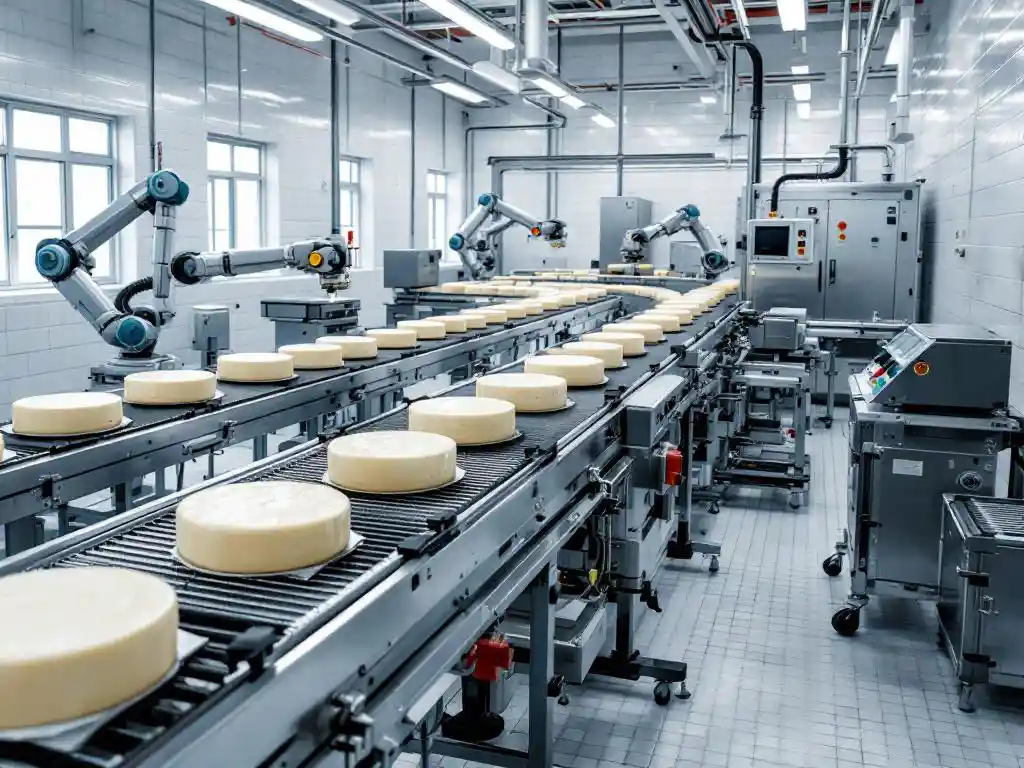
Tailoring goat cheese for production lines involves adapting this versatile dairy product to meet the specific requirements of industrial food manufacturing. Goat cheese offers unique properties that make it particularly suitable for large-scale production, including consistent texture, stable melting characteristics, and adaptability to various processing methods. Understanding how to customise goat cheese for different production needs helps manufacturers improve efficiency, maintain quality standards, and create better end products across applications from ready meals to pizza production.
What makes goat cheese suitable for industrial production lines?
Goat cheese possesses several inherent properties that make it exceptionally well suited to industrial production environments. Its naturally smooth texture allows for consistent processing through automated systems, while its lower melting point compared with cow’s milk cheese provides better flow characteristics during manufacturing. The protein structure in goat cheese creates stable emulsions that maintain quality through various production stages.
The versatility of goat cheese extends to its ability to maintain flavour stability during high-temperature processing. Unlike some dairy products that can develop off-flavours when heated, goat cheese retains its characteristic mild, tangy profile through pasteurisation, cooking, and cooling cycles common in industrial food production. This stability makes it reliable for manufacturers who need consistent results across large production batches.
Texture adaptability represents another key advantage for production lines. Goat cheese can be formulated to various moisture levels, from creamy spreads suitable for automated filling equipment to firmer varieties that work well in slicing and portioning machinery. The fat globules in goat’s milk are naturally smaller and more uniformly distributed than in cow’s milk, creating a product that processes smoothly through industrial equipment without separation or texture breakdown.
Production efficiency improves significantly with goat cheese due to its compatibility with standard dairy processing equipment. The cheese flows well through pipes and filling systems, reduces downtime from equipment clogs, and maintains consistent viscosity across temperature ranges typical in production facilities. These characteristics translate to higher throughput rates and reduced waste compared with other cheese varieties that may require special handling or equipment modifications.
How do manufacturers customise goat cheese for different production needs?
Customising goat cheese for specific production requirements begins with texture modifications tailored to end-use applications. Manufacturers can adjust moisture content from 45% to 80%, creating products ranging from firm, sliceable cheeses for sandwich production to smooth, pumpable varieties for sauce applications. These modifications involve precise control of processing temperatures, drainage times, and salt content during production.
Flavour profile adjustments allow manufacturers to create goat cheese that complements specific products without overpowering other ingredients. By controlling factors such as culture selection, ageing time, and added ingredients, producers can develop mild varieties for mass-market appeal or more pronounced flavours for speciality applications. Natural flavour enhancers such as herbs, spices, or vegetable extracts can be incorporated during production to create unique profiles that remain stable through subsequent processing.
Moisture content variations play a crucial role in production line compatibility. Higher-moisture cheeses work well in pumping and depositing systems for products such as filled pasta or topped pizzas. Lower-moisture varieties provide better performance in applications requiring longer shelf life or resistance to syneresis during storage. Manufacturers can also adjust pH levels to optimise melting characteristics, with slightly acidic formulations providing superior melt and stretch for pizza applications.
Packaging format flexibility represents another important customisation option. Goat cheese can be packaged in bulk formats ranging from 5-kilogram blocks for slicing operations to 20-kilogram bags for pumping systems. The cheese can also be pre-crumbled, diced, or shredded to exact specifications, saving labour and ensuring portion control in production facilities. Some manufacturers offer frozen formats that provide extended shelf life and allow for just-in-time production scheduling.
Ageing processes can be modified to meet industrial requirements, with accelerated ripening techniques producing desired flavour profiles in shorter timeframes. This customisation allows manufacturers to specify exact flavour intensities while maintaining production efficiency. Additionally, protective cultures can be added to extend shelf life and maintain quality throughout the distribution chain.
What are the key considerations when sourcing goat cheese for production?
Consistency requirements represent the primary consideration when sourcing goat cheese for industrial applications. Production lines depend on uniform product characteristics to maintain efficiency and quality standards. This includes consistent moisture content, pH levels, texture, and melting properties across all deliveries. Suppliers must demonstrate their ability to maintain these specifications through rigorous quality control procedures and standardised production methods.
Volume capabilities and supply reliability directly impact production planning and customer commitments. Evaluate potential suppliers based on their annual production capacity, ability to scale with your growth, and track record of meeting delivery schedules. Consider suppliers with multiple production facilities or strategic inventory management systems that can ensure continuous supply even during seasonal fluctuations in milk availability.
Certification standards play an increasingly important role in supplier selection, particularly for manufacturers serving international markets. Essential certifications include HACCP (Hazard Analysis and Critical Control Points), BRC (British Retail Consortium), and IFS (International Featured Standards). These certifications demonstrate a commitment to food safety and quality management systems that align with industrial production requirements.
Quality control measures should extend beyond basic specifications to include microbiological testing, sensory evaluation, and functional property verification. Request documentation of testing protocols, the frequency of quality checks, and procedures for handling non-conforming products. Suppliers should provide certificates of analysis with each delivery and maintain traceability systems that allow for rapid response to any quality concerns.
Supply chain reliability encompasses more than just on-time delivery. Consider factors such as cold-chain management capabilities, contingency planning for transportation disruptions, and flexibility to accommodate emergency orders. Evaluate the supplier’s financial stability, investment in infrastructure, and commitment to long-term partnerships. Geographic proximity can also influence reliability, with closer suppliers often providing better responsiveness and reduced transportation risks.
Which production applications benefit most from tailored goat cheese?
Ready-meal production benefits significantly from customised goat cheese due to its stability during cook–chill processes and reheating cycles. Goat cheese maintains its creamy texture without separating or becoming grainy when subjected to the temperature variations common in ready-meal manufacturing. Its natural emulsification properties help create smooth sauces and fillings that remain stable through freezing and microwave reheating.
Pizza manufacturing represents one of the largest applications for tailored goat cheese in industrial settings. The cheese can be formulated to provide optimal melt and browning characteristics while maintaining distinct flavour notes that differentiate products in the marketplace. Custom blends combining goat cheese with mozzarella create unique flavour profiles while maintaining the stretch and coverage properties essential for pizza production. Pre-crumbled formats speed production and ensure consistent distribution across pizza surfaces.
Sandwich and wrap manufacturing uses goat cheese spreads formulated for high-speed depositing equipment. These products maintain stability at refrigerated temperatures without becoming too firm to spread or too soft to contain. The natural tanginess of goat cheese complements both meat and vegetable fillings while providing a point of differentiation from traditional sandwich offerings.
Salad production, particularly for pre-packaged salad kits, benefits from crumbled goat cheese with extended shelf life properties. Anti-caking agents prevent clumping during storage, while compatibility with modified-atmosphere packaging ensures the cheese maintains quality throughout distribution. The cheese can be portioned into exact weights for inclusion in salad kits, reducing waste and ensuring consistent value delivery to consumers.
Meal-kit assembly operations appreciate the versatility of portion-controlled goat cheese formats. Individual portions can be packaged for easy consumer use while maintaining quality during the extended distribution times typical of meal-kit delivery services. The cheese works well in various cuisines and cooking methods, from pan-frying to baking, making it suitable for diverse meal-kit offerings. Stable shelf life under refrigeration reduces waste from expired ingredients, a critical consideration for meal-kit profitability.
How does DeJong Cheese help with customised goat cheese solutions?
We at DeJong Cheese understand the unique challenges of industrial food production and have developed comprehensive solutions to support our B2B customers’ goat cheese needs. Our approach combines traditional craftsmanship with modern production capabilities, allowing us to deliver consistent quality at industrial scales while maintaining the artisanal characteristics that set goat cheese apart.
Our customisation services include:
- Texture modifications to match specific production line requirements
- Moisture content adjustments from 45% to 80% for optimal processing
- Flavour profile development for unique product applications
- Custom packaging formats from 5 kg blocks to 20 kg bulk bags
- Pre-processed options including crumbled, diced, and shredded formats
- Private-label production with your branding specifications
Our production facility maintains the highest food safety standards, including BRC and IFS certifications, ensuring compatibility with international market requirements. We operate with a team of 55 dedicated professionals who understand both traditional cheese-making and modern industrial needs, allowing us to bridge the gap between artisanal quality and large-scale production efficiency.
We support our customers through every stage of product development, from initial concept to full-scale production. Our technical team works closely with your product developers to create cheese specifications that optimise both quality and production efficiency. With distribution to over 20 countries, we understand diverse market requirements and can adapt our products to meet specific regional preferences or regulatory standards.
Ready to explore how our customised goat cheese solutions can enhance your production lines? Contact our team to discuss your specific requirements and request samples tailored to your applications.
Frequently Asked Questions
How do I determine the right moisture content for my specific production line?
Start by evaluating your equipment’s pumping or depositing capabilities and your product’s final application. For automated filling systems, aim for 65-75% moisture content for optimal flow, while slicing operations typically require 45-55% moisture. Request samples at different moisture levels from your supplier and conduct trial runs to identify the specification that maximises both production efficiency and product quality.
What's the typical shelf life of customised goat cheese in industrial applications?
Shelf life varies significantly based on moisture content, packaging, and storage conditions, typically ranging from 3-6 months for frozen formats to 4-8 weeks for refrigerated products. Lower-moisture varieties and those with added protective cultures can extend shelf life by 20-30%. Work with your supplier to specify shelf life requirements based on your distribution timeline and implement proper cold chain management to maximise product longevity.
How can I prevent goat cheese from affecting the flavour profile of mild products?
Select ultra-mild goat cheese varieties with reduced tangy notes, typically achieved through shorter ageing periods and specific culture selections. Consider using goat cheese at 10-20% in blends with milder cheeses to maintain functionality while minimising flavour impact. Pre-testing flavour interactions with your complete recipe and adjusting usage levels or requesting custom mild formulations can ensure the cheese enhances rather than dominates your product.
What are the most common processing mistakes when working with goat cheese on production lines?
The most frequent errors include overheating during processing (keep below 75°C to prevent texture breakdown), incorrect pH adjustment leading to poor melting, and inadequate temperature control during storage causing moisture migration. Additionally, using the wrong moisture content for your equipment can cause blockages or inconsistent portioning. Establish clear processing parameters with your supplier and maintain strict temperature controls throughout production to avoid these issues.
How do seasonal variations in goat milk supply affect industrial purchasing?
Goat milk production typically peaks in spring and early summer, potentially affecting pricing and availability during autumn and winter months. Mitigate supply risks by establishing annual contracts with fixed pricing, considering frozen inventory during peak season, or working with suppliers who have diverse sourcing networks. Large suppliers often manage seasonal variations through strategic inventory management, but discuss contingency plans for your critical production periods.
What equipment modifications might be needed for processing goat cheese?
Most standard dairy processing equipment handles goat cheese well, but you may need to adjust temperature settings (typically 5-10°C lower than for cow’s milk cheese) and pump speeds for optimal flow. Consider installing variable-speed drives on depositing equipment to accommodate different moisture contents, and ensure your heating systems can maintain precise temperature control to prevent texture degradation. Regular cleaning cycles may need adjustment due to goat cheese’s different fat composition.
How can I calculate the cost-effectiveness of switching to goat cheese in my products?
Compare total landed costs including product price, yield after processing, labour savings from pre-processed formats, and potential premium pricing for finished goods. Factor in reduced equipment downtime, lower waste rates, and the marketing value of product differentiation. Many manufacturers find that whilst goat cheese has a higher upfront cost, improved yields (often 5-10% better than cow’s milk cheese in certain applications) and premium positioning opportunities result in better overall margins.
Related Articles
- Which seasonal goat cheese concepts fit the current food trends?
- Why is a shelf life of 23 weeks for goat cheese crumbles an advantage for buyers?
- What are the advantages of flexible goat cheese packaging options?
- Which goat cheese types are best for mild-tasting menu items?
- Is goat cheese a healthy choice for professional menus?