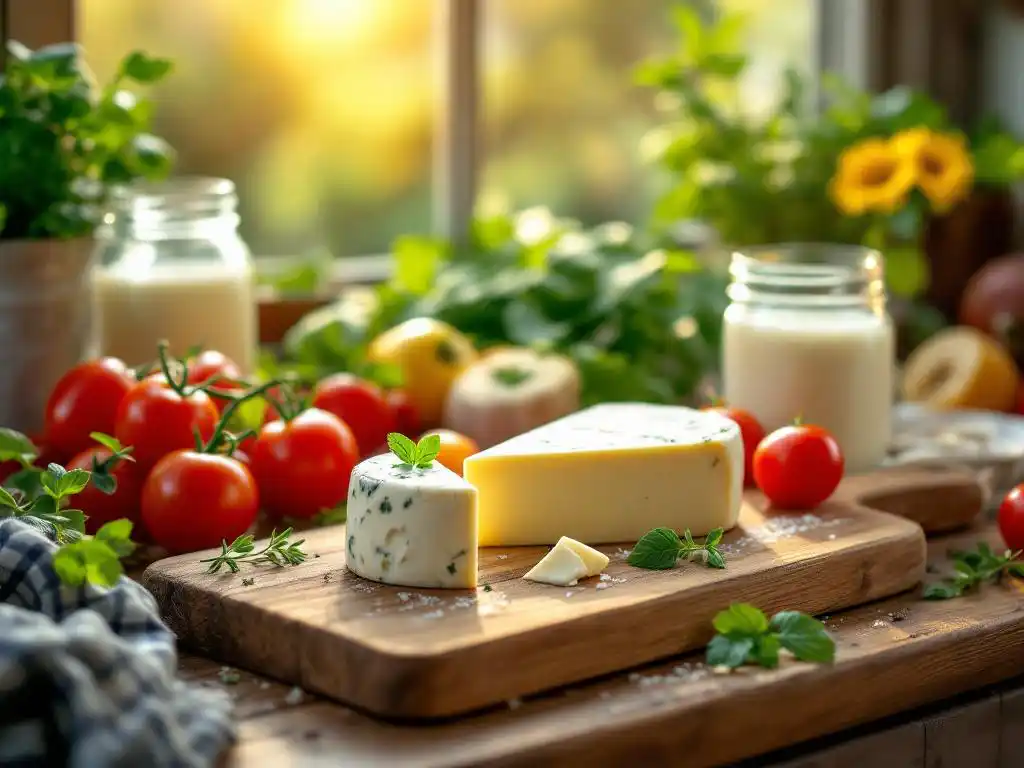
Goat cheese represents a powerful solution for food businesses seeking sustainable protein sources that align with environmental goals. Producing goat cheese requires significantly fewer resources than traditional dairy, with goats needing smaller amounts of feed, water, and land while producing fewer greenhouse gas emissions. Food businesses incorporating goat cheese into their offerings can reduce their environmental footprint while meeting growing consumer demand for sustainable, ethically produced ingredients that support both local economies and global environmental initiatives.
What makes goat cheese a sustainable choice for food businesses?
Goat cheese production creates a substantially smaller environmental footprint compared to cow’s milk cheese. Goats require approximately 90% less land and 85% less water than dairy cows, while producing significantly lower methane emissions. These efficient animals thrive on marginal land unsuitable for other agriculture, converting sparse vegetation into high-quality protein without competing for resources needed for human food production.
The environmental advantages extend beyond basic resource efficiency. Goats naturally prefer browsing on shrubs and weeds, making them excellent for sustainable land management without requiring intensive farming practices. Their smaller size means less soil compaction, preserving land quality for future generations. Additionally, goat farming operations typically maintain smaller herd sizes, allowing for higher animal welfare standards and reduced concentrations of waste products that can harm local ecosystems.
For food businesses, choosing goat cheese means supporting a production system that aligns with circular economy principles. The versatility of goat cheese in various culinary applications—from fresh spreads to aged varieties—allows businesses to offer sustainable options across their entire menu without compromising on quality or customer satisfaction.
How does local goat cheese production support sustainability goals?
Sourcing goat cheese from local producers dramatically reduces transportation emissions while strengthening regional food systems. Local production typically involves delivery distances under 150 miles, compared to thousands of miles for imported cheeses. This proximity ensures fresher products reach businesses within days of production, maintaining optimal quality while minimizing the carbon footprint associated with refrigerated transport and storage.
Local goat cheese production creates resilient supply chains that benefit both businesses and communities. Regional producers often employ traditional, small-scale farming methods that preserve biodiversity and support rural economies. These operations maintain genetic diversity in goat breeds, protecting against disease vulnerabilities while preserving traditional cheesemaking knowledge. Direct relationships with local producers enable businesses to verify sustainable practices firsthand and communicate authentic sustainability stories to increasingly conscious consumers.
The economic sustainability of local sourcing extends beyond environmental benefits. Shorter supply chains reduce price volatility and ensure more consistent availability. Businesses can develop exclusive products with local producers, creating unique offerings that differentiate them in competitive markets while supporting sustainable agricultural practices in their communities.
What are the most sustainable packaging options for goat cheese?
Sustainable packaging for goat cheese balances product protection with environmental responsibility. Biodegradable wrapping materials made from plant-based cellophane or compostable wax papers provide excellent moisture barriers while decomposing naturally. Recyclable glass jars and returnable containers offer reusable solutions particularly suitable for foodservice operations, eliminating single-use packaging waste while maintaining product integrity.
Bulk packaging represents the most sustainable option for high-volume users. Food manufacturers and restaurants can purchase goat cheese in 5–10 kilogram blocks wrapped in minimal packaging, reducing material use by up to 80% compared to individual portions. These larger formats use vacuum-sealed bags made from recyclable plastics or innovative materials like milk protein-based films that biodegrade completely.
Innovation in sustainable packaging continues to evolve. Edible coatings made from natural waxes or chitosan extend shelf life without synthetic materials. Some producers now offer zero-waste packaging programs in which businesses return containers for sanitization and reuse. The key lies in selecting packaging that matches your operational needs while minimizing environmental impact throughout the product lifecycle.
How can restaurants incorporate goat cheese into sustainable menus?
Restaurants can leverage goat cheese’s versatility to create sustainable menu items that reduce overall environmental impact. Plant-forward dishes featuring goat cheese as a flavor accent rather than the main component allow chefs to decrease portion sizes while maintaining satisfaction. A small amount of tangy goat cheese transforms simple vegetable dishes into memorable culinary experiences, supporting both sustainability goals and profitability through optimized ingredient usage.
Strategic menu planning with goat cheese supports waste reduction initiatives. Fresh goat cheese works excellently in daily specials, utilizing seasonal vegetables and reducing food waste through flexible preparation methods. Aged goat cheeses offer extended shelf life, minimizing spoilage while providing umami-rich flavors that enhance plant-based proteins and whole grains. Creative applications include:
- Whipped goat cheese spreads replacing cream-based sauces
- Crumbled aged goat cheese as a sustainable salad protein
- Goat cheese-based dressings and marinades
- Stuffed vegetables featuring herbed goat cheese
Seasonal menu rotation maximizes sustainability benefits. Spring menus might feature fresh goat cheese with early greens, while autumn offerings could highlight aged varieties with roasted root vegetables. This approach reduces transportation needs by aligning with local growing seasons while keeping menus exciting and relevant.
What certifications should businesses look for in sustainable goat cheese?
Credible certifications verify sustainable practices throughout the goat cheese production chain. Organic certification ensures goats graze on pesticide-free pastures and receive no antibiotics or growth hormones. Animal welfare certifications such as Certified Humane or Animal Welfare Approved guarantee ethical treatment standards, including adequate space, natural behaviors, and humane handling practices that conscious consumers increasingly demand.
Environmental management certifications demonstrate comprehensive sustainability commitments. ISO 14001 certification indicates systematic environmental impact reduction across operations. Carbon-neutral certifications verify offset programs that compensate for production emissions. B Corporation certification represents holistic sustainability encompassing environmental, social, and governance practices, providing businesses with suppliers aligned with comprehensive sustainability values.
Regional certifications often provide additional sustainability assurance. Protected Designation of Origin (PDO) status ensures traditional production methods that typically involve sustainable practices refined over generations. Fair Trade certification, while less common for European cheeses, guarantees ethical labor practices and community investment. Understanding these certifications helps businesses select suppliers whose values align with their sustainability commitments and communicate authentic environmental responsibility to stakeholders.
How De Jong Cheese helps with sustainable food concepts
We at De Jong Cheese combine traditional craftsmanship with modern sustainability practices to support your sustainable food concepts. Our family business, rooted in Alphen since 1995, maintains artisanal production methods that naturally align with environmental responsibility. We offer comprehensive solutions for businesses seeking sustainable goat cheese options:
- Local sourcing and production: Our Netherlands-based facility minimizes transportation distances for European customers
- Traditional production methods that require less energy than industrial processes
- Flexible bulk packaging options that reduce packaging waste by up to 75%
- Custom product development for plant-forward menu concepts
- Private label opportunities for sustainability-focused brands
Our commitment to sustainability extends throughout our operations. We work closely with local goat farmers who maintain high animal welfare standards, ensuring ethical sourcing that supports regional agriculture. Our range includes both fresh and aged varieties, perfect for seasonal menu planning and helping reduce food waste through optimal shelf life management.
Ready to enhance your sustainable food offerings with premium goat cheese? Explore our foodservice solutions to discover how our traditional expertise can support your sustainability goals. Visit our sales locations page to find distribution partners near you, or contact our team directly to discuss custom sustainable packaging and product development opportunities tailored to your business needs.
Frequently Asked Questions
How can I calculate the actual carbon footprint reduction when switching from cow's milk cheese to goat cheese?
To calculate carbon footprint reduction, compare the CO2 equivalent per kilogram: goat cheese typically produces 5.5-7 kg CO2e/kg versus 8.5-12 kg CO2e/kg for cow’s milk cheese. Multiply your annual cheese usage by this difference (approximately 3-5 kg CO2e saved per kg) to determine total emissions reduced. Many carbon calculators now include specific dairy categories, or work with suppliers who can provide verified emissions data for their production methods.
What are the biggest challenges when transitioning a menu to feature more goat cheese, and how can I overcome them?
The main challenges include customer perception of goat cheese as ‘too strong’ and higher initial costs compared to conventional cheese. Overcome these by introducing milder, fresh goat cheese varieties first and educating staff to recommend appropriate pairings. Start with small menu additions like optional goat cheese upgrades, then gradually expand based on customer response. Partner with suppliers who offer tasting sessions and training to build team confidence in selling these sustainable options.
How long can I store different types of goat cheese to minimize waste in my operation?
Fresh goat cheese keeps for 2-3 weeks unopened under proper refrigeration (2-4°C), while aged varieties can last 2-3 months. Once opened, use fresh varieties within 5-7 days and aged cheeses within 2-3 weeks. Extend shelf life by vacuum-sealing portions, storing in airtight containers with parchment paper, and maintaining consistent cold chain management. Consider ordering smaller quantities more frequently from local suppliers to ensure optimal freshness.
Are there specific goat breeds that produce more sustainable cheese, and should I ask suppliers about this?
Yes, heritage breeds like the Dutch White, Nubian, and Saanen goats often require less intensive management and adapt better to local climates, reducing resource needs. These breeds typically produce milk with higher solid content, yielding more cheese per liter of milk. Ask suppliers about their herd composition, breeding programs that prioritize hardiness over maximum production, and whether they maintain genetic diversity to support long-term sustainability.
What's the most cost-effective way to start offering sustainable goat cheese without committing to large inventory?
Begin with versatile fresh goat cheese that works across multiple menu items—breakfast, lunch, and dinner applications. Partner with local producers who offer smaller minimum orders or join buyer cooperatives to access better pricing without large commitments. Test demand through weekly specials before adding permanent menu items. Consider shared purchasing arrangements with neighboring restaurants to meet supplier minimums while splitting inventory risk.
How do I communicate the sustainability benefits of goat cheese to customers who might be skeptical about the taste?
Focus on the positive flavor attributes rather than defending against preconceptions—describe goat cheese as ‘creamy,’ ‘tangy,’ or ‘delicate’ rather than addressing the ‘goaty’ concern directly. Create side-by-side comparisons showing water usage, land requirements, and carbon emissions in simple graphics on menus or table tents. Offer complimentary tastings during slower periods, paired with local honey or preserves to showcase versatility while telling your sustainability story.
What equipment or storage modifications might I need to properly handle artisanal goat cheese versus conventional cheese?
Artisanal goat cheese requires dedicated storage areas with humidity control (75-85% for aged varieties) and consistent temperatures. Install separate cheese paper or breathable wrapping stations to prevent moisture buildup. Consider small cheese caves or specialized refrigeration units with adjustable humidity for optimal aging. Train staff in proper handling techniques, as goat cheese is often more delicate than cow’s milk varieties and requires gentler portioning methods.
Related Articles
- How do you find a supplier who thinks along with you instead of just delivering?
- What sustainability certifications are relevant when purchasing goat cheese for the food industry?
- Why is consistency key in goat cheese supply?
- What makes Dutch goat cheese unique in the market?
- What packaging options are available for goat cheese?