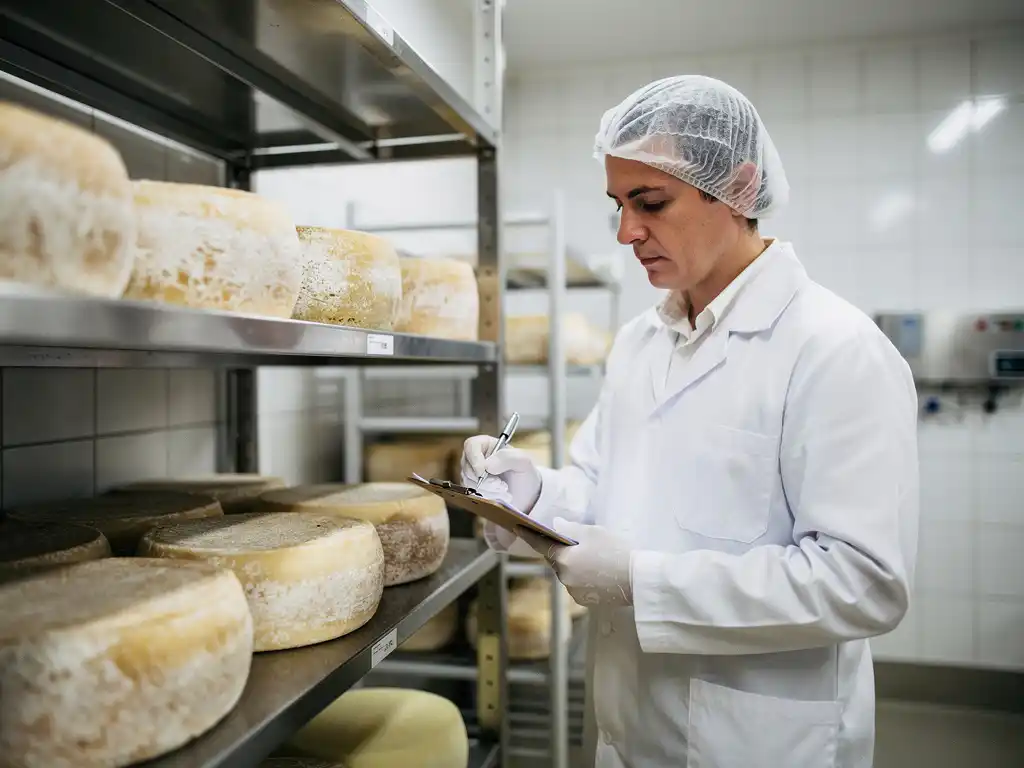
As a buyer in the food industry, you know that the quality and safety of your raw materials are crucial for your end product. When selecting a cheese supplier, it’s about more than just taste and price – food safety and hygiene come first. Whether you’re purchasing cheese for pizzas, ready meals, or other food products, compliance with European hygiene standards is non-negotiable. In this article, we’ll discuss step by step how to verify that a cheese supplier meets all required standards, which certificates are essential, and how to prevent potential risks.
What are the most important European hygiene standards for cheese suppliers?
The most important European hygiene standards for cheese suppliers are established in EU regulations 852/2004 and 853/2004, which contain general and specific hygiene requirements for foods of animal origin. These standards require suppliers to implement a HACCP system, maintain strict temperature controls, and ensure complete traceability from raw material to end product.
These regulations form the foundation of food safety in the European dairy sector. Regulation 852/2004 focuses on general hygiene requirements that apply to all food businesses, including the obligation to establish and implement procedures based on HACCP principles. This means that cheese suppliers must systematically identify and control all potential hazards in their production process.
Regulation 853/2004 specifically addresses hygiene requirements for foods of animal origin, including dairy products. For cheese producers, this means strict requirements for raw milk quality, pasteurization processes, ripening conditions, and storage facilities. The temperature during transport, for example, must not exceed 6°C for fresh cheese, while aged cheeses must be stored under controlled conditions.
Additionally, cheese suppliers must comply with microbiological criteria as established in Regulation 2073/2005. This regulation sets limit values for pathogens such as Listeria monocytogenes, Salmonella, and E. coli in cheese products. Suppliers must regularly sample and test to demonstrate that their products remain within these safe limits.
What certificates should a reliable cheese supplier have?
A reliable cheese supplier must have at least HACCP certification and preferably also internationally recognized standards such as IFS Food, BRC Global Standards, or FSSC 22000. These certificates demonstrate that the company meets strict food safety standards and has implemented a robust quality management system that is regularly audited by independent auditors.
IFS Food (International Featured Standards) is one of the most requested certifications in the European food industry. This certificate evaluates not only food safety but also product quality, legal compliance, and process control. For industrial buyers, IFS Food provides assurance that the supplier can consistently deliver according to agreed specifications. The certificate is renewed annually and requires continuous process improvement.
BRC Global Standards (British Retail Consortium) is similar to IFS but has its origins in the United Kingdom. Many international retailers require BRC certification from their suppliers. The certificate strongly focuses on product integrity, traceability, and preventing food fraud. For cheese suppliers, this includes strict controls on the origin of milk and other ingredients.
FSSC 22000 combines ISO 22000 with additional food safety requirements and is recognized by the Global Food Safety Initiative (GFSI). This certification scheme is particularly suitable for suppliers operating internationally, as it is recognized worldwide. The system requires a comprehensive risk analysis of the entire supply chain.
In addition to these main certificates, specific certificates may be relevant depending on your market segment. Organic certification according to EU regulation 834/2007 is essential if you’re looking for organic cheese products. For export markets, additional certificates such as halal or kosher may be required. Dutch cheese suppliers may also have the COKZ quality mark, which stands for Central Organization for Quality Affairs in Dairy.
How do you verify that supplier certificates are genuine and valid?
To verify the authenticity and validity of supplier certificates, always request the original certificate with a unique certificate number and verify this directly with the certifying body via their online database or telephone contact. Pay attention to the validity date, scope of certification, and whether the company address on the certificate matches the production location.
Every legitimate certificate contains specific elements you must check. The certificate number is unique and traceable in the certifying organization’s database. Reliable certifiers such as DNV, SGS, Bureau Veritas, or TÜV have online portals where you can enter certificate numbers to verify status. Always check whether the scope of the certificate covers the specific products you want to purchase – a general food safety certificate doesn’t automatically mean all product lines are certified.
Watch for common signs of false or misleading certificates. Warning signs include certificates without accreditation logos, unclear or general scope descriptions, certificates issued by unknown bodies without GFSI recognition, or documents missing contact details of the certifier. Also, certificates that have been expired for months but are still being presented require extra attention.
Make certificate verification part of your standard supplier assessment. Set up a system where you automatically receive reminders when certificates of important suppliers expire. When renewing, always ask for the new certificate and verify again. Some companies work with certificate management systems that automatically receive updates from certifying bodies.
When in doubt about authenticity, contact the certifying body directly. They can not only confirm validity but also provide information about any suspensions or withdrawals that are not visible on the certificate itself. Be extra careful with suppliers who are reluctant to share certificate information or make verification difficult.
What should you check during a supplier audit?
During a supplier audit, you check the implementation of HACCP procedures, hygienic production conditions, temperature recordings, cleaning and disinfection procedures, staff training, raw material control, and traceability systems. Focus especially on critical control points such as pasteurization, cooling, and packaging, and ask for records that demonstrate procedures are consistently followed.
Start your audit with a tour of the production areas. Pay attention to the general state of maintenance, separation between raw and processed products, and the personal hygiene of employees. Check whether there are adequate facilities for hand washing, whether protective clothing is worn correctly, and whether there are systems to prevent unauthorized access. The routing through the factory should be logical without cross-contamination risks.
Document control forms an essential part of the audit. Ask for temperature recordings from recent months for cold rooms, ripening chambers, and transport vehicles. Check whether deviations have been recorded and what corrective measures were taken. Review cleaning schedules and verification results of cleaning procedures. Personnel files must contain training certificates, especially for employees in critical positions.
Test traceability by randomly selecting a batch and asking the supplier to present the complete history within a reasonable time: from milk supplier to end product. A good system should be able to provide all relevant information within two hours, including raw materials used, production dates, quality controls, and distribution data.
Specifically for cheese producers, you must pay attention to ripening processes. Check whether temperature and humidity in ripening chambers are monitored and recorded. Ask about procedures for treating cheese rinds and how cross-contamination between different cheese types is prevented. For suppliers of fresh cheese, control of shelf life and cold chain management is extra important.
Also evaluate the complaint management system and recall procedures. A professional supplier has a clear system for recording and handling complaints, with trend analyses to identify structural problems. Ask for examples of recent complaints and how they were resolved. Test the recall procedure by asking how quickly they can alert all customers of a specific batch.
What questions do you ask a cheese supplier about food safety?
Essential questions about food safety include: frequency of microbiological testing, allergen control, recall procedures, staff training in food safety, control of foreign objects, and how they handle deviations in the production process. Also ask about their performance regarding complaints and recalls in the past two years.
Microbiological safety is central to dairy products. Ask specifically about testing frequency for pathogens such as Listeria monocytogenes, especially important for soft cheeses and products with longer shelf life. Inquire about their environmental monitoring program – how often do they test surfaces and equipment for pathogens? What actions do they take with positive results? A good supplier has detailed protocols for this.
Allergen management is becoming increasingly important. Ask how they prevent cross-contamination when producing different cheese types, some of which may contain nuts or mustard. How are production lines cleaned between different runs? How do they validate the effectiveness of cleaning? Also ask about their policy for declaring “may contain traces” – do they use this responsibly or as a general disclaimer?
Inquire about specific control measures for physical hazards. What metal detectors or X-ray equipment do they use? How often are these calibrated? What is their policy for glass control in the production environment? How do they prevent plastic or other foreign objects from entering the product? Ask for records of found and removed foreign objects.
Training and competence of personnel are crucial. Ask about the training program for new employees and the frequency of refresher courses. How are temporary workers instructed? Is there a system to verify that training is effective? Specifically for cheese production: have employees working with starters and cultures received special training?
Also ask about their experience with audits from other customers or certifying bodies. What non-conformities have been recently identified and how were they addressed? A transparent supplier shares this information openly and shows how they continuously improve. Be alert to suppliers who claim never to have problems – this may indicate lack of transparency or insufficient self-evaluation.
What are the risks if a supplier doesn’t meet standards?
Risks of non-compliance include product recalls, fines from regulators up to hundreds of thousands of euros, reputational damage, loss of customers, criminal liability in health incidents, and blocking of products at borders. For your company, this means production shutdowns, claims from end customers, and possible loss of your own certifications.
Financial consequences can be far-reaching. A product recall action costs on average between 50,000 and 500,000 euros, depending on the scale. This includes not only the direct costs of recalling and destroying products but also logistical costs, communication, and additional quality controls. For your company, there are additional costs of production shutdowns and finding alternative suppliers on short notice.
Legal liability is a serious risk. Under European legislation, you as a producer are liable for the safety of your end product, even if contamination occurred at your supplier. This means you may be liable for health damage to consumers. Criminal prosecution of management and quality managers is possible in cases of serious negligence. Insurance doesn’t always cover all damage, especially not in cases of demonstrable negligence in supplier selection.
Reputational damage can have long-term consequences. In the digital age, negative news about food safety incidents spreads rapidly. Consumers remember brand-related food scandals for years. For B2B suppliers, one incident may mean the loss of important contracts. Retailers and foodservice companies tolerate no risks and will quickly switch to competitors after incidents.
Operational disruptions affect your entire company. If an important cheese supplier suddenly cannot deliver due to closure for hygiene problems, your entire production line may shut down. Finding and qualifying alternative suppliers takes time – time you don’t have if you have contractual delivery obligations. This can lead to penalties for late delivery and loss of customer confidence.
Cascade effects can occur where one incident at a supplier leads to increased controls at all customers. Regulators such as the NVWA intensify inspections at companies doing business with problem cases. This means additional administrative burdens, possible production stops during inspections, and stricter requirements for your own quality systems. Your own certifications may be at risk if auditors find that you have performed insufficient supplier control.
How DeJong Cheese helps with food safety and hygiene guarantees
As a family business with more than 30 years of experience in cheese production, we at DeJong Cheese understand how crucial reliable food safety is for industrial customers. Our Alphenaer range is produced according to the strictest hygiene standards, supported by our IFS Food certification and extensive quality controls. We offer complete transparency in our processes and welcome supplier audits.
Our food safety guarantees for industrial partners include:
- IFS Food-certified production facility with annual external audits
- Extensive microbiological testing according to Regulation 2073/2005
- Complete traceability from milk supplier to end product within 2 hours
- Validated HACCP procedures with continuous monitoring of critical control points
- Dedicated quality team with direct lines to production for rapid intervention
- Monthly trending of quality parameters with proactive improvement
For industrial processors like Marco Visser, we offer specific support in food safety. Our technical specifications contain detailed microbiological parameters, allergen information, and complete ingredient declarations. We proactively share updates on certificate renewals and audit reports. For questions about food safety, our quality team is immediately available with documentation and technical support.
Our traditional production process combined with modern quality systems ensures consistent safety. The goat milk comes from selected local suppliers we have known for years and regularly audit. Our production lines for fresh goat cheese, aged specialties, and industrial applications such as pizza cheese are strictly separated to prevent cross-contamination. Temperature monitoring happens 24/7 with automatic alerting for deviations.
Are you looking for a cheese supplier who takes food safety as seriously as you do? Contact our team for a comprehensive presentation of our food safety systems and certificates. We would be happy to invite you for a visit to our production facility in Alphen, where you can see for yourself how we ensure quality and safety. Visit our homepage for more information about our company, view our complete product range, or contact us directly. For local pickup options, we gladly refer you to our sales points.
Frequently Asked Questions
How often should I recheck my cheese supplier's certificates?
Check certificates at least annually upon renewal, but also set up a system for interim checks every 3-6 months. Many certificates such as IFS Food and BRC are renewed annually but can be suspended or withdrawn in between. Automate this process with reminders and ask suppliers to proactively send updates when their certification status changes.
What are the first steps if I suspect my cheese supplier doesn't meet hygiene standards?
Stop immediately with new orders and conduct a risk assessment on products already in stock. Plan an unannounced audit within 48 hours and document all findings thoroughly. Inform your quality department and consider hiring an external auditor for an objective assessment. Meanwhile, prepare alternative suppliers to ensure continuity.
What specific microbiological tests should I request for cheese intended for heated applications like pizza?
For heated applications, tests for Listeria monocytogenes, Salmonella, and E. coli are essential, even though the product will be heated. Also ask for enterobacteriaceae counts as an indicator of general hygiene. Spores of heat-resistant bacteria such as Clostridium can survive, so ask for anaerobic spore formers. Ensure the supplier tests both end product and environmental samples from the production area.
How can I as a small customer still conduct a supplier audit without major costs?
Join collaborative audits organized by industry associations or form a purchasing group with other small customers to share costs. Ask if you can join an existing audit of a larger customer. Alternatively, you can start with a remote audit via video calling and document control, followed by targeted physical inspections of critical processes during regular supplier visits.
What are warning signs during supplier conversations that indicate possible food safety problems?
Watch for reluctance in sharing audit results, vague answers about testing frequencies, or downplaying non-conformities. Warning signs also include frequently changing personnel in quality functions, evasive answers about recall procedures, inability to give concrete examples of improvement actions, or suggesting that certificates are ‘merely formalities.’ A reliable supplier is transparent and proud of their food safety systems.
Should I set different requirements for suppliers of fresh cheese versus aged cheese?
Yes, fresh cheese requires stricter controls on cold chain management and shorter shelf life, with emphasis on Listeria prevention and pH monitoring. For aged cheese, focus more on ripening conditions, surface treatments, and possible formation of biogenic amines. Fresh cheese must be microbiologically tested more frequently, while for aged cheese, control of mycotoxins in rind formers and consistent ripening parameters are crucial.
How do I effectively integrate supplier evaluations into my existing quality system?
Develop a supplier scorecard with weighted criteria for food safety (40%), delivery reliability (30%), product quality (20%), and price (10%). Link these scores to your ERP system for automatic warnings when deviations occur. Plan structural review moments each quarter and provide supplier performance feedback during annual evaluation meetings. Ensure all relevant departments (purchasing, quality, production) have access to current supplier information.
Related Articles
- How do you position goat cheese as a premium ingredient compared to cow's milk cheese?
- How do you ask a producer to think outside their standard range?
- How do you compare the total cost of ownership of goat cheese crumbles versus a log?
- How to integrate goat cheese into existing restaurant supply chains?
- What to do with goat cheese?