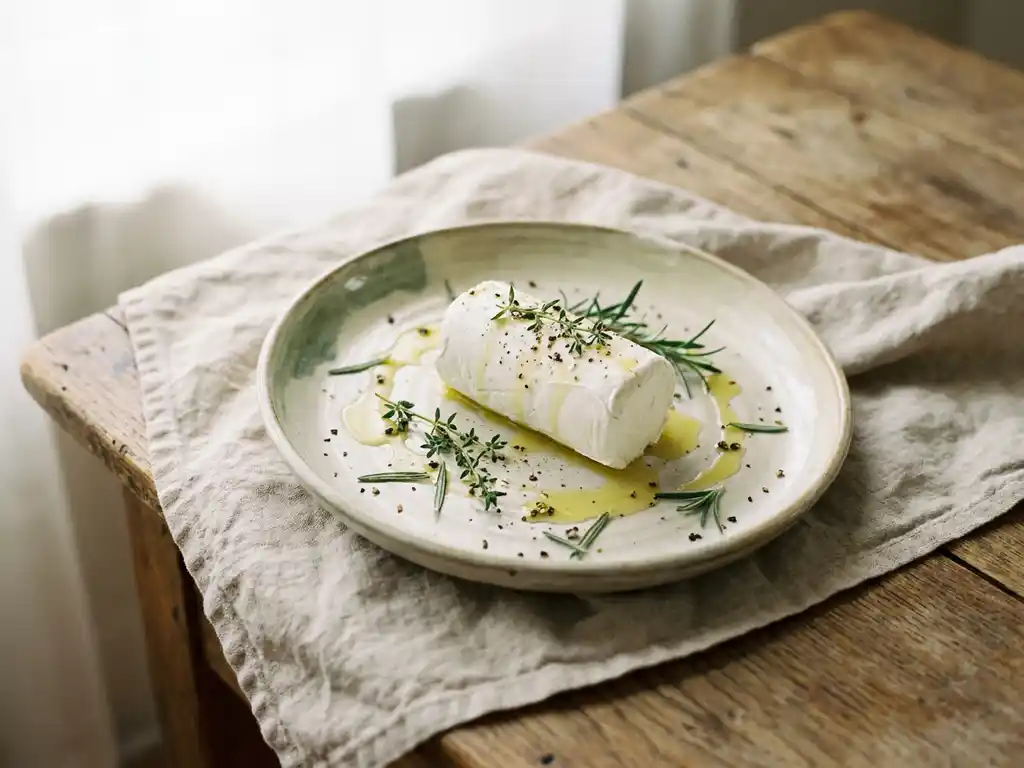
Developing a clean-label product with goat cheese as the main ingredient starts with choosing a variety that naturally needs few additives, allows for a short ingredient list, and performs well in your product concept. Fresh goat cheese is ideal for this: it’s simple to make, has a short ingredient list, and tastes authentic. In this article, we answer the most common questions about clean-label product development with goat cheese.
What does a clean-label ingredient list need to look like?
A clean-label product has an ingredient list that is short, easy to understand, and free from artificial additives. Consumers should be able to recognize every ingredient without any food science background. In practice, this means: no artificial colors, no synthetic preservatives, no flavor enhancers, and no ingredients with E-numbers that feel unnatural.
Clean-label is not an officially certified term, but a marketing standard that carries more and more weight with retailers and consumers alike. For product developers, this means taking a critical look at every ingredient in your formula. Can you replace a preservative with a different packaging technique? Can you leave out a stabilizer by changing your processing method? These are the key questions in clean-label product development.
- A maximum of five to seven ingredients as a guideline for simple products
- No ingredients you wouldn’t say out loud to a consumer
- A preference for local or recognizable raw materials such as goat milk, salt, and herbs
- Transparency about origin as an added clean-label signal alongside the ingredient list
Why is goat cheese a natural fit for clean-label products?
Goat cheese is a natural fit for clean-label products because traditional production requires very few ingredients: goat milk, starter culture, rennet, and salt. That’s essentially all you need to make a flavorful, functional cheese. This keeps the ingredient list short and transparent — exactly what clean-label calls for.
Goat cheese also has a bold flavor profile that is naturally strong enough to carry a product on its own, without needing flavor enhancers or added aromas. The slightly tangy, fresh taste of fresh goat cheese speaks for itself. That’s a big advantage over milder cheese varieties, where producers more often reach for extra ingredients to add depth of flavor.
Another plus is its versatility in texture. Depending on how long it has been aged, goat cheese ranges from spreadable and creamy to firmer and sliceable — all without stabilizers or texture improvers. This natural range makes goat cheese suitable for a wide variety of product categories, from dips and spreads to filled pastas and savory snacks.
Which types of goat cheese work best as a main ingredient?
The best types of goat cheese to use as a main ingredient in a clean-label product are fresh goat cheese, soft goat cheese, and mild aged varieties. The right choice depends on the texture, flavor intensity, and processing method in your production line.
Fresh goat cheese
Fresh goat cheese is the most neutral and versatile option. Its creamy texture makes it ideal for spreads, fillings, and dressings. The mild, slightly tangy flavor works well in both savory and lightly sweet applications — think a goat cheese and honey combination or an herb spread. For clean-label products, fresh goat cheese is the safest starting point: minimal ingredients, maximum versatility.
Soft and aged goat cheese
Soft goat cheese with a light rind has more character and a slightly more intense flavor. This works well as a recognizable main ingredient in premium products where the goat cheese needs to stand out in both taste and appearance. Mild aged varieties offer more structure and are suitable for products that need a firmer bite, such as a filled wrap or a cheese board assortment.
How do you combine goat cheese with trending clean-label ingredients?
The best way to combine goat cheese with clean-label ingredients is to choose additions that enhance its natural flavor without complicating the ingredient list. Think fresh herbs, roasted nuts, honey, dried fruits, truffle, and red onion. These ingredients are easy to recognize, fit a clean-label positioning, and reinforce the premium character of goat cheese.
In 2026, we see a clear trend toward authentic, local flavor combinations that match consumers’ desire for transparency and traceability. Goat cheese with lavender honey and walnuts, or a variety with roasted red onion and thyme, are examples of concepts that are both clean-label and distinctive on the retail shelf.
Practical tips for combining:
- Truffle: pairs beautifully with soft goat cheese for a premium positioning in retail and foodservice
- Red onion: adds a sweet-savory balance that works well with fresh goat cheese products in the snack category
- Fresh herbs like basil or thyme: enhance the fresh flavor of goat cheese without adding complexity to the ingredient list
- Honey or fig: offer a sweet counterpart that feels both premium and clean
Always consider the shelf life of your added ingredients in combination with goat cheese. Fresh herbs can shorten shelf life; dried varieties or herb oils are technically safer and remain fully clean-label.
What are the technical challenges of clean-label product development with goat cheese?
The biggest technical challenges in clean-label product development with goat cheese are shelf life without preservatives, texture stability without additives, and consistent quality when scaling up production. All three require careful planning from the very start of the development process.
Shelf life is the most critical factor. Without synthetic preservatives, you rely on packaging technology such as modified atmosphere packaging, a low pH, or a carefully chosen salt level. Fresh goat cheese naturally has a lower pH, which offers some protection — but this needs to be thoroughly tested in combination with your specific product formula.
Texture stability is a second consideration. Goat cheese can change texture at certain processing temperatures or during extended storage. If you want to avoid stabilizers, you need to manage this by selecting the right fat-to-moisture ratio in the cheese and carefully controlling your processing conditions.
Consistency when scaling up is the third challenge. A concept that works perfectly in the lab also needs to be reproducible on an industrial production line. This requires standardized specifications for the goat cheese you source, including fat content, moisture content, and acidity.
When should you bring in a specialized goat cheese producer?
You should bring in a specialized goat cheese producer as soon as you find that standard cheese varieties don’t meet your specific technical requirements, or when you want to develop a distinctive product concept that calls for a custom approach. A specialist can help you think through specifications, texture variants, and flavor profiles that align with your clean-label goals.
In practice, it makes sense to involve a specialized producer during the concept phase — not only after the recipe is finalized. A goat cheese specialist knows which variants are technically feasible, which combinations work well in a production line, and how to keep the ingredient list as short as possible without sacrificing quality or functionality.
Signs that you need a specialist:
- Your current supplier cannot guarantee specific fat or moisture levels
- You want to develop a private label goat cheese product with its own flavor profile
- Your product concept requires a goat cheese variety that isn’t available off the shelf
- You need technical support for shelf life and texture testing
How DeJong Cheese supports clean-label product development with goat cheese
As a family business with more than thirty years of experience in goat cheese specialties, we understand what clean-label product development requires. From our facility in Alphen, we produce fresh and soft goat cheese specialties under the Alphenaer brand, with a short and transparent ingredient list that naturally meets clean-label standards. We supply retail and foodservice customers worldwide, both under our own brand and as private label.
What we offer product developers who want to work with goat cheese as a main ingredient:
- Custom specifications: we align fat content, moisture content, and acidity to your product formula
- Flexible flavor profiles: from neutral and mild to bold and herby, tailored to your concept
- Consistent quality: the same specifications, delivery after delivery, even at industrial volume
- Technical collaboration: we think along with you during the development phase on shelf life, texture, and processability
- Private label options: fully customized for your brand and product line
Want to find out what we can do for your product development? Check out our offering at DeJong Cheese or get in touch for a no-obligation conversation about your concept.
Frequently Asked Questions
How long does a clean-label goat cheese product stay fresh without preservatives?
The shelf life of a clean-label goat cheese product without preservatives is typically between three and six weeks, depending on the packaging technique and the moisture content of the cheese. Modified atmosphere packaging (MAP) and a carefully calibrated salt level are the most common techniques for extending shelf life without adding to the ingredient list. It is strongly recommended to run shelf life trials under realistic distribution and storage conditions before bringing a product to market.
Can I put 'clean-label' on my product packaging?
Clean-label is not a legally protected or officially certified term, which means you can technically use it — but you are vulnerable to criticism if your ingredient list does not meet the expectations of consumers and retailers. Retailers are increasingly applying their own clean-label criteria when evaluating new products, so it is wise to check in advance whether your formula meets their specific requirements. Transparent communication about origin and production method significantly strengthens the credibility of a clean-label claim.
What are common mistakes in first-time clean-label product development with goat cheese?
A common mistake is thinking about shelf life too late: product developers finalize the recipe first and only then discover that the desired shelf life is not achievable without additives. Another frequent misstep is sourcing a standard goat cheese without fixed specifications, which causes texture and flavor to vary from batch to batch. Finally, many developers underestimate how quickly fresh ingredients like herbs affect microbiological shelf life; dried alternatives or herb oils are technically safer and remain fully clean-label.
How do I test whether consumers actually perceive my goat cheese product as clean-label?
The most direct method is a consumer panel where you have the ingredient list read aloud and ask how many ingredients are recognized and perceived as ‘natural.’ You can also check the ingredient list against common clean-label guidelines from major retailers or tools like the Yuka app, which consumers use more and more to evaluate products. Don’t forget to test the packaging communication as well: a short ingredient list loses its impact if the packaging itself is busy and hard to read.
Is clean-label goat cheese relevant for foodservice products, or mainly for retail?
Clean-label is definitely relevant for foodservice too, though the focus differs slightly: while retail consumers read the ingredient list themselves, in foodservice it is buyers and chefs who set clean-label requirements based on their own brand positioning or customer expectations. Restaurants and caterers working with ‘honest food’ or farm-to-table concepts actively look for products with a short, recognizable ingredient list. Goat cheese with a transparent origin and minimal ingredients fits perfectly into this positioning and can be a differentiating argument in foodservice tenders.
Can I reformulate an existing product to be clean-label, or do I need to start from scratch?
Reformulation is possible in many cases, but it requires a thorough analysis of which ingredients serve a functional purpose and which are only there as a ‘safety net.’ Start by mapping out each ingredient and its technical role: stabilizer, preservative, flavor carrier, or filler. Ingredients without a critical function can be removed right away; for the remaining ones, look for clean-label alternatives or adjust the production process. Keep in mind that reformulation almost always requires new shelf life and sensory testing before you can bring the updated product to market.
How do I ensure consistent goat cheese quality as my production volume grows?
Consistency when scaling up starts with fixed purchasing specifications: contractually establish the fat content, moisture content, acidity, and microbiological parameters of the goat cheese with your supplier. Ideally, work with a specialized goat cheese producer who can guarantee the same specifications at industrial volume, and request batch certificates with every delivery. Also set up internal quality controls on your production lines so you can spot deviations in texture or flavor early, before they affect the final product.
Related Articles
- How do you compare domestic versus foreign goat cheese producers on reliability?
- What product specifications do you request in an initial quote for industrial curd?
- How can goat cheese be used in stuffed bakery products?
- What are portion control guidelines for goat cheese?
- What are the different textures of goat cheese varieties?