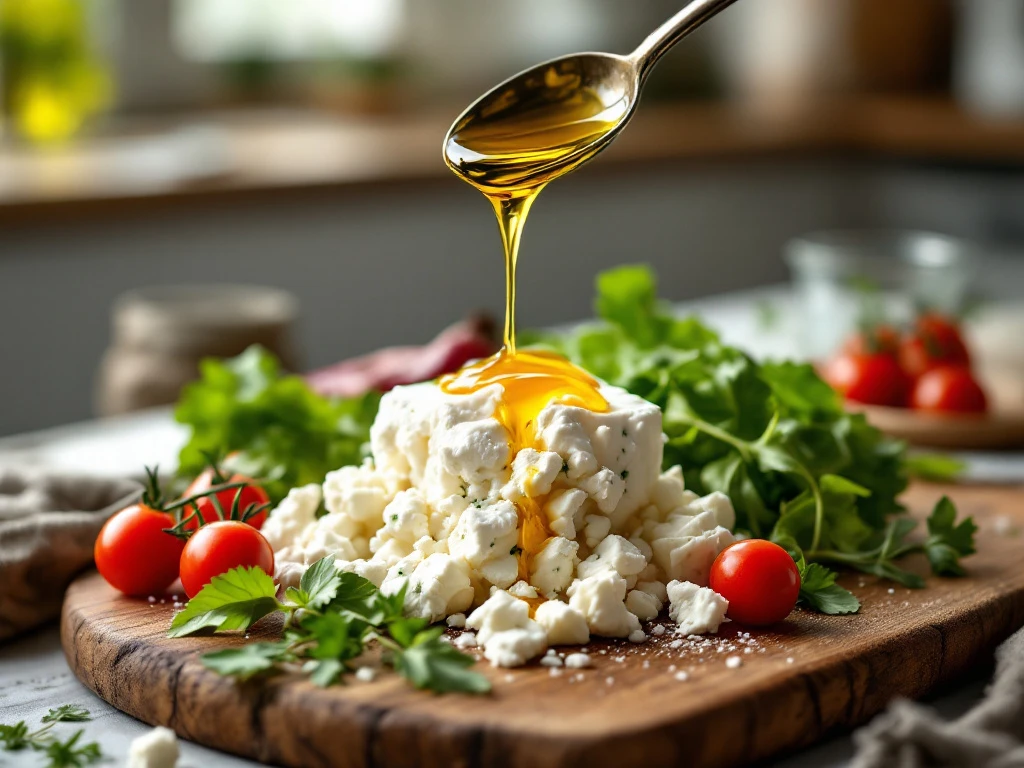
To make goat cheese salad dressing, mix fresh goat cheese with olive oil, lemon juice or vinegar, and seasonings until smooth. The basic recipe needs 4 ounces of goat cheese, 1/4 cup olive oil, 2 tablespoons lemon juice, salt, pepper, and herbs. Change the liquid amounts to get the thickness you want, from thick and creamy to light and thin. This useful dressing makes salads taste better with its tangy, creamy flavor and gives more protein than regular dressings.
What ingredients do you need for goat cheese salad dressing?
Important ingredients for goat cheese dressing are 4 ounces fresh goat cheese, 1/4 cup extra virgin olive oil, 2 tablespoons lemon juice or white wine vinegar, 1 garlic clove, salt, and black pepper. You can also add fresh herbs like thyme, basil, or chives, plus honey to make it sweet. The quality of goat cheese changes the taste a lot, so pick fresh, creamy types for the best results.
For basic making, use 2 parts goat cheese to 1 part liquid. This makes a good thickness that covers salad leaves without being too heavy. Fresh goat cheese works better than old cheese because it mixes more easily and tastes milder. Our fresh goat cheese gives the perfect creamy texture and clean taste that makes the best dressing base.
You can change ingredients for different diets. Use avocado oil instead of olive oil for different taste, or use yogurt to have fewer calories. For dairy-free options, try cashew cream or soft tofu mixed with nutritional yeast. Instead of lemon, try apple cider vinegar or balsamic vinegar, and change the amounts to taste good.
How do you make goat cheese dressing smooth and creamy?
To make smooth, creamy goat cheese dressing, you need room temperature cheese, good mixing, and slow liquid adding. First, leave goat cheese at room temperature for 30 minutes before mixing. This makes it soft and stops lumps from forming. Use a food processor or strong blender for best results. Process the cheese alone first, then add liquids.
How you blend decides the final texture. First, break goat cheese into small pieces in your processor and pulse until broken down. Slowly pour olive oil while processing without stopping, like making mayonnaise. Add lemon juice bit by bit, checking how thick it is between additions. This way makes a smooth mix that doesn’t separate.
Common texture problems are lumps, separation, or being too thick. Fix lumpy dressing by pushing it through a fine strainer or blending longer. Stop separation by adding liquids slowly and using something like Dijon mustard to help mix. If dressing gets too thick, make it thinner with water or milk, one tablespoon at a time. For thicker dressing, add more goat cheese or put it in the fridge before serving.
What’s the difference between goat cheese vinaigrette and creamy dressing?
Goat cheese vinaigrette has more oil than cheese (3:1), making it lighter and easy to pour. It’s good for delicate greens. Creamy goat cheese dressing uses equal parts cheese and liquid, making it thick and rich. This works well for stronger salads. Vinaigrettes mix ingredients by whisking or shaking, while creamy types need blending to be smooth.
Different ingredients make these styles different. Vinaigrettes usually have vinegar, olive oil, small amounts of crumbled goat cheese, and seasonings mixed together. The cheese adds tang without changing the texture too much. Creamy dressings blend larger amounts of goat cheese with buttermilk, yogurt, or cream, making a rich coating.
You can change between styles by adjusting amounts and how you make them. Turn vinaigrette into creamy dressing by adding more goat cheese and blending well. Make creamy dressing thinner like vinaigrette by adding oil and vinegar while using less cheese. Goat cheese crumbles work very well in vinaigrettes, while soft types make smoother creamy dressings. Use lighter vinaigrettes with spring mix or arugula, while creamy ones go well with romaine, kale, or grain salads.
How long does homemade goat cheese dressing last?
Homemade goat cheese dressing stays fresh for 5-7 days when you store it correctly in a closed container in the fridge. Glass jars or containers with tight lids work best. They stop air from getting in and prevent other food smells from changing the taste. Always use clean spoons when serving to keep it fresh longer.
Storage temperature is very important for how long it lasts. Keep dressing at steady fridge temperature below 40°F (4°C). Store it in the main part of the fridge, not in the door where temperature changes more. Write the date you made it on the container so you remember.
Signs that it’s gone bad include sour smell, mold growing, separation that won’t mix back together, or bad taste. Throw away dressing that shows any of these signs. Don’t freeze it because the texture becomes grainy and separated when it thaws. Keep it fresh longer by using safe ingredients, keeping preparation areas clean, and not putting dirty spoons back in. For safety, never leave dressing at room temperature for more than two hours.
Which herbs and flavors pair best with goat cheese dressing?
Good herb choices for goat cheese dressing are fresh thyme, chives, basil, and dill. These work well with the cheese’s tangy taste without being too strong. Thyme adds earthy taste, chives give mild onion flavor, basil brings sweetness, and dill gives bright, fresh taste. Use 1-2 tablespoons fresh herbs or 1 teaspoon dried herbs per cup of dressing.
Adding different flavors turns basic dressing into special types. Honey balances the tangy taste with gentle sweetness, while roasted garlic adds deeper flavor. Dijon mustard gives sharpness and helps mix ingredients together. Lemon zest makes it brighter than just juice. Our goat cheese types with herbs and spices give ideas for creative dressing mixes that make any salad better.
Different seasons call for different flavors to keep dressings interesting all year. Spring is good for fresh herbs and lemon, summer works well with basil and sun-dried tomatoes, autumn suits warm spices like paprika, and winter is good for strong additions like rosemary. Match dressing flavors to salad ingredients: use herb types with green salads, honey types with fruit salads, and garlic types with roasted vegetable salads. Try unexpected additions like truffle oil, harissa, or maple syrup for unique flavors.
Making great goat cheese salad dressing turns ordinary salads into special meals. Whether you like light vinaigrettes or rich, creamy types, the secret is good ingredients and proper technique. Fresh goat cheese gives the base, while your choice of herbs and seasonings makes each batch personal. With proper storage, homemade dressing tastes better and works better than store-bought types. We invite you to look at our range of fresh and special goat cheeses, perfect for making dressings that show the pure, special taste of real goat cheese in every delicious bite.