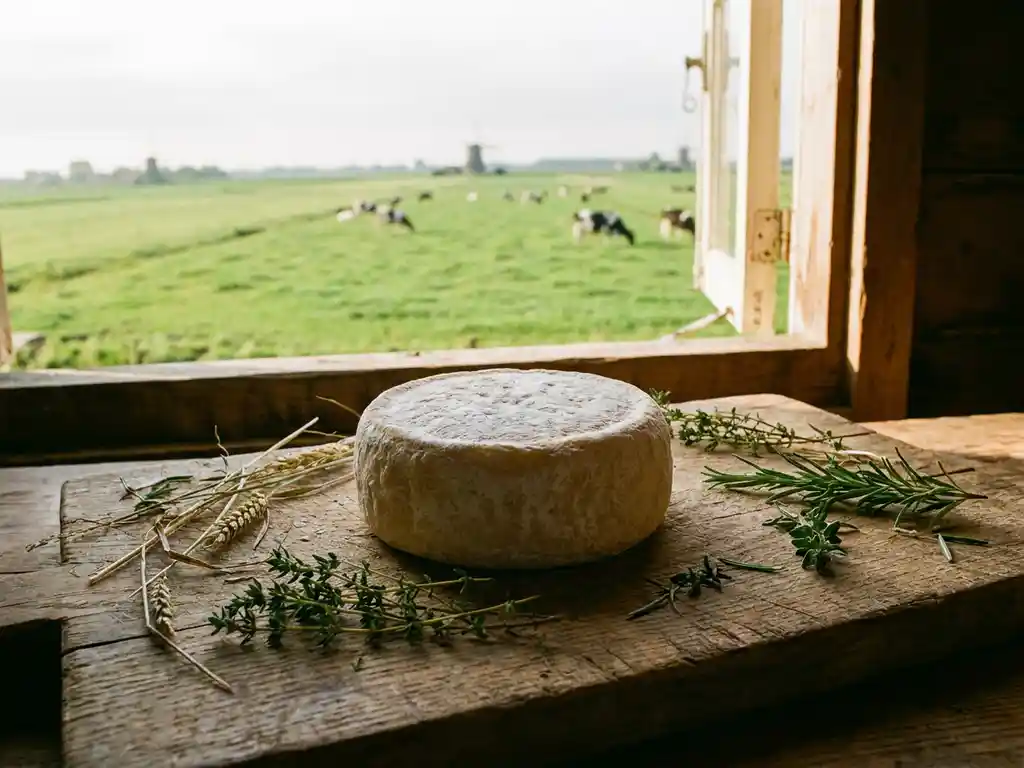
Buying from a local cheese supplier delivers clear sustainability benefits: shorter transport routes reduce CO2 emissions, regional milk production supports animal welfare and biodiversity, and a shorter food chain improves food safety and traceability. These benefits matter for both food industry buyers and product developers working with premium ingredients. Below, we answer the most common questions about sustainable cheese sourcing from a regional producer.
What are the CO2 benefits of buying from a regional cheese supplier?
Buying from a regional cheese supplier significantly reduces CO2 emissions because transport distances are far shorter than with international suppliers. Fewer miles on the road means less fuel and less emissions. For companies working toward sustainability goals, the carbon footprint of the food chain is one of the most concrete factors you can actually influence.
Transport accounts for a significant share of total emissions in the food industry. When cheese travels thousands of miles by truck or ship, those emissions add up fast. A regional cheese producer delivering nearby cuts that share considerably. That makes it easier for buyers and product developers to demonstrably meet internal climate targets or retailer requirements.
Regional production also brings indirect benefits: smaller facilities more often use local energy sources and have better control over their own energy use. The combination of short distances and conscious production makes sustainable cheese sourcing from a nearby supplier a logical choice for companies looking to reduce their Scope 3 emissions.
How does local cheese production contribute to sustainable milk sourcing?
Local cheese production supports sustainable milk sourcing because producers maintain direct relationships with nearby farms. That close connection makes it possible to agree on animal-friendly practices, pasture access, and responsible land use — things that are much harder to verify with distant suppliers.
When it comes to goat cheese sustainability, the milk source plays a central role. Goats naturally have a smaller ecological footprint than cows: they eat a more varied diet, thrive on less intensively managed grassland, and produce less methane per kilogram of milk. When a local producer also works with farms that actively invest in biodiversity and soil health, that strengthens the overall sustainability profile of the cheese.
For food industry buyers, this matters because consumers and retailers are increasingly asking where ingredients come from. Locally produced cheese with traceable milk sources gives you an honest, concrete story you can communicate on packaging and in product files.
What are the food safety benefits of a shorter food chain?
A shorter food chain improves food safety because there are fewer steps where errors or contamination can occur. Every time a product changes hands, a potential risk is introduced. Fewer handoffs means better traceability, faster response times when something goes wrong, and simpler documentation for compliance.
For buyers working with strict quality specifications and food safety protocols, this is a practical advantage. When an issue comes up, the cause is easier to trace and resolve with a regional supplier. Communication lines are shorter, documentation is clearer, and audits run more smoothly.
A shorter chain also means less variation in temperature and transport conditions, which has a positive effect on the shelf life and quality consistency of fresh and soft cheeses. This is especially relevant for locally produced cheese like fresh goat cheese: the product arrives fresher, with less risk of quality loss along the way.
How does a local cheese supplier help with sustainable packaging?
A local cheese supplier can respond more flexibly to sustainable packaging needs because communication is easier and customization is simpler to arrange. Think fewer packaging layers — since long-distance transport isn’t a factor — or the ability to collaborate on reusable or recyclable packaging solutions tailored to your production line.
International transport often requires extra protective packaging to keep products in good condition over long distances. With a regional supplier, that need largely disappears. That means less plastic, less material use, and less packaging waste in the chain. For product developers working on clean-label concepts, this fits naturally with positioning a product as sustainable and transparent.
Proximity also makes it possible to develop packaging specifications together. A local producer can respond quickly to changes in size, labeling, or materials — without long supply lines slowing everything down.
When is working with a nearby cheese producer financially beneficial?
Working with a nearby cheese producer is financially beneficial when you look at the total cost of sourcing — not just the price per kilogram. Lower transport costs, less packaging material, shorter lead times, and fewer quality losses in transit can more than offset the sometimes higher purchase price of regionally produced cheese.
A reliable, nearby supplier also reduces the risks that come with international supply chains. Disruptions caused by long transport routes, customs procedures, or geopolitical factors are much less of a concern with a local partner. For buyers working with tight production schedules, that predictability has real financial value.
Proximity also pays off in compliance and documentation. Less complex chain structures mean less administrative burden and a lower risk of costly mistakes during audits or certifications. Companies that actively manage sustainability reporting can also use the lower CO2 footprint of local sourcing as a demonstrable advantage with stakeholders and retailers.
How DeJong Cheese contributes to sustainable cheese sourcing
As a family business based in Alphen, we have been producing high-quality goat cheese specialties under the Alphenaer brand since 1995. Our regional roots, close ties to milk sources, and artisanal production methods make us a concrete partner for companies that take sustainability seriously. Here is what we offer:
- Regional production with demonstrably shorter transport routes and a lower CO2 footprint in the chain
- Traceable milk sources for transparent and reliable documentation for retailers and auditors
- Consistent quality with fixed specifications, suitable for industrial applications and product development
- Flexible customization in formats, flavor combinations, and packaging solutions for both retail and foodservice
- Personal collaboration where we actively think along with you in product development and innovative concepts
Want to find out how DeJong Cheese can support your sustainable cheese sourcing? Get in touch with us and we’ll be happy to discuss the options for your specific situation.
Frequently Asked Questions
How do I start switching from an international to a regional cheese supplier?
Start with a thorough analysis of your current sourcing costs, including transport, packaging, and quality losses, so you can make a fair comparison. Then reach out to regional producers like DeJong Cheese for an introductory conversation and ask for samples and specification documentation. Many regional suppliers offer the option to start with a pilot order, so you can test the partnership before fully switching over.
Can a local cheese supplier also meet the volumes I need as an industrial buyer?
Many regional cheese producers have expanded their capacity over the years to serve mid-sized and larger industrial buyers without losing their artisanal quality. It’s smart to discuss your volume needs and delivery frequency early in the conversation, so the producer can tell you what’s feasible. DeJong Cheese, for example, works with fixed production specifications suitable for both retail and foodservice applications at scale.
What certifications or quality documents can I expect from a regional cheese supplier?
A serious regional cheese supplier will have relevant food safety certifications such as IFS Food or BRC, and can provide traceability documentation down to the level of the milk source. Always ask for up-to-date certificates, product specifications, and audit reports at the start of the partnership. Because the chain is shorter, this documentation is typically clearer and more readily available from regional producers than from international suppliers.
How can I demonstrate the sustainability benefits of local cheese sourcing to my retail partners?
Ask your supplier for concrete data such as transport distances, CO2 calculations per kilogram of product, and information about the milk sources, so you can include this in your product file or sustainability report. Many retailers now use sustainability scorecards where origin and chain length count, and locally produced cheese consistently scores better on these. A supplier like DeJong Cheese can actively support you in putting together these communication materials.
What are the most common mistakes when sourcing cheese based on sustainability criteria?
A common mistake is focusing on just one sustainability aspect, such as CO2 emissions, without evaluating the broader chain — including packaging materials, animal welfare, and water use. Another pitfall is relying on supplier self-declarations without backing them up with certificates or audit reports. Always make sure sustainability claims are demonstrable and traceable, so you’re not vulnerable as a buyer or product developer during retail audits or consumer inquiries.
Is goat cheese from a local producer also suitable for use in ready-made products or foodservice applications?
Yes — as long as the producer works with fixed product specifications covering fat content, moisture content, flavor profile, and shelf life, locally produced goat cheese is an excellent fit for industrial processing and foodservice. Discuss your technical requirements and processing conditions at the start of the partnership, so the producer can tailor the product accordingly. DeJong Cheese offers customization in formats and flavor combinations specifically for these applications.
How does the seasonality of local milk production affect my supply security?
Local milk production does experience seasonal fluctuations, which can affect the availability and flavor profile of the cheese. An experienced regional producer anticipates this through production planning and inventory management, and communicates transparently about any variations. When entering into a supply agreement, it’s wise to make arrangements about minimum availability guarantees and how peak demand or seasonal dips will be handled.