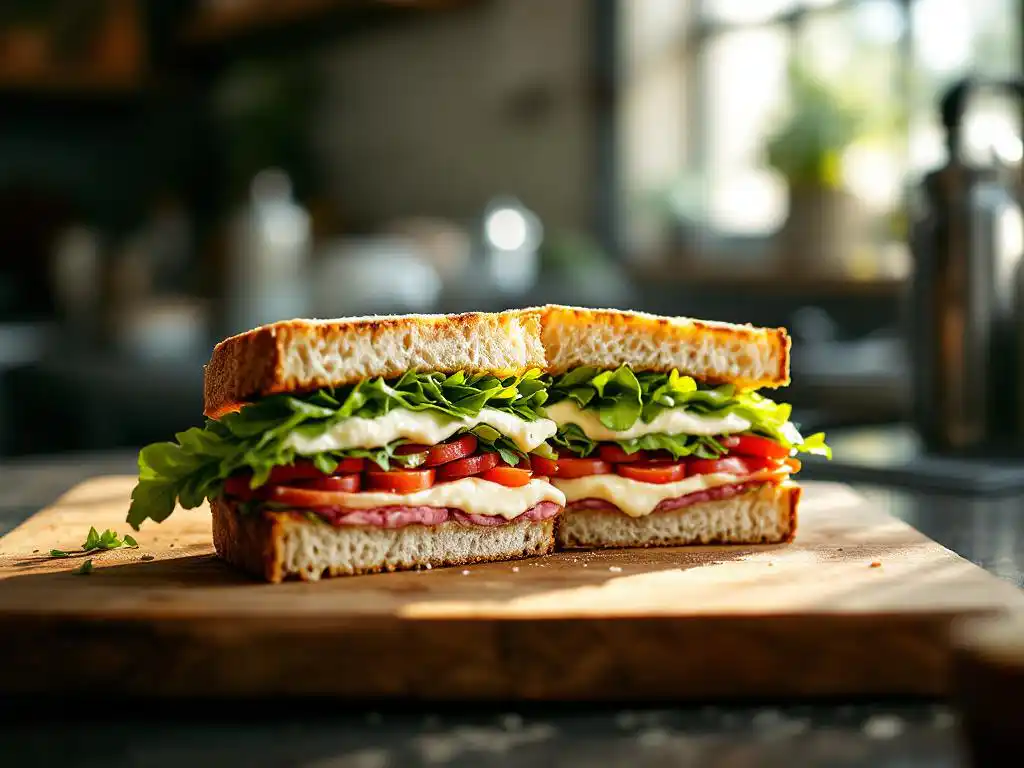
Goat cheese brings unique flavour-enhancing capabilities to sandwich manufacturing through its distinctive tangy profile, creamy texture, and versatile application methods. Unlike traditional cow’s milk cheeses, goat cheese offers manufacturers opportunities to create more complex, sophisticated flavour profiles while maintaining cost-effectiveness and operational efficiency. Understanding how to leverage goat cheese’s specific properties can transform standard sandwich offerings into premium products that command higher margins and customer loyalty.
What makes goat cheese different from other cheeses in sandwich manufacturing?
Goat cheese contains smaller fat globules and different protein structures compared to cow’s milk cheese, resulting in a naturally smoother, more spreadable texture ideal for sandwich applications. The lower lactose content makes it easier to digest, while the unique fatty acid profile creates its characteristic tangy flavour that cuts through rich sandwich ingredients.
The chemical composition of goat cheese includes higher levels of medium-chain fatty acids, particularly capric, caprylic, and caproic acids. These compounds not only contribute to the distinctive flavour but also affect how the cheese melts and spreads at various temperatures. For sandwich manufacturers, this means better consistency across different production environments and improved texture retention during storage.
The protein structure in goat cheese forms a more delicate curd, making it naturally creamier without additional processing. This property eliminates the need for added emulsifiers or stabilisers often required with cow’s milk cheeses to achieve similar spreadability. The result is a cleaner-label product that appeals to health-conscious consumers while maintaining the functional properties needed for efficient sandwich assembly.
How does goat cheese enhance flavour complexity in mass-produced sandwiches?
Goat cheese adds layers of flavour complexity through its natural tanginess that complements both savoury and sweet sandwich components. The cheese’s earthy undertones and bright acidity balance rich meats, cut through fatty ingredients, and enhance vegetable flavours without overwhelming delicate components like fresh herbs or greens.
The umami-enhancing properties of aged goat cheese varieties work particularly well in grilled sandwiches and paninis. As the cheese warms, it releases aromatic compounds that intensify the overall flavour experience. Fresh goat cheese varieties provide a clean, bright note that pairs exceptionally well with Mediterranean ingredients like roasted peppers, sun-dried tomatoes, and olives.
For cold sandwich applications, goat cheese acts as a flavour bridge between disparate ingredients. Its creamy texture carries flavours throughout the sandwich, while its acidity prevents flavour fatigue. This makes it particularly effective in multi-component sandwiches where ingredient harmony is essential. The cheese’s natural saltiness also reduces the need for additional seasoning, simplifying production processes.
What are the technical advantages of using goat cheese in sandwich production?
Goat cheese offers superior moisture-retention properties that prevent sandwich dryness during extended storage periods. Its natural emulsification capabilities mean it maintains consistency without separation, even under temperature fluctuations common in distribution chains. The cheese’s pH level also provides natural antimicrobial properties that can extend shelf life.
The freeze–thaw stability of goat cheese surpasses many cow’s milk alternatives, making it ideal for frozen sandwich products. During freezing, the smaller fat globules and protein structure prevent the grainy texture often encountered with other cheeses. This stability ensures consistent quality from production through to consumer consumption, reducing waste and customer complaints.
From a production-efficiency standpoint, goat cheese’s spreadability at cooler temperatures reduces equipment strain and speeds up assembly lines. The cheese adheres well to bread surfaces without requiring warming, which can compromise bread texture. Its natural binding properties also help secure other sandwich fillings, reducing ingredient migration during packaging and transport.
Which goat cheese formats work best for different sandwich applications?
Spreadable goat cheese works best for high-volume sandwich production lines where speed and consistency are paramount. Crumbled formats suit artisanal sandwich concepts where visible cheese pieces add textural interest and premium appeal. Pre-portioned medallions or slices offer portion-control benefits while maintaining the visual impact of distinct cheese layers.
For cold sandwich applications, whipped goat cheese blends provide optimal spreadability and flavour distribution. These formats can be easily dispensed through automated systems, ensuring consistent portion sizes and reducing labour costs. The lighter texture also prevents the dense, heavy mouthfeel that can occur with traditional cheese spreads.
Grilled sandwich applications benefit from firmer goat cheese varieties that maintain their shape while developing appealing browning. Semi-hard goat cheeses can be pre-sliced for consistent melting properties, while fresh varieties mixed with herbs or spices create signature flavour profiles. For wraps and flatbreads, cream-cheese-style goat cheese provides the adhesion needed to secure rolled formats while adding flavour throughout.
How can manufacturers incorporate goat cheese cost-effectively?
Strategic blending of goat cheese with complementary ingredients can extend its impact while managing costs. Mixing goat cheese with cream cheese or ricotta at ratios of 30–70% maintains the distinctive goat cheese flavour while reducing overall ingredient costs. This approach works particularly well for spread applications where texture is as important as taste.
Bulk purchasing agreements with suppliers can significantly reduce per-unit costs, especially when committing to consistent volume orders. Many suppliers offer industrial packaging formats that reduce packaging waste and handling time. Frozen bulk formats provide additional flexibility, allowing manufacturers to thaw only what is needed for production runs.
The premium positioning potential of goat cheese often justifies slightly higher ingredient costs through increased menu prices. Consumer research consistently shows a willingness to pay 15–25% more for sandwiches featuring artisanal ingredients like goat cheese. Additionally, the extended shelf life of properly stored goat cheese reduces waste-related losses compared to some fresh cheese alternatives.
How DeJong Cheese helps with sandwich manufacturing innovation
We at DeJong Cheese understand the unique challenges sandwich manufacturers face when incorporating speciality cheeses into their product lines. Our traditional family-business expertise, combined with modern food-safety certifications, provides the perfect partnership for your goat cheese needs. We offer comprehensive solutions designed specifically for industrial sandwich production:
- Custom bulk packaging formats tailored to your production-line requirements
- Private-label development for unique sandwich concepts
- Flexible goat cheese blends designed for specific flavour profiles
- Technical support for optimal storage and handling procedures
- Consistent quality backed by the highest food-safety certifications
- International logistics capabilities serving over 20 countries
Our Alphenaer brand represents generations of cheese-making expertise, bringing authentic Dutch craftsmanship to your sandwich innovations. Whether you need fresh goat cheese for cold applications or aged varieties for grilled concepts, we provide the consistency and quality your customers expect.
Ready to elevate your sandwich offerings with premium goat cheese? Contact our team to discuss your specific requirements and discover how our extensive product range can transform your sandwich menu. For those interested in sourcing options, explore our sales points to find the most convenient supply solution for your business.
Frequently Asked Questions
What's the best way to prevent goat cheese from overpowering other sandwich ingredients?
Start with smaller portions (15-20g per sandwich) and pair goat cheese with bold, complementary flavours like caramelised onions, balsamic reduction, or honey. For milder applications, blend goat cheese with cream cheese at a 40:60 ratio to soften its intensity while maintaining its distinctive character. Temperature also matters—serving goat cheese at room temperature releases more flavour, while chilled applications provide a subtler taste profile.
How can I troubleshoot goat cheese that becomes grainy or separates during storage?
Graininess typically occurs from temperature fluctuations or improper pH levels. Store goat cheese consistently at 2-4°C and avoid repeated temperature changes. If separation occurs, gently re-whip the cheese with 1-2% cream to restore smoothness. For prevention, add a small amount of sodium citrate (0.5-1%) to stabilise the emulsion, especially for products with extended shelf life requirements.
What equipment modifications are needed to handle goat cheese on existing sandwich lines?
Most sandwich lines require minimal modifications for goat cheese integration. Replace standard dispensing nozzles with wider-aperture versions (8-12mm) to accommodate the cheese’s texture. For spreadable formats, heated hoppers aren’t necessary—ambient temperature dispensing actually preserves texture better. Consider installing portion-control pumps calibrated for goat cheese’s specific density to ensure consistent portioning across production runs.
Which herbs and seasonings work best when mixing with goat cheese for sandwiches?
Fresh herbs like chives, dill, and basil maintain their vibrancy when mixed into goat cheese 24-48 hours before use. For longer shelf life, use freeze-dried herbs at 60% of fresh herb quantities. Proven combinations include honey-lavender for breakfast sandwiches, za’atar-lemon for Mediterranean concepts, and black pepper-thyme for classic applications. Always add salt sparingly as goat cheese has natural saltiness that intensifies over time.
How do I calculate the proper goat cheese ratio for sandwich cost targets?
Calculate goat cheese costs at 2.5-3.5% of total sandwich cost for premium positioning, or 1.5-2% for value offerings. A typical 180g sandwich uses 20-30g of goat cheese for optimal flavour impact. For cost management, create cheese blends where goat cheese comprises 30-40% of the total cheese component—this maintains menu appeal while meeting margin requirements. Track usage through portion-controlled dispensing to maintain consistency.
What are the most common mistakes when scaling up goat cheese sandwich production?
The biggest mistakes include over-warming goat cheese before application (which causes oil separation), using the same storage protocols as cow’s milk cheese, and not accounting for goat cheese’s faster flavour development during shelf life. Additionally, many manufacturers underestimate the importance of consistent tempering—goat cheese needs 2-3 hours at production temperature for optimal spreading. Avoid pre-mixing with acidic ingredients more than 24 hours ahead, as this can break down the cheese structure.
Related Articles
- How do you compare technical datasheets from different goat cheese producers?
- What are red flags when first contacting a potential cheese supplier?
- Why is supplier concentration a risk when purchasing goat cheese pucks?
- What role does goat cheese play in premium product lines?
- How to train kitchen staff on goat cheese preparation?