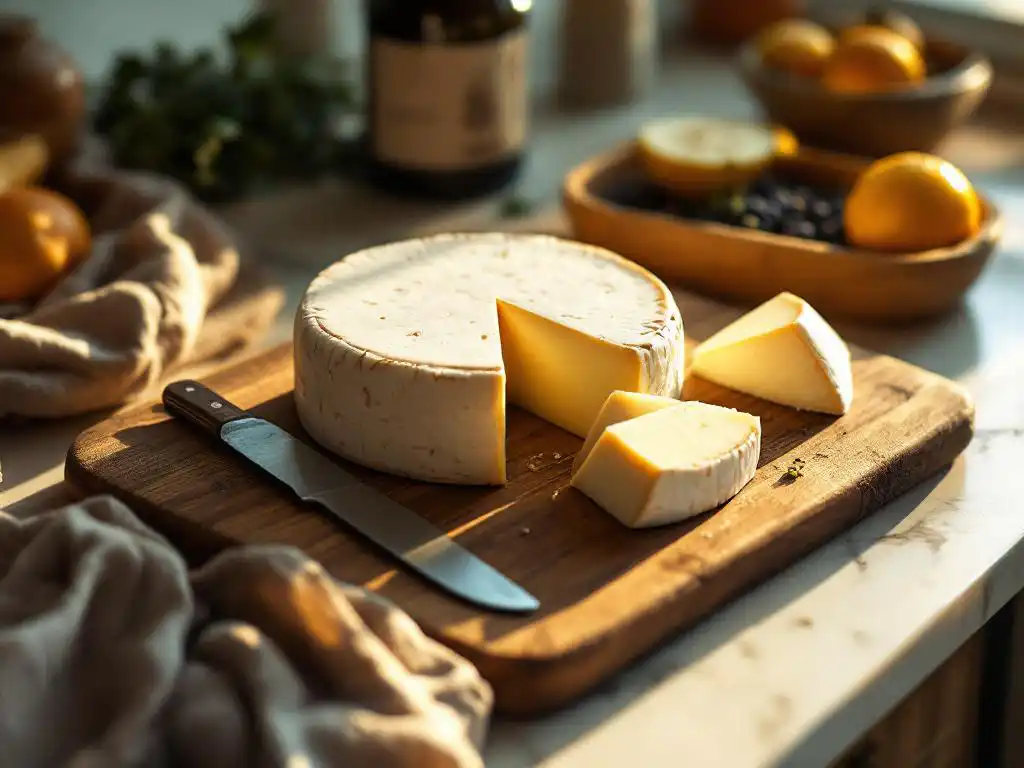
Goat cheese offers unique advantages for creating tailored B2B solutions that meet specific market demands and customer preferences. Its naturally versatile properties, ranging from mild and creamy to aged and complex, provide manufacturers with exceptional flexibility for product customization. The adaptable nature of goat cheese allows businesses to develop distinctive products that stand out in competitive markets while meeting precise specifications for texture, flavor, and functionality. This comprehensive guide explores how goat cheese enables customized solutions across various industries and applications.
What makes goat cheese ideal for tailored B2B solutions?
Goat cheese possesses inherent characteristics that make it exceptionally suitable for customization in B2B applications. The milk’s unique protein structure creates a naturally softer texture that can be modified through various production techniques to achieve specific consistencies, from spreadable to firm. Its distinctive tangy flavor profile serves as an excellent base that can be enhanced or mellowed according to client requirements.
The nutritional advantages of goat cheese add another dimension to its customization potential. With smaller fat globules and different protein compositions compared to cow’s milk cheese, goat cheese offers easier digestibility and lower lactose content. These properties appeal to health-conscious markets and allow manufacturers to create products targeting specific dietary needs. The naturally white color of goat cheese also provides a clean canvas for incorporating herbs, spices, or other flavorings without affecting visual appeal.
Production flexibility represents a key advantage in goat cheese customization. The cheese responds well to various aging processes, allowing manufacturers to create products ranging from fresh, creamy varieties to aged, complex cheeses with developed flavors. Temperature control, humidity management, and aging duration can all be precisely adjusted to achieve desired characteristics. This adaptability enables producers to meet exact specifications for different applications, whether for salad toppings, pizza ingredients, or gourmet cheese boards.
How does the cheese customization process actually work?
The customization journey begins with a detailed consultation phase where manufacturers work closely with B2B clients to understand specific requirements. This initial stage involves discussing desired flavor profiles, texture requirements, intended applications, and any nutritional considerations. Clients share their vision while cheese experts provide guidance on feasibility and suggest innovative approaches to achieve the desired outcome.
Recipe development follows the consultation, where cheesemakers create initial formulations based on client specifications. This phase involves selecting appropriate starter cultures, determining optimal milk treatment processes, and establishing precise production parameters. Small-batch testing allows for refinement of recipes, with adjustments made to factors such as acidity levels, moisture content, and aging conditions. Each iteration brings the product closer to the client’s vision while ensuring consistency and scalability.
The testing protocol includes sensory evaluation, shelf-life assessment, and functionality testing in the intended application. For instance, a cheese destined for pizza production undergoes melting tests, while salad cheeses are evaluated for crumbling characteristics and flavor stability. Once the recipe meets all requirements, scaling considerations come into play. Production processes are standardized to ensure consistent quality across larger batches, with quality control measures implemented at every stage.
Key stages in the customization process include:
- Initial consultation and requirements gathering
- Recipe formulation and small-batch development
- Sensory and functional testing
- Production scaling and standardization
- Quality assurance and final approval
- Full-scale production implementation
What’s the difference between private label and custom cheese solutions?
Private label production involves manufacturing existing cheese varieties under a client’s brand name, offering a faster route to market with proven products. These solutions typically feature established recipes and production processes, allowing clients to offer quality goat cheese products without development costs. Private label arrangements suit businesses seeking to expand their product range quickly while maintaining control over branding and marketing.
Custom cheese solutions, by contrast, involve creating entirely new products tailored to specific requirements. This approach offers complete control over every aspect of the cheese, from flavor profile to texture and functionality. Custom development requires more time and investment but results in unique products that can provide significant market differentiation. The development process includes exclusive recipe ownership and the ability to modify products as market demands evolve.
Cost structures differ significantly between these approaches. Private label production typically requires lower initial investment, with costs primarily related to packaging and minimum order quantities. Custom solutions involve development fees, testing costs, and potentially higher per-unit prices due to specialized production requirements. However, custom products often command premium market prices, potentially offering better profit margins.
Timeline considerations also vary between options. Private label products can often reach the market within weeks, as production processes are already established. Custom cheese development typically requires several months, encompassing recipe development, testing, and production setup. Minimum order quantities tend to be more flexible with private label options, while custom solutions may require larger commitments to justify development investments.
Which industries benefit most from tailored goat cheese products?
The foodservice industry represents a major beneficiary of customized goat cheese solutions, with restaurants and catering companies seeking unique products to differentiate their menus. Fine-dining establishments often require specific flavor profiles and textures that complement their culinary creations. Quick-service restaurants need consistent melting properties and portion control, while catering operations value products with extended shelf life and stable performance across various applications.
Retail sectors, including supermarkets and specialty food stores, benefit from tailored products that meet specific market segments. Premium retailers seek artisanal-style cheeses with unique flavor combinations, while mainstream supermarkets require competitively priced options with broad appeal. The growing demand for organic, grass-fed, and locally sourced products creates opportunities for customized offerings that meet these specific criteria.
Meal-kit companies have emerged as significant users of customized goat cheese products. These businesses require precisely portioned products with extended shelf life and consistent quality. The cheese must maintain its properties during shipping and storage while providing home cooks with restaurant-quality ingredients. Customization allows for portion sizes that minimize waste and packaging solutions that preserve freshness throughout the distribution chain.
Food manufacturers utilize tailored goat cheese in various applications, each with specific requirements:
- Salad producers need crumbled varieties with specific particle sizes and flavor stability
- Pizza manufacturers require consistent melting properties and browning characteristics
- Sandwich and wrap producers seek spreadable varieties with extended shelf life
- Ready-meal manufacturers need products that maintain quality through freezing and reheating
- Snack food producers utilize powdered or concentrated forms for flavoring applications
How does DeJong Cheese help with tailored goat cheese solutions?
We at DeJong Cheese combine traditional cheesemaking expertise with modern innovation capabilities to create exceptional tailored solutions for B2B clients. Our approach begins with understanding each client’s unique requirements, whether they need custom recipe development or private label production. With decades of experience in goat cheese production, we guide clients through every step of the customization journey, from initial concept to full-scale production.
Our comprehensive consultation process includes:
- Detailed analysis of your specific market requirements and target applications
- Expert guidance on flavor profiles, textures, and functional properties
- Recipe development leveraging our traditional techniques and modern technology
- Rigorous testing protocols ensuring consistent quality and performance
- Flexible production options for both small- and large-scale requirements
- Complete support from development through to market launch
Our state-of-the-art facilities maintain the highest food safety standards, with certifications that meet international requirements for global distribution. This enables us to serve clients across more than 20 countries, providing them with products that meet local market preferences while maintaining consistent quality. Whether you’re a foodservice distributor seeking unique menu solutions, a retailer looking for private label excellence, or a manufacturer requiring specific functional properties, our team of specialists delivers tailored solutions that exceed expectations.
Ready to explore how customized goat cheese can enhance your product offering? Contact our team for a personalized consultation to discover our range of possibilities and find out more about how we can serve your business needs.
Frequently Asked Questions
What are the minimum order quantities for custom goat cheese development?
Minimum order quantities vary based on the complexity of customization and production requirements. For private label solutions, minimums can start from as low as 500-1000 units, while fully custom cheese development typically requires larger commitments of 2000+ units to justify development costs. However, many manufacturers offer flexible arrangements with graduated pricing tiers that make custom solutions accessible for growing businesses.
How do I determine if my business needs private label or custom cheese solutions?
Consider your timeline, budget, and differentiation needs. Choose private label if you need products within 4-6 weeks, have limited development budget, and existing recipes meet your requirements. Opt for custom solutions when you need unique functional properties, have 3-6 months for development, and require products that provide significant competitive advantage in your market.
What certifications should I look for when selecting a goat cheese customization partner?
Essential certifications include HACCP for food safety management, BRC or SQF for quality assurance, and ISO 22000 for comprehensive food safety systems. For specific markets, look for organic certifications, halal or kosher approvals, and country-specific export certifications. Verify that your partner maintains current certifications and has experience meeting regulatory requirements in your target markets.
How can I ensure consistent quality when scaling from test batches to full production?
Work with manufacturers who implement standardized production protocols, detailed batch records, and regular quality testing at multiple stages. Request documentation of their scaling methodology, including how they maintain moisture content, pH levels, and aging conditions across different batch sizes. Establish clear quality parameters and approval processes before moving to full-scale production.
What are common mistakes businesses make when developing custom goat cheese products?
The most frequent mistakes include underestimating development timelines, not considering seasonal milk variations that affect consistency, and failing to test products in real-world applications before finalizing recipes. Additionally, businesses often overlook packaging requirements for their specific distribution channels or don’t account for how products perform throughout their entire shelf life under various storage conditions.
How do seasonal variations in goat milk affect custom cheese production?
Goat milk composition changes throughout the year, with higher fat and protein content during winter months affecting texture and yield. Professional manufacturers adjust production parameters seasonally to maintain consistent product quality, using techniques like standardization and modified aging processes. When planning custom products, discuss seasonal management strategies with your manufacturer to ensure year-round consistency.
What's the typical timeline for launching a new custom goat cheese product?
A complete custom development cycle typically takes 3-6 months: 2-4 weeks for initial consultation and concept development, 6-8 weeks for recipe formulation and testing, 4-6 weeks for production trials and scaling, and 2-4 weeks for final adjustments and launch preparation. Private label solutions can launch in 4-6 weeks, while simple modifications to existing products may take 6-10 weeks.