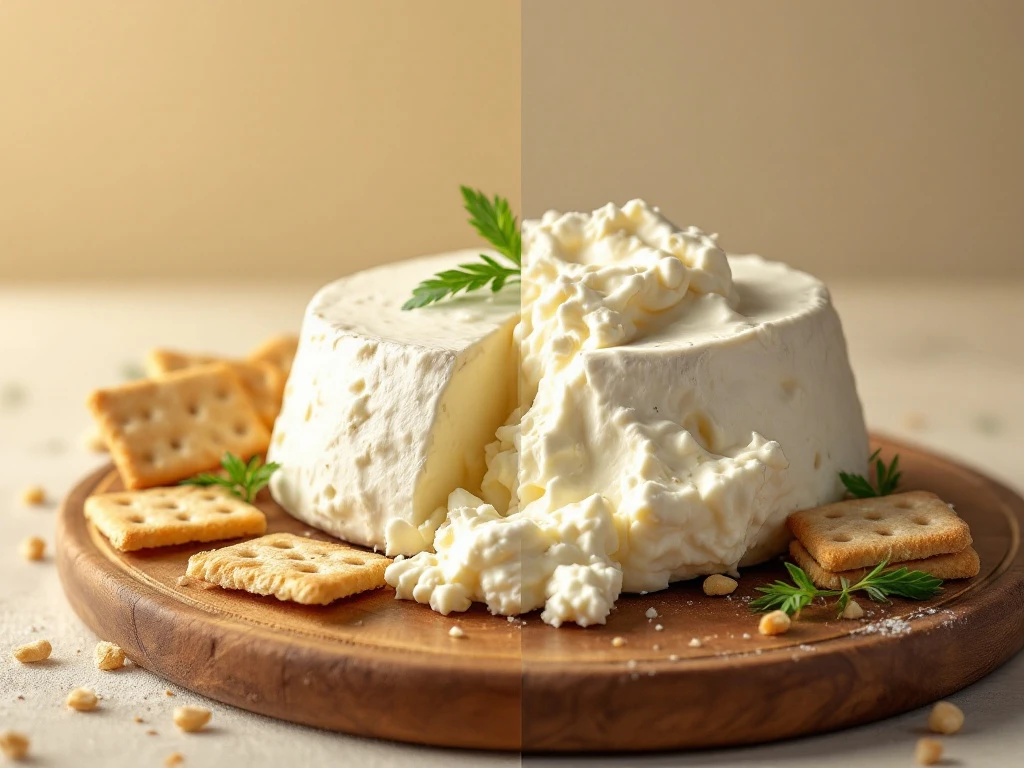
Goat cheese and mascarpone are very different types of cheese. They come from different animals and are made in different ways. Goat cheese is made from goat’s milk and has a strong, tangy taste with a crumbly texture. Mascarpone is an Italian cream cheese made from cow’s cream. It is very smooth and rich with a mild, sweet taste. When you understand these differences, you can choose the right cheese for your cooking.
What are the main differences between goat cheese and mascarpone?
The biggest differences between goat cheese and mascarpone are where they come from and how they are made. Goat cheese is made from goat’s milk using traditional cheese-making methods with special bacteria and rennet. Mascarpone uses cow’s cream mixed with acid. These different ways of making cheese create very different products.
The type of milk makes the biggest difference. Goat’s milk has smaller fat pieces and different proteins than cow’s cream. This is why goat cheese tastes tangy and feels crumbly. Our fresh goat cheese keeps these traditional qualities through careful processing. Mascarpone is made from heavy cream (with 35-40% fat), which makes it very rich and smooth.
The way these cheeses are made is also different. Traditional goat cheese needs bacteria and rennet to make curds. These curds are then drained and shaped. This process can take several days or weeks. Making mascarpone is much faster. You just heat cream to 85°C, add acid, then strain the thick mixture overnight.
These cheeses have very different amounts of fat. Fresh goat cheese has 16-22% fat, so it is lighter. Mascarpone has 60-75% fat because it is made from cream. This big difference affects how healthy they are and how they work in recipes. Goat cheese also has more protein per serving than mascarpone.
How do the textures and flavors compare between these cheeses?
The texture differences between goat cheese and mascarpone are easy to notice. Goat cheese is usually creamy but crumbly. Some types are smooth and easy to spread. Mascarpone is very smooth and feels like thick whipped cream. These different textures affect how you can use them in cooking.
Fresh goat cheese can be soft and spreadable or firm enough to slice. This depends on how much water it has and how old it is. Our spreadable goat cheese is smoother than traditional fresh goat cheese but still has that tangy taste. As goat cheese gets older, it becomes firmer and more crumbly. Aged varieties have a creamy inside under their white skin.
Mascarpone always stays smooth and soft. It spreads easily at room temperature. Its high fat content makes it feel very rich in your mouth, which is perfect for desserts and rich sauces. Unlike goat cheese, mascarpone doesn’t change texture as it ages. It keeps the same smooth feel throughout its short shelf life.
The flavors of these cheeses are very different. Goat cheese has complex flavors that range from mild and fresh in young varieties to earthy and tangy in aged ones. The special “goaty” flavor comes from an acid naturally found in goat’s milk. Mascarpone has a mild, slightly sweet flavor with subtle dairy notes. It doesn’t have the tang or complexity of goat cheese. This neutral taste makes mascarpone great for both sweet and savory dishes.
Which cheese works better for different cooking applications?
Choosing between goat cheese and mascarpone for cooking depends on what you want to achieve. Consider the temperature, flavor goals, and final texture you want. Goat cheese works well when you want tangy flavor and pieces that hold their shape, like in salads, pizzas, and baked dishes. Mascarpone is better for recipes that need smooth mixing, rich texture, and mild flavor, especially in desserts and cream sauces.
For baking, goat cheese works very well because its protein structure helps it keep its shape when heated. Our goat cheese crumbles and slices are easy to use in pizzas, quiches, and tarts. They soften nicely while keeping distinct pieces. The cheese turns a lovely golden color when baked and adds savory depth to pastries and breads.
Mascarpone behaves differently in baking. Its high fat content means it melts completely, making it perfect for cheesecakes where you want smooth texture. However, this same quality makes it bad for recipes that need distinct cheese pieces. Mascarpone works perfectly in no-bake desserts, frostings, and fillings where its creamy texture stays preserved.
For cold dishes, each cheese has different strengths. Goat cheese adds texture and complex flavor to salads, sandwiches, and cold appetizers. You can shape it in different ways, from crumbles to pearls, which gives you versatility in presentation. Mascarpone is excellent in cold desserts like tiramisu, fruit tarts, and mousses, where its smooth texture creates luxurious results. For savory cold dishes, mascarpone works well in dips and spreads where you want mild flavor.
Can you substitute goat cheese for mascarpone in recipes?
You can substitute goat cheese for mascarpone, but you need to think carefully about texture, flavor, and fat content differences. While it’s possible in many recipes, successful substitution depends on adjusting amounts and possibly adding other ingredients to get the right consistency and taste. The tangy flavor of goat cheese will always make the final dish taste different than with mild mascarpone.
For desserts, substituting goat cheese for mascarpone can be challenging. In tiramisu, using goat cheese creates a more tangy version that some people like, but you need to change the texture. Mix fresh goat cheese with a small amount of heavy cream to make it as smooth as mascarpone. For every cup of mascarpone, use ¾ cup soft goat cheese mixed with ¼ cup cream. However, you will still taste the distinctive goat cheese flavor.
Cheesecake substitutions work better because baking and other ingredients help hide texture differences. Use equal amounts of soft goat cheese instead of mascarpone, but expect a more tangy result. Adding an extra egg yolk can help achieve the rich, creamy texture that mascarpone would give. For no-bake cheesecakes, blend the goat cheese well and consider adding a tablespoon of cream per 200g of cheese.
Savory substitutions often work better than sweet ones. In pasta sauces, goat cheese can replace mascarpone well, though the sauce will have stronger flavor. Our spreadable goat cheese varieties work particularly well as mascarpone substitutes in warm sauces because they melt smoothly and mix easily. For cold savory dishes like sandwich spreads or dips, goat cheese often improves the recipe with its additional flavor complexity. However, you may need to thin it with milk or cream to get the right consistency.
What nutritional benefits does each cheese offer?
The nutritional content of goat cheese and mascarpone is very different, offering distinct benefits for various dietary needs. Goat cheese has higher protein content with moderate fat levels, while mascarpone has concentrated calories from its high fat content. Understanding these differences helps you make informed choices based on your nutritional goals and dietary restrictions.
Goat cheese offers several nutritional advantages, especially for those wanting lower-calorie options. With about 75 calories per 30g serving and 6g of fat, it provides good protein (5-6g) while staying relatively light. The protein in goat cheese contains all essential amino acids, making it a complete protein source. Additionally, goat cheese provides important minerals including calcium, phosphorus, and B vitamins.
Mascarpone’s nutritional profile reflects its cream base, containing about 120-130 calories per 30g serving with 12-14g of fat. The low protein content (2g per serving) makes it less suitable as a protein source. However, mascarpone does provide fat-soluble vitamins A and D, though in smaller amounts than harder cheeses. Its high caloric density makes portion control important for those watching calorie intake.
These cheeses digest differently, which benefits different people. Goat cheese has smaller fat pieces and different protein structures than cow’s milk products, making it easier to digest for some people. While not lactose-free, goat cheese typically has less lactose than cow’s milk cheeses. Mascarpone, despite being made from cow’s cream, has very little lactose due to its high fat content and how it’s made. This makes it surprisingly well-tolerated by many people with mild lactose sensitivity.
Understanding the unique characteristics of goat cheese versus mascarpone helps you make better choices in both cooking and nutrition. While goat cheese offers tangy flavor, versatile texture, and higher protein content, mascarpone provides unmatched richness and smooth consistency perfect for indulgent dishes. Each cheese serves different culinary purposes, and knowing when to use each one makes your cooking results better. For those interested in exploring high-quality goat cheese options that showcase these distinctive characteristics, we offer a wide range of traditional and innovative goat cheese products perfect for both professional and home kitchen use.