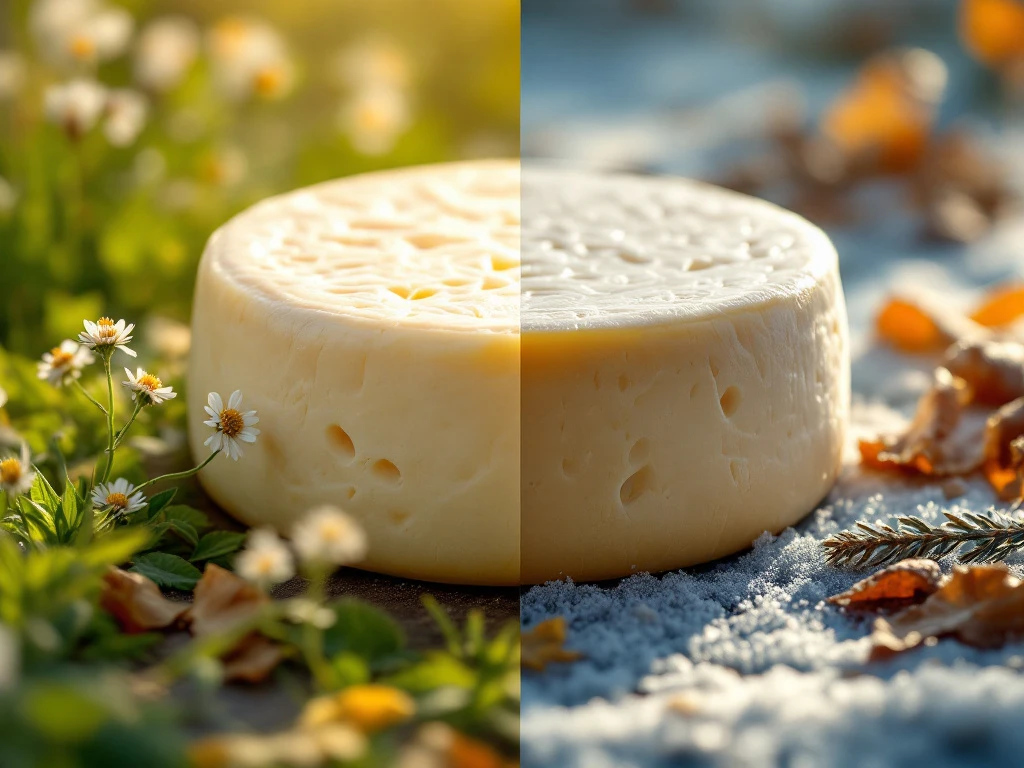
Changes in seasons affect goat milk and make cheese taste different throughout the year. The milk changes because of what goats eat and when they produce milk. In spring and summer, goats eat fresh grass. This makes milk with more water and lighter taste that creates mild, fresh cheeses. In autumn and winter, goats eat hay and dried food. This makes milk with more fat and protein, creating stronger, richer cheese taste. When you know about these changes, you can choose the right goat cheese for your meals all year.
What exactly changes in goat milk throughout the seasons?
Goat milk changes a lot during different seasons because of what goats eat, how much milk they make, and the weather around them. Fat in the milk goes from 3.5% in spring to over 5% in winter, and protein changes between 2.8% and 3.6%. Important minerals like calcium and phosphorus increase in cold months when goats eat stored food instead of fresh grass.
When goats change from eating fresh grass to hay, their milk becomes very different. Spring grass has lots of water and many different plant compounds that give the milk gentle herb flavors. Winter food like hay and grains gives steady nutrition but fewer smell compounds. This makes milk that is richer and more concentrated.
The milk production cycle also changes milk quality through seasons. In spring, goats make lots of milk but it has less solid parts. In autumn, they make less milk but it has more of the parts needed for making cheese. These natural patterns have helped cheese makers for hundreds of years. They plan when to make cheese to get the best from each season.
How do spring and summer milk create different cheese flavors?
Spring and summer milk makes goat cheeses that taste bright and fresh because goats eat lots of fresh plants. The milk has more flavor compounds from different pasture plants, making cheeses with citrus tastes, flower hints, and herb flavors. Water content is highest during these months, making lighter textures and gentler tastes.
When goats eat fresh grass, they get special compounds like terpenes and phenols that change how cheese tastes. Clover, wild herbs, and flowering plants that goats eat in warm months add special smell molecules that stay in the cheese. These natural flavors make the cheese more interesting without being too strong. This makes spring and summer cheeses very refreshing.
Making cheese changes with seasonal milk properties. More water means we need to adjust how long we drain the cheese and how much salt we use to get the right texture. We watch these things carefully to keep the milk’s natural taste while making sure quality stays good. The result is cheese that captures what the season tastes like, perfect for light summer meals and fresh dishes.
What makes autumn and winter goat cheese taste richer?
Autumn and winter goat milk has concentrated nutrients from hay-based food, making cheeses with deeper, more complex flavors. Fat content increases a lot, giving a creamy feel in your mouth and better ability to carry flavor compounds. Protein levels also go up, making firmer textures and stronger nutty, caramel tastes when the cheese ages.
The change to stored feeds completely changes milk composition. Hay and silage give consistent nutrition but don’t have the different plant compounds found in fresh grass. This concentration effect makes the milk’s natural qualities stronger, producing cheese with strong, earthy characteristics. Minerals from concentrated feeds add savory depth that develops more during aging.
Cold weather affects how goats’ bodies work, making them store fat that makes milk quality better. This natural change results in milk that works perfectly for aged cheeses and richer fresh types. Our aged goat cheeses benefit especially from winter milk, developing complex flavor profiles that work beautifully with hearty seasonal dishes and strong wines.
Which seasonal goat cheeses pair best with different foods?
Spring goat cheeses with their light, citrus tastes work excellently with fresh salads, asparagus, and delicate herbs. Summer types go well with tomatoes, stone fruits, and grilled vegetables. Autumn cheeses match perfectly with roasted root vegetables, mushrooms, and apple dishes. Winter’s rich cheeses make hearty stews, caramelized onions, and dried fruit combinations taste better.
Wine pairings change with seasonal cheese characteristics. Light spring cheeses work well with crisp white wines like Sauvignon Blanc or Albariño. Summer types welcome rosé and light red wines. Autumn cheeses work with medium-strength wines, while winter’s strong profiles match full-bodied red wines and fortified wines. These pairings make both cheese and wine taste better.
Cooking uses vary by season. Fresh spring cheese melts beautifully into pasta with spring vegetables or tops delicate flatbreads. Summer types work great in cold dishes and light baked dishes. Autumn cheeses add depth to quiches and savory tarts. Winter cheeses provide richness in fondue, baked dishes with cheese, and other cooked dishes where their concentrated flavors work well with other ingredients.
How can you identify seasonal differences when buying goat cheese?
Visual signs show seasonal changes in goat cheese at markets and specialty shops. Spring cheeses show bright white color with smooth, moist surfaces. Summer types show slight ivory colors with shiny appearance. Autumn cheeses develop deeper cream colors, while winter cheeses show rich, dense textures with possible crystals in aged types.
Texture differences give reliable seasonal signs. Press gently on fresh cheese – spring types feel light and soft, almost fluffy. Summer cheeses keep moisture but offer slightly more resistance. Autumn cheeses feel firmer with denser paste. Winter types present the most solid texture, breaking cleanly rather than spreading when fresh.
Label information and production dates offer additional help. Quality producers often show seasonal production or milk collection periods. Ask cheese shop workers about seasonal availability – many craftsmen make specific types only during the best milk seasons. Tasting remains the best test, with each season’s distinct flavor becoming easy to recognize through experience. Our Alphenaer range shows these seasonal changes, allowing customers to experience how nature’s rhythms influence traditional goat cheese production throughout the year.